10 Best Movie Plot Twists Of 2014

Twist and shout (about how good these were).
Ah, plot twists. Where would the cinematic medium be without its plot twists? Though often derided by critics and audiences - especially when they render a picture something akin to incomprehensible - there's something inherently satisfying about the idea of a "twist." Though a bad one can do away with all the good that comes before it, a worthy rug-pull can imbue a movie with added layers of light and shade; it can inject a picture with hidden depths; it can increase the likelihood that you'll go back. Over the course of each and every year, audiences often find themselves plopped down in front of lots of pictures that thrive on their ability to blow-minds with some well-placed plot twists, and 2014 was no different. Though there were certainly a healthy number of ill-judged and ultimately dissatisfying twists on show - many of which were contained within some of the year's biggest movies - 2014 also gifted audiences with lots of films that really knew how to utilise those all-important plot twists for the better. Here, then, are the best twists of 2014: the ones that stuck in your memory banks and refused to vacate for a surprising long time. The best twists linger on for days, of course, forcing you at metaphorical gunpoint to revaluate everything you saw - or everything you thought you saw - to find new meanings and hidden depths. For the purposes of this article, a plot twist shall be classified as "a sudden and often unexpected change of direction in the plot, implemented to shake up or shock the viewer." Please be warned: this article contains heavy spoilers. Don't venture onwards if you're the kind of person who goes insane over the revealing of plot details. Seriously.

10. It Was Howard Burkan All Along - Magic In The Moonlight
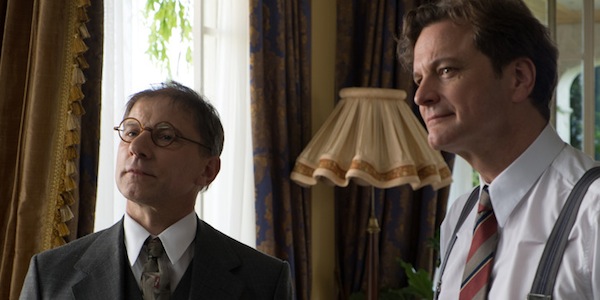
To be entirely honest, Magic In The Moonlight was a bit of a dud. The script felt like something that writer/director Woody Allen found in a box under his bed during a clean-out - messy and unfocused to the point of frustration. What should have been a charming romantic comedy in the vein of his "earlier, funnier ones," starring Colin Firth and Emma Stone, failed to develop into anything that you'd want to sit through even once (let alone a second time). But it does feature a neat twist. The plot concerns Firth's illusionist, Stanley Crawford, who is asked by a former colleague and fellow magician, Howard Burkan, to investigate a medium - Emma Stone - who looks to be exploiting a rich family with her "powers." This sets the stage for a bunch of middling scenes in which Firth and Stone do their best to show us that they have zero chemistry together. The final denouement, however, in which Burkan is revealed to have engineered the whole scenario as a means of tricking his "best friend", is a good one.

9. Chester Confesses Everything - The Two Faces Of January
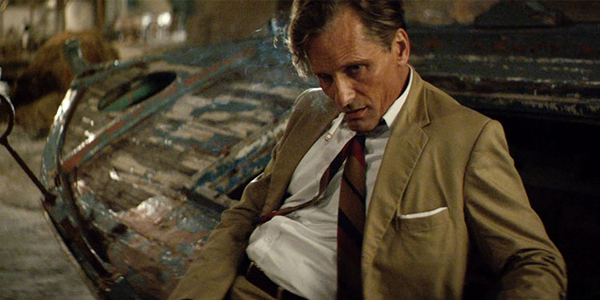
In true Hitchcockian style, The Two Faces Of January - which stars Viggo Mortensen and Kirsten Dunst as a husband and wife vacationing in Athens - is a movie built entirely around deception and twists. Based on the novel of the same name by Patricia Highsmith, who also dealt in similar territories in her Ripley series, the movie was also one of 2014's more underrated efforts; solid acting, a tense and unpredictable script, and - best of all - an unexpected finale, make it worthwhile. The plot, maze-like in its construction, hones in on Chester (Mortensen), who finds himself at odds with a mysterious tour guide, Rydal, played by Oscar Issac. This sets the stage for a relentless game of cat and mouse, as Chester's shady past soon begins to catch up to him. During a tense finale, a foot-chase through the streets of Istanbul, Chester is shot. At this point, we've all been conditioned to believe that he will implicate Rydal in a series of crimes. Instead, he plainly admits his deceit, and falls dead. Shocker.

8. Toothless Kills Stoick - How To Train Your Dragon 2
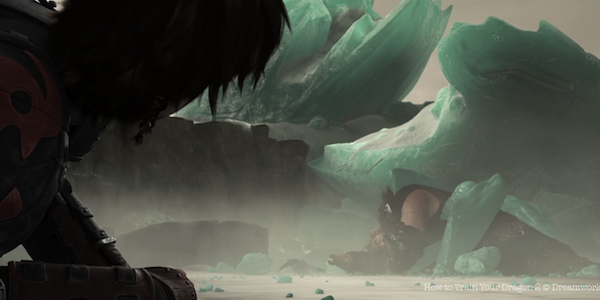
How To Train Your Dragon 2 is probably one of the best animated movie sequels ever made, and has been compared to the likes of The Empire Strikes Back for its "darker" approach to the material. No wonder, given the plot twist that takes hold over the course of this apparently family friendly slice of dragon-based fun. Which is to say, the movie contains what has to be one of the most unsettling death scenes in recent memory - not because it's graphic or anything, but because of how it goes down. At one point in the movie, then, Toothless - the loveable dragon pet of our main hero, Hiccup - falls under the control of a super mean "alpha" dragon, and is ordered to murder his master. As Toothless, powerless to prevent his actions, unleashes a fireball towards Hiccup, though, Stoick - Hiccup's father - leaps in the way and shields his son from the attack. Stoick is killed at this point - yes, actually killed - and Toothless awakens, heartbroken, realising his mistake. Unexpected and dark, who'd have thought?

7. Cuddy's Suicide - The Homesman

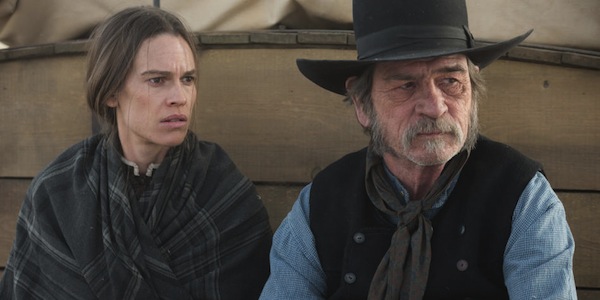
The Homesman is one of the strangest western movies in a long, long time. Essentially a feminist and revisionist western in one, Tommy Lee Jones' seemingly straightforward frontier drama is actually packed to the brim with an endless bullet hail of curveballs and plot twists: it's almost if the movie exists as a means of shaking things up when you least expect it, refusing to bow to pre-existing genre conventions. As a result, reviews for the movie were mixed. Critics were also particularly critical of the movie's "biggest" twist. The plot, then, concerns George Briggs (Jones), a claim jumper hired by a spinster named Mary Bee Cuddy (Hilary Swank) to transport three insane woman to a church in Iowa. What appears to be a road movie of sorts, however, switches up at the 90 minute mark, when - rejected and depressed - Cuddy commits suicide, leaving Briggs to carry out the task alone. One wonders why the response to this twist was so harsh; though it lacks emotional power, it cements this western as a truly barmy and curious oddity.

6. Godzilla Is The Hero? - Godzilla

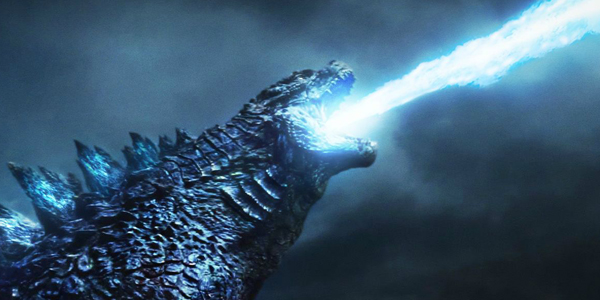
There were lots of things to dislike about Gareth Edwards' surprisingly slow-paced reincarnation of Toho's most famous monster, Godzilla, though it did succeed in one aspect: the characterisation of Godzilla himself. He could have been written off as just another angry lizard of the giant kind, but - instead - was gifted with something akin to an emotional capacity. Which is another way of saying that Godzilla refused to pigeon-hole its titular character as a straight bad guy, opting instead to have him play mediator. In something of a twist, then, other monsters are poised as the villains of the piece, whilst Godzilla himself - a relic of the nuclear age - wakes up to restore the balance brought on by their anarchy. In the film's climactic final battle, 'Zilla unleashes certain hell in an attempt to save humanity from certain destruction, before slinking off into the ocean with an exhausted expression stuck on his face. We're then treated to a TV headline that asks "King of the Monsters - Savior Of Our City?" Unexpected, but so cool.

5. HYDRA Are Actually S.H.I.E.L.D. - Captain America: The Winter Soldier
Captain America: The Winter Soldier pretty much excelled in every single capacity: not only did it mark itself as one of the most relentlessly entertaining comic book movies ever made, it also played homage to the political thrillers of the '70s, and managed to work as both a solo film and as part of the Marvel Cinematic Universe. It also dared to take a few risks, the most unforgettable of which came in the form of a mid-point twist, which revealed that HYDRA were actually running S.H.I.E.L.D. In case you're unfamiliar, HYDRA were the Nazi-esque bad guys that antagonised Captain America int the original flick, The First Avenger, whilst S.H.I.E.L.D. have been running the show as a sort of superhero C.I.A. ever since the first Iron Man movie. For Marvel to pretty much tell the fans: "Oh, S.H.I.E.L.D. has literally been infiltrated by these Nazi guys the entire time, by the way" takes a hell of a lot of balls, and the revelation is bound to send shockwaves through the entire MCU as the franchise goes on. Unbelievable.

4. Scott & Jean Come Back To Life - X-Men: Days Of Future Past
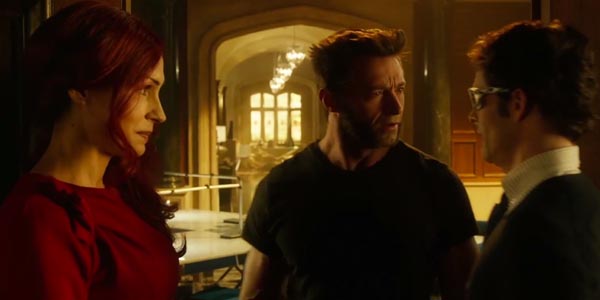
Essentially, X-Men: Days Of Future Past exists as a means of trying to "clean up" the muddled X-Men continuity, which begin to decline when Bryan Singer left the franchise and the studio opted to release ill-judged entries such as X-Men Origins: Wolverine, which the series really didn't need. How, then, did this movie manage to sort through the frankly frustrating pile of inconsistencies inherent to this franchise, whilst still rendering a motion picture that was both entertaining and progressive in its own right? Time travel! The events that take place across the span of the seventh X-Men movie render both X-Men: The Last Stand and X-Men Origins: Wolverine as entirely non-canon; as far as the series is concerned, by the end of Days Of Future Past, they never happened. The result of that, of course, meant that formerly deceased X-Men characters Jean Grey and Scott "Cyclops" Summers are still alive. In the movie's final moments, you see Wolverine's shock at finding them wandering the halls of the X-Mansion in an awesome twist. Yay!

3. The Death Of Gwen Stacy - The Amazing Spider-Man 2

Though the death of Peter Parker's first love, Gwen Stacy, has always been an integral part of the Spider-Man mythology, Emma Stone did such a good job of playing the character over the course of The Amazing Spider-Man movies that you kind of hoped the filmmakers would let her stick around. Alas, it wasn't meant to be. Though fans suspected that Stacy might meet her doom at one point in this rebooted franchise, her "unexpected" death at the end of The Amazing Spider-Man 2 still came as a shocker. Considering that the chemistry between Gwen and Peter was pretty much the only good thing about The Amazing Spider-Man 2 (and indeed, the picture drags whenever she's off-screen), her death at the hands of Harry Osborne marks the most emotionally affecting point of the entire movie: during a battle between Spidey and the Green Goblin, Gwen is dropped from a height by the latter, only to be caught by Peter's web a moment too late; the impact of the fall kills her. Brutal, cruel, and innately brilliant stuff.

2. Amy Is A Psychopath - Gone Girl

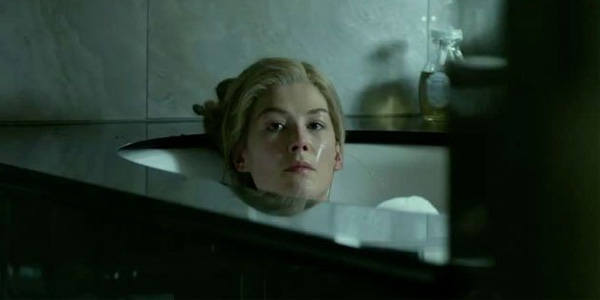
If you happened to have read Gillian Flynn's original novel of Gone Girl before you went to see David Fincher's filmic adaptation, the big twist probably came as no surprise. And yet, if you allowed yourself to give into Fincher's vision and Fincher's vision alone, Gone Girl's mid-point curveball presumably left you in a state of turmoil, as Ben Affleck's "cool girl" wife, Amy Dunne, is revealed to be a deceitful, scheming psychopath of the highest order, having framed her husband for murder. Gone Girl is a movie that thrives on its two-way structure - as the film alternate between conflicting perspectives, it's nearimpossible to know which of our untrustworthy characters is telling the truth. The genius of the twist, however - and this was inherent to Flynn's novel, too - stems from the placement of the big reveal. It's not at the very end of the movie at which the audience discover Amy's intentions, but half-way through. It's the kind of strange and unexpected narrative embellishment that Hitchcock would have loved.

1. It's All In A Kid's Imagination - The Lego Movie
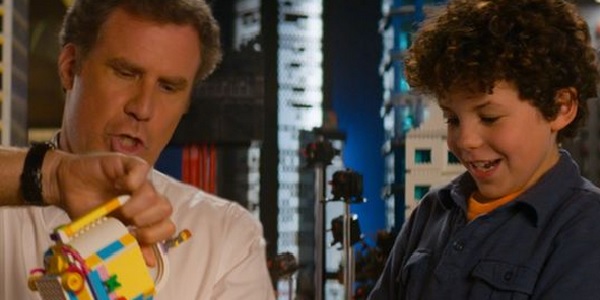
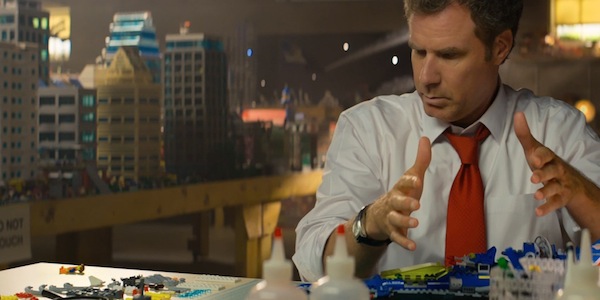
The Lego Movie has - rather surprisingly - seen itself poised as a major contender for best movie of the year: what could have been a straight-forward exercise in cinema as an advertisement for consumerism inadvertedly presented itself as a brilliant meditation on the power of the imagination. Relentlessly enjoyable for the entire length of its runtime, The Lego Movie also unleashed a bold and mostly unforgettable twist in its final third that completely justifies its place at the very top of this list. Which is to say, The Lego Movie initially presents itself as existing within its own self-contained universe, and you accept this because... well, why wouldn't you? Suddenly, though, the film - which up to this point has been animated - cuts to live-action, and you realise that everything you've seen so far has been the sum of a child's playtime. You've been witnessing what has been occurring inside his imagination, with his own father (played by Will Ferrell) cast in the role of the movie's main bad guy. This twist could have been detrimental to the entire picture, of course, but it's played with such conviction - and so charmingly - that it works. From this point, the movie relishes the opportunity to switch back and forth between the Lego world and the real world, imbuing the picture with an added novelty for the remainder of its run-time. The Lego Movie was undoubtably made as a means of shifting more bricks to consumers; the genius of the movie, and indeed its big twist, is that it never feels that way for a single second. Like this article? Any twists from 2014 that we missed? Let us know in the comments.

Contributor

Sam Hill is an ardent cinephile and has been writing about film professionally since 2008. He harbours a particular fondness for western and sci-fi movies.