10 Reasons Tim Burton's Batman Is Still The Best

Move over Nolan, stand aside Schumacher, there's only one Batman film that really matters.
This month sees the 25th anniversary for the release of the comic book movie that boasts the most impact on cinematic history, and paved the way for the rise of the all-powerful genre as it now exists. Tim Burton's Batman exploded into cinemas on 23rd June 1989, making an immediate and unprecedented impact that fundamentally changed cinema at the deepest levels, and reimagined the way that blockbusters were both made and marketed. The legacy has not always been a positive thing, as the film also inspired some of the worst current trends in blockbuster film-making, but it's hard not to marvel at the thinking €“ never before seen, on such a scale €“ that whipped up a storm of Bat-Mania ahead of release. And boy did the film deliver: Burton's original is still counted as one of the best comic book movies ever made, without the weight of today's media monster behind it, and though Christopher Nolan's trilogy has more recently become the pinnacle for some Bat-fans, Burton did a lot of things better and before. With that in mind, and to celebrate the 25th anniversary of the film's release, we're looking back at the elements of Burton's Bat-masterpiece (and its sequel) that are still the best parts of the history of Batman on film.

10. The Vision Of Gotham

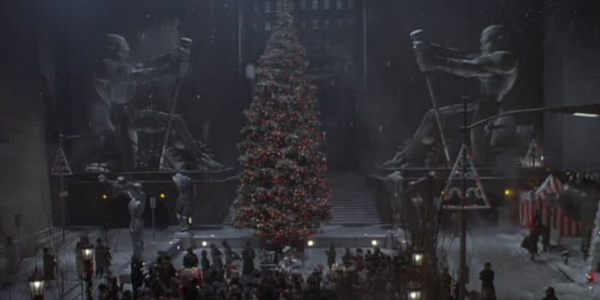
There is no doubt that Nolan's vision of Gotham as a mirror for reality, where monsters could be more effective for their proximity to something resembling normalcy, was the right choice for his universe. By comparison, it made Schumacher's overblown, over-cooked version of the city look like the deranged cartoon scrawls of a man who sort of has half an idea of what it's supposed to look like. But Nolan's vision of Gotham was something of a betrayal of the comics, because it never celebrated Gotham as the entity that it had always been in the source. Nolan's Gotham could have been any American city, but Burton's beautifully imaginative version could be nowhere other than Batman's gothic-soaked, iconic home. The cityscape was as brooding and as grotesque as Batman himself, and it felt far more like the hero was an extension of the city as was always part of the comics.

9. The Style

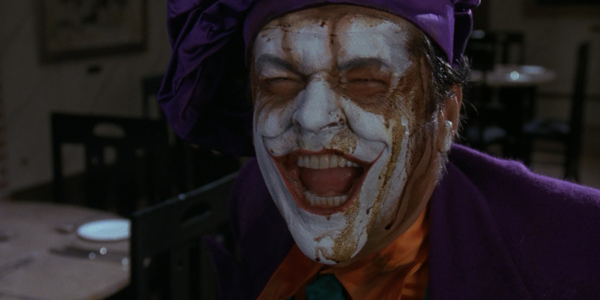
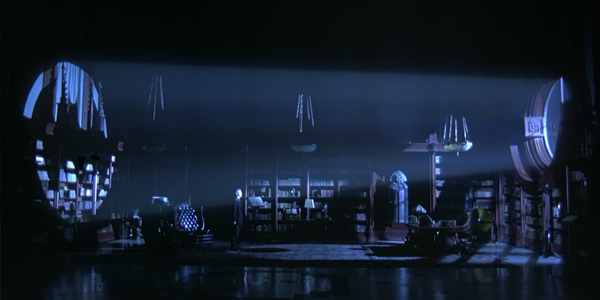
And it wasn't just the setting that was the best looking under Burton's control. His was the best Batsuit before Schumacher added ridiculous silver flourishes, super-shiny cod-pieces and nipples, and Nolan made Batman a riot cop with a penchant for angles, and his was easily the best Bat-mobile. He also gave Batman a cave befitting the idea of a billionaire who dresses up as a bat to fight grotesque villains, and which sparked familiarity with the fans of the comics, and swathed everything in a theatrical, shadowy darkness that looked like it had leaped right out of the comics. And in terms of character designs, though Nolan's Joker and Bane get nods for their looks (the former more than the latter), Burton's designs were more flamboyant, less functional and more befitting of the supervillain label. And his iconic Catwoman design is probably the best designed character in the history of comic book movies.

8. The Blend Of Theatricality

There is a reason Heath Ledger's performance as The Joker worked so well in Nolan's trilogy: it wasn't simply that it was unexpected, or that it was as well conceived as it was executed, it was because it doesn't fit within the Nolan universe. Nolan's stripped down Gotham was always built on an agenda of authenticity €“ partly because Joel Schumacher had thrown all sense of restraint out of the window and that approach was the only conceivable antidote €“ and Burton's villains wouldn't have worked. But Ledger worked so well because he owed something to Burton's grandiose, grotesque vision. The same cannot really be said of the other villains, and it is extremely unlikely in the long-term that any of Nolan's villains will be as memorable as The Joker, or as any of Burton's four main villains. And it all comes down to how well Burton blended the theatricality of the grotesque into his universe, blending silliness and seriousness with a horror genre-like commitment to the overblown. Yes, Nolan did it well with Ledger's Joker, but Burton did it first and for longer.

7. The Batman Acting

Val Kilmer was once proclaimed the best Batman actor, but it's hard to take that as seriously as it probably deserved, because it was proclaimed by Joel Schumacher, who diluted his own judgement considerably while in charge of the Bat-franchise. The actual best Batman was Michael Keaton, the actor who fans notoriously didn't want anywhere near the film when he was first announced. He might not have the best credits on his CV, and his star may have waned massively after he left Batman, but his work under the cowl was breath-takingly unexpected and beautifully, atypically understated. In contrast to Christian Bale's Batman, who started off gruff in Batman Begins and ended up growling comically without any sense of restraint in The Dark Knight Rises, Keaton's Batman was never a pantomime figure. Yes, Nolan was all about the symbolism, and used Bale's physical performance to imply difference and supernaturality, but it went so far that the voice became a point for criticism, and it really wasn't necessary.

6. The Tone

Joel Schumacher might have taken the comic notes of Batman and Batman Returns too far to the extreme in Batman Forever and particularly Batman And Robin, but that doesn't mean Burton's approach to the material should be immediately discarded as inferior by proximity as a result. His more gentle humour, which bordered on the absurd at times €“ like the Joker's dancing entrance in his parade €“ was suited to the comic book source, without ever wandering into the silly camp territory of either 1960s Batman or Schumacher's vision, and in hindsight it worked better than Nolan's poe-faced seriousness. There is not only very little relief in Nolan's universe, there's only no room for it at all, and thus the few quips that exist €“ like Batman's €œso that's what that feels like€ - feel completely perverse. In not occasionally tipping his cowl to the absurd, by the end of The Dark Knight Rises it felt like Nolan was never acknowledging it in a way that has worked so well for the MCU so far.

5. The Score

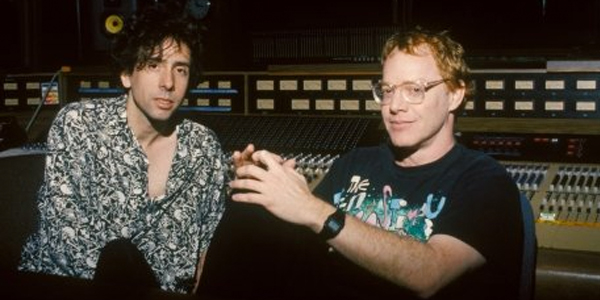
Danny Elfman takes a lot of heat in Hollywood, but his Batman and Batman Returns scores were the genius expression of a composer completely in touch with his director's vision of both the character and the film universe. For good reason, his work on those two films remains the best of the Batman franchise. That's not to say Hans Zimmer's score in the Nolan trilogy isn't great, it just goes the same way as Christian Bale's vocal performance as Batman, becoming too over-blown and too insistent by the time the final film ended. Had he continued to work with Nolan, it would probably have got to the stage where the score devolved into a booming, ominous monotone, and while the tone fit the agenda of the films, there wasn't the personality of Elfman's iconic score. Admittedly, Burton's soundtracks weren't the best (that accolade goes to Joel Schumacher's poptastic Batman Forever track), but in purely score terms, the winner has to be Elfman.

4. It Completely Delivered On Unprecedented Hype

In 1989 Batman basically invented how the modern audience interacts with tent-pole releases. Not only did it fundamentally give rise to the angry fanboy in casting Michael Keaton (imagine if the internet had been around back then?!) it was also the first original movie to be anticipated like a sequel. From the moment the first publicity stills appeared up to release, the film attracted the kind of hype that accompanies comic book movie releases today, and despite the fact that it was an unprecedented project, the opening weekend response was phenomenal. The same fans who had bemoaned Keaton's casting flocked to the cinema, earning Burton's film a massive $42.6m over its first three days, smashing the records recently set by Indiana Jones And The Last Crusade and Ghostbusters II of $29m, and breaking single day records for all three days. And then, in its second weekend, it took $30m, and while the returns slowed down, that immediate impact hints at the excitement fans had to see it. While Nolan's films were hyped to an unimaginable level, none of them had the same kind of immediate impact as the first one managed way back in 1989 without a culture of such response even really existing.

3. The Villains' Sense Of Occasion

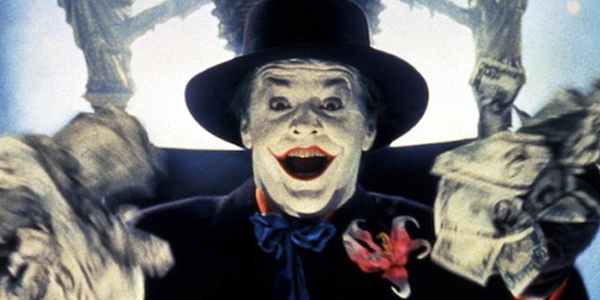
Nolan's Joker knew how to draw up a complex, multi-faceted plot, Bane knew how to phrase things to be incredibly menacing, and Schumacher's goons were the kings and queen of excruciating one-liners, but none of them were furnished with the sense of occasion as Burton's villains. All of the four main villains €“ including Max Schreck €“ were grotesque super-villains of the oldest tradition, almost worthy of Hammer horror billing, and still bearing the hallmarks of the oldest and most successful villain archetypes. They had the perfect pomp and circumstance to their malevolent ploys, and it is their grandiose commitment to making a statement and leaving a scar as a group that pushes them ahead of Nolan's take on Batman's villains. There are flashes of that in Nolan's trilogy, but in his quest for realism he took something away from the fundamental make-up of what makes the rogue's gallery so enduringly popular.

2. The Casting

There is no doubt that Christopher Nolan knows how to put a cast together, and the majority of his decisions in the Dark Knight trilogy were very shrewd. Were it not for the questionable decisions behind Katie Holmes, Juno Temple and Sarah Jayne Dunn (all of whom were either replaced or all but edited out), and behind Matthew Modine, who was wooden, his ledger would have been redless. Joel Schumacher's decisions were less nailed on: Alicia Silverstone didn't so much deliver lines as chew them long after they'd left her face, Chris O'Donnell was too wet behind the ears, and all of the villains (apart from Jim Carrey's Riddler) could and should have been cast better, not to mention executed better. George Clooney meanwhile was hamstrung badly by a terrible script and by association with easily the worst Batman film of all, and had he been under the guidance of a better director and with a better script behind him he might have been far, far better as both Batman and Bruce Wayne. But Tim Burton's casting team didn't put a single foot wrong in the major choices: Michael Keaton, Michelle Pfeiffer, Jack Nicholson, Danny DeVito, Christopher Walken and Michael Gough are all perfectly cast, and put in career-high or near-career-high performances. And then in the wider cast, there are very few €“ if any €“ examples of actors badly placed or wrongly used, which is impressive given the size of the casts.

1. Bruce Wayne

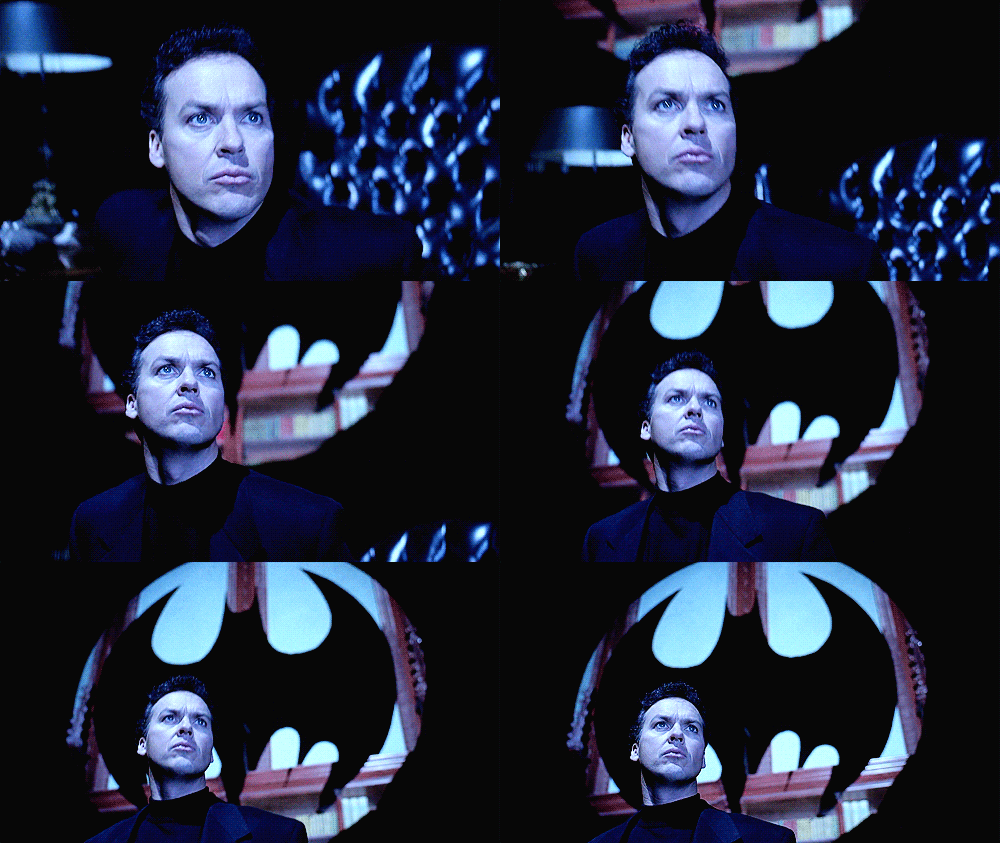
Even with the strength of his artistic vision, the convergence of his creative identity and his pitch perfect adaptation of the source, and the essential comic book feel of his films, Burton's chief success in the first Batman and its sequel is in the portrayal of Bruce Wayne. What Burton understood more than both Schumacher - who went for polished playboy €“ and Nolan €“ who went for preened, arrogant playboy €“ was that Bruce Wayne didn't need to have an unlikable public persona. Yes, Nolan pushed the idea of Wayne's real mask being his public one, rather than his cowl, but Bale's performance as the character was a little too forced to the extreme end, and it's hard to understand why anyone would even care about him. It isn't enough to sell Bruce Wayne as an eccentric loner with borderline anti-social behaviour and a Patrick Bateman edge without the extreme psychosis, he has to remain a socialite who remains important in his community. That is the magic of his deception, and having him hiding as much as Nolan did just isn't as smart as Burton's more restrained, but still guarded version of the character. Where do you think Tim Burton's Batman sits in the ranking of the best Batman movies? Share your thoughts below in the comments.

Contributor
Contributor

WhatCulture's former COO, veteran writer and editor.