10 Ways You Get Tricked Into Seeing Movies

Did you actually want to see these?

The greatest trick the devil ever pulled was convincing the world he didn't exist. But a close second is tricking you into seeing a movie you didn't want to. Unless you're a cinematic masochist (although judging by the success of the Transformers some of you must be) you never want to see a genuinely bad movie. There may be the odd moment of ridiculousness you can laugh at (Nicolas Cage wearing a bear suit and punching women), but that's overpowered by the boredom or anger a terrible movie instills (the rest of The Wicker Man remake). But movie studios, being the devious fellas they are will happily have you suffer if it means they can get a slice of the box office and will be less than honest to make that happen. Whether it's rather subliminal, or unbelievably obvious, there's a whole toolbox of tricks that can be used to make audiences end up willingly handing over their hard earned cash for a cinematic atrocity. Today we intend to show to what extent marketing will go to, highlighing ten little tricks they repeatedly play. Not all the movies in the examples are bad, but the techniques are certainly devious. Some you may know, some you may not, but you've probably fallen for them all at some time or another.


10. Titles That You're More Likely To Click On

In 2012, schlock factory The Asylum released a film called, no joke, #HoldYourBreath. Most people dismissed this an incredibly cynical attempt to drum up publicity, both by breaking new ground and social media potential, but the real motivation is something more targeted. This wasn't the point when a hashtag became so prevalent that it was now suitable in any situation, but when a company realised how we pick what to watch. You see, on Netflix, #HoldYourBreath will automatically be the first result when films are sorted alphabetically. And that's where this film predominantly featured the hashtag (the DVD is the more conventional Hold Your Breath). When browsing for something to watch on a streaming service, people tend to pick towards the top of a list of results, even if it's sorted arbitrarily. Whether it's short attention spans or the effect of Google search, we're more likely to watch Jurassic Park than The Lost World: Jurassic Park (because J comes before L, not because the first is obviously better). This tends to target people watching things at home more than cinema-goers, but as streaming becomes ever bigger expect the titles of smaller movies to start with numbers or early letters in the alphabet to get a bigger share of the market.

9. Vague Relations To Other Movies

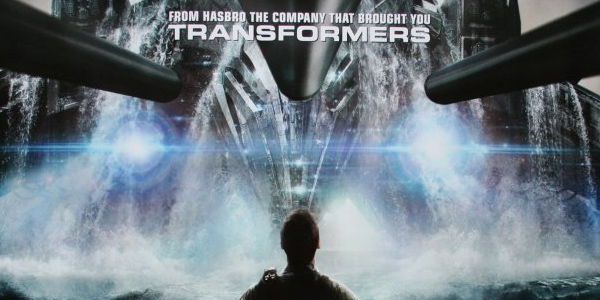
"You liked X, so you'll like Y" is one of the best ways to sell a film. If the director was behind a previous popular movie, or a critic has made some positive comparisons, the association can get an audience ready for a new movie by itself. When Avatar came out the big push was on how it was from the director of Titanic. When Titanic was re-released a couple of years later, all the posters made a big deal about how it was the guy who directed Avatar. Of course, not every movie is going to be from James Cameron or equivalent. But that won't stop marketing departments from reaching to some vaguely associated film in an attempt to make just about any movie look relevant. "From The Producer Of..." is one that has a real air of legitimacy despite in most cases speaking little of two movies' relation, although it's the more extreme (and dumb) cases that really trick you. Battleship's marketing pushed how it was from Hasbro, who had also been behind Transformers, in what we assume was a bid to scare off anyone who may find fault with an explosion fest. In fact, saying a movie is from the same studio or production company as a previous hit is surprisingly common place, but unless your dealing with something with a unified view (think Pixar or Marvel), then it's worthless.

8. Presenting A Movie Release As News

12 Years A Slave was released in the UK on 10th January 2014. Exactly one week before, all major TV networks - BBC, ITV and Channel 4 - as well as many newspapers, ran stories about the movie. These weren't cultural pieces, however, but actual news coverage that treated the release of one of hundreds of movies this year as something monumental. And while 12 Years A Slave was a pretty great movie, it's not like every other great release gets such intense simultaneous coverage. So why were there all these stories? Was Steve McQueen's slave-drama doing anything new? Nope, we'd seen these themes explored in Roots and, when you really think about it, Django Unchained. Was it a pre-Oscar hopeful? Well, yes, but no more than the likes of American Hustle which was still in the running and didn't get fanfare on release. The real reason why there was all this coverage was because Fox, the distributor behind the film, had, for lack of a better word, made them report on it. They'd made a press release that highlighted the film's controversially uncontroversial themes and on a slow news day let the reporters do the rest. 12 Years A Slave, it doesn't really need to be said, is not a bad film. But the sort of trick played with it can be used for other films to make them feel important.

7. Artificially Essential Viewing

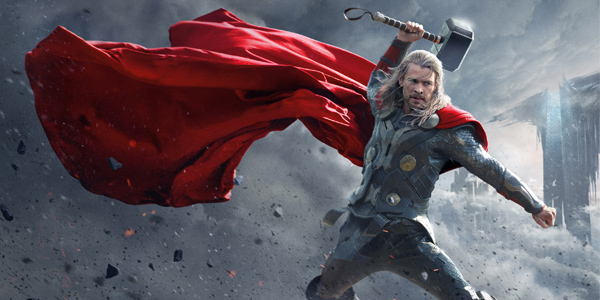
On the face of it the positives of the shared universe franchise model that is currently being ushered in by Hollywood are pretty obvious. More movies can be released as part of the same franchise more frequntly, which naturally means those end of year accounts will be extra shiny. But there's a secondary effect that subconsciously turns movies people would have previously passed on into essential watches. Thor: The Dark World was a fun slice of blockbuster entertainment, but a cut below what the rest of the MCU has been offering recently. And in terms of overarching narrative progression it was rather slight. Yet thanks to being a part of the mega-franchise at all it was a must see for people who'd previously just been fans of Iron Man. Again, Thor isn't bad, but with countless studios (Legendary are doing monsters, Universal are doing horror icons) building their universes, shrugging off a big release will mean ignoring blockbusters for the next few years entirely. Look at DC, who with their recently announced ten upcoming films are playing the same trick before there's any real sense of audience investment; we only know what's coming all the way to 2021 just to make sure we don't think something like The Flash is inessential.

6. Lies On Posters

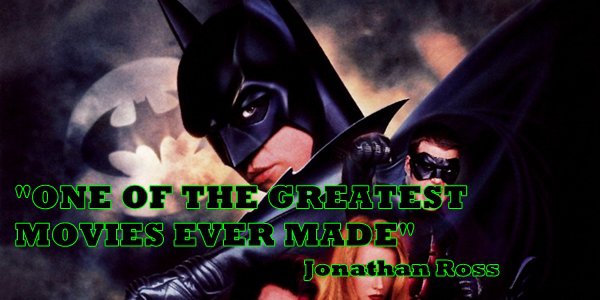
It may seem a little outdated in the internet age, but one of the most common ways people still find out what new movies are on release is through movie posters. And while there's some things you can trust them on (mainly the release date), most of the information they give is highly suggestive. Think the title's going to be right? Well what about Edge Of Tomorrow, which has recently rebranded itself as Live Die Repeat in a bid to distance a fun movie from the label of box office flop? Surely the actors are going to be accurate? Nope, most of the time the biggest names are pushed regardless of whether they're the lead or have a two minute cameo. And when you get into them quoting from other sources (think critic quotes) things become even less accurate. Words can be twisted and misrepresented to the point where a poster can make a bad movie look like a knockout masterpiece. That quote Jonathan Ross gave about Batman Forever being one of the greatest movies ever made? That was for a bet just to see whether he could get on a movie poster. For more information on the extent of what sort of blatant trickery that marketers can play with movie posters, check out our article looking at 8 Devious Ways Movie Posters Trick You Into Seeing Terrible Films.

5. Misleading Trailers

Ah this old chestnut. Trailers do an awful lot wrong, to the point where your whole quality of life is actually improved if you ignore them entirely. There's so little restraint across the multiple trailers each big release gets that you end up piecing together the major plot beats whether you want to or not; just look at The Amazing Spider-Man 2, which even went as far as to include its final sequence verbatim. It's not just in making a movie pointless where trailers have a negative effect, however. We still have this warped expectation that trailers are teases of what's to come, so even if a crime of Spider-Man-level proportions is committed, you expect to get something more. Oh look, a helicarrier crashes in Captain America: The Winter Soldier, I can't wait to see what happens next... oh, that's it. They sell the movie, but don't care if they ruin that same movie in the process. And that's saying nothing of the movies whose trailers completely and utterly misrepresent it. Drive painted as a Fast And Furious-esque action flick and Sweeney Todd not as a musical are just two hilarious cases that have got people making official complaints.

4. Related Ads

One of the most sure-fire ways to advertise a kids movie is a marketing tie-in; get McDonalds to run an offer with plastic toys and you've got another avenue of advertising with overwhelmingly positive connotation. When dealing with a movie for adults, however, the effect stops. Or rather, it shifts. Instead of targeting people through merchandising or Happy Meals, movies with a more mature target audience are marketed in sneakier ways. Take Life After Beth, an unnecessary installment in the unnecessary zombie rom-com genre that tries so hard to be an indie hit, with a hipster cast (Dane DeHaan, Aubrey Plaza, John C. Reilly and Anna Kendrick) and lack of interest in zombies. The film is rather flat once it gets past its necrophilic concept and had the movie been released as-is it would have passed by most people without notice. But in the weeks leading up to release twenty-something-tageted British TV channel E4 had been pushing the film in a decidedly upbeat way as part of their Slackers Club. And wouldn't you know it it helped increase the film's awareness to a respectable UK first week, with people thinking it was good flick. The second week drop-off likely came when people realised it wasn't.

3. Lies By The Film-Makers

Press junkets are a great way to sell a movie. Auxiliary to the trailers and posters, they give the film-makers a direct way to stir the hype pot, throwing out behind-the-scenes tidbits or little teases for the fans. Of course, if they don't want to go by common, or even morally OK, means, then they can always tell a big fat porky. Producers and directors lie all the time about their movies, yet never seem to be held accountable for it because... um... they pretend it's art? Michael Bay said he'd learnt from the mistakes of Transformers, yet only made something more titillating than before with Revenge Of The Fallen. He then said the same thing when promoting both Dark Of The Moon and Age Of Extinction, despite neither film showing any interest in doing more than appeal to teenagers. It's not the most potent example of lies tricking you (we'd like to think most people know before going in the film's are going to be crap) but highlights how easy it is to get away with. This is particularly common when a series has, in some way, offended the fan-base - just look at how the cast and crew of The Amazing Spider-Man 2 were keen to push how they'd learnt from the first film (while simultaneously unlearning the lesson of Spider-Man 3). For some more examples of lies explicitly told to sell movies, check out 11 Flat Out Lies We Were Told Just To Sell A Movie (And We Stupidly Believed).

2. The IMDb/Amazon Shift

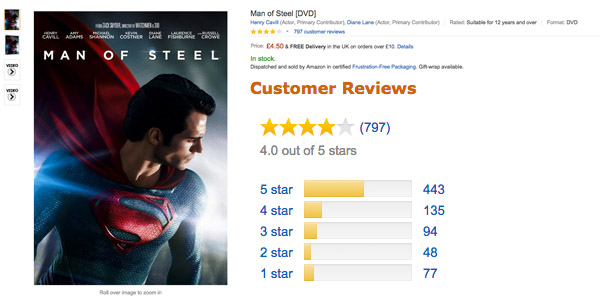
Despite it forming no part of its basic mission statement, Amazon is one of the biggest user film review sites on the internet, offering hundreds of reviews on just about every film imaginable. And that status comes with a unique set of problems. Even if you liked Man Of Steel, you can probably agree that the majority weren't heralding it as a 5 star masterpiece. And yet as you can see on amazon.co.uk that's what its ratings suggest. There's people reacting to the haters in those 443 top marks reviews, sure, but most of it comes from overzealous people who think a film that they'd happily watch again deserves a full rating (the same is true of 1 stars - it's disproportionately bigger than 2). That's because the people writing these reviews don't need to be experienced in any form of film criticism, amateur or professional. Which is fine, but when other people are basing opinions off these compiled ratings (think of what you look at when buying a DVD), it can be pretty destructive. The same is true of IMDb, where most movies come between 6 and 8 out of 10 for the same reasons. You could argue this Metacritic and RottenTomatoes to a degree, with a skew meaning films can often sit higher than the general consensus, but with Amazon it's just impossible to tell what something's actually like.

1. An Existing Product

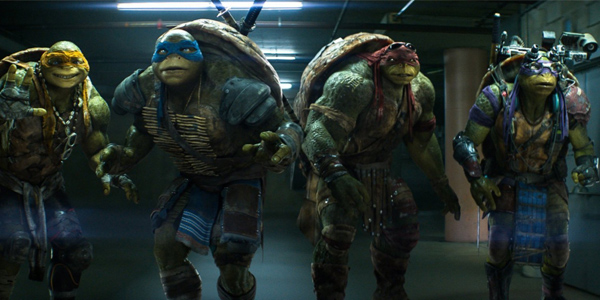
We're all painfully aware of this and yet it still manages to have an effect on us all. A movie is made based on an existing property in a vain attempt to capture its in-built audience. And even though you fully expect it to suck, you can't help just check it out because, well, you know the original and are curious to see how a modern take works. It's both subtle and painfully overt. And when done right it really works. There is no reason why someone over the age of fifteen should have any interest in a movie titled Teenage Mutant Ninja Turtles, yet it was the film that knocked Guardians Of The Galaxy off the top spot at the US box office. A lot of that may have come from families, but there'll have been a significant appeal to people who grew up with some version of the heroes wanting to see how the gang was doing. On the converse, you have the misunderstanding of which existing properties are enticing. Why did The Lone Ranger bomb? Because it was a mess of a movie is a strong argument, but the big reason was that while it was based on an existing product, the iconic TV series was so old that the original audience won't have found Johnny Depp pulling faces worth their time. The same is true of John Carter, which became irrelevant at the same point Star Wars came along. What other ways do people get tricked into seeing bad movies? Let us know your personal takes in the comments below.

Contributor
Contributor

Film Editor (2014-2016). Loves The Usual Suspects. Hates Transformers 2. Everything else lies somewhere in the middle. Once met the Chuckle Brothers.