12 Mind-Blowing Documentaries With 100% On Rotten Tomatoes

In feature films, the director is God. In documentary films, God is the director.

While many still view the documentary as the ugly stepsister of the glamorous feature picture, the truth is that non-fiction has played an important part in the development of film, being just about as old as the art itself. The term itself was coined some 90 years ago by young Scottish academic John Grierson during his review of Robert Flaherty€™s 1926 ethnographic piece Moana, a film funded by Paramount Pictures that aimed to document the traditional lives of the Polynesians. Pioneer Soviet filmmaker Dziga Vertov developed the genre further with his experimental work in the late 20s and beyond, though the documentary would be taken in a different direction entirely during the 1930s and 40s, used as a war-time tool rather than a means of education or entertainment. It wasn't until the 1960s that a new generation of young filmmakers in the US and Europe took steps to redefine the nature of the documentary. Cinéma Vérité (or Direct Cinema, as the US variation became known as) strived to bring the audience closer to the subject, doing away with voice-over narration and keeping directorial intervention to a minimum in favour of filming real people in unrehearsed situations. This cinematic movement, along with the increasing availability of affordable home camera equipment in the decades that followed meant that anyone with an idea and enough cash could make a film, and nowadays all you need to become a documentary-maker is a smartphone. As people continue to discover the power that non-fiction film has to entertain and enlighten, the more people are inspired to get out there and create it, and the amount of documentaries that have managed a perfect score on Rotten Tomatoes is as much a testament to those dedicated filmmakers as it is a recognition of the genre as a major presence in film. Here are twelve mind blowing documentaries with 100% on Rotten Tomatoes...

12. Mr Death: The Rise And Fall Of Fred A. Leuchter (1999)

In what was hailed as his most provocative work since 1988's The Thin Blue Line, Academy Award winning director Errol Morris details the rise and fall of a Fred A. Leuchter, an ingenious designer turned famous holocaust denier. As a child, Fred would accompany his father to work at a state prison, where he saw first hand just how inefficient and inhumane prison executions were. In response, he set out to design and build a better electric chair, and he didn't stop there - Leutchter also pursued his interest in gas chambers. He soon became a well-known expert in the area of capital punishment, and when notorious Nazi sympathiser Ernest Zündel was arrested in Canada, Fred was called upon as an expert witness to corroborate his assertion that the Holocaust was nothing but a hoax. After making a trip to Auschwitz (on his honeymoon, no less) Fred obtained illegal samples that he claimed were free of cyanide, and so he concluded that the Holocaust did not happen and amazingly testified on behalf of Zündel.

11. Sound City (2013)

Directed by Foo Fighters front man and ex-Nirvana drummer Dave Grohl, Sound City is the story of the legendary San Fernando Valley recording studio of the same name. Hidden among miles of dilapidated warehouses, this shrine of rock n' roll has hosted countless seminal artists since it opened its doors in 1969, with Fleetwood Mac, Neil Young, Rick Springfield, Tom Petty, Metallica and Nirvana all having recorded albums there. Grohl himself shows real promise as a filmmaker in his debut effort as a director, using a blend of interviews and performances by the iconic musicians who recorded some of the greatest rock music in history at the studio to plunge the viewer right into the heart of life at Sound City. As well as being a fascinating account of the process of analogue recording, this film is an extremely fun and often moving tribute to rock music and the artists that made the genre what it is today.

10. The Square (2013)

In July 2013 the world watched with baited breath as the president of Egypt was deposed, the second leader to be stripped of his standing in the space of only three years. Director Jehane Noujaim invites us to join the struggle of the Egyptian people as it was in 2011, when millions gathered at Tahrir Square with change on their minds. Demonstrators from a range of backgrounds and religions joined forces for marches, occupations of plazas, riots and strikes, all in the hope of overthrowing President Hosni Mubarak. Clashes between security forces and protesters resulted in 846 people being killed with over 6,000 left injured, and this film offers a window into the mayhem, enveloping the viewer in the chaos of revolution. Focusing not only on the large-scale drama but on the personal stories behind the conflict, The Square is an inspirational tale of young people fighting for their rights against deep-seated corruption.

9. Taxi To The Dark Side (2007)

The failings of the American legal system have been in the spotlight since the release of Steven Avery documentary Making A Murderer late last year, and those interested in other gross miscarriages of justice should look no further than 2007's Taxi To The Dark Side. Alex Gibney's Oscar winning film is a fascinating inquiry into the suspicious death of Afghani taxi driver Dilawar at Bagram Air Base, the largest US military base in Afghanistan. The film is an examination into how an innocent man was arrested, imprisoned, tortured and eventually murdered by the so-called greatest democracy on earth, using documents and records of the incident along with testimony from eyewitnesses. A proud American and self-confessed patriot, Gibney saw it as his duty to share his findings after unearthing an undeniable link between the death of an innocent man in 2002 and the policies made at the very highest level of the Bush administration.

8. Deliver Us From Evil (2006)

An issue highlighted by Tom McCarthy in Best Picture nominee Spotlight, paedophilia in the Catholic church is now known to have taken place on a phenomenal scale. Documentary maker Amy Berg investigates the root cause of this disturbing trend and takes a look at the particular case of paedophile priest Oliver O'Grady, as well as the Catholic bureaucracy that protected him. Father O'Grady was constantly on the move in Northern California during the 1970s, going from one parish to the next and quickly winning the trust and respect of every congregation he visited. In the public eye, O'Grady managed to hide the fact that he was a dangerously active paedophile, one that Church hierarchy, in full knowledge of his past crimes and present urges, had harboured for over 30 years.

7. Seymour: An Introduction (2015)

Fresh off two superb performances for Richard Linklater in Before Midnight and Boyhood, Ethan Hawke takes a seat in the director's chair for this endearing documentary about a concert pianist who decides to bring his long and illustrious career as a performer to an end so that he can devote himself to helping others develop their own musical gifts. Seymour Bernstein was teaching Piano to others from the age of fifteen, and Seymour: An Introduction allows us to spend some quality time with an endlessly generous human being who has managed to find harmony through his love of the instrument. While Hawke's warm and lucid portrait of Bernstein and his exceptional life is indeed the spine of this documentary, the film is also about the love of music itself and the importance of patience, concentration, and devotion to one's art.

6. Everyday Sunshine: The Story Of Fishbone (2010)

Beginning in 1980's Hollywood at the height of Reagan's America, Everyday Sunshine follows the rise of infamous LA band Fishbone as they battle against economic and racial tensions to become one of the most hyped acts in the country. Their unique fusion of punk and funk not only challenged the idea of genre, but in the end their music served to expose racism and political agendas within a music industry that refused to accept them, despite their huge popularity at a street level. While bands from the same scene that were peddling a watered down version of Fishbone's sound went on to flourish (*cough* Red Hot Chili Peppers *cough*), the all-black band were ignored by the powers that be and went on to become to greatest band that never made it. Bringing his unmistakable tones to this fast-paced film is the almost aptly named Laurence Fishburne, who narrates a story about music, history, persistence and funk.

5. Man On Wire (2008)

On August 7, 1974, a young Frenchman named Philippe Petit shocked and astonished the world when he secretly suspended a wire between the Twin Towers of the World Trade Center and stepped out onto it with no safety net beneath him. After walking - and even dancing - across the wire for the best part of an hour, Petit was coaxed back to safety and arrested for what would become known as the artistic crime of the century. British filmmaker James Marsh put this film together nearly 35 years after the event, though he captures the magic of the moment superbly in this exhilarating nail-biter of a documentary. This is a true masterclass in tension building, and even though you know Petit survives to tell the tale in a series of fascinating interviews, you can't help but flinch while watching archive footage of him dancing and tumbling 1,350 feet above the pavement.

4. Afghan Star (2009)

One of the first things the Taliban outlawed after taking control of Afghanistan in 1996 was popular music, which the terror organisation deemed a corrupting and sacrilegious influence. Though power was taken back from the group in 2001, Islamic extremists continue to violently oppose western popular culture and music, with many Afghan musicians finding themselves the target of assassination plots even today. That an American Idol style TV show could flourish under such circumstances is quite unbelievable, though it is estimated that a third of the country tune in to watch Afghan Star, a public-vote based talent show aimed at unearthing musical talent in Afghanistan. Filmmaker Havana Marking explores both the competition itself and the effect it has had on Afghan society, including interviews with contestants who have become heroes to young people across the country and outcasts in their conservative Islamic communities.

3. Last Train Home (2010)

Chinese-Canadian filmmaker Lixin Fan's Last Train Home is a film that examines the cost of China's ascendance as an economic superpower. The country's bustling cities are thrown into unimaginable chaos every spring as in excess of 130 million migrant workers return to their home villages for the New Year's holiday, the world's largest human migration. As epic a spectacle as this is, Fan paints a picture of a country caught between its rural heritage and industrial ambitions. Filmed over several years in a classic verité style, Fan's film invites the viewer to join a couple who have undertaken this annual trip for almost two decades. Changhua and Sugin Zhang left behind their two infant children for back-breaking jobs in city factories, though their teenage daughter grows to resent their prolonged absence in what amounts to an emotionally engaging and visually striking documentary.

2. Nostalgia For The Light (2011)

Master political documentary maker Patricio Guzmán goes for a change of scene in Nostalgia For The Light, travelling 10,000 feet above sea level to the driest place on earth, the Atacama Desert. Atop these South American mountains, the world's best astronomers gather to observe the stars of a sky so translucent that it allows them to see all the way to the boundaries of the universe. They are not alone on the mountains, however. In the Atacama, the scorching heat from the sun is known to keep human remains intact. Pre-Columbian mummies, 19th century explorers and mountain miners have all been found in recognisable conditions on the plateau. In fact, the place was used as a dumping ground by the Chilean army after the military coup of 1973, and as the astronomers search the skies, the families of missing political prisoners continue to search for the remains of their loved ones, some forty years later.

1. We Were Here (2011)

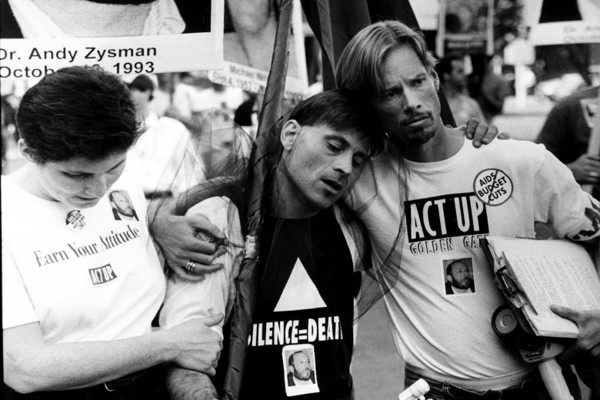
We Were Here sheds an uncomfortable light on the many issues raised by the AIDS epidemic of the 1980s, as well as examining the political and social upheavals the so-called "gay plague" brought down on America. In many ways, filmmakers David Weissman and Bill Weber offer a cathartic experience for a generation of young gay men who lived through the AIDS crisis, yet their documentary also serves to open a window of understanding for those unable to fully appreciate the magnitude of the suffering. The film provides a fascinating yet disturbing insight into how even the most basic of help - medical care, social services, community support - was practically non-existent for those carrying the disease, and through interviews with five survivors, we come to learn how an entire San Francisco community was virtually wiped out right under the nose of a government who simply didn't see it as their problem. What's your favourite documentary on this list? Are there any that scored 100% we missed? Share your thoughts down in the comments.

Contributor

Phil still hasn't got round to writing a profile yet, as he has an unhealthy amount of box sets on the go.