8 Movie Heroes Who Definitely Have Personality Disorders

Delving a little deeper into Willy Wonka's "world of pure imagination"...

A good character has got to have a distinctive personality, but when do these exaggerated character traits cross that boundary from quirks to psychiatric disorders? It's probably not a shock that fictional characters don't generally behave in a way that would be considered "normal" in the real world, but there are definitely a few of our favourite protagonists out there who are running around with full blown, undiagnosed mental illnesses. For the sake of not-stating-the-bleeding-obvious*, we have excluded the likes of the Joker and the BBC's latest iteration of Sherlock Holmes because, well, duh. These characters are often considered perhaps a little eccentric or a little whacky, but by modern clinical standards, there are one or two of them that could definitely benefit from some professional evaluation and perhaps a little bit of rest and recovery. *In the interest of actually stating-the-bleeding-obvious, this article is for fun and should in no way be used as a tool for diagnosis. Obviously.

8. Peter Pan - Narcissistic Personality Disorder

As much as Peter Pan appears to be every inch the charmed child, his playful demeanour hides a dysfunctional personality. Narcissistic Personality Disorder is characterised by extreme selfishness. Narcissists might be arrogant and have unrealistic ideas of their own abilities. They require the admiration of others, such as when Peter congratulates his own cleverness when Wendy fixes his shadow ("Oh, the cleverness of me"), or when he returns to the lost boys ("I am back," he said hotly, "why do you not cheer?" ). They might also be anxious and jealous, insisting that people prioritise their needs above their own (€œWendy, when you are sleeping in your silly bed you might be flying about with me.€). He brings Wendy in to care for himself and the other boys and persistently tries to discourage her from going home and living her life, become anxious and angry when she suggests leaving. There is even a suggestion in the books that Peter gets rid of lost boys when they grow up. The quote is that he "thins them out" when they get too old and therefore no longer fit in with his plans, displaying a severe lack of empathy. Of course, it is also possible that Peter Pan is actually suffering from, er, Peter Pan Syndrome - a pathological aversion to growing up - but it is currently not recognised as a fully fledged psychiatric disorder. Don't even get us started on Tinkerbell.

7. Hermione Granger - Obsessive Compulsive Personality Disorder

Hermione Granger is the model student, but her obsession with rules regulations and exams could be an indicator of disordered thinking. When she arrives at Hogwarts, Hermione has an almost chronic obsession with rules and regulation, a trait that is especially unusual in children on the cusp of puberty. Her excessive reliance on authority indicates insecurity and doubt when it comes to autonomy and spontaneity. People with OCPD are pathological perfectionists. They display undue preoccupation with productivity and often allow this to get in the way of their personal relationships and happiness. Hermione's reliance on a time turner in order to complete an unreasonable about of work to and unreasonable level of perfection came at the cost of her mental well being and even her physical health as she began to display symptoms of exhaustion and stress. The stubborn adherence to rules and social conventions can put pressure on personal relationships, such as when she damages her relationship with Harry after insisting he hand his Firebolt over to Professor McGonagall. Another symptom of OCPD is that sufferers tend to insist that others fall in line with their methods. Hermione repeatedly buys her closest friends gifts such as revision planners and reference books. These are gifts that Hermione herself would enjoy, but the boys would not, demonstrating social and cognitive inflexibility. Hermione allows her compulsive perfectionism to impact on her mental well being. Her boggart transforms itself into Professor McGonagall giving her fail grades, indicating the disproportionate levels of stress and anxiety associated with perfection, above that of the representations of death or dangerous creatures of her classmates.

6. Willy Wonka - Schizotypal Personality
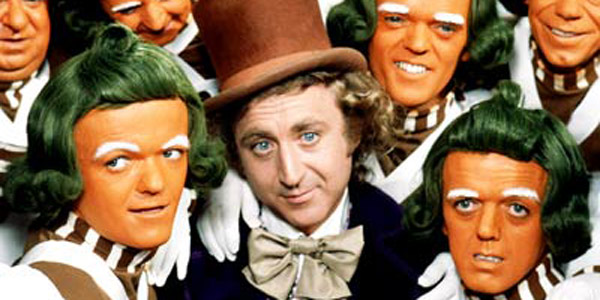
Willy Wonka is the whimsical merry-maker at the centre of Roald Dahl's novel. He offers Charlie an escape from crippling poverty but he is also proof, if any were needed, that you shouldn't take sweeties from strangers. A Schizotypal Personality is characterised by a detachment from reality. Sufferers may have "Odd reasoning and speech (vague, stereotyped, over elaborate, circumstantial). Willy Wonka certainly has an odd turn of phrase and commonly speaks with elaborate metaphors using strange sentence structure (€œEverything in this room is edible. Even I'm edible. But, that would be called cannibalism. It is looked down upon in most societies.€) They may have strange, even magical, beliefs ("Do you know what breakfast cereal is made of? It's made of all those little curly wooden shavings you find in pencil sharpeners!€), could be superstitious and may try to inhabit a fantasy world (such as, you know, living in a chocolate factory staffed by kidnapped pygmies). They might be socially averse, more inclined to shutting themselves away and limiting contact, and experience paranoid and suspicious ideas such as "everybody is out to steal my chocolate recipes". His lack of concern at turning children into mutant candy beings is also a bit of a red flag.

5. Ariel - Compulsive Hoarding And Xenomelia

The teenage mermaid, Ariel, inspired a generation of kids to risk near-drowning try to swim like a mermaid, but it would seem that Ariel was fighting her own battles. Compulsive hoarders generally have difficulty parting with possessions that might seem to others to be inherently worthless. Ariel has a large collection of objects that are of seemingly little use to her, and yet she continues to accumulate them, even to the point of hoarding multiple duplicates of the same objects (e.g. 20 identical thingamabobs). The collection appears to an outsider to be chaotic, disordered and cluttered, yet Ariel appears to have a spot for each item. She also conceals her collection from others for fear that they wouldn't "understand" and socially distances herself from her peers. As compulsive hoarding is often associated with further psychological disorders, we should also consider a link with body dysphoria and even Xenomelia - a non-acceptance of one's own body parts, and the desire for them to be removed. Ariel rejects her mermaid identity and subsequently the physical characteristics that make her such. She has a desire to remove her tail, a psychical feature that is arguably essential to her current day-to-day life, and even replace it with a different body part (legs). She views this as essential to her future happiness. The compulsive hoarding is likely an expression of her frustration with her identity as the items that are hoarded are associated with the world she so desires to inhabit.

4. James Bond - Functional Psychopath

Psychoanalysis of James Bond's character reveals that he is an almost textbook functional psychopath. In his role as a spy, Bond displays all of the major umbrella characteristics for a psychopath: Ruthlessness, focus, charm, fearlessness, lack of empathy, narcissism and extroversion. Whilst much of this serves him well in the line of duty, his impulsive, thrill seeking nature, combined with a disdain for authority (also psychopathic traits), are not. These combined with his excessive drinking and borderline delinquent behaviour actively put others, and national security, at risk. Despite this risk-taking, Bond displays parasitic traits and a failure to take responsibility for his own actions, expecting others (specifically, M) to get him out of trouble. This isn't in the hope of forgiveness, but in order to enable him to continue his behaviour. His sexual promiscuity and manipulative nature, particularly with regard to women, are also strong indicators. Bond is what is referred to as a "socialised psychopath", in the sense that he understands how to use his charm and manipulate social conventions in order to get what he wants. He can be considered a "functional psychopath" in the sense that many of his psychopathic traits serve him well in his specific and unusual line of work. Outside of the world of espionage, these traits would be significantly more problematic, particularly if they were to be channelled into criminality.

3. Cinderella - Dependent Personality Disorder

Cinderella is the ultimate rags-to-riches fairytale and solid proof that, if you remain a docile and compliant empty vessel, then everything will surely turn out great for you. Dependent Personality Disorder is more often diagnosed in women than men, and sufferers display highly passive and submissive behaviour. The underlying fear of independence causes the sufferer to remain in oppressive and dysfunctional situations rather than have to make their own decisions. The fear of disagreement and the pathological need to feel "needed" means that those with DPD are likely to perform unpleasant tasks for others, striving to make themselves indispensable and therefore unlikely to be rejected. Cinderella remains placid and dutiful in the face of her step-family's cruelty. Despite their abuse, she remains polite and hardworking, seeking their approval and putting their wants and needs before her own. She is apparently incapable of changing her situation without outside help, first in the form of a fairy godmother, and then in the form of a prince. She even allows herself to be dressed by others, her godmother and animal friends, and physically changes herself in order to be acceptable to her new potential target. The only way she feels as though she can break ties with her previous relationships, is if she is immediately able to replace it with another, this time as a wife as opposed to servant. Cinderella is careful never to risk having to be self-reliant by continually fulfilling everybody else's expectations of her the the Nth degree.

2. Bruce Wayne/Batman - Borderline Personality Disorder

Okay, it might not come as a surprise that a grown adult that dresses up as a bat, goes around punching bad guys and putting on a silly voice has a couple of issues. However, the question is, which ones? A diagnosis of Borderline Personality Disorder, with a side of Complicated Grief Disorder, seems to fit the bill. One of the key symptoms that stands out is the "Frantic efforts to avoid real or imagined abandonment". Batman's abandonment issues stemming from the loss of his parents have caused him to not only try to eliminate the perceived cause of this abandonment (criminals and crime in general, as opposed to just the perpetrator, Joe Chill), but rejects any displays of weakness that might make him a victim again. His vigilante methods also display a warped sense of justice as, despite the fact that he claims to want to eliminate crime, the Batman mostly seeks to punish perpetrators after they have committed a crime, as opposed to preventing it in the first place. He also generally targets street-level crime, as that is the type that took his parents away, as opposed to any other (by contrast, The Joker targets institutionalised crime, the kind that Bruce Wayne is compliant in), demonstrating a severe lack of objectivity, emotional instability and a clear link with his abandonment. Identity disturbance is also a prominent factor, evidenced in the fact that he, well, he dresses up as a bat, puts on a special "bat voice", drives a "batmobile" and has a "bat cave". He is prone to mood swings, uncontrollable outbursts of anger and violence and has a reckless disregard for personal safety.

1. Albus Dumbledore - Compensatory Narcissistic Personality Disorder
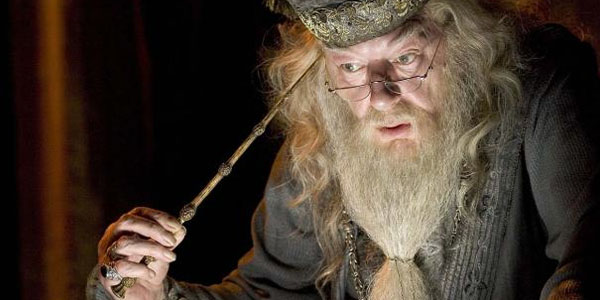
Not Dumbledore! Surely not? Yep. Sorry. Dumbledore (spoilers) killed his sister, or at least thinks he did, there's no way he came away from that with a squeaky clean bill of mental health. Compensatory Narcissistic Personality Disorder shares a fair few characteristics with Narcissistic Personality Disorder, but the behaviour exhibited is used as a mask for feelings of inadequacy, guilt and the need to "prove oneself". Sufferers may seek to create an image of superiority and high self-worth whilst masking deep insecurities. They may strive for recognition and indicators of prestige such as titles (e.g. Order of Merlin (first class), Headmaster of Hogwarts School of Witchcraft and Wizardry, Supreme Mugwump of the International Confederation of Wizards, and Chief Warlock of the Wizengamot). They might have a tendency towards boastfulness ("That is one of my more brilliant ideas. And between you and me, that is saying something"), and display aspirations to glory and status, as demonstrated in his and Grindelwald's early plans to seize power and rule over the muggles. They may also rush through, and therefore screw up, important work for the gratification of success (such as putting on the cursed horcrux ring). He displays contempt and bitterness for failures and imperfections, viewing them as a sign of weakness, and frequently refers to himself as an "old fool" when called out on his mistakes. Evidence for Dumbledore's confident, capable and superior demeanour being a front or act can be seen when he drinks the potion in the horcrux cave, and the performance comes crashing down. He also lies about what he sees in the Mirror of Erised, clearly still plagued by the guilt of his past. Here, we glimpse Dumbledore's insecurity, guilt and vulnerability that he has so carefully constructed his persona to hide. Want to write for WhatCulture Science? Click here to find out how you could get paid to write about what you love.Hey, you. Yeah, you. You want some more science? Like us on Facebook or follow us on Twitter for your next fix.

Contributor
Contributor

Writer. Raconteur. Gardeners' World Enthusiast.