8 Once-Popular Movie Franchises (That Will Never Work Again)
Hollywood's on a fool's errand.
You know who loves franchises? Everyone. People moan on and on about how the mainstream movie release slate is nothing but sequels and remakes, but things are only that way because people keep turning out to see see them in favour of remotely new concepts. Heck, even original movies that look like existing movies (hello Pacific Rim) get shunned in favour of a pre-tested idea.
But while the hype around the recent successes of Star Wars and Jurassic World shows popularity of a certain series or property can be maintained, that isn't always the case. Plenty of movie franchises are products of their very specific time or have simply passed the point of interest, although that doesn't stop Hollywood still trying to wring more and more movies out them like they're a bottomless pit of cash.
Let's take a look at eight of those...
8. It Only Appeals To A Fragment Of The Population - Teenage Mutant Ninja Turtles

The problem with Teenage Mutant Ninja Turtles wasn't that April O'Neil was involved in the turtle's backstory, or that Megan Fox wasn't right as that the once-plucky reporter, or that Splinter died, or that the heroes looked goofy, or that Shredder was a mute villain (in a last minute change to avoid him being white). The real problem was that so many people thought these were the deplorable film's issues.
Taking these as major negatives treats the whole enterprise with an air of sincerity it doesn't deserve. On a base level, the idea is dumb. The heroes are teenage, mutant, ninja turtles. Each element of that is so stupid that it would only ever work with children, and only ever really succeed in the mainstream at a time when teenagers, mutants and ninjas were totally cool - the late eighties and early nineties.
You see, whereas people of all ages recognise the cultural significance of Star Wars or The Lord Of The Rings, TMNT is only important to a thin slice of the populace - namely those who were aged between five and ten in 1989. And as these kids have grown up to now be a major vocal voice in the media, something they remember as being rad and epic (regrettably their words) is dragged from their rose-tinted memories into the real world. TMNT isn't some sacred cow that needs to be brought back every five or so years for a new generation of kids to experience - it's a period curio that shouldn't have advanced any further than Battletoads.
Of course, when it first crawled into life Teenage Mutant Ninja Turtles was a gritty comic mocking then-current medium trends, but to think that justifies a self-serious take thirty years later misses that the whole idea was originally a one-off joke.
7. Jack Is Now Exactly What He Was Mocking - Pirates Of The Caribbean

To highlight just how far Johnny Depp has gone, both in terms of effort and public perception, consider this; he was nominated for Best Actor at the 76th Academy Awards for his first turn as Captain Jack Sparrow. Sure, that was the year The Lord Of The Rings swept the board, making any other movie, no matter how good, automatically an also-ran, but it reminds you just how much the first theme-park-based movie understood itself.
Captain Jack was a loose cannon, barrelling like a rolling stone through a movie that a more conventional take would have had Will and Elizabeth front-and-centre. Thanks to Depp, The Curse Of The Black Pearl was an off-kilter, safely-unsafe adventure romp that in Jack had the best type of movie hero - a well-defined, unique character who nobody expects to be the hero.
But as time wore on and Sparrow's heroism became an ever-more regular occurrence, even coming back from death itself, he lost that edge. Oh, it was trussed up as being a side-effect of his drunken antics, but by the time he was taking on Blackbeard Captain Jack was the dependable proto-hero he'd previously been eschewing. And with that all you're left with is a fantasy with Johnny Depp doing a silly voice. And there's too many of those around already.
Dead Men Tell No Tales, the fifth movie in the franchise, is currently in production with a 2017 release date. And given the success of On Stranger Tides, it's unlikely much effort will be made to bring the Jack everyone fell in love with back.
6. Its Brand Is Far Too Old - The Man From U.N.C.L.E.
The most important phrase in Hollywood moment (aside from "How can we copy Marvel?") is "brand recognition". Why bother coming up with a new idea when you can just ride an audience's goodwill towards an old one? Even if the film doesn't really fit the brand parameters (Roland Emmerich's Godzilla, Ang Lee's Hulk), just slap on the name and reap in the cash.
And it works. For all the widespread bemoaning of sequels and reboots, audiences are much happier forking over cash to something safe and familiar. Of course, the logic of this breaks down when you mistake "brand recognition" for "existed at some point in history".
The Lone Ranger is a prime example of this - while it was a proven brand back in the sixties, due to the pesky passage of time it was only really known to those much older than the movie's target audience, and mucked with the source so much (what the hell happened to Tonto?) that there was little to appeal to the younger few who had heard "Hi Ho Silver" uttered before.
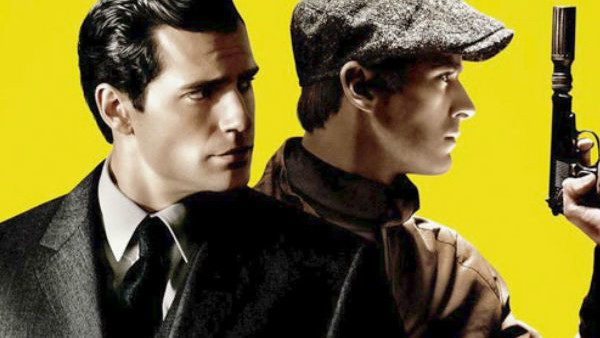
The Man from U.N.C.L.E. repeated The Lone Ranger's mistake, even going as far as casting John Reid himself, Armie Hammer, as one of the leads. Based on a British TV known only fleetingly to modern audiences for its odd name (although thanks to Agents Of S.H.I.E.L.D. acronym titles are now pretty vogue), you could argue that with Hammer, Henry Cavill and Alicia Vikander being directed by Guy Ritchie this is actually a very modern spy story, but that just begs the question, "Why base it on U.N.C.L.E. in the first place?"
5. New Movies Only Exist Because Of Their Legacy - Fantastic Four

Pop quiz, hotshot - what's the first thing anybody mentions when talking about the Fantastic Four? No, not naked Jessica Alba - time and again it's how they were Marvel's first superhero team. The comic giant had had some successes with superpowered beings under the guises of Timely and Atlas Comics previously, but it was Stan Lee's first creation that really put them on the map.
However, that they got there first (although not really - it was an attempt to cash in on DC's success with superheroes) and shaped the company is not only the prime selling point of the whole series, but also the only reason Fox are still trying to make them work on the big screen. When you break down Fantastic Four's appeal there's not much else there; the powers the quartet have a broad and nonsensical, while their actual adventures have been overshadowed by other characters ever since Spider-Man swung into view a year after they arrived.
They're so much background noise that they received one of the heftiest origin re-writes in the Ultimates comics line, an alternate-universe run that aimed to bring in new readers, while any new movie that comes along makes a big deal about how it's found depth in the bland original ciphers or is purposely diverging from anything that came before (as with U.N.C.L.E. making the name rather worthless).
This is something Superman has also struggled with - the original movies are incredibly pedestrian by today's standards, reflected in the overly-nostalgic Superman Returns, while Man Of Steel steered too far in the other, revisionist direction - but not only is his whole idea more interesting, there's been enough in-comic development and cultural presence since his inception to make him still (potentially) relevant.
4. He Has Weak Stories - Spider-Man
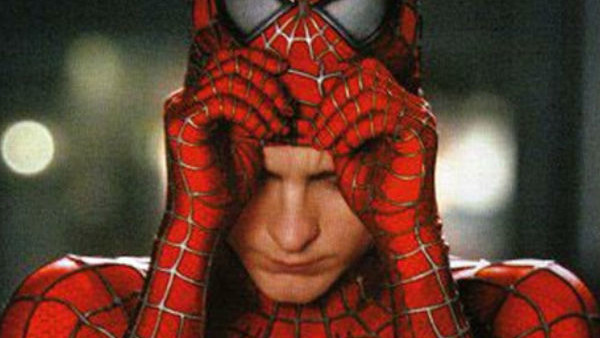
When Spider-Man hit in 2002, bringing a superhero to the screen at all was impressive. Doing it faithfully, or using a film to dramatise a much loved arc was a pipe-dream. Heck, Sam Raimi and co. made a massive deal about how they sort of adapted Spider-Man No More for five minutes in Spider-Man 2 - that's how rare comic adherence was.
Over a decade later and things are very different: Marvel are slowly building to Infinity War while also paying off major arcs such as Civil War and The Winter Soldier; X-Men are now all about realising their famed stories (Days Of Future Past, Apocalypse) with the ever rotating cast; DC are leaning heavily on the comic lore (bits of The Dark Knight Returns and New 52), making an epic Crisis storyline all but inevitable.
And this leaves Peter Parker in a bit of a pickle; he doesn't really have any adventures fans are champing at the bit for. Oh sure, he has some brilliant villains, but the epic story arcs that jump to mind are either total messes (the nonsensical Clone Saga and fan-despised One More Day) or rely too heavily on characters currently tied up with different studios (Civil War) and thus have no hope at working on screen.
Spidey was for a long time Marvel's most popular hero (until Robert Downey, Jr. moved into Tony Stark's Malibu mansion), but mainly because his down-trodden, yet secretly strong character resonated with the audience. In a world where Guardians Of The Galaxy reigns and The Avengers are mainstream, that just doesn't cut it.
3. It's Become White Noise - Paranormal Activity

The thirties had monsters, the fifties had sci-fi, the eighties had slashers, the noughties had torture porn and the teenies (please can someone come up with a better name than that before it catches on) have jump scares. Oh, don't be mistaken, jump scares have already been a part of horror for a long time (the violin screeches of Psycho's signature score pumps adrenaline in a similar way), but now they're so ubiquitous that a film not using them becomes something of a minor masterpiece (although The Babadook is admittedly awesome on its own merits anyway).
Which nicely brings us to Paranormal Activity, the inheritor of Saw's crown of annual Halloween scares and a key propagator of cheaply-made yet-massively-successful horrors. The first film was noteworthy for being made for a pittance, but, like Blair Witch before it, succeeded because it built a genuine chill though realism. The ending featured a conventional jump scare (which was forgivable, if a cut below the original, non-sequel-enabling finale), but the whole thing wasn't your usual cattle-prod cinema.
Not so of the sequels, which relied more and more on a string of jolts interspersed with stretches of bland plot made interesting just because there's the potential for an unexpected shock at any moment. Which is rather similar to... oh, every horror movie made at the moment. Good job to turn something semi-creative into mediocrity.
They've also seriously bungled that whole momentum thing - Saw released a new movie every year with skull-cracking regularity, but Paranormal Activity's been spluttering, with the original run of annual sequels halting any major audience experience.
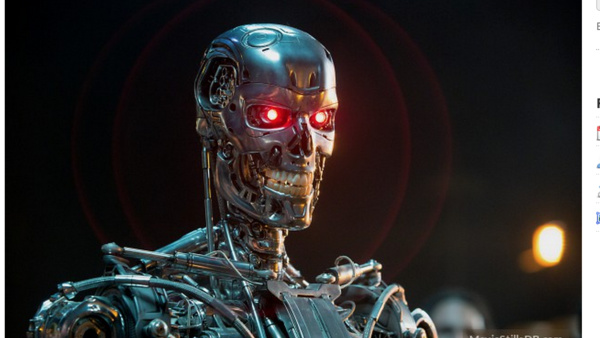
2. It's Not Had A Success In Decades - Terminator Genisys

2015 was the year mega-franchises came home to roost. Star Wars: The Force Awakens, Jurassic World, Spectre - it was a smörgåsbord of nostalgia. Joining them was Terminator Genisys, which was being pushed as another big-hitter, but it ended up sticking out like a sore thumb.
Terminator 2: Judgement Day was the then-most expensive movie ever made and also one of the most successful. Because of that (it turned $100 million into $500 million), there's this belief Terminator is a perpetually relevant, universally-beloved series. And even though any attempts this century to prove that have failed miserably - Rise Of The Machines barely made a profit and Salvation actually lost money - Hollywood trundles on tossing the rights around waiting for the inevitable hit.
That hit, however, won't arrive because (and here's the shocking twist) Terminator isn't a big blockbuster franchise. Oh, it's certainly treated as one in terms of budget, but aside from that one success back in 1991 (when the main audience of Genisys weren't even born) it's never had any mainstream popularity to back it up; the first film was an indie sci-fi and nowadays the second is popular, but only to genre fans (which, thanks to being a vocal minority on the internet appear a bigger force than they are).
Terminator's a niche property through-and-through, and any attempts to turn into something more mainstream are doomed to fail - the bite of (the very much awesome) first two the fans want is lost in favour of pandering to regular cinema-goers who have limited interest in the property. Now that's a paradox.
1. It's A Product Of Its Time - Indiana Jones

Chris Pratt would be inspired casting as Indiana Jones. There's no one out there who has that balance of cool confidence and serious yet comic timing perfected quite like Star Lord (Bradley Cooper certainly doesn't), making him a shoe-in for the role. Unfortunately, whatever Indy movie he ends up being in (no aliens please) is doomed to failure on an even more fundamental issue - the entire notion of more Indiana Jones is idiotic.
Now let's not get any wires crossed here - Raiders Of The Lost Ark is a masterpiece, not just of blockbuster cinema, but of the whole medium in general, and its two immediate sequels are both fun romps. But they work because of when they were made, both in terms of movie-making trends and cultural applicability, and are hardly transferable to the 21st Century.
When Harrison Ford first wore the fedora the world was still reeling from the revelation Darth Vader is Luke's father and Steven Spielberg was known just as the guy who did Jaws. Now an unironic action hero in a throwback to action serials is both antiquated and unfitting of the high-scale adventure employed by most blockbusters that a remake would be shoe-horned into.
You see, Indiana Jones may exist in the 1930s, but he's intrinsically eighties. The movies mark a significant change in Hollwood's approach and, despite not having many of the decade's more garish elements, its success come from the period's style, while Indy himself goes up against villains who hadn't been fully assimilated into history books at that point (the older generation had clear memories of World War II). A modern Indy can either reboot in the thirties, a time too far removed from our present, or maintain the time difference Bond-style, which would lead to a Cold War (and thus immediately less fun) story. Neither of those is a delectable prospect.
The Kingdom Of The Crystal Skull partially proved this point, showing how the adventures don't work transplanted to a new time period, nor in the modern blockbuster landscape, although those faults have been dismissed in favour of inter-dimensional baddies and Harrison Ford being too old (which are both big faults, but miss the bigger point). And thus another one is inevitably doomed.
Which other franchises are never going to reclaim former glory? And why? Join the discussion down in the comments.