The Hobbit: The Desolation Of Smaug - 5 Unforgivable Deviations From The Novel

You just don't mess with Tolkien's lore.

The Desolation Of Smaug, the second instalment in Peter Jackson's three-part Hobbit adaptation based on the novel by J.R.R Tolkien, hit cinemas on December 13 to rave reviews. Following the adventures of Bilbo Baggins, Gandalf and a company of Dwarves, The Desolation Of Smaug - it is widely agreed by critics - got the franchise back on track after predecessor 'An Unexpected Journey' received a mixed response. Richard Corliss of TIME has described Jackson's latest offering one of the top 10 films of 2013, while Nick de Semlyen of Empire raved: "Middle-earth's got its mojo back." But for all the glowing reviews and the money it raked in at the box office ($209 million worldwide on its opening weekend), The Desolation Of Smaug is by no means a perfect film. An avid fan of the novel it is based on, I found the many deviations from Tolkien's writing to be glaring, and while I am still mystified that Jackson was able to pad out a trilogy of films from Tolkien's 351-page pamphlet, it was the hard-to-ignore detours from the writing that most bothered me. From Legolas and Tauriel through to Azog the Orc, here, we take a look at 5 Unforgivable Deviations From The Novel. (Please note that the following pages contain plot details from The Desolation Of Smaug.) Click "Next" to begin.

5. The Great Spiders Of Mirkwood

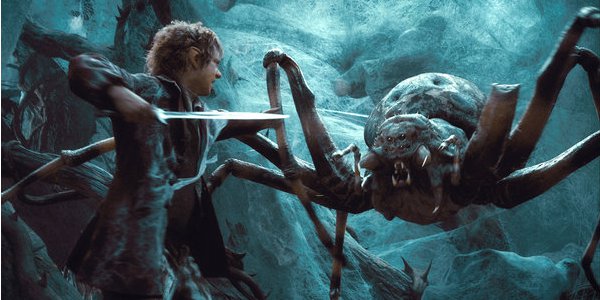
As Bilbo Baggins, Gandalf and the company of Dwarves venture through Middle Earth, they inevitably encounter enemies on their travels, from pursuing Orcs through to The Great Spiders of Mirkwood. The arachnids capture the travelling companions - that both the book and Peter Jackson's epic film agree upon - but how Baggins and co. escape from the eight-legged fiends varies. The book says that Bilbo uses the invisibility from the One Ring to hide himself and throw stones at the spiders, leading them all away from the captured Dwarves mocking them in song, before returning to cut his friends loose and fending off the remaining beats. The film however sees Bilbo's heroism removed as he takes a backseat to the action, as Legolas and Tauriel are flung into battle in his place, shooting dead the spiders with their bows and arrows and capturing the Dwarves, taking them prisoner. Though the book states the company were imprisoned by the Elves, there is not a single mention of Legolas, nor indeed Tauriel - more on them a little bit later.

4. The Extended Role Of Azog

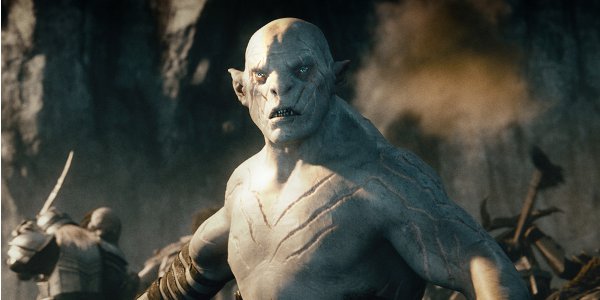
As mentioned, Middle Earth is teeming with villainous folk, most of which want Bilbo, Thorin and co. dead. And where Thorin is concerned, that goes doubly so for Azog, the muscled, maimed, one-armed Orc (above) who serves as the chief antagonist in the films. Azog and Thorin have an ongoing feud, starting with Azog murdering and beheading Thorin's grandfather, Thrór. Thorin then cuts Azog's left forearm off in the ensuing battle and, mistakenly thinking he has killed his arch enemy, later discovers he is very much alive. Azog goes on to have an expanded role in the films while in the book he is mentioned by Gandalf in one singular throwaway line: "Your grandfather Thror was killed, you remember, in the mines of Moria by Azog the Goblin", and that is the last we hear of him. What's more, In the Return of the King appendices, Azog is described as being fully protected by iron armour, however in the Jackson films he is bare-chested and scarred, another deviation from Tolkien's writings.

3. The Invention Of Tauriel

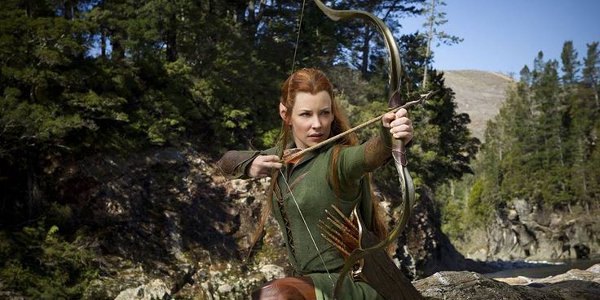
As well as handing Azog an expanded role in the films, Peter Jackson has set about inventing characters off the top of his head, not just taking a detour from Tolkien's writings but taking a total diversion. Tauriel, for instance, is a complete invention, created by Jackson and screenwriter Fran Walsh, the 'she-elf', as she is described by the Orcs, doesn't feature in any of Tolkien's writings. For purists, this one sticks in the craw. I am a big fan of Evangeline Lilly, and she contributed to the high-velocity action scenes, but her subsequent love affair with Kíli, an actual Tolkien character, takes things way too far, and tears to shreds Kili's original character arc. This plot feels totally manufactured and as such you have zero inclination to invest in either Kili or Tauriel for the remainder of the film. Had her appearance ended when the Dwarves escaped from the Elve's captivity, I perhaps could have lived with her inception and inclusion in the story, but as a focal character who interferes with Tolkien's original writings, I feel as though Jackson has crossed a line.

2. Legolas's Presence

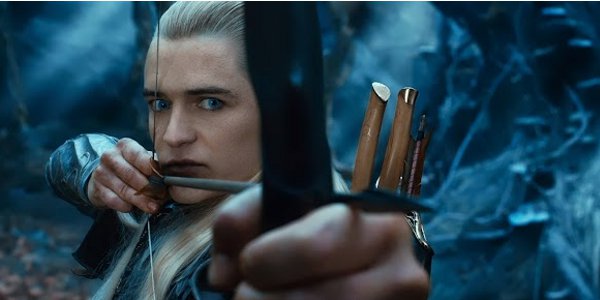
Much has been said and written about Legolas's involvement in The Hobbit ever since Orlando Bloom was confirmed as a cast member, and this is another decision of Peter Jackson's that I cannot abide by. While it is feasible that Legolas could have been around during the time-frame in The Hobbit, given the longevity enjoyed by Elves, the archer's mere presence remains grating simply because he exists entirely within the confines of the Lord of the Rings, and not its prequel. If the invention of Tauriel and her silly love triangle with Kili and Legolas wasn't bad enough on its own, completely ignoring Tolkien's lore is a cardinal sin. For purists who want the events of the book to be adequately conveyed in the adaptation, this one does not sit well. I can't help but feel that Legolas's involvement was Jackson's way of selling more tickets to Bloom's legions of adoring female fans to get bums in seats, which is both cynical and shameful, but at least there's no sign of Viggo Mortensen's brooding Aragorn. Small mercies.

1. Smaug And The Lonely Mountain

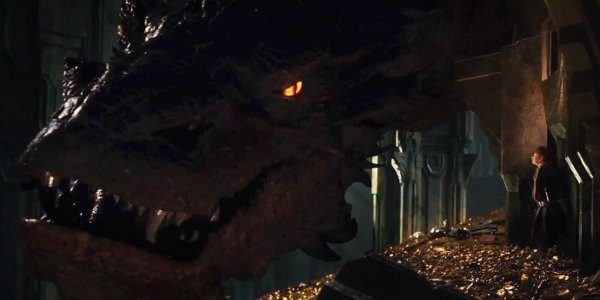
Finally we come to Smaug, and I say finally, because the first two films were basically one heck of a long walk to his lair up on Lonely Mountain, and it felt like hours until we finally caught a glimpse of his scales. And when we finally did, we were unhappily subjected to a good half hour of nonsense as Peter Jackson made a further mockery of Tolkien's writings. Bilbo ventured deep into the Dragon's Den, walked a path of glittering gold, woke the sleeping beast, and had a conversation with it, pandering to its enormous ego to buy time. So far so good. Sticking pretty closely to the book, and then, suddenly, the Dwarves appear, riding to Bilbo's rescue and leading Smaug on a merry dance through the vaults and chambers of the mountain. The disaster is compounded by a purely fictitious attempt to drown the dragon in molten gold, and while Smaug mercifully escapes this punishment to fly off for his destiny with Bard's arrow, the whole ordeal left a very bad taste in the mouth, particularly when the end credits claimed the film was "based on the novel by J.R.R Tolkien." Loosely, perhaps. What did you think of Peter Jackson's additions and edits to Tolkien's source? Share your thought below in the comments.

Contributor
Contributor

Joseph is an accredited football journalist and has interviewed nearly all of the current 20 Barclay's Premier League managers. He is also a correspondent for Bleacher Report and has written for Caught Offside and Give Me Football.