20 Biggest Wasted Opportunities In The MCU
The greatest Marvel fumbles of them all, from Secret Invasion to the Hulk.
Over the years, the Marvel Cinematic Universe has offered audiences an obscene amount of stories and characters to enjoy, but it hasn't always got things right.
It's easy to forgive the franchise some mistakes - after all, making two or three dozen inter-connected movies and TV shows is always going to lead to some flaws, issues, and glaring omissions for fans to scrutinise and question.
But even so, Marvel Studios has made plenty of fumbles over the years that are much less understandable, leading to a large number of plot holes, disjointed narratives for major characters, and beloved comic book storylines that have been severely underdeveloped when they've finally been given the big screen treatment.
Whether it's a beloved character whose storylines have left their development in the dirt, or plotlines that were inexplicably abandoned despite their narrative potential, these missed opportunities range from mildly frustrating to deeply annoying, squandering the MCU's capacity for reaching its highest potential.
With that in mind, before the release of Avengers: Doomsday later this year, here are the 20 biggest missed opportunities in MCU history, with MAJOR SPOILERS and potentially controversial opinions throughout!
20. Introducing The X-Men

Marvel has plans for bringing a new X-Men roster into the MCU, with the likes of Sadie Sink and Kit Connor landing key roles in the team for future movies.
But genuine question: Why has it taken so long?
With Avengers: Doomsday, the franchise is bringing back the old X-Men guard (Patrick Stewart, Ian McKellen), and some previous films have seen the return of Hugh Jackman and Kelsey Grammar, but until Sink's debut as Jean Grey in Spider-Man: Brand New Day, we've never been given a real answer to the MCU's X-Men.
Given the X-Men's pedigree, it's a wonder why Marvel wouldn't have tackled something sooner. Of course, the mainline Fox X-Men films were running until 2019, when the MCU was already in full swing, but even so, no attempts were made to bring the two together or shake things up with new faces until now.
Whatever the reason, we now live in a world without any of the MCU originals forming a bond with Marvel Comics' most famous team, and that feels like a major loss. We'll have to see what the future holds, I guess.
19. Asgardians of the Galaxy
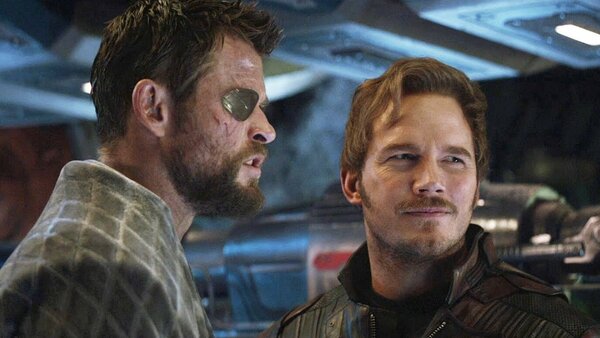
If only we could forget Thor: Love and Thunder and watch this mash-up instead.
In the closing minutes of Avengers: Endgame, Thor (Chris Hemsworth) gives leadership of Asgard to Valkyrie (Tessa Thompson) so he can travel the universe with the Guardians of the Galaxy on a quest for self-actualisation and personal growth. Their team-up forms the first few moments of Love and Thunder, before they go their separate ways.
And it's an absolute waste. For one, their scenes together - much like the rest of Love and Thunder - are coated in cringey comedy and awful visuals, but more importantly, their relationship could have offered some real depth for everyone involved.
More petty ego clashes between Thor and Star-Lord (Chris Pratt)? More bromance for Thor and Rocket (Bradley Cooper)? Thor teaching the misfits to work together better than ever? A fun little standalone adventure that felt fresh and fun after the heartbreak of the Blip? Nope. Their partnership ends as quickly as it began, and we had to suffer through Love and Thunder instead.
But, hey, at least Guardians of the Galaxy 3 was good!
18. Galactus

By the standards of the MCU's recent output, Fantastic Four: First Steps is a genuinely fun and original project, brought to life with great colour, heart, and a refreshing new setting far removed from previous movies.
It's not a flawless vision, though, where its villain is concerned. Whilst the central team get some decent moments to shine - particularly a haunted Reed Richards (Pedro Pascal) and an unshakable Susan Storm (Vanessa Kirby) - big bad Galactus (Ralph Ineson) is given painfully little to do, and ends up an easily dispatched foe despite his perceived threat level.
Given Galactus has had such a large impact on the comic books over the years, and stands tall as one of Marvel's biggest, baddest baddies, it's a damn shame his screen presence here relegates him to just another villain of the week - a few big speeches, a demise that feels maddeningly easy and anticlimactic, the end.
The MCU has always had a villain problem, and it doesn't look like Marvel is in any major rush to fix things in that department.
17. The Multiverse of Madness

The problem with Doctor Strange in the Multiverse of Madness isn't entirely the multiverse side of things - director Sam Raimi does a great job of exploring the cosmos for all its weird, wonderful, and scary realities - but the film surrounding these brief creative highs.
Instead of offering an adventure that forced Strange (Benedict Cumberbatch) to deal with past trauma and his own complex legacy, there are far too many moments in Raimi's MCU debut that reek of tacky nostalgia bait, the multiverse of it all allowing the studio to give vocal fans (and haters) some meme-able cameos.
Between Hayley Atwell's turn as Captain Carter, which should have been so much cooler, and the fleeting, boring appearances of Patrick Stewart (sorry, sir) and John Krasinski as a dull-as-dishwater Reed Richards (after years of fan casting), the film suffers from an abundance of odd, uneventful Easter eggs.
Multiverse of Madness soars with its central conceit and emotional pull, but everything either side of it is just a bit sad.
16. The Nine Realms
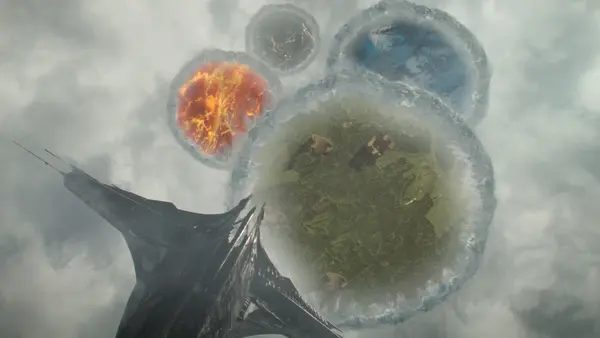
Throughout the first three Thor movies, the Nine Realms are spoken of and seen as the centre of the universe, a branch of worlds with vastly different cultures and people that are each protected from outside calamities by Thor's world, Asgard.
We see many of these realms throughout the film, most notably Asgard itself and Midgard (that's Earth, to me and you), but also Jotunheim, the land of the Frost Giants, and Svartalheim, a world inhabited by the Dark Elves.
Despite the topsy-turvy quality of the Thor movies, the lore surrounding the Nine Realms is quite compelling, especially as it posits Asgard as the de facto centre of them all. But after Thor: Ragnarok, in the wake of Asgard being reduced to ash by the fire demon Surtur, the Nine Realms have never been discussed again.
What happened to these richly diverse worlds and their people? Do Thor and his closest allies still protect them? It seems Marvel has swept these worlds under the rug for narrative convenience, and given the implications - that they've been left to fend for themselves, alone - that's a real shame.
15. Red Hulk

It's worth noting that, before we get into this, the late William Hurt and legendary Harrison Ford were both excellent as Secretary of State (and later President) Thaddeus Ross, a hardened military commander who often came to blows with various members of the Avengers.
A complex, endearing character who was neither villain nor hero - merely a guy who wanted peace and failed to see the full picture - Ross's introduction to the MCU instantly suggested that he'd one day become Red Hulk, the red-skinned counterpart to the famous alter ego of Bruce Banner (Mark Ruffalo).
There were times it seemed the transformation would never come, and despite years of restless waiting fans were rightly let down when the big day arrived in the awfully forgettable Captain America: Brave New World.
Turned into Red Hulk by a vengeful Samuel Sterns (Tim Blake Nelson, returning from 2008's The Incredible Hulk for... reasons), Ross's turn to villainy barely registers. Too brief, too anti-climactic, and without the original Hulk by his side? A real waste.
14. Kang the Conqueror

One of the most infamous Marvel misfires of recent years, the supposedly unstoppable Kang the Conqueror was first introduced, via a variant, in the first season of the TV show Loki, before taking centre stage in Ant-Man & the Wasp: Quantumania.
Portrayed by Jonathan Majors, who was rightfully fired after being found guilty on assault and harassment charges, Kang was posited as the multiverse's most dangerous figure, a shape-shifting warrior who sought control over the multiverse.
Positioned as the MCU's follow-up big bad after the death of Thanos (Josh Brolin), Kang was ultimately relegated to monster of the week status, a tough opponent who was nonetheless unable to defeat Ant-Man (Paul Rudd) and an army of ants.
His brief appearance and the way he falls to such a comparatively minor foe sure took the wind out of his sails, pushing a massive question mark over his ability to be an Avengers-level threat, so much so that you have to wonder: did Majors' off-screen controversies derail Kang's role, or were Marvel already thinking of letting him go for a character a bit more... doom-y?
13. Taskmaster

Looking back, what sucks most about the loss of Taskmaster (Olga Kurylenko) is that she's actually quite a compelling figure in her debut feature, Black Widow.
An indomitable killing machine programmed like a supercomputer to study and best any fighter she crosses, the reveal that Taskmaster was actually the daughter of Black Widow's villain Dreykov (Ray Winstone) was quite powerful, and helped hammer home the film's themes of control and personal grief.
She also makes it out of the film alive, set up as a major part of the recent team-up effort Thunderbolts, which promised some added depth to a woman now free of her father's cruelty. Only, it never comes, because she's killed almost instantly in her second on-screen appearance, and that's that.
Though far removed from their comic counterpart, Taskmaster was nonetheless a compelling riff on a tried and tested formula, a character bursting with potential that would have surely enriched Thunderbolts for all its discussions of trauma, regret, and the futility of violence. Bummer.
12. Baron Mordo's Crusade

In one of many post-credit scenes that (so far) have gone exactly nowhere, Doctor Strange ends with an enticing cliffhanger, following Strange's former ally and mentor Mordo (Chiwetel Ejiofor) as he sets out on a crusade to rid the world of his fellow sorcerers.
There are, admittedly, veiled references to Mordo's quest in Multiverse of Madness, as Strange describes his genocidal path has left him an enemy of his old friends, but that's all; later, he's brought back as an alternate variant who briefly clashes with Strange and is then swiftly forgotten.
Not only is this unexplored cliffhanger such a dud because it's been so long since it first appeared - a whole decade as of this writing - suggesting Marvel had no real clue what to do with the character, but it also sucks because of Ejiofor, a brilliant actor tossed aside despite the rare opportunity to play a morally complex villain.
This one may be resolved going forward - Doctor Strange isn't going anywhere for a while - but at this point, it feels too little, too late.
11. What If's Overarching Storyline

All Marvel's Disney Plus series What If...? had to be was what it said on the tin: Stand-alone episodes exploring different situations for different characters, each one having a bit of fun with the faces and movies audiences had come to love.
But alas, Marvel decided to go a different route. Though there were plenty of genuine stand-alone efforts, some of which were perfectly fine, the series decided it would be a good idea to tie its many alternate scenarios together into its own kind of mini-franchise, complete with overarching villains and recurring heroes.
This isn't entirely a bad idea on paper - the animated format could have made it a fun little adventure reminiscent of our favourite comic books, achieving things live-action never could - but in execution the whole affair was painfully bland, heavy-handed, and forgettable.
In another world, What If...? should have been one of Marvel's more enjoyable throwaways, far removed from the mainline drama, but it just couldn't help trying to be more.
10. The Dark World

Thor: The Dark World is widely regarded, despite stiff competition, as one of the MCU's weakest movies, and looking back, a large reason for that is how great it could have been considering the story it decided to tell.
Drenched in a murky grey aesthetic and populated by interpersonal drama that never feels earned or all that compelling, the first God of Thunder sequel has an awful lot going for it, from the fraught relationship of Thor and Loki (Tom Hiddleston), to the should-be moving romance of Thor and Jane Foster (Natalie Portman) and the introduction of Christopher Ecclestone as menacing big bad Malekith, a dark elf intent on controlling the Nine Realms.
None of these potential highs come to fruition, though. Though Hiddleston is on great form, Thor and Loki's relationship never feels all that exciting, nor do its tragic twists feel earned; likewise, the romance never comes alive, and both Thor and Jane fall painfully flat as both lovers and characters.
As for Ecclestone - how you waste such a talent with a bland nothingburger like Malekith is a real mystery. Booooooo!
9. Quicksilver

You didn't see this coming? Well, perhaps you should have.
Introduced in the post-credit scene of Captain America: The Winter Soldier and offered a more prominent role in Avengers: Age of Ultron, Pietro Maximoff, aka Quicksilver (Aaron Taylor-Johnson), is portrayed as the caring brother of Wanda Maximoff (Elizabeth Olsen), the pair of their grieving orphans with a personal grudge against Tony Stark.
Charming and well-performed, Quicksilver wastes little time forming relationships with the Avengers throughout his feature debut, particularly Hawkeye (Jeremy Renner), and he seems set up to make a strong addition to the team alongside his sister.
Until, that is, he's killed in Age of Ultron's climactic battle, and seldom mentioned again. Now, he feels like little more than a narrative trope to advance his sister's story - hers a tale of grief and loss - rather than a real character, one that showed tremendous promise only to be tossed aside for shock value.
8. Maria Hill

The sheer volume of should-be great characters the MCU has neglected over the years is almost impressive, and the forever dependable Maria Hill (Cobie Smulders) is one of its greatest wastes.
Introduced in The Avengers as a senior SHIELD agent and the loyal right-hand of Nick Fury (Samuel L. Jackson), Hill was portrayed valiantly as a fearsome leader, fighter, and friend, one of remarkably few people Fury trusted and fewer still who stayed by the Avengers' side after SHIELD fell.
In her brief appearances throughout the franchise, she showed great promise and depth of character, a conflicted soul who stood for integrity and peace and always did the right thing. Thanks to Smulders, she was also casually charming, clearly more than met the eye.
But as the franchise went on, Hill was never given much to do, and though Marvel set her up to have a major role in the TV miniseries Secret Invasion (more on that later), she was ultimately killed early on as a means of advancing Fury's storyline. Meh.
7. Secret Invasion

The prospect of Marvel adapting one of its grandest comic books to the big screen always filled fans with excitement, though it's safe to say the studio really dropped the ball when they finally got around to producing it.
In the comics, the Secret Invasion was a major crossover event following the X-Men, the Avengers, and all their many allies coming face-to-face with an invasion of Skrulls, alien shapeshifters with the ability to become anyone, infiltrate anything.
A brutal arc centred on all our favourite heroes struggling to trust each other whilst their world becomes overrun, the MCU's version is a bit different, following a weathered Nick Fury as he faces the threat alone in a TV miniseries that acts like a political thriller rather than an epic, big-screen event movie.
Though a strong showcase for Sam Jackson in one of his most iconic roles, Secret Invasion proved a bland, lifeless, ultimately inconsequential project that leaves no lasting impact - not on the audience, not on the franchise's future, and certainly not on fans of the comic book who wanted so much more.
6. Civil War

Like Secret Invasion, Civil War remains one of Marvel Comics' most iconic and devastating storylines, following every hero under the sun coming to blows after a tragedy forces them to confront how the world sees them.
In Captain America: Civil War, the conflict is toned down to only a handful of major movie characters, split into two factions led by Cap and Iron Man. The film itself is honestly pretty great, allowing its all-star cast to really shine in a thrilling action spectacle only sometimes tangled by its convenient storytelling.
Unfortunately, looking back, it's safe to say Civil War came a bit too early, when there were too few characters and too few stakes on the board. Given how damaging, emotional, and large-scale the comics were, Civil War would have perhaps benefitted from being an Avengers event; something bigger, bolder, more earth-shatteringly epic.
Captain America's second sequel is fine as it is - that final act clash between Cap and Tony packs a real emotional wallop - but it might just be that Marvel played their hand too soon and safe with this one.
5. The Missing Black Widows

So many loose threads, so many missed opportunities.
In the closing moments of Black Widow, Natasha (Scarlett Johannsen) and her estranged sister Yelena (Florence Pugh) band together to save an army of brainwashed women who had been kidnapped, conditioned, and forced to become killing machines by the evil supervillain Dreykov.
With Dreykov dead and his influence destroyed, the film ends with the remaining Black Widows, now free to be whoever they want to be, taking off in pursuit of the lives they left behind. It's neat and wholesome, sure, allowing these warriors to find peace, but one has to wonder what ever became of them.
With little life outside their time spent as mind-controlled assassins, and the world poised to change for the worst in Avengers: Infinity War, who wouldn't love to see more Black Widows climb back from the shadows they've made home, ready for another fight? We may never know, but we can surely dream.
4. The Hulk's Character Arc

The problem with Bruce Banner and the Hulk (initially played by Edward Norton before Mark Ruffalo took the reins) isn't where they ended up, but how they got there.
Introduced in 2008's action-heavy dud The Incredible Hulk before being given a more prominent, compelling role in The Avengers, Banner has served throughout his MCU life as second fiddle to the bigger personalities around him - Stark, Thor, Spider-Man (Tom Holland) - leaving his own development sidelined and rushed.
Whenever Banner or Hulk turn up, the development has already happened. In Avengers: Age of Ultron, he's formed a bond with Natasha Romanov (off-screen); in Thor: Ragnarok, Banner and Hulk have become a famed gladiator on a distant planet (off-screen); between Infinity War and Endgame, Banner and Hulk have found harmony (off-screen); and in She-Hulk, he's had a child (off-screen).
Banner and Hulk's development is all frustratingly tell-don't-show, which, given the depth of their internal conflict and violently juxtaposed personalities, feels like a bit of a cop-out. Banner should be so much more well-developed; right now, he's basically an afterthought.
3. Stories From The Blip

Between the events of Avengers: Infinity War and Avengers: Endgame, there is a five-year gap where the world is in turmoil following the Blip, an event caused by Thanos and the Infinity Stones that wiped out 50% of all life in the universe.
Aside from some brief asides, what transpires in those five years is never explicitly explored, despite so much having clearly taken place. Who wouldn't have loved to see Banner merge his personality with the Hulk's? Or seen Nebula (Karen Gillan) and Rocket as members of the Avengers? What kind of threats did our heroes face in those years of mourning?
Admittedly, doing a deep dive on what these years did to our favourite heroes would have been a bit much, and potentially taken the sting out of later twists - Hawkeye's stint as Ronin works better as a tale of legend rather than its own TV show - but still, the possibilities for great emotion are endless.
Maybe another TV show like What If...? would do the trick?
2. Where Is The Love?

Over the course of the MCU's run, there have been almost forty movies and a dozen TV shows, and aside from obvious outliers, the franchise has suffered massively where romance is concerned.
Whilst the relationship of Tony Stark and Pepper Potts (Gwyneth Paltrow) form the bulk of Iron Man's three movies and Tony's development from reckless arms dealer to great hero, Peter Parker and MJ (Zendaya) have brought audiences to tears on more than one occasion, and Peter Quill and Gamora (Zoe Saldana) were a lovable pairing, you gotta ask: where is all the love, people?!
Thor and Jane Foster, for example, certainly starts promising enough, only to fizzle out to nothing by the closing act of Thor: Love and Thunder, whilst the controversial pairing of Bruce Banner and Natasha Romanov proved dead on arrival, landing nowhere.
Considering the stakes and the sheer volume of characters on the board, the MCU has so few romantic highs it's honestly irritating, especially since so many potential bonds are touched upon and ever properly developed, or end in tragedy. Of all the aforementioned couples, none of them are together anymore! In the MCU, love is dead. We need more of it.
1. Bucky In The Void

Thunderbolts is a brilliant movie, a genuinely moving, down-to-earth drama about a group of traumatised soldiers brought together by regret and poor judgement, that would honestly be near-perfect were it kinder to co-lead Bucky Barnes (Sebastian Stan).
One of the MCU's most compelling and tragic characters, Bucky has been a mainstay in the franchise since Captain America: The First Avenger, and throughout his run has served as a loyal sidekick, a brutal villain, an unstoppable assassin, a welcome source of comic relief, and finally a bona fide hero.
In Thunderbolts, he's become a failing politician brought back to the fight by the emergence of Sentry (Lewis Pullman), a supreme being with a dark side called Void that casts all he touches into nightmares based on the victim's most painful memories.
In the film, it's Yelena who the audience see in the Void, but we never get to see Bucky's nightmare. Given the fact the Void would have allowed Bucky to clash with his own alter ego, the Winter Soldier, this feels like a major missed opportunity, especially since Bucky spends so much of the Thunderbolts playing second fiddle to those around him, always slightly outside the main action.