10 Biggest Video Game Flops Of All Time
Failures of epic proportions.

In the decades in which the video game industry has grown and flourished, there have been many success stories. Games such as Call of Duty, Halo, and Assassin’s Creed all started out as risky investments with no guarantee of success, only to explode into multi-million-dollar franchises. But for every triumph, there are countless failures.
Indeed, the games industry has had no shortage of flops; titles which failed so dramatically that they act as cautionary tales on the dangers inherent to game development. This has happened for a multitude of reasons ranging from inflated budgets to constant delays to general behind the scenes shakeups. Sometimes it’s as simple as a lack of interest by the majority of consumers, regardless of whether a game is good or not. Like any business, making video games is a gamble, and all you can hope for is to make it out alive.
The following games weren’t so lucky in this regard. Not only did these titles fail, but many of them failed on a scale so large they had significant impacts on their developers, publishers, and the industry as a whole.
10. Tony Hawk: Shred

Following the critical and commercial failure of Tony Hawk: Ride, you’d think Activision would have quit before they fell too deep. Instead, they doubled down with a follow up, titled Tony Hawk: Shred, in 2010. Just as with the previous game, Shred used a motion sensitive skateboard controller to attempt to simulate real skateboarding, and just like the previous game, it was rubbish.
While a slight improvement over its predecessor, Tony Hawk: Shred is still nearly unplayable, and it’s precisely because the motion controls do not work as they’re intended to. Instead of freeing the player from the restrictions of a controller, it traps them with an even worse alternative. The peripheral took all the fun out of a series that was once the best of its kind. Sure, kudos can be given for attempts at innovation, but it wasn’t enough to make Shred a worthy competitor to other, better skateboarding games.
Tony Hawk: Shred only sold around 3,000 copies in its first week in the U.S., and it never quite recovered after that. It fell so below expectations that Activision was forced to temporarily put the Tony Hawk series on hold in order to reconsider the future of the franchise going forward. The series returned to its roots with Tony Hawk's Pro Skater HD in 2012, though the damage to its reputation had already been done.
9. Okami

Okami was a game that seemingly had everything going for it. Its distinct style and beautifully unique artistic expression made it so refreshingly different from any other game available at the time. It was a critical darling, winning numerous awards from various media outlets. For all intents and purposes, it should have been a hit.
And yet despite these strengths its ambitions didn’t quite connect with the interests of enough gamers to be successful. It sold less than 300,000 copies in North America and less than 100,000 in Japan. While there is no definitive reason for its low sales, many have speculated that it came out at the wrong time. Okami was one of the last major releases on the PS2, and as interest began shifting to the new generation of consoles, it’s likely that Okami got buried beneath the hype.
It's also likely that many were simply confused and/or uninterested, especially given its rather abstract subject matter and vague title. Whatever the reason, the financial failure of Okami is a depressing fact for anyone who has actually played it. It deserved all the admiration it got, and as time has gone on more people have stumbled upon this lesser known gem. It’s just too bad more people weren’t around to play it when it came out.
8. Advent Rising

Riding high off the success of Halo, Advent Rising was hyped as being the next big sci-fi franchise for the Xbox. Various talented artists were brought on board to give it serious nerd cred, including notable science fiction authors Orson Scott Card and Cameron Dayton. Its promotion was extensive, even going so far as to advertise in theaters, where it was billed as the first chapter in an epic trilogy.
Yet even with all this going for it, the 2006 release of Advent Rising was met with a collective ‘meh’. It received only lukewarm reviews and sold even worse. Instead of being recognized as the great new and original franchise it aspired to be, it came off as yet another cookie cutter, bug filled, by the numbers third-person shooter set in a generic sci-fi universe. Since the video game industry has no shortage of those, it’s easy to see why this one got lost in the shuffle.
Suddenly, all plans for sequels, novels, comic books, and merchandise tie-ins were cancelled, and just like that the burgeoning Advent Rising franchise came to an abrupt end. Publisher Majesco Entertainment had to change its business plans going forward in order to recoup all the money it invested in the game; a harsh lesson in the risks a business takes when investing in new intellectual properties.
7. Rise Of The Robots

You might be hard pressed to find many who remember the ill fated Rise of the Robots now, but back in the early '90s it was hyped as the next great leap in the fighting game genre. The developers promised mind-blowing graphics and sophisticated artificial intelligence in a fighting game that would be light years ahead of Street Fighter or Mortal Kombat.
Aided by a massive marketing campaign promising way more than it could deliver, Rise of the Robots was released on various systems just in time for the Christmas season in 1994. While the animations and visuals were indeed impressive at the time, it came at the expense of the gameplay, which proved to be substandard, repetitive, and dull. It lacked the complexity and responsive controls of other popular fighting games at the time.
Those that had been invested in the excitement leading up to the game’s release felt duped by the deceptive and costly advertising, and sales never took off. The backlash was enough that Rise of the Robots couldn’t recoup its losses, although it did somehow manage to get a sequel, which was also terrible. In the least surprising twist of fate ever, the Rise of the Robots franchise never took off, and the first is considered one of the worst fighting games in existence.
6. Lair
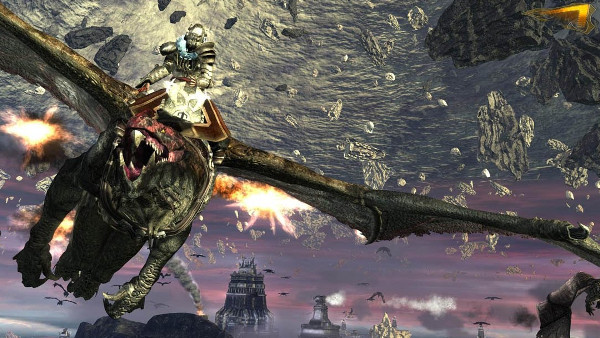
On the surface, the conditions for Lair’s success were all there. Its premise, which has you riding a dragon, had so much potential to be good, especially with Factor 5, the developer behind the original Star Wars: Rogue Squadron, handling the reigns. It was also promised to use the Sixaxis motion controls in a way that actually enhanced the experience. On paper, it appeared that Lair would be the game PS3 owners were waiting for.
Unfortunately, the Sixaxis controls ended up crippling the game, making it unresponsive and nearly unplayable. All the fun of riding a dragon was ripped out of your hands, turning what should have been an exhilarating experience into an unbearably frustrating and boring one. The game was also too short and repetitive, leaving little reason for anyone to ever play it ever again. In short, Lair was a colossal disappointment, and this led to sales numbers that fell far below expectations.
Sony and Factor 5 had invested so much into Lair, and the negative response took its toll on both. The Sixaxis ended up being one of Sony’s many failed experiments, while Factor 5 suffered financial and legal burdens until the company was forced to declare bankruptcy. While Lair was eventually made playable via a patch allowing the use of the analog sticks, it was too late,A and the game was quickly forgotten.
5. APB: All Points Bulletin

APB: All Points Bulletin is a game whose concept worked better than its execution. Conceived as a sort of cops and robbers MMO experience, APB was constantly referred to by the developers as the next great step in multiplayer experiences. And with David Jones, one of the minds behind the Grand Theft Auto series, as lead designer, there was certainly reason to be excited.
Unfortunately the end result bit off more than it could chew. Despite being in development for many years, APB could not deliver on its promises. In fact, it was even worse than that. The game felt unpolished and underdeveloped, and it was clear that it had been released before it was finished, which is a death sentence for any video game. Matters weren’t helped by a ridiculous review embargo, which was used to keep the horrible truth away from consumers for as long as possible. By the time the game came out, the damage was already done.
APB ended up costing developer Realtime Worlds everything. Its failure put the studio in administration a mere six weeks after the game’s release, and shortly after that the servers were shut down. The ending to this story isn't entirely sad though, as the company K2 Network eventually bought APB and relaunched it as the free-to-play APB: Reloaded. Still, it's one of the biggest crash and burn stories in the industry.
4. Pac-Man (Atari 2600)

Pac-Man for the Atari 2600 was highly anticipated by fans of the arcade version, primarily because it was the first home console version of the game to be released at that point. Finally, fans would no longer have to venture to a nearby arcade and pump countless quarters into the machine in an effort to top their high score. For this reason, it was expected to generate a record profit for Atari.
Imagine, then, the horror fans of this classic must have felt when they popped the cartridge into their Atari and saw how ugly this Pac-Man was. It was a noticeable downgrade from the arcade version, the limitations of the console stripping away many of the technical features prominent in the original. Essentially, the Atari version turned the game so many fell in love with into a shell of its former self. It shared the core game design of the original, but everything else felt wrong.
Pac-Man was initially very successful, and still remains the highest selling game for the Atari 2600, but it didn’t take long for gamers to realize how terrible it was, and returns started hitting retailers at an increasingly rate as sales took a nosedive. With excess copies of the game on their hands, Atari ended up losing hundreds of millions of dollars, and confidence in the company waned as a result. It took years for Atari to recover and earn back the trust of consumers, proving that even the best intentions can have lasting consequences.
3. Daikatana
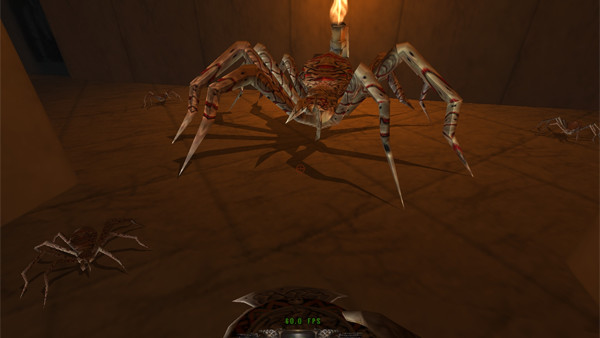
Daikatana should have been amazing. What else would you expect from John Romero, one of the minds behind Doom and Quake, two of the greatest shooters ever made? The game was supposed to be the next step, and it was hyped as such, with Romero’s name at the head. People were understandably hyped, even with the constant delays and insider rumbles, which were a sign of things to come.
After a long wait, Daikatana was eventually released in 2000 for Windows and Nintendo 64, and it was anything but revolutionary. The entire game was a significant step behind where game development was at the time. Its gameplay was boring and slow, while the game itself was incredibly ugly. Everything about it was immensely disappointing, and this led to poor sales and terrible review scores.
The commercial and critical failure of Daitkatana was an unpleasant shock for those looking forward to the game. It was a huge blow to developer Ion Storm, of which Romero was a founder, causing it to eventually close down its Dallas office. It’s unquestionably the lowest point in John Romero’s career, and an explicit demonstration that even the best can stumble.
2. Too Human

Given the history of Too Human, it’s amazing the game was ever released at all. Developer Silicon Knights originally meant for it to come out on the PlayStation, but it remained frozen in development hell for years, forced to start from scratch over and over as it switched from various consoles. It finally landed with Microsoft and was released in 2008 for the Xbox 360.
The final release of Too Human did not live up to the wait. Despite some excellent world building featuring an inspired mixture of Norse mythology and science fiction, everything else about the game was uninspired and underdeveloped. The story was bland, the protagonist a carbon copy of every other action hero out there, and the combat hampered by questionable design decisions. The various parts just didn’t gel together into a seamless whole.
Too Human didn’t sell near enough copies to recoup its rumored 60 to 100 million dollar budget, and a lawsuit involving Epic Games damaged Silicon Knights to the point where they had to file for bankruptcy. They were even court ordered to destroy all copies of any of their games using the Unreal Engine 3, including Too Human. It’s rare to see a game get so brutally punished for its failings in the way Too Human was, making its fate an especially tragic one.
1. E.T. The Extra-Terrestrial

There perhaps never will be as big of a financial failure within the video game industry as E.T. the Extra-Terrestrial for the Atari 2600. Even quarter of a century later, E.T. is still considered one of the worst games ever made.
While E.T. actually sold fairly well early on, the sales weren’t anywhere near Atari’s expectations. Terrible word of mouth hurt sales even more, and despite the immense popularity of the film, sales continued to dwindle. This led to an excess of inventory, which caused retailers to consistently drop the price just to make some profit off it. All of this combined with the cost of the movie license caused Atari to take a huge financial hit off of what was supposed to be a surefire success.
The spectacular failure of E.T. cannot be overstated. It is said to be a major catalyst to the video game crash of 1983, which nearly destroyed the entire industry. Its failure also birthed the rumors of the legendary Atari video game landfill in New Mexico: a mass burial which was long believed to contain thousands of unsold E.T. cartridges. While it was considered a myth by many for a long time, it was finally proved true when it was excavated in 2014. In this way, E.T.’s failures have immortalized it within gaming culture; that’s how significant of a bomb it truly was.
What are some other notable video game flops? Let us know in the comments!