10 Most Disastrous Video Game Launches Of All Time
 On the eve of a gaming release, the developers and publishers spend a hefty lump of time gnawing their ever declining finger nails until you would believe they were dipped into piranha infested waters. The unnerving thoughts of panic, hoping everything will run smoothly while their stomach's churn in a sickness reminiscent to telling that special someone you have your eye on that you want to stick your tongue in their mouth. Those involved in the project hope the fans will erupt in rapturous approval and is a reoccurring thought always at the forefront of everybody involved in the product. Gaming is a business, and success is constantly sought after and in order to achieve this then gaming companies must have their new IP looking shiny and ready to go once it gets into the controller callused hands of gamers worldwide. With the recent outrageous diabolical GTA Online launch only just having many of the game breaking issues ironed out enough for people to actually play the game, we here at WhatCulture decided to focus our attentions on other disastrous gaming launches in the past. Join me as I laugh my way through terrible gaming launches as I happily admit I wasn't a part of any of these frustrating experiences. GTA Online can kiss my ass though.
10. Diablo III
 A stuttering launch that is still fresh in the minds of the millions of dungeon crawlers across the world was the public release of Diablo III for the PC. Diablo III already garnered up a ridiculous amount of positive steam pre-release as the hugely anticipated RPG became the fastest selling PC game of all time, selling 3.5 million in the first 24 hours. The Diablo success train continued on its interrupted journey to become the biggest selling PC game of 2012, which all sounds happy and terrific today, a year and a half later. However, Blizzard didn't exactly cruise to this success for their beloved franchise without a barrage of fan abuse and internet outrage as the universally despised DRM always on connection played havoc with the servers. Error 37, that little phrase can make Diablo III fans cry tears of blood and screech a war cry to make Genghis Khan turn in his grave. Diablo was a single player game, with optional co-op, with no ability to play offline, which is just the height of silly-ness for a single player campaign. Players went hours, days and some even weeks without being able to log into the servers to play the game they had been waiting ten years for. The DRM was set in place to keep the in game online auction house from being hacked a long with a load of PR gibberish that attempts to cloak the DRM in a positive light. Diablo III eventually ironed out the problems and has also been recently released on PS3 and Xbox 360 with significantly less launch problems, with a PS4 version on the horizon. After all the DRM problems to protect the auction house, Blizzard has announced that the auction houses are to close in March 2014 as they feel it has and still will affect the player base, painting Diablo III in a negative light.
9. SimCity
 While I'm on it I thought I might as well stay with the ever turbulent theme of DRM hassle that lovingly causes rapturous disapproving comments from gamers. This one is a fresher rage than Diablo III, so fresh that if you tilt your nose 45 degrees, you can still smell the scent of anger pee that gleefully floats through the air. SimCity, released in March 2013, was another hotly anticipated PC title that was set to reboot the series a decade after the previous instalment, SimCity 4. Everyone's favourite publisher EA was behind the persistent online connection decision they laughably thought would be a game changer in the gaming industry. They guessed right I suppose, as people will change games once they learn one is launching with a persistent connection. In an ever present trend the servers buckled under the popularity of the title, which was just the start of the disastrous drama that unfolded in the days and weeks following release. Amazon pulled the game from sale, with users totalling up over 1000 one star reviews. EA refused refunds with some users receiving (EA later apologised) bans from the game for requesting them. 30,000 people signed a petition to have the persistent connection removed and EA stopped all marketing for the title until they had a stable product. Today SimCity is seen as a fantastic title by critics and fans who have weathered the stormy sea to stability, although it is still regarded as one of the worse gaming launches in history.
8. WWF No Mercy
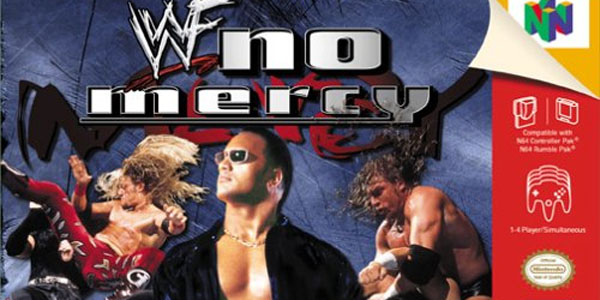 WWF No Mercy is touted by many as the pinnacle, yet to be beaten definitive wrestling game even after all these years. Released in 2000 on the N64 it was the complete package that the fickle wrestling fans always grappled for. The customisation, branching story lines and gameplay was head and shoulders above anything that had been released prior. No Mercy was a game that even managed to entertain the non devotee wrestling fans in spades and has even gone under the modding community knife with more updated rosters and skins to keep the game as fresh as can be. Despite all this positivity, No Mercy suffered from a launch bug that rendered the game completely useless for those wanting to devote hours of their time inside and outside the squared circle. The first batch of release cartridges suffered from a bug that erased any saved content and with each load of the game, you would be greeted with a fresh menu screen as if you had just bought the cartridge. The internet moaning army was in their infancy at the time this happened so not too much of a furore was made of this game crippling bug, and it makes it even more of a terrible launch due to the game being cartridge based so a simple online patch wasn't available. The error was corrected on the second batch of cartridges where buyers could simply return their buggy game to the store and replace it with a brand new, all game saving version.
7. The War Z
 The War Z is another recent controversial launch that suffered the rage of gamers, although the man at the head of development, Sergey Titov, was a complete asshole about the whole affair too. Released, or so people thought, on 17th December 2012 through Steam, what people didn't know was it was the "foundation release" of the game and not a fully blown packaged title. Gamers accused developers Hammerpoint of fraud. Not only did they try and encourage people to buy the game directly from their own website, they also informed they would raise the price of the title if downloaded through Steam. Key features that were advertised by the developers for the games launch were absent from the title. Enticing features such as 100 player servers, skill point levelling system, various large game worlds. Despite the Steam page being updated after the launch it still advertised these faux features, with Sergey Titov saying "Size of the area, once again, come on the first map is over 100 sq km. So the text is right." However a study by PCgamesN.com revealed the map size to be just less than 10 sq km. Sergey you complete lying bastard! The gaming uproar that followed caused Steam to pull the title from sale after two days while also offering full refunds to anyone unfortunate enough to hand over their hard earned cash for a falsely advertised product. Complaints started rolling in that Sergey had begun to ban players who criticised the game on the Steam forums, and also made a forum post himself calling spawn campers "faggots" which the PR team for the game leapt all over insisting it was just a poor choice of words and that Titov has no prejudice against homosexuals. The United States Patent and Trademark Office have also suspended the trademark of the games name due to the similarity it has to the blockbuster film World War Z. In April 2013 the game and forums were taken offline in a hack, although no payment details were stolen, and it wouldn't surprise me if it was a few frustrated customers behind the attack. The War Z is now known by the less catchy name Infestation: Survivor Stories and has experienced a critical mauling which it is probably never going to recover from.
6. Back To The Future III
 The less loved part of the much lauded film trilogy, Back to the Future III, also experienced a less than stellar reception in the gaming world upon its release in the summer of 1991 on a host of the hottest systems such as the DOS and Amstrad CPC. Developed by Probe Software (Acclaim Cheltenham) of Mortal Kombat, Batman Forever and Jelly Boy fame, the game was published by Image Works, of Speedball fame. The launch failure in question shockingly came on the most powerful port for the game at the time which was the Megadrive/Genesis where the laughs and frustration were directed. Gaming studios in the UK were slowly coming into their own, with most of the A list games at the time being developed in USA or Japan, before being ported over to the European market. Back to the Future III was an exception in this instance as a UK developer took on the challenge of pleasing the fans of the Hollywood franchise. In a bit of standard knowledge for nerdy neckbeards but a world of confusion for other folk, the UK games play slower due to the TVs running at 50Hz while Japan/US run at 60Hz. The problem here was that BTTF III was developed in the UK and the talented chaps at Probe forgot to adjust the code for the US release causing their version of the eye watering four levelled western to play in super speedy mode. This hilariously for us in Europe, made the title pretty much impossible to get past the first level for our American cousins who probably clench their fist in anger that they never got to throw pies as Marty McFly.
5. Half Life 2
 The recently announced Half-Life 3 reminded me of the launch shambles of its older brother, Half-Life 2 on Valve's industry changing download client Steam. The launch of Half-Life 2 was the perfect game to show off the capabilities of Steam, due to it being the most anticipated game ever, at the time. Now that you have all returned to leave some angry comments after scavenging the internet for any information on that Half-Life 3 announcement I mentioned, as you can tell I lied. So if you don't mind will you calm down and continue reading please? I could be doing with the views. Half-Life 2 now sits in the unreachable echelon that many FPS strive to achieve and is still the most beloved FPS to date, with fans foaming at the mouth for the third in the series to reveal itself from beneath a head crab. The game was such a commercial and critical success that many of the fans have chosen to forget the ugly launch problems it suffered, problems that partnered with the launch of Steam. Players were unable to validate their codes for the game, which was a mandatory step at the time, which of course caused Valve's servers to become overloaded with crowbar wielding frustrated fans. Valve let customers pre load the game in the weeks leading up to the official release, with some not realising they needed to have an internet connection to validate the game before playing could commence, even a store bought boxed copy, which was another kick in the balls for Valve's legions of unconnected fans. So here we are now, almost a decade later and Half-Life 2 still, deservedly, gets its praise daily for what a fantastic game it is, and has managed to climb through the rubble of a shaky launch, along with Steam, to be the darlings of the PC gaming community.
4. Sega Saturn
 The Saturn is probably the most battered, bashed and bruised of Sega's main console manufacturing career and they only have themselves to blame unfortunately. The Saturn was released in November 1994 in Japan and was due to see a release in the west on what Sega annoyingly labelled "Saturnday" which was advertised as Saturday 2nd September 1995. Sega's western fans were excited and started saving immediately to grab the console on day one, almost a year after the Japanese launch. The very first industry changing E3 commenced on 11th May 1995 and Sega took to the stage for their first press conference. Sega of America President Tom Kalinske strutted up onto the stage like Fonzy at a 'who's the coolest competition' and with a beaming smile he began to address those in attendance. He mentioned "Saturnday" which had been the PR drive for Sega's next console, and then proceeded to attempt to shock the audience out of their wallets by announcing that "Saturnday" was a hoax and the Sega Saturn was available immediately. The journalists were confused, what did he mean? Tom went onto explain they had made secret plans with Toys R Us and Electronics Boutique to begin selling the Saturn effective immediately which people took as a sign they wanted to get a head start on the PlayStation. This enraged other US retailers, developers and publishers who had been planning their games for a September launch and missed out on the excited day one customer window where money is thrown around with no regrets. The retailers left out of the childish secret meetings refused to stock the Saturn, and those that did offered a lot more shelf space to the incoming PlayStation. We all know how it ended from there, as the Saturn flopped in the west and was truly destroyed by the PlayStation and N64. Remember folks, people don't really like being surprised or being left out of any secrets. Let that be a lesson to you. That E3 reveal held the title of 'Worst Games Console Conference" until this year's Xbox One cannon fodder showpiece.
3. LittleBigPlanet
 The original create anything and everything popular title before Minecraft strutted its blocky self onto the scene, LittleBigPlanet was a resounding success, eventually. Promising endless content and with a creative community itching to get their hands on it, which is still active today, LittleBigPlanet was attempting something no other game had succeeded in doing, on a console anyway. The game barely touched store shelves when Sony had to issue a mass recall of the title after one forum poster noted that one of the soundtrack songs, Tapha Niang, contained lyrics that consisted of passages from the Quran. Sony, fearing that the Muslims would become offended pulled the millions of copies off store shelves and warehouses to remove the mistake before re-releasing the game a month later. Media Molecule, the British creators of the game had a patch ready to roll out but Sony decided that the correct thing to do was to reprint new discs with the offensive content removed. This slight hiccup in production didn't have any major negative effect on LittleBigPlanet's success as it spawned a successful sequel, with a third game in the series a much sought after title in the PlayStation community.
2. Wii U
 Sega's old console rival Nintendo finally experienced a catastrophic console launch last year with the arrival of the Wii U into consumer mitts. Nintendo wanted to honour their word of having the console on store shelves in time for the Christmas season, so they decided to begin manufacturing the consoles with many of the essential firmware features nowhere to be seen. Nintendo seen this as using some of their Mario magic initiative to have development staff beavering away on the innards to roll out a day one update, and on paper this sounded like a fool proof plan to manufacture as many consoles as possible. The Miiverse, e-shop, internet browser and crucially backwards compatibility would all be downloaded in the day one patch, bringing your Wii U up to scratch complete with everything promised. Release day rolled round and Nintendo fans everywhere shelled out their cash for the Wii U and gleefully ran home to get their hands on Nintendo's latest. Everyone was greeted to the day one download as promised, but what they didn't expect was the hours upon hours of waiting for the download to finish due to the servers becoming clogged. This is something no developer has seemed to have learned from yet as they constantly underestimate the popularity of their title. What made matters worse was if you turned the console off during the update it would result in the fanciest dinner plate holder available as the console became bricked. This led to many unhappy gamers the world over and Nintendo falling victim to a launch day debacle.
1. ET: Extra Terrestrial The Game
 Perhaps the most laughable launch in gaming history, and a title that frequently puts in a strong performance in any 'Worst games of all time' list is the shambolic film tie in for ET: Extra Terrestrial. Atari was looking to capitalise on the phenomenal success ET experienced at the box office that summer and handed over an impressive $25 million for the rights to make a digital playable adventure of the beloved film in time for the Christmas period. This was going to be easy money for everyone at Atari, surely? Lone developer and American man Howard Scott Warshaw was contacted by the big brass at Atari, at the request of Spielberg himself, to develop the game for them which would have been any developers dream job at the time. That was until Atari informed him he had only five weeks to code the game which to his credit, Warshaw accepted the challenge and deemed it a honour that Mr Spielberg requested him by name, after his work on Raider of the Lost Ark videogame. The $200,000 paycheque was also a bonus along with the all expenses paid trip to Hawaii. Warshaw gave the short turnaround time a crack, and after a meeting with Spielberg, who spluttered the unoriginal thought of asking the game be more akin to Pac-man, Warshaw stuck with his original design plans of a small adventure based around the film's plot. ET launched in time for Christmas as planned, with Atari paying for around five million units to hit store shelves. Roughly 3.5 million of those were returned to Atari after a disastrous launch which caused a loss of around $100 million for them, that isn't exactly petty cash for any company, especially in 1982. ET was a dreadful game that suffered the wrath of the critics, and to this day lives on in infamy as being the worst gaming launch failure of all time. According to various sources, most of the 3.5 million cartridges are buried under a cement landfill in Alamogordo, New Mexico although nobody has any concrete proof of this, but an excavation of the area was announced earlier this year. ET also has the distinct honour of being the sole game that caused the legendary video game crisis of 1983. ET: The Game is a true real life horror of a gaming launch but also one to look back at and enjoy the hilarity of the whole situation. That concludes our 10 disastrous gaming launch failures for everyone to point and laugh at that will always be fondly remembered by gamers who have no interest in any of those titles. Lucky escapees were World of Warcraft, Final Fantasy XIV and NBA Elite 11 who also suffered botched launches but I didn't find them as interesting or entertaining as the list provided. Has there been any left out that you fondly and angrily remember? Let us know in the comments below.