10 Insane Video Game Endings That Totally Came Out Of Nowhere
Unsure how to finish your story? Just throw a nuclear bomb at it.

Video game stories don't make for neat endings. Unless they're short, self-contained, narrative-driven titles, there's a good chance a gaming story will become unwieldy at some point, as the writers and designers attempt to make it interesting for potentially tens of hours. Usually, this means a game's focus can completely shift from the beginning to the end, as the developers introduce new characters, arcs and themes that completely transform what you thought the story was about.
Consequently then, this approach to storytelling can make for releases that finish completely differently to how they started, offering up a finale that just seems to come out of nowhere. This goes double for games that have spanned an entire franchise, indulging in hundreds of hours of story and then scrambling in an attempt to tie all the threads together for a satisfying conclusion.
They might not necessarily be bad - hell, a complete subversion might even elevate a game to a whole other level of quality - but it's undeniable that these finales took everyone by surprise.
10. Nier: Automata
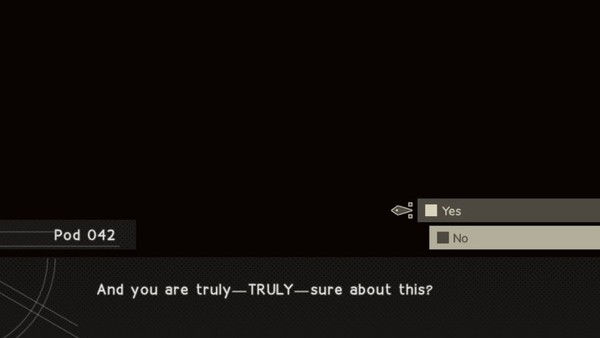
Technically, about 20 of Nier: Automata's many endings could have made it on this list, as they're all equally ridiculous and surprising, but it's the main, "proper" ending that's the most mind-bowing because of just how definitive it is. After completing the game three different times, you're thrown one final choice, asked whether or not you want to tackle a last challenge in order to save the main characters from their untimely deaths.
Obviously, you say yes, and are kicked into the title's final set-piece: a bullet-hell sequence set in the game's credits, where you have to shoot the names of the people who actually made the game. It's extremely punishing, and eventually you're asked whether you need assistance, which comes in the form of gamertags from other people who have completed the mission.
It's truly triumphant to fight alongside other people during this final stretch, watching them succumb into nothingness to help you win. A credits brawl is already a weird way to finish a game, but then Nier throws you one final curveball: you can delete all your saved progress, and join the ranks of the gamertags, or hold onto it, and hope other people have made the sacrifice to help others beat the game.
9. F.E.A.R. 2

F.E.A.R. 2 is one of the very best horror games of the 2000s, mixing genuine, Japanese-tinged horror with satisfying first-person shooting that didn't undercut the scares. In a lot of ways it was similar to Dead Space 2; a bigger, meaner version of an atmospheric original title which would give way to a third game's transition into total action-oriented nonsense.
The eventual trajectory of the series is especially disappointing considering the way the second game ends, subjecting players to one of the weirdest, most uncomfortable climaxes in gaming history.
The entire game is centred around Alma Wade, a creepy, undead child who can twist reality and essentially has the power to turn the entire world into a living hellscape. As a spec-ops soldier called Beckett, you're tasked with taking her down, with Alma occasionally shedding her young girl visage for an older, more sexually-provocative image.
Just when you think you've completed your mission during the game's final moments however, your vision starts to cut back to "reality", where Alma is sexually assaulting Beckett, revealing the entire final mission to be a hallucination.
Instead of stopping her, you've actually impregnated her, and the sequel ends on the promise of Alma's child bringing about the apocalypse.
8. The Witness

So this is technically more of a secret ending than anything else, but it's so outrageously meta that it more than deserves a spot on this list. While you can complete the unfathomably beautiful The Witness by finishing most of its puzzles, there's also a way that nets you a far more satisfying conclusion.
It's kind of convoluted to figure out how to trigger the ending, but the general gist is you have to find a hint in the challenge rooms that'll direct you back to the puzzle that unlocked the very first gate in the game. Though it's already "complete", the hint will show that there's an alternate answer you can input, which will fire a beam of light off the gate into the air. Align the light with the sun to unlock yet another puzzle, and once you've finished that, you'll open up a gateway out of the game itself.
Follow this, and eventually you'll end up leaving the code of the game, and entering the real world. What comes next is an FMV, all shot from the perspective of the game's designer, Jonathan Blow. This ending essentially puts you in the mind of the developer, as he goes about his daily routine, stretching, going to work, playing around with the figures on his desk, and completely shattering the fourth wall.
7. NBA 2K16
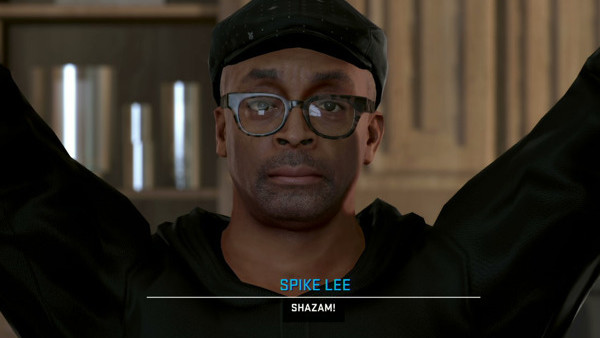
In one of the strangest moves the gaming world has ever seen, 2K drafted writer-director (and all around legend) Spike Lee in to craft the story mode for NBA 2K16, in an attempt to deliver a cinematic narrative in a franchise that had mostly been home to rote stories.
Titled 'Livin' Da Dream', the Spike Lee joint cast you as Freq, a pretty terrible player who, through hard work, manages to climb the ranks of the NBA. However, it isn't all just glitz, glam and basketball, and there's a huge dramatic focus surrounding Freq's personal life, his terrible friends, the leeches who only take interest in him when he hits the big time, and the bigotry he faces.
The ingredients were there for a really special story, but the execution wasn't exactly flawless, and all this drama kind of resulted in a weird, tonally inconsistent hodgepodge of cutscenes.
Even worse, it has an ending that comes completely out of nowhere, and serves as a dour - if admittedly explosive - cap on the experience as a whole. Freq's childhood friend, Vic, is killed in an apparent suicide via an intentional car crash, and the title ends with his ghost making his way to an abandoned basketball court, and reading his goodbye note to the camera.
It's well acted, and the music gets the heartstrings going, but it's such a strange, surreal ending - even in a story mode as strange as this.
6. Assassin's Creed III
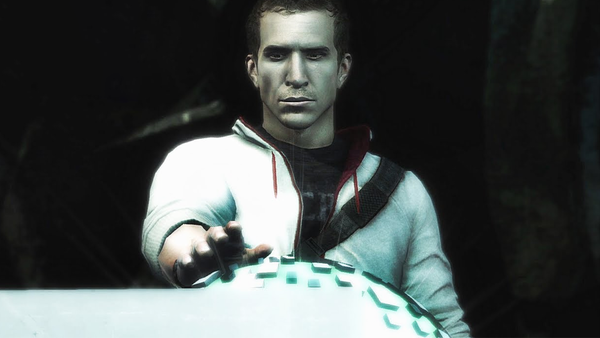
Assassin's Creed III was the apex of Ubisoft's late 2000s/early2010s indulgence. Although it was the third numbered title, the series had been growing larger with yearly releases for far too long, spinning a mad story about time travel, gods, and an incoming apocalypse via a solar flare that the developers of the third title had the misfortune of attempting to wrap up.
Finishing the story of Desmond, the title essentially ends with an impossible choice: the hero can either doom the world to its fiery destruction, or trust Juno, a all-powerful, mysterious, alien-god-thing to save the world - but he has to sacrifice his own life in the process.
The actual consequences of this decision are never explained or explored, and the series' main story essentially concludes with the player dead, and a benevolent demigod set to preside over humanity.
...hooray?
Future games wouldn't even attempt to really make sense of it either, opting to pull away from the grand, overarching story. Probably for the best.
5. Super Fire Pro Wrestling Special
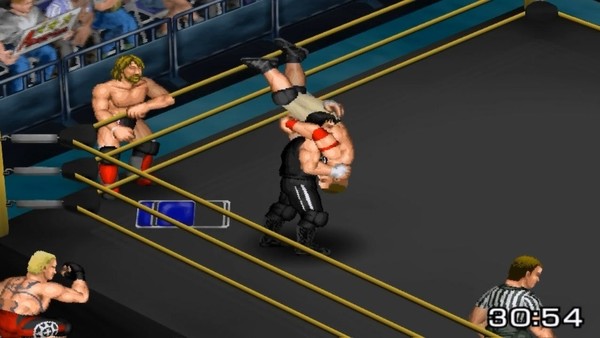
Like all wrestling games at the time, Super Fire Pro Wrestling Special was a mad caricature of the actual sport, full of ridiculous, rip-off characters and a storyline that went from one extreme to another. It was also surprisingly dark, and in between the bombastic bouts was a tale all about murder, death and, eventually, suicide.
You played as a rookie up and comer, rising the ranks with each match to become the most popular wrestler in the company. However, your journey was marked by tragedy, from the murder of your friend and the death of your coach, most of which was orchestrated by your biggest rival. You eventually beat him and become World Champion, but it sends your hero into an existential crisis, where he worries that nothing he's accomplished has any meaning.
Three days later, he shoots himself in the head, and the game ends.
It's ridiculously bleak, but it makes a bit more sense when you realise it was developed by Suda51, the oddball visionary who'd go on to create such gems like Lollipop Chainsaw, Killer7 and No More Heroes. However, at the time, nobody was expecting this from a wrestling game,
4. Inside

Inside's entire story is purposefully abstract and ambiguous, so it's probably no surprise that its ending makes just as little immediate sense as the rest of the game. You play as a boy attempting to navigate a dangerous, dystopian city built on the slave labour and mind-control of humanoid husks. Eventually, you make your way through to a huge science complex, where a bunch of officials are experimenting on the 'Huddle'.
Essentially, it's a blob of people, limbs and consciousness, a horrifying creature that can be totally controlled by the scientists working on it. You infiltrate the tank it's being kept in, free it from its confines, but get sucked into the Huddle itself, now part of its amalgamation of bodies. Using its power, you break out of the complex, destroying it in the process, and escape the walled city and roll down to the coastline, before being bathed in light.
It's a strangely optimistic ending, but it's one that's a bit of a head-scratcher. Even worse, the optimism of the resolution is undercut by the fact that this exact scenario - the light, the hillside and coastline - has been built in miniature in the lab before you break out, suggesting your "escape" was actually anything but.
3. Far Cry 5

Far Cry 5's story, for the most part, is pretty compelling. Spending hours taking down Joseph Seed and his religious, cult family, you're subjected to the kind of end-of-the-world rhetoric that's defined these groups both in fiction and in real life, with the assumption that they're using doomsday prophecies as merely a means of manipulation and control.
However, after you complete the "proper" ending for the game and attempt to take Seed into custody, there's a final twist: he was right. Just as you're about to lock him up, a nuclear warhead detonates a few miles away, and the suggestion is that whether or not the villain had any control over the outcome, his vision of an apocalypse was totally correct.
From here, you attempt to outrun the blast, and the game ends with both you and Seed making it to a fallout bunker, safe and sound. The only problem is, Seed managed to get the upper hand in the struggle, and has taken you hostage, forced to live out the end of the world as his captive. At that point, the atomic fire outside probably looked pretty appealing.
2. Metal Gear Solid V
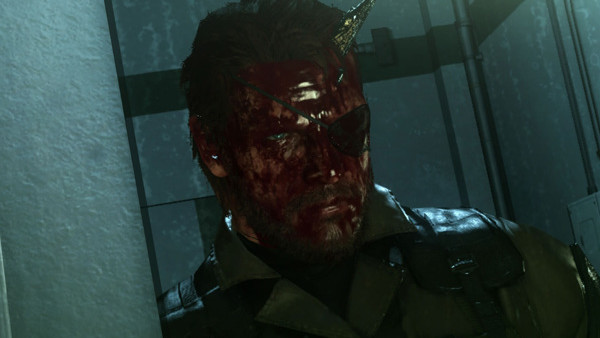
Part of the reason the ending to Metal Gear Solid V comes out of nowhere is probably down to the split between the publisher and the developers causing the second half to be butchered. There's no real structure to the title's storytelling as it moves into the third act, as major set-pieces are implemented between repeated Chapter 1 missions that don't provide any context to what's actually happening.
Compounding the suddenness of the finale, which arrives without any fanfare, is that it doubles as a twist that recontextualises the entire game. The final mission is essentially just the first mission played through again without any variation, but at the end, in a cut-scene, it's revealed that you haven't actually been playing as Big Boss like you thought you were.
Well, you kinda have. You have his face, and you've been his public image, but you're actually a survivor of the explosion from the end of MGS V's epilogue, Ground Zeroes, who's changed his face and been convinced that he's the legendary soldier. While you've been fronting a military organisation, the real Big Boss has been away doing something completely different behind the scenes.
1. Mass Effect 3

Say what you will about Mass Effect 3's ending, but nobody could have expected it to resolve the sci-fi series in the manner it did. The entire title has you struggling to build the Crucible, which has been promised to be the only effective weapon against the invading Reaper force. You eventually succeed, but it turns out the machine isn't some kind of giant, instant-win space gun that can take out all the Reapers, but actually a way to change the very fabric of space and time.
When you activate the machine, you're welcomed by the Catalyst, an A.I. that's made up of the collective knowledge of the Reapers, as well as all the civilizations they've harvested over the years. Essentially, it's the leader of the Reapers, who takes the form of a little boy you couldn't save earlier in the game, a computer programme which waxes philosophical about the relationship between organic and synthetic life.
After it's done monologuing, it gives you a choice of three ways to stave off the total destruction of the galaxy: destroy all A.I. and technology in existence, forcing all races to start over again, take control of the Reapers themselves, or synergise all organic and synthetic life into one new super species.
Each outcome seems pretty terrible, and the original ending barely provided any context for what your decision meant for the world at large. Finishing the series was never going to be easy, but this 2001-esque final choice came completely out of nowhere.