10 Modern Trends That Make Gaming Too Easy
 Nowadays, gamers often complain that the industry is suffering from games being way too dumbed down. Of course, we've always been a nitpicking bunch. But what's the saddest part of this accusation? The fact that, the complainers are mostly right. It would be unfair to call modern gaming too easy as a whole, since some games manage to break through and deliver a hard and rewarding experience; but it wouldn't be a stretch to call it a watered down version of what we used to have a few years back, in terms of challenge and giving you a run for your money. Some blame it on certain developers for kickstarting various trends, but what we'll see is that it's not a single developer (or just a handful, for that matter) that is responsible for the downward spiral that is challenge in gaming. Why That's what we're gonna discuss here, my fellow WhatCulturians. Behold, my list of "10 Modern Trends That Make Gaming Too Easy" (in no particular order -- they're numbered for the sake of it).
10. Full Motion Video Cutscenes (FMV) Are Not Rewards Anymore
 Yes, I said it. What was introduced in Final Fantasy VII as a reward for reaching a certain part in the story, and was later adopted by games for various reasons (beating a certain tough opponent, or acquiring a certain great item for example) has been so overused that it hampers pace and gameplay more often than not. It's no secret that games can now be considered powerful storytelling devices, and to this, FMV's have contributed a lot. I can't think of a game with a cinematic premise that doesn't heavily feature cutscenes; and just so it can showcase the gorgeous cutscenes, or advance the good story, the gameplay suffers. Be it by being short, being easy, being shallow... "The player has to reach point X where cutscene Y will commence, so let's make it easy for them, because our story is so great and needs to be told!", in short. FMV's stopped being rewards quickly, and are even deceiving (see: every game that shows an absolute badass character that can't perform half the actions in gameplay that were in the cutscenes). Example: A host of games from the Playstation One era
9. Downloadable Content (DLC)
 Of course, as wtih every reason I state in the article, this is arguable and subject to opinion. While not an absolute deciding factor of gaming becoming too easy, I think DLC is a culprit to look for a lot of the times. Developer X made game Y, and wants the player to buy post-launch DLC that continues the story, or is placed between the start and finish of it, or anything in between. How, then, will it be more luring for the consumer? "Maybe if the game is difficult and the player craves for more!", I hear you saying. Hell no (although sometimes that's reality, example, Artorias of the Abyss for Dark Souls). An easier way would be to make a good-but-easy game, let the player see it to the end without too much effort, and later throw in some DLC to keep them on your rails. Now, how much DLC would you buy for a game you enjoyed but finished after a long time of trying and sweating over it, and how much DLC for a game you enjoyed, but breezed through? With casual players in mind, I think the second option is more viable for developers. Example: Resident Evil: Operation Raccoon City (imbalanced downloadable weapons)
8. ReGenerating Health
 You knew this would be here. You knew it pretty damn well. What is often coined as the main reason modern games have become too easy is ever-present on such lists. Why, though? While I appreciate it in some games and cases (for example, after a battle's end in Final Fantasy XIV), it is often the reason a game is too easy. Gone are the days you would watch your every step because you're left with 10HP, searching for a medpack. Now is the era of regenerating health, even after you received a hundred bullets in your skull. "I'm being shot at with rocket launchers, let me hide behind a crate to regenerate my health!" is a commonplace scenario for a lot of nowadays' games, and gamers know well enough not really appreciate games offering this "upgrade". Example: Halo: Combat Evolved
7. Mass Appeal
 With a huge chunk of the planet's population playing video games on some kind of device, from mobile phones to home consoles and PC's, it's obvious why developers would want an easier game. How would they appeal to the young sibling of yours, or my housewife mother? Easy: make a game they can both play, and that doesn't require much thought. While it's true that educational games, or games simply catered to a young audience exist, the difference between those and the point I'm making is the target audience. Nowadays, developers may pitch an adventure blockbuster to core gamers and families alike. For example, my father really wanted to play Fable, for the premise of it and the cool-looking action. Guess what? Fable III came out, and he managed to play it, even though he's more of a Gran Turismo/Tourist Trophy/Super Mario guy when it comes to gaming. And even then, he said the game was too easy and dumbed down compared to what he saw me do in Fable II (which he never managed to get into). This ties perfectly to the next reason on the list... Example: Fable III
6. It's A Huge Industry, Not A Passionate Hobby
What started out as a passionate hobby for some programmers and artists, grew to a handful of companies making games for a very specific target audience. Back in the 80's, gaming wasn't as widespread as today. Today, it's a multi-million dollar industry, with more companies, publishers and games than you can count. Top-tier games require millions of investment, too, and how are the people who paid for development get their money back? By making their games easy to access, and thus, appeal to as many potential buyers as possible (look at reason #7). In an industry ruled by shareholders, big companies with faceless bosses, people who want to express their love for video games through their creations but face walls of "this will not sell well", it's sad to see the effect these have on it. Of course, not every developer is guilty. Example: Tons upon tons of games5. Easier And Less Costly Development
 This might be the most up-for-discussion point in the whole list. While an easy game does not guarantee small development costs, it is of great importance. Designing complex mechanics takes time and money, and implementing them successfully takes even more of both. Throw in a story long enough to complement these additions, and you've already spent mighty dollar on a game people might or might not understand/appreciate/buy. How do you counter this? Just don't make it deep, complex or expensive. Make it look cool on the surface instead. You save time, money, and can also make it appeal to the more casual base -- why not? After all, there's no shame in saying you're in for the money -- people got families to feed, that's completely understandable -- the shame is when you try to apply a coat of sugar over it. I might be the only one, or one of the dying breed left that plays Call of Duty for the campaign. What once was a spectacular, epic journey through war has now devolved into a corridor shooter. The blueprint of corridor shooters, to be exact. Sure, stick with the successful formula, you'd be a fool to tinker too much with it! But the use of the same old engine over and over again limits an already lack of creativity from Infinity Ward/Treyarch's side, as it limits what they can do with the game. Example: Hordes of licensed games
4. Bottomless Inventories
 "How to defeat that boss? Easy! Let me look through 40 rocket launchers, 65 pistols, 30 shotguns and 180 SMG's to find what works best!" That basically describes a lot of today's games that lack the difficulty of having a limited arsenal. What's arguable in this reason is that, many games (like Borderlands) are designed around this system, but other games have no excuse. For all my love for everything Metal Gear, I can't help but think, where does Snake/Raiden hide 5 cardboard boxes, an RPG launcher, 3 assault rifles, etc etc? A neat mechanic in Uncharted and BioShock, for example, is the weapon limiting system. Your characters simply can't carry everything, and you have to make decisions on the run. Pick up the Grenade Launcher, in case you need it? Or stick with your M4 that has full ammo? What have I faced so far, and what are the chances I'll face something new soon? Remove the tactical layer and the lack of safety from the player, and you got people that can finish every such game given enough time, in big or small amounts. Example: Metal Gear Solid
3. Quick-Time Events
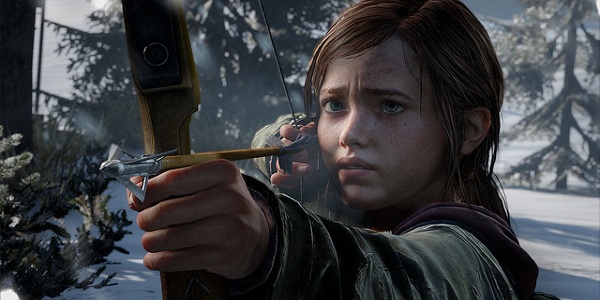 Alongside regenerating health, this is also a staple in this type of lists. With more and more games relying on QTE's for action-heavy sequences, instead of a well-made, fleshed out gameplay opportunity, it's a no-brainer that QTE's are despised by core gamers. Not only do they break immersion, but they also break gameplay, and make for a very easy experience. You messed up and that zombie's on top of you? No worries, mash X to shake it off! No, piss off Capcom, I won't! I understand that, in some cases, it needs to be there... no, I don't actually. QTE's should die a horrible death already. Examples: Shenmue for starting it, Resident Evil 6 for relying on it, Asura's Wrath for basically being a long QTE event, Ryse: Son of Rome for what it's shown so far
2. Critics And Ratings
 Believe it or not, reviews can make or break a game. In fact, game developers may get bonuses if a game scores above X on Metacritic. For that very reason, they are going the safe route. The route that might mean more sales, and "okay" to "warm" reception from critics. For example, a critic may note that game X is too difficult and took a lot of their time to finish. So, reader Y will wonder: why should I get that game? Especially the more casual audience that game every now and then, would not be pleased with a time-consuming, challenging game. Not to mention, harder games usually get scored lower, because of their difficulty; make no mistake, I'm speaking of genuinely difficult games, and not broken ones that can't be finished. Remember how many critics were divided on The Wonderful 101? It's not a game for everyone, that's true, and for this reason you have to find the right person for a review. However, that's not always the case, and I can't say more without naming websites and people, which I really don't want as I work in the same industry. Possible example: The Wonderful 101
1. Not What We Grew Up With
 It's just not the same anymore. When a generation was growing up with Battletoads, Castlevania and Zelda, others grew up with Call of Duty, Halo, fetch-quest RPG's with no ambition, and numerous other uninspired efforts. While I am, by no means, a nostalgia monger, nor do I believe everything was super great back then (E.T., anyone?), I have to recognize success when I see it. Our generations are not without their gems - Okami, Metal Gear Solid, Crash Bandicoot, Super Mario Galaxy, The Last of Us, Gears of War, Pokemon, GoldenEye - but, the way I see it, quality has diminished over the years, and the game makers of today have to stick with what their audience grew up with. Make no mistake, I'm not undermining the success of Halo and Call of Duty (named above). I passionately play both, as I do with most games that come out. I play each for their strengths and their weaknesses; as in, I want to see how the developers could make the game better the next time around, it's just pure curiosity after all my years of digging through piles of games of every genre imaginable. Example: Nothing explicit
 So, there you have it. What is, in my opinion, the downward slide of gaming from challenging and rewarding to ho-hum and irrelevant filler content. What's the cause? Is it the lack of passion? Is it the mega-corporations? Is it that money speaks louder than fans? I don't really know. But what I do know is that gaming has to reinvent itself, if it wants to become that great getaway from reality it once was. Note: this is my first article as a contributing writer for WhatCulture!, and I've got to say, I'm pretty excited. I want to learn and improve on everything in my life, so don't be afraid to state your criticisms in the comments below. I know some of you will agree, some will disagree, some will start a wonderful discussion -- whatever applies to you, please do it in a civil way. With that said, I'm off to find another subject to write about. Until next time, have fun gaming!