10 Most Confusing Video Game Plots
Oh, Ellen Page, what are you DOING.

For whatever reason, video games as a medium is pretty much defined by incredibly confusing stories. Especially in decades gone by, video game plots were more of an afterthought than anything else, and developers would seemingly reward the most dedicated players by providing them with ridiculously detailed mythologies that they could lose themselves in.
Likewise, video games have to spin a story that remains interesting for potentially hundreds of hours, so it makes sense that they take a couple of segues here and there. However, while it's sort of acceptable for stories to get a little complex when they span across countless sequels and spinoffs, there are some titles which have crammed the same complexity into a single game.
Sometimes it's justified and players digging deep enough can untangle huge questions that no other medium is capable of asking, whereas other times you have to wonder just how the developers transformed such simple premises into mind-numbing conundrums.
10. Cryostasis: The Sleep Of Reason
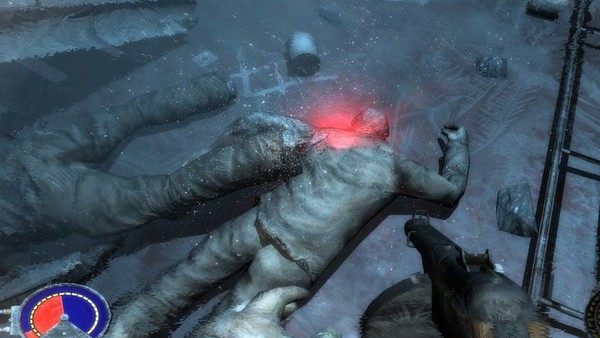
Beginning with the player character Alexander turning up to a nuclear-powered icebreaker called the North Wind expecting to get a trip home after completing a tour of duty in the North Pole, he immediately realises the vessel has been out of commission since the late '60s, and its inhabitants have been transformed into monsters.
Told through flashbacks and a "mental echo" (a technique which other psychological horror games have used since), the story of what happened after the ship hit an iceberg is slowly put together. After anarchy broke out in the weeks following the ship's initial crash, the whole crew kind of lost it, eventually dying from starvation and radiation poising while the nuclear core failed and resulted in a strange energy blast.
Putting this story together is easier said than done, though, as the game constantly shifts between the past and present as you control dead characters and attempt to change history by altering their actions. This only ends up in you fighting the Titan of Time though, and eventually getting sent back to the beginning of the story.
9. Nier: Automata

Every inch of Nier: Automata is designed to confuse players, so it's no surprise that its plot takes at least three playthroughs and the read of an entire Wiki page to properly understand. The first 10 hours or so are kinda straightforward, as you follow androids 2B and 9S to wage a war against aliens on Earth on behalf of the surviving human race.
About half way through it's revealed that, actually, the war has long since ended and the aliens have all been killed, with their robotic helpers gaining a strange sentience and being controlled by Adam and Eve. Then it's revealed that there are no humans left either, and the androids have been fighting a war for pretty much nobody.
Also, at one point there's a virus that wipes most of the machines out so the cycle can eventually continue without anyone realising, while 2B's real purpose is to assassinate 9S when he finds out the truth. This is all on top of the philosophical, meta commentary as well, which would take this entire list to properly dive into.
8. Alan Wake
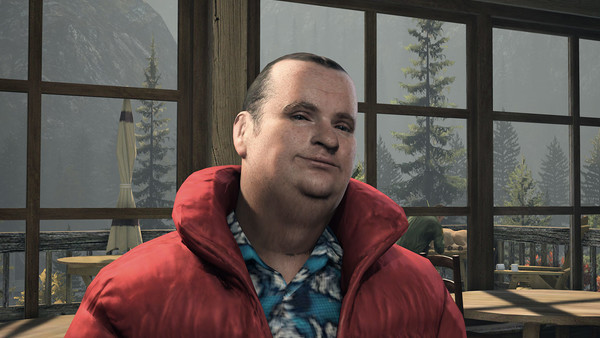
Like the shows it was inspired by, Alan Wake's tale of small-town horror is purposefully obtuse, as much about the sheer act of storytelling and authorship as it is blowing shadow demons away with a shotgun.
Following the titular character's stay at Bright Falls on account of his writer's block, Alan discovers the town holds a dark secret when his wife Alice is pulled into a lake by a dark presence. Trying to untangle the mystery of why he's being attacked by monsters and why his wife has been taken, he continues to find pages of a manuscript, written by himself, which has detailed every sinister event before it happened.
Seemingly part of the problem, the game ends with Alan giving himself over to the lake, sinking below while Alice is able to pull herself out.
While you might be able to get your head around all of that, the ending proceeds to throw everything up in the air once again. It picks up with Alan, isolated in the middle of the lake, beginning to finish the manuscript. However, his final comment is an ominous realisation of "it's not a lake - it's an ocean!". What does that mean? I have literally no idea.
7. L.A. Noire
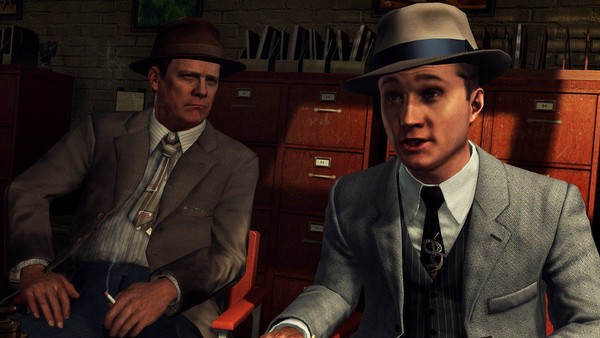
For the first 2/3rds of L.A. Noire, players are subjected to pretty much every hard-boiled detective plot ever thought up, as they solve murders, petty crimes and conspiracies that rarely last more than a couple cases. The longest one involves a serial killer who eventually turns out to be related to a powerful man in the city, which means your hard work cannot be publicly recognised.
That's the first major sign that corruption has crept its way into the police force, setting up a major twist that everyone has been stopping you from seeing a larger, city-wide conspiracy this whole time.
With the help of private investigator Jack Kelso, Cole Phelps realises pretty much every major character he's encountered has something to gain from a new city development, with the majority of crimes he's solved having much larger implications.
This is all tied into Cole's WW2 backstory as well, and the people he met in that conflict show up as pawns in the larger conspiracy, all of which can be missed if you don't pick up every newspaper in the game.
6. What Remains Of Edith Finch

What Remains of Edith Finch is all about storytelling and how real events are spun into something fantastical in order to make sense of them, which means that getting to the actual "truth" of its plot is surprisingly rather difficult.
Told in different vignettes as Edith Finch returns to her childhood home - which has been transformed into a memoriam for her dead family (who all died in tragic accidents) - you play through each one of these deaths from the victim's perspective, all of which have an element of truth to them that's been obfuscated by years of fantasy and embellishment.
They're are all in service of a grander story, though, with Edith trying to come to terms with whether or not her family really is cursed and she's also destined to suffer the same fate as them, or whether the repetition of these demented stories created a self-fulfilling prophecy for a family terrified to succumb to the same fate.
5. Bloodborne

Like Dark Souls before it, Bloodborne's story is purposefully obtuse and abstract, making players work for every nugget of insight they can get. Ostensibly about a society addicted to the "old blood", which has been used to cure ailments and make the people of Yarnham prosper, the only downside is that it eventually causes a breakout of monsters that Hunters are tasked to come in and regularly purge.
That's already a lot to get your head around, but as you fight your way through Bloodborne you'll realise it's not quite the Bram Stoker-inspired horror tale it appears to be, but actually a Lovecraftian nightmare. The blood is actually from the "Great Ones", eldritch monsters of unknown origin who were worshipped by a secret Church in Yarnham, and you're currently trapped in a literal nightmare of their creation.
The more insight characters gain about these beings, the more mad they become, and the entire game is about uncovering more about what they're doing and breaking their spell, which eventually leads to you fighting a "Moon Presence" and transforming into a baby Great One yourself. Oh, but to battle it you need to find and eat three umbilical cords while out on your travels. Good luck.
4. Call Of Duty: Black Ops III

The Call of Duty: Black Ops series has slowly become the tentpole COD sub-series, not only boasting the best multiplayer suite but also presenting some of the most interesting stories.
Gaining a reputation for its mystery narratives and plot twists, the third game attempted to outdo everything that came before with an almost supernaturally-inspired story where the first level is actually the very last chronologically. The twist is that everything you're playing through is simply a memory of previous missions, with the final level revealing that you've been playing as a dying man who's conscience is in the process of being transferred to another body.
Funnily enough, this confusing plot partly came from the fact that barely anybody plays these campaigns, and the developers were looking to make something non-linear that could be tackled in any order. That approach royally f****d up the flow of the plot, though, leading to this mess of a campaign that took the charming rug-pulling of the previous games to ridiculous new heights.
3. Killer 7

Comparing surreal media to David Lynch movies is a little trite, but there are few creatives in any medium that come close to matching the director's unwavering avoidance of explaining his art like game director Goichi Suda.
His Killer 7 release is no different, putting players in control of seven different assassins on a quest to destroy a god-like creature. This is all told through pulpy ultra-violence, set against a broader political landscape where struggling US-Japan relations and UN assassinations all come into play.
There's an immense sense of scale to the plot that the title never even attempts to give players a handle of, offering little to no explanation for what's actually going on, while at the same time constantly trying to surprise players by revealing characters aren't who they say they are and introducing subplots about brainwashing and perpetual battles between heaven and hell.
When it does try to explain itself, the story is presented in such a dense, cutscene-heavy way that's it's virtually impossible to take everything in anyway. Still, at least the blood looks cool.
2. Beyond: Two Souls

Like any other Quantic Dream release, Beyond: Two Souls is very self-serious, presenting a narrative about a supernaturally-connected young woman played by Ellen Page. She spends most of her life attempting to escape these abilities but is eventually drafted in to stop an attack on America via a device which connects the world of the dead to that of the living.
But the real kicker is this entire story is told out of chronological order, meaning you have no idea about the significance of scenes until hours later. David Cage clearly saw Pulp Fiction and Irreversible, and knew that splitting up a narrative was a part of why these movies gained such a following, but had no real idea how or why the technique worked so well, leading to Beyond: Two Souls' already-confusing plot becoming an incomprehensible mess.
It was so bad that when it was re-released, there was a new option to play the game chronologically, which alleviated some of the headaches but still didn't make it any good.
1. Metal Gear Solid 2: Sons Of Liberty
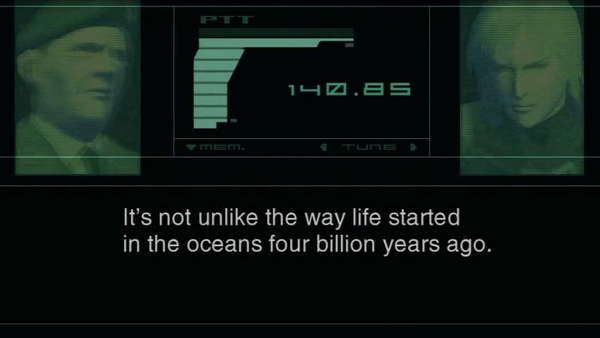
Look, pretty much any Metal Gear Solid game could have made it on this list. Every entry is seemingly more confusing than the last, but it's the second game that takes the cake, primarily because of how deceptively simple it is on the surface. You're cast as Raiden, a special agent sent to stop a terrorist group who've taken over an offshore plant.
However, it turns out you're not the only hero there to take down the group, eventually uncovering a worldwide conspiracy involving The Patriots, a secret organisation set up to secretly control every aspect of society. Who, in the end credits, all turn out to have long-since died.
That's just the tip of the iceberg as well, as there's also the revelation that your boss is actually an A.I., a plotline about Raiden's life as a child soldier, and a meta, fourth-wall breaking ending that brings the player themselves into the narrative.
Likewise, that's only taking the events at face value, as Kojima also created the game as a comment on the industry at large and sequels in particular, using references to the first game and mirroring whole sequences to delve into the artificiality of franchises and the fallacy of player expectations.
I think I need to sit down.