10 Times Video Game Sequels EMBARRASSED Movies
When the games go hard and the movies phone it in - 10 sequels that totally stole the spotlight

For years, video games were seen as the awkward spin-offs - clunky tie-ins, rushed adaptations, or desperate cash grabs riding on the coattails of bigger, flashier movies. But somewhere along the way, the roles flipped.
While Hollywood franchises bloated into nostalgia-heavy legacy sequels or collapsed under bad scripts and studio interference, games quietly stepped up. They told tighter stories, took bigger risks, and, in some cases, delivered the exact experience fans had been begging for. Want a proper Future War in Terminator? The games nailed it. A true third Ghostbusters outing? Already happened. A Bond adventure that actually feels like Bond? Look no further.
This isn’t just about direct adaptations. Some of these games took the vibe of a franchise and outclassed the movies entirely, delivering more excitement, character, and emotional weight than their big-screen counterparts could muster with ten times the budget.
Whether continuing a beloved universe or just doing what the films never could, these video game sequels didn’t just outshine the movies - they embarrassed them.
10. Ghostbusters: The Video Game > Every Movie Sequel
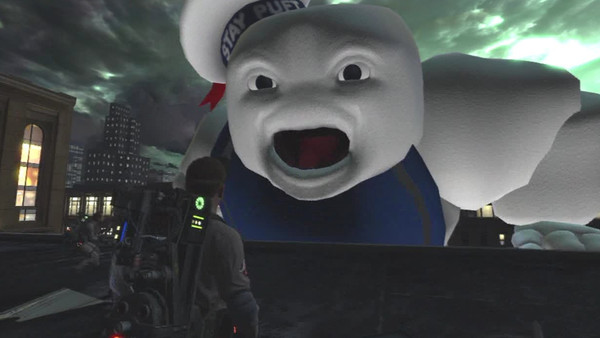
After the original Ghostbusters, all we really wanted was to see the gang back together — proton packs fired up, wisecracks flying, and spectral chaos erupting across grimy New York streets. Ghostbusters II didn’t quite stick the landing, and every attempt at a true third film - with the original cast intact - kept falling apart. Then came the reboot era, legacy sequels, and timeline juggling, all with mixed results and diminishing returns.
And with Harold Ramis’ passing, the dream of a proper reunion seemed gone for good.
But a video game had already stepped up and quietly given us everything we’d been asking for.
Released in 2009, Ghostbusters: The Video Game brought back the entire original cast - Murray, Aykroyd, Ramis, Hudson - for one last proper case. With a script co-written by Ramis and Aykroyd, it wasn’t just a throwback; it was a true follow-up. Funny, creepy, fast-paced, and packed with lore, it felt like Ghostbusters 3 in all but name.
You suited up as the rookie, chased ghosts through museums, hotels, and the streets of Manhattan, and it all just worked. No studio interference, no tonal confusion - just pure Ghostbusting bliss.
The movies fumbled it. The game nailed it.
9. The Chronicles of Riddick: Escape from Butcher Bay > The Chronicles of Riddick (2004)

The Chronicles of Riddick movie wanted to turn Vin Diesel into a sci-fi messiah. The game just let him be a badass.
Escape from Butcher Bay didn’t try to expand the lore with intergalactic cults, prophecies, or whatever "necromongers" were meant to be. Instead, it zoomed in on one thing: Riddick breaking out of the most dangerous prison in the galaxy. No grand space opera - just fists, shivs, and shadows.
While the movie got lost in its own overblown mythology, the game delivered a tight, atmospheric, and surprisingly stylish stealth-action hybrid that felt way more grounded and brutal, in the best possible way. It looked incredible for 2004, played like a dream, and gave Vin Diesel more presence through voiceover and body language than the film managed in two hours of slow-motion cape-swirling.
In short, the game understood the assignment. It was lean, mean, and focused entirely on what made the character cool in the first place. It leaned into the grit and let the character do what he did best.
Whilst the film series has chugged along (mostly due to Diesel's persistence) and both sequels have enjoyed a cult reappraisal since their muted releases, Butcher Bay still stands as the best instalment since the original.
The movie tried to turn Riddick into Dune. The game just let him be Riddick - and it was all the better for it.
8. Terminator: Resistance > Terminator: Salvation
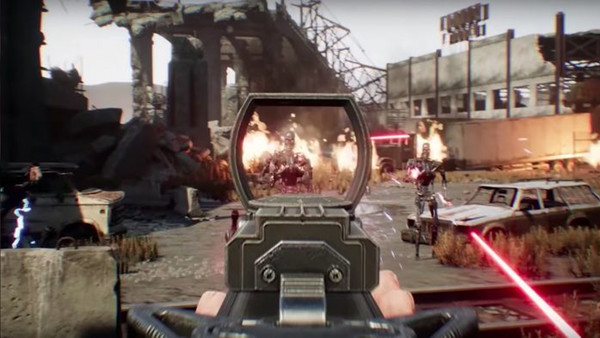
After T2, the Terminator franchise has been stuck in a time loop of diminishing returns - constantly chasing the original’s magic with increasingly convoluted time-hopping plots. Every sequel promised to “go back to basics,” but somehow ended up messier than the last. Fans didn’t want timelines and multiverse nonsense - they just wanted to see that gritty, desperate Future War teased in James Cameron’s flash-forwards, brought to life.
Terminator: Salvation tried, but the result was a joyless, grey slog with a moody Christian Bale and almost no actual Skynet menace.
Resistance doesn’t waste time pretending. It gives us exactly what we asked for: a boots-on-the-ground survival story set during the war between man and machine. You’re not a chosen one or a time-travelling saviour — you’re a soldier in the mud, sneaking through bombed-out ruins while killer machines stalk you in the dark. The T-800 isn’t an action figure - it’s something you hide from, not fight.
Every gunfight feels earned. Every win feels lucky. And it all builds to a third act that ramps up the tension and pays off with a clever, satisfying twist that brings everything full circle.
It’s not flashy. It’s not expensive, and it released to absolutely zero fanfare. But it might be the most faithful Terminator sequel we’ve ever had.
7. Max Payne 3 > A Good Day to Die Hard

Who didn’t think Tony Scott should’ve directed a Die Hard movie? We got close with The Last Boy Scout, but the full dream never materialised. Unless, of course, you count Max Payne 3 - a sweaty, bloody, bullet-soaked sequel that feels like it fell right out of Scott’s late-era playbook.
While A Good Day to Die Hard dragged John McClane through Moscow in the most joyless way imaginable, Max Payne 3 dropped its washed-up hero into the chaos of São Paulo and gave us exactly what we wanted: brutal shootouts, hard-boiled narration, and a protagonist who’s broken, bitter, and still terrifyingly efficient with a pistol in each hand.
The neon-soaked visuals, smash-cut edits, and relentless pacing are pure Man on Fire energy - all kinetic fury and emotional damage. It’s not just a style choice; it feels like Payne is spiralling, and the game never lets you forget it.
Meanwhile, Die Hard 5 completely forgot what made McClane great in the first place. Max Payne 3 remembered. It gave us a flawed, cynical antihero in a world collapsing around him - and somehow made it all look cool as hell.
This was the Die Hard sequel we never got - and the better for it.
6. James Bond 007: Everything or Nothing > Die Another Day
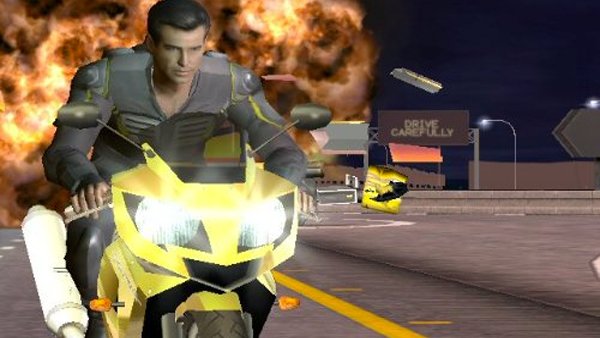
It’s hard to argue that any debuting Bond had a stronger start than Brosnan in GoldenEye - well, okay, maybe Casino Royale. But still, GoldenEye was a statement: Bond was back, and Brosnan fit the role like a perfectly tailored tux. Unfortunately, the films got worse and worse from there, until we hit Die Another Day, which, outside of a killer opening, has a third act that has Bond windsurfing an arctic tidal wave made of CGI. Seriously.
Then along came Everything or Nothing, a game so cinematic it was hyped as “the first Bond game that feels like a Bond movie.” And somehow, that tagline undersold it. This thing might actually be the best Bond movie of that era.
Pre-Gears cover shooting? Check. High-speed chases in tanks, bikes, and sports cars? Check. Two sultry Bond girls, explosive gadgets, and Willem Dafoe hamming it up as a rogue industrialist? Absolutely. And the cherry on top? Brosnan, Dench, and Cleese all returned, giving this full blockbuster energy.
It didn’t just fill the gap between films - it showed how far the movies had fallen. Everything or Nothing wasn’t a tie-in, it was the real sequel that Die Another Day should’ve been.
5. Indiana Jones and the Great Circle > Dial of Destiny
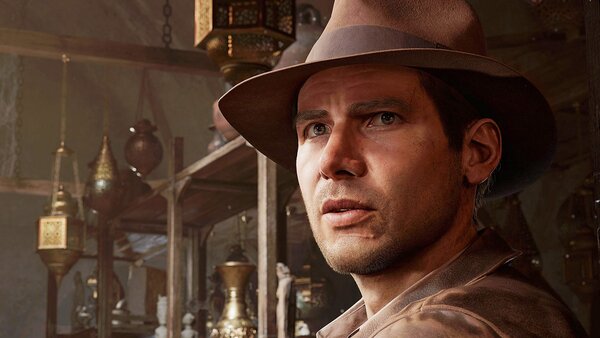
For Indiana Jones, there’s the original trilogy - and then there’s everything else. And when the nicest thing you can say about Dial of Destiny is that it isn’t as bad as Kingdom of the Crystal Skull, you have to ask: what was the point?
It didn’t help that Dial constantly reminded us - via abrasive de-ageing and endless nostalgia bait — of the movie we really wanted but will never get: a proper, pulpy, prime-era Indy adventure. More tombs, more Nazis, more punches. Less existential dread.
So along comes The Great Circle, and somehow, the game delivers exactly that.
MachineGames understood the assignment. Set in 1937, The Great Circle gives us an Indy who still cracks wise, solves ancient puzzles, and takes a few beatings along the way. More importantly, it gives him something the sequels always fumbled: a legit antagonist. Emmerich Voss, portrayed with chilling precision by Marios Gavrilis, is what truly set this adventure apart.
And with Troy Baker channeling Indy’s spirit without doing a straight Ford impression, it all just clicks. First-person perspective pulls you into the action, the globetrotting feels organic, and the whip-swinging is actually fun.
Dial of Destiny tried to retire the legend. The Great Circle reminds us why he became one in the first place.
4. Star Wars Jedi: Fallen Order > The Rise of Skywalker
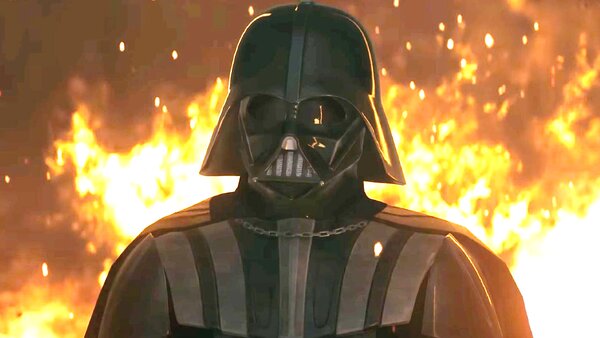
The modern Star Wars films have been a rollercoaster, and not the fun kind. Outside of anything Tony Gilroy touched (Andor baby, yeah!), it’s mostly been a mess. And nothing was messier than The Rise of Skywalker - a jittery, soulless finale that somehow made Star Wars feel… boring. Which should be impossible, considering even the most flawed entries have had their moments.
Then Jedi: Fallen Order drops in and casually reminds us how good this galaxy can be when someone actually gives a damn.
Set during one of the most interesting timelines the movies still haven’t touched - with Jedi hunted, scattered, and in hiding - it follows Cal Kestis, brilliantly played by Cameron Monaghan, as he fights to survive in a galaxy that wants him dead. No destiny nonsense. No secret bloodlines. Just one man with a lightsaber and a target on his back.
It’s dark, grounded, and full of emotional weight. The combat’s tighter, the worlds are richer, and Cal feels like a real Jedi, not some franchise mascot being dragged through rewrites. Monaghan brings actual depth to the role, and the story hits harder because of it.
Rise of Skywalker tried to wrap up a trilogy with noise. Jedi: Survivor tells a better story just by focusing on one fugitive trying to hold on to hope.
3. Transformers: Cybertron Series > Every Michael Bay Transformers Movie After the First

The War for Cybertron and Fall of Cybertron games didn’t just outdo Michael Bay’s Transformers sequels - they straight-up made them look like parodies.
While the first entry gets a pass, Bay’s films got progressively louder, dumber, and more obsessed with military hardware and weird jokes about robot balls, High Moon Studios actually took the source material seriously. The Cybertron games delivered a rich, lore-heavy reimagining of the Autobot-Decepticon civil war, with gravitas, character development, and yes, Optimus Prime being an actual leader instead of a bloodthirsty lunatic.
The games gave fans what they’d been waiting for: a devastated metallic world torn apart by ideology, brutal third-person combat, and set pieces that felt genuinely epic without drowning in sparks and slow-motion debris. They even had proper arcs for Starscream, Megatron, and Grimlock - characters reduced to cannon fodder or punchlines in the films.
And the best part? No Shia LaBeouf screaming. No robot testicles. Just pure, high-quality Transformers storytelling with weight, stakes, and a killer soundtrack work to match.
The movies wanted mass appeal and spectacle. Cybertron gave fans an actual war worth fighting - and it never once tried to sell you a Bud Light in the middle of a gunfight.
2. The Texas Chain Saw Massacre (2023) > The Texas Chainsaw Massacre (2022)

At this point, there have been almost as many Texas Chainsaw reboots as there have been actual sequels - and somehow, the 2022 film still managed to be the worst of the lot. No small feat. What it gave us was Leatherface fighting gentrification and influencers on a party bus. Yes, really.
Gun Interactive’s Texas Chain Saw Massacre game, on the other hand, understood the brief from the first swing of the hammer.
Rather than trying to reinvent the wheel, the 2023 asymmetrical multiplayer horror leaned hard into what made the original 1974 film iconic: grit, tension, claustrophobia, and the sickening feeling that you’ve wandered into a nightmare you were never meant to see. From the sweat-stained basements to the sun-blasted fields, every inch of it screams authenticity, right down to the muffled screams and buzzing chainsaw echoing through the house.
It doesn’t need to explain Leatherface’s psychology or cram in bad social commentary. It just drops you into the worst day of your life and dares you to survive.
Meanwhile, the movie was too busy trying to do a Halloween (2018) cosplay with none of the weight or payoff. The game didn’t need legacy characters or viral marketing stunts. It just needed to get the tone right, and it absolutely did.
1. Middle-earth: Shadow of Mordor > The Hobbit Trilogy

Peter Jackson’s Hobbit trilogy turned a 200-page children’s book into a nine-hour CGI arms race. Shadow of Mordor just gave us a guy with a sword and a grudge - and somehow delivered a better Tolkien experience.
Set between The Hobbit and The Lord of the Rings, Shadow of Mordor was never supposed to be groundbreaking. And then it dropped the Nemesis System - a dynamic, evolving hierarchy of Orcs who remembered your every failure, insulted you mid-fight, and came back from the dead uglier and angrier each time.
It wasn’t just clever — it was pure, interactive storytelling. Your personal rivalries felt earned. Your victories, bloody. And the combat? Basically Arkham with a broadsword.
Meanwhile, The Hobbit movies drowned in excess. Over-reliant on green screen, overloaded with filler characters, and constantly straining to feel “epic,” they forgot the charm and wonder of Tolkien’s world. By the third film, even Ian McKellen looked like he wanted to go home.
Shadow of Mordor understood that Middle-earth didn’t need to be bigger - it needed to be more personal. One ranger, one wraith, and an entire army of Orcs with your name on their lips. That’s how you do it.