10 Video Game Fourth Wall Breaks No One Saw Coming

Refresh the page. Do it. Unlock the secrets...
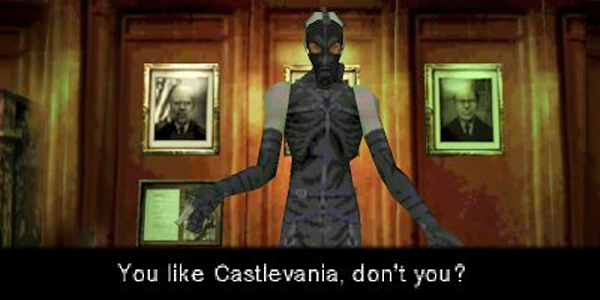
In terms of gaming, the concept of breaking the fourth wall is simply to dissolve the barrier between the game and the audience. More simply explained, it's when a game becomes aware of its own existence, references the real world or acknowledges the gamer directly. It's not an element that often appears in games, but much like it has in films and TV, it's been popping up more regularly since the dawn of the 21st century. Metal Gear Solid is probably the most well-known for breaking the fourth wall, there are countless moments in the series that bewildered fans. A recent example would be when Otacon told the player to switch to disc 2 in Metal Gear Solid 4, before realizing that the PS3's Blu-ray capabilities removed the need for disc switching. There's also the unforgettable moment when Colonel tells you to abort the mission and turn off your console in MGS 2. There's no doubt the franchise has been the most effective in its use of fourth-wall breaking, the epic Psycho Mantis boss fight comes to mind in particular. It also definitely played a role in popularizing its use. However, we're not intending to comment on the greatest use of fourth wall-breaks in games, this time we're going for the least expected fourth wall references, ones that we didn't see coming or expect like the ones that often occur in Metal Gear Solid. When the medium is used best, it's used to bewilder, or to shock or astound - to do that the element of surprise is needed.

10. Deadpool - Script Edits

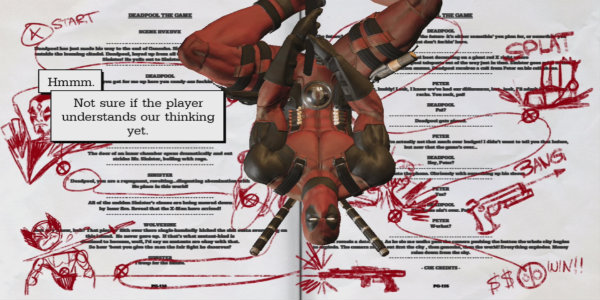
If you're familiar with Deadpool, you'll know him for his fast-talking, self aware, fourth wall breaking sense of humor. While fans expected much of his personality to translate to his video game, it wasn't exactly clear how his gags would manifest visually or verbally. While Deadpool's constant fourth wall referencing gags do get quite stale near the end of the game's duration, the first opening gag of Deadpool making the arrangements for his own video game is hilarious. Upon deciding that he wants to be a virtual star in his very own video game; he sends a script to the developers at High Moon Studios, and later a bomb, harasses his own voice actor and makes comprehensive edits to the game's own script. While it's all the kind of humor we were expecting, how much of it and how well it fit the character was genuinely surprising.

9. Conker's Bad Fur Day - Conker Blackmails Software Engineers
In Rareware's Conker's Bad Fur Day, an unfortunate error happens in one of the game's boss fights as you face a giant, terrifying monster akin to the xenomorph creature that inhabits the film Aliens. The battle freezes, as Conker comes back on-screen and asks if any software engineers are present to give him a hand. Green computer-like text appears, responding to his plea for help. He blackmails the developers into a favor, as a giant matrix-esque weapon cache appears. Breaking the fourth wall has always been used a source of comedy in both games and films, but nevertheless, Conker's 'technical' problem wasn't the most obvious fourth wall reference.

8. Metal Gear Solid - Back Of The CD Case
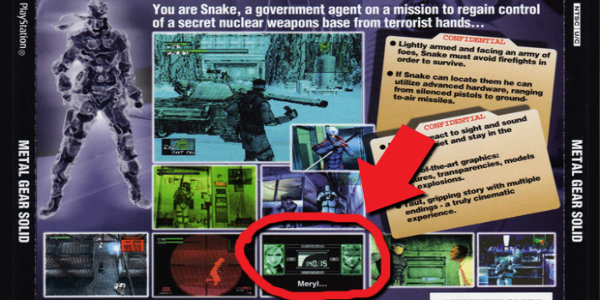
As the Metal Gear Solid franchise developed, so did Hideo Kojima's reputation for unusual moments, strange plot-points and unnecessary fourth wall breaks. In Konami's smash-hit first installment of Metal Gear Solid, the primary method for contacting your allies was via radio codec call, using radio frequencies. After encountering Meryl 'Rookie Eyes' Silverburgh, Colonel Roy Campbell discloses that you should get in contact with his niece, seeing as they are relatives - surely he has her frequency right? Nope, no he doesn't. He does inform you it can be found on the back of the CD case though, how convenient. That's not some weird in-game item, it's literally on the back of the retail cover in one of the stills on the back. It's certainly an intelligent way to prevent progress in bootleg copies. This moment was most unexpected due to the youth of the franchise, this being the literal first moment when the game broke the fourth wall, before it had a reputation of frequently doing so.

7. Animal Crossing - Resetti Is Angry

Mr. Resetti isn't a bad guy, really, he just wants to do his job and would really appreciate it if anyone occasionally listened to him. In Nintendo's Animal Crossing, Mr. Resetti is there to make sure you don't turn off without saving, which players would often due to abuse the game's real-time clock and make the stock in Tom Nook's store reset. Everytime you don't save before turning off, he'll appear again and again and again, usually with a more heinous and boring speech than last time. You don't want to know what happens when Mr. Resetti gets really angry though. If a player has repeatedly reset without saving, Mr. Resetti might decide you're a lost cause and reset the game himself, oh, he'll be taking all of your hard earned game data with him, though. Considering Animal Crossing is an addictive second life game which requires hours upon hours of time to get anywhere, this is literally the cruelest trick Resetti could play. It's hard to believe that this is a legitimate feature in a children's game -an abusive mole who threats to delete all your saves, but he's very much there. Resetti's appearances are surely one of the most unorthodox fourth wall breaking moments in gaming.

6. Tomb Raider 2 - You've Seen Enough
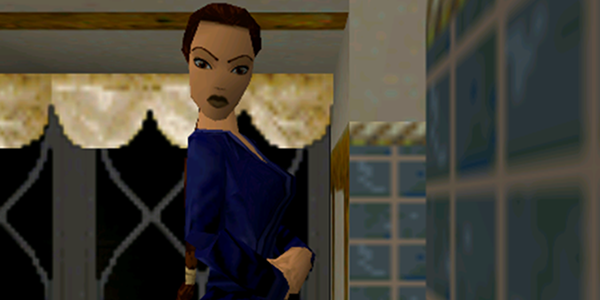
Lara Croft's overt sexuality is a pretty known gaming fact at this point. The developers at Core Design knew what they were doing when they created a protagonist like Lara Croft, they directly appealed to sexuality, an element that was still a massive taboo in the early days of the Playstation 1. Many players thought there were some kind of nude code, cheat or glitch in Tomb Raider 1 for some reason or another, which obviously turned out to be untrue. In acknowledgment of this, Core Design decided to have a little fun with their fan-base in Tomb Raider 2 via the fourth wall. After a hard day of beating the bad guys, Lara Croft decides to have a nice soapy shower. Before she gets comfortable and completely disrobes, she turns to the camera and bluntly asks 'Haven't you seen enough'?, before promptly picking up her shot gun and blowing the spectator away. If anyone genuinely thought they were going to see some gratuitous nudey pixels, think again. At the time no one saw this swerve coming, while Core Design definitely had some fun at the expense of their fan-base.

5. Batman: Arkham Asylum - Use The MIDDLE Stick.

In the first entry of Rocksteady's groundbreaking Batman: Arkham series, one of the most unexpected fourth wall breaks in gaming history happened. Scarecrow and his hallucinatory powers are a force to be reckoned with in the game, often forcing Batman to fight through delusion to face him. The fourth wall reference in question happens when Scarecrow's toxin causes the game to appear as if it has crashed and restarted, the opening cut-scene then replays, but with a few minor differences. This time, the cutscene starts with the Joker behind the wheel of the Batmobile, moving on to show Batman strapped down in the prison transportation with Joker and Harley walking beside him. At the end of the cutscene, Joker pulls out a gun and promptly shoots the Caped Crusader, prompting a game over. The hint on the game over screen reads 'use the middle stick to dodge Joker's gun fire'. Of course this is a hoax and Batman is just dreaming again, as the controls only have right or left sticks, unless you somehow managed to play Arkham Asylum on the N64.

4. Monkey Island 2: LeChuck's Revenge - Calling The Developer Hotline
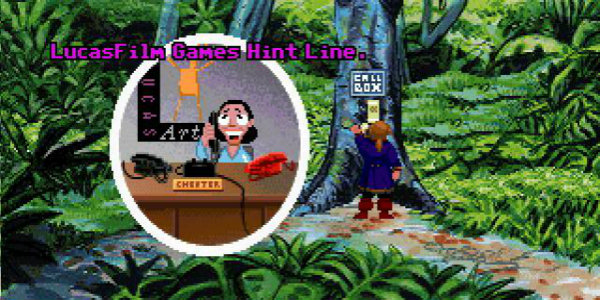
The point-and-click adventure series Monkey Island has always been self aware, early on it became known for comedic fourth wall breaking and self-referential gags. In 1991's Monkey Island 2: LeChuck's Revenge, one of the most memorable fourth wall breaks was on Dinky Island when lost in the jungle. Upon some exploration, you'll find a conveniently placed call phone. The phone dials to the help hotline at Lucas Arts, where your put on the line with Chester. While the segment is not inherently that funny (arguably like most of Monkey Island games), the moment is truly bizarre and quite unexpected. It's almost shameless self-promotion, or would be if Chester weren't so grumpy and unhelpful. You can even asked about the infamous insert disk 114 stump joke, to which Chester basically admits it was a stupid idea and says to stop asking about it.

3. Eternal Darkness: Sanity's Requiem - Sanity Effects
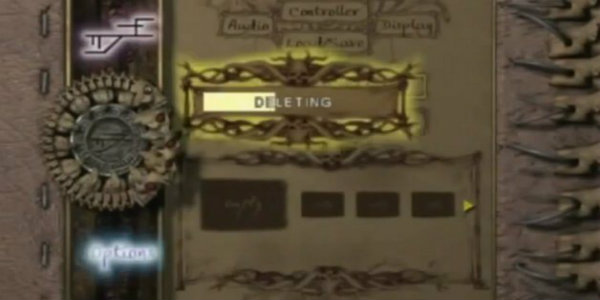
Eternal Darkness is a criminally underrated survival-horror game for the Nintendo Gamecube. As you might have guessed from the game's title, the game plays with the concept of sanity and insanity, with many of the mechanics intended to make the player feel as if they were approaching insanity themselves. Each character has a health bar but also the more important sanity bar, when you're discovered by a monster, the sanity bar drops. When a player's sanity bar falls too low, strange events begin to occur not only within the game, but also in 'reality' itself. There are several insanity effects which break the fourth wall, some of which are fairly tame, while others are completely terrifying. A few examples mess with the TV display, blackening the screen as if the TV was turned off, making insects appear, or even lowering the in-game volume with a big green volume bar which mimics real on-screen TV settings. Occasionally, a player will attempt to save his game and be met with a prompt asking 'Would you like to delete all your saved files', with the answers being 'yes, or continue without saving', while neither answer causes any actual data to be deleted. The game could even be as cruel to give you a blue screen of death as if Windows had just crashed, it could falsely tell your controller needs to be plugged in, or even fakely congratulate you on finishing the demo. The sheer amount of different, innovative ways Eternal Darkness could mess with a player has never been met. The wall breaks are still fairly unexpected as Eternal Darkness is still quite an obscure game, due to it being an early third-party title on the Gamecube. Eternal Darkness may have broken the fourth wall countless times, but each time created a much more terrifying, atmospheric and gripping experience.

2. X-Men - Reset The Danger Room

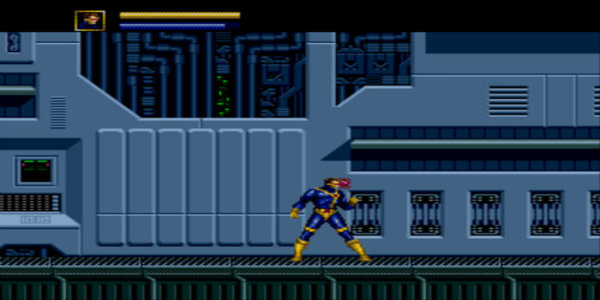
In the action/beat-em-up simply known as X-Men for the Sega Mega Drive and Genesis, the player is told they need to reboot the danger room by 'resetting the computer' in the stage called Mojo Crunch. This happens after the player has already progressed through the level, defeated most of the enemies and the boss. Upon exploring the stage, there's no clear in-game computer reset-button, or any prompt, hint or direction for what you have to do. By resetting the computer, the game is actually referring to the Sega Genesis on which you're playing X-men. Yes that's right, you have to restart the console in order to continue playing the game. If you hold the button for more than a few seconds you'll trigger a hard reset and actually reboot, but a soft reset causes a Matrix-esque green text to come up on the screen, followed by a message telling you that the infectious virus has been subdued. This method of the console being used as a game-play prop is highly unexpected from a game released in 1994. and it predates all Metal Gear Solid shenanigans regarding controller ports, memory cards and turning the console off.

1. Startropics - Hidden Message Letter
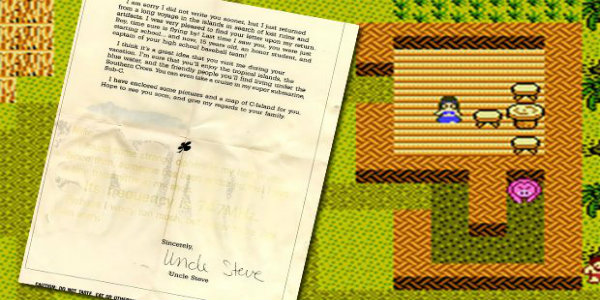
When it comes to hints included in the retail package, most will mention Metal Gear Solid and the aforementioned CD case which has Meryl's codec number on the back of it. Many regarded this use of packaging as 4th wall exposition as revolutionary and completely unexpected, but the truth is they were actually beaten to the punch by about 10 years. In Nintendo's action-adventurer StarTropics for the NES, you're given a letter in the game's packaging which tells the player where to go to start the game, an inventive and subtle way to start things off. That's not all though, later in the game, the player will receive a mysterious message which tells him to dip the letter in water. This isn't an in-game item he's talking about, he's talking about the actual later which came with the game cartridge. Upon dipping it in water, a secret message discloses a code the player will need later in the game as well as where to go for the game's next story segment. Given that StarTropics came out in 1990, this was a bold move on behalf of Nintendo and was widely unexpected as it simply hadn't been done before. It's also worth stating that this use of 4th wall acknowledgment is one of the rare cases that actually enhanced the gaming experience, it tried to actively include the player in the game's sense of discovery, likening him to the protagonist where as other entries just made you more aware that you're simply playing a game.

Contributor
Contributor

Sam is an experienced Film, Gaming and Wrestling writer, critic and journalist who was written for a vast number of different entertainment websites. Follow him on twitter at @Sams_Reel_Views.