10 Video Game Franchises That Never Got Better Than The First Instalment

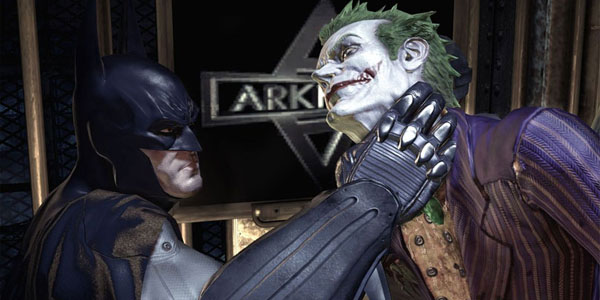
Let's face it - Rocksteady will never top Arkham Asylum.
It's common to hear people complaining about how cinema is dominated by sequel after sequel, but few non-gamers realise that exactly the same problem exists in video-games. Only worse. Looking through the high profile releases over the next few months and only Destiny, the first post-Halo project from developer Bungie, stands out as a wholly new title. There's plenty of franchised games that look awesome and some may even be series highlights, but the originality question rears into view; how many are regurgitating the same old tat in a lazy cash grab? That's not to say developers always get it right first time. It may now carry the responsibility of being Ubisoft's mega-franchise, but before they became a yearly 'event', the sequels to Assassin's Creed were genuine improvements; the second took some daring creative choices to make the Italian-set adventure not feel as repetitive as the original. With tight deadlines it can take a couple of go arounds for a game idea to be perfected. But sometimes they get it right first time, with later entries in the series only serving to highlight how bloody brilliant the first game was. Brilliant games like the ten we present to you today. Warning: extreme nostalgia and blatant bias are present throughout this article. You have been warned.

10. BioShock

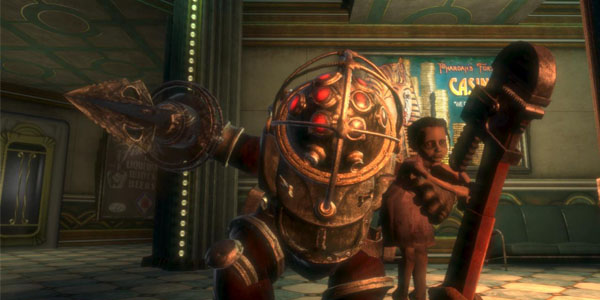
The Franchise: Although it shares much of its gaming DNA with the earlier System Shock, Bioshock stepped forward in 2007 as its own thing. Trumpeting complex character upgrades, the game was noteworthy for its complex and well-written story. Set in the underwater and now run-down city of Rapture, the game chronicles the last days of the city's fall, pitting you in the middle of a violent power struggle. If you've played the game then you already know all its twists and turns and if you haven't we won't ruin them here (you can thank us kindly later). The sequel continued the story of Rapture, while last year's Bioshock Infinite took to the skies. Set in the floating city of Columbia where the founding fathers are viewed as prophets, it too had a twisty plot that really has to be experienced first-hand. Why The First Was Best: No one's going to claim that Bioshock 2, which improved the gameplay but was really just a retread of the original, is a worthy successor to the original, but last year's Infinite showed just how strong the guys over at Irrational Games are at telling entertaining stories loaded with subtext. What inches the original ahead of the latest is that while Infinite certainly has the better plot, it didn't have the same perfectly balanced gameplay, nor anything to quite match the horror of coming up against a Big Daddy.

9. Call Of Duty: Modern Warfare

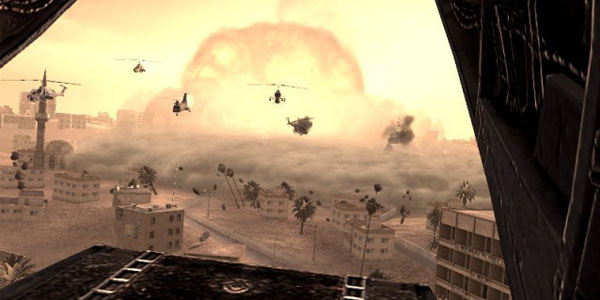
The Franchise: Call Of Duty was already the behemoth of mainstream shooters, but it was the fourth instalment, Modern Warfare, that really made it the king of the genre. Bringing the previously period shooter into the (sort of) present, Infinity Ward's third game in the series proved to also be the most successful CoD game at that point. In between releases for the franchises other big story-line (Black Ops), the Modern Warfare series continued with two more entries that no doubt sit on your shelf. The plot of the games is sub-Hollywood fare (pesky Russians are causing trouble again), but it allowed for some exciting set pieces. And that's not even touching on the multiplayer. Why The First Was Best: Although if you're a CoD fan each new game in the series is a must-buy for the slightly updated multiplayer, upgrading has never felt as such a leap forward as with the first Modern Warfare. Given how tired the series' deathmatches are now it's refreshing to think back to this game where experience points felt simple and fresh. And then there's the way it handles the story, providing some genuinely shocking moments. Although the second game had an airport set massacre and the third featured a little girl getting blown up, nothing can quite match the first game's nuclear detonation. Visceral and shocking, but not in an offensive manner as in the other games, it reminds us that CoD didn't have to be all about online fighting.

8. Mass Effect

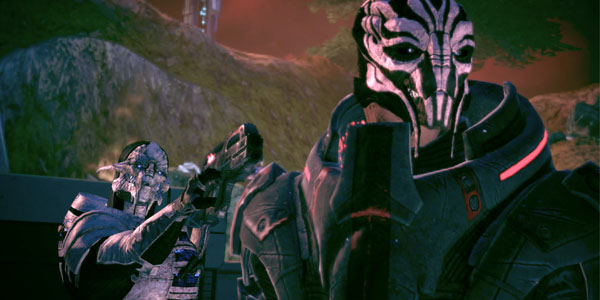
The Franchise: Built around free-will, the Mass Effect series is a properly sprawling sci-fi epic that you can fully make your own. You may go through the same basic plot beats as everybody else, but with complete character customisation and sprawling dialogue trees the experience could vary wildly. You could play as a young man who never listens to the facts, instead just pushing forward doing the right thing, or a middle-aged woman who carefully takes in all the information so she can best further her nefarious goals. That freedom, set in a whole galaxy ready to be explored alongside a cast of varied and three-dimensional characters made for one of the most engrossing sci-fi experiences in gaming. Why The First Was Best: The series ultimately bundled its freedom promise with an ending that made most of the decisions made in the earlier games null and void (contrary to what was promised), but to get hung up on that misses out what made the series so engrossing in the first place. As well as having the best story out of the trilogy, the original game was the one that made you feel like you were actually part of a massive, explorable universe. The locales may have felt a little repetitive at times, but there's no denying Mass Effect was the most expansive of the series; using the Mako tank you could actually go down to a planets and feel like an intrepid explorer. The controls weren't all that great, but it's better than spending hours mining planets from space.

7. LEGO

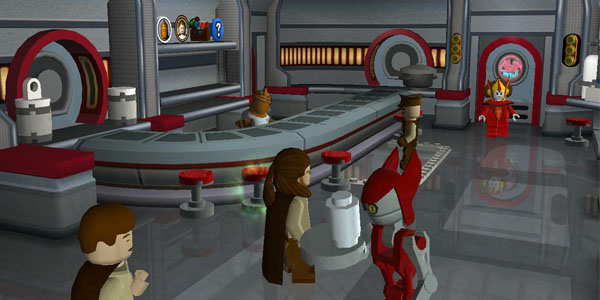
The Franchise: The guys over at LEGO must have some of the best brand managers on the planet. Ten years ago the Danish plastic blocks were a little nostalgic throw-back. Now they've just had a massively successful blockbuster movie and own one of the most successful family game franchises. Star Wars, Indiana Jones, Pirates Of The Caribbean, Batman, Marvel and The Lord Of The Rings have all received the digital-brick treatment and delighted just about anyone who's had a go playing with games' massive rosters of characters. Remaking the famous films in bricks with a little bit of tongue-in-cheek humour, the gameplay is deviously simple yet addictive; it's impossible to play a level and not try to collect every single stud. Why The First Was Best: The first game was the self-explanatory titled LEGO Star Wars and although the series has added many cool features over time (flying, aiming arrows and batarangs), much of what makes the games such a delight to play was already present here. For such questionable source material to be elevated to something so fun (there's no talk of trade routes here) is impressive enough, but with the first game the whole LEGO concept felt so fresh and unformulaic that it was hard for any subsequent game to capture the same joy. In fact, the only other game that came close was the sequel, The Original Trilogy, although that's just because those films are better.

6. Halo

The Franchise: Explaining the Halo series is something that really only needs to be done to non-Microsoft players. The game that put the original Xbox on the map and will prove to be a big reason many people take the plunge and get an Xbox One, Halo is a game with the right balance of sci-fi story and good old fashioned shooter gameplay. There's a deep mythology expanded upon in books, movies and their like, but the games present just the important elements that make it (almost) comprehensible; invading aliens the Covenant are threatening humanity and are attempting to stop the Flood, an deadly parasitic race, by using the destructive Halo rings. OK, it's pretty complicated, but that doesn't get in the way of the action, which varies from tense encounters with packs of aliens in small corridors to epic battles against giant mechs in vast open vistas. Why The First Was Best: The real money shot of Combat Evolved, the first game in the series, comes very early on. After the ship he's travelling on is ambushed, the series' hero Master Chief crash lands on one the titular rings. The sight of seeing the construction looping round in the sky is a jaw-dropper the series has been trying (unsuccessfully) emulate over the past five games. And that's just one example of how the original game did everything best. The later games (particularly those starring Chief) are all great, but the first feels the most natural; at this point the story isn't complicated for the sake of it. Given a current-gen overhaul in 2011 to mark its ten-year anniversary, graphical complaints about Combat Evolved are less pressing, meaning modern gamers can now experience it for the masterpiece it is.

5. Tetris

The Franchise: Erm... it's Tetris. No? Here's a free version. Enjoy it. Tetris at its heart is a stupidly simple game and has had numerous ports across all manner of early-generation consoles and online flash games. The version that really pushed it to be one of the most iconic game of all time was the copy bundled with the original Game Boy, although its appearance in almsot any format ensures a good chuck of the world's population have played it at one time or another. Why The First Was Best: When talking about the "original" game, created in Soviet Russia (the NES box came with the tagline "From Russia with fun!"), we're grouping all basic ports of the game under that umbrella. Because after those the series goes very silly. There are dozens of semi-official sequels, ranging from the logical (multiplayer and three dimensions) to the crazy (underwater versions, a puzzle/platforming twist) and some with just ridiculous titles (Tetris Party and Terror Instinct are real games in the series). And as you can guess, none could match the simplicity of just trying to get a full row.

4. Portal

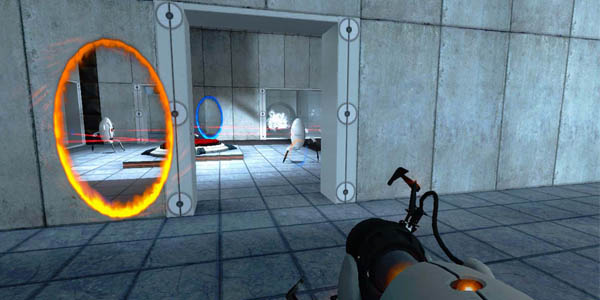
The Franchise: A little bonus thrown in to pad out the package, Portal proved to be the standout of Valve's The Orange Box. A genuinely new idea in a landscape dominated by sameness, Portal was a three-dimension puzzle game that had working through twenty increasingly complex test chambers using the does-what-it-says-on-the-tin portal gun. A full-length sequel, released a few years later, continued the story and added even more dry humour, as well as introducing co-op levels (awesome and frustrating both at once). There's only one bit of unexplored potential. With Aperture, the company in the game, a part of the bigger Half-Life world there was speculation that the gun would appear in that series next game. We're still waiting. Why The First Was Best: Portal takes you at most a couple of hours to complete (more if you went looking for all the easter eggs literally behind the scenes that hinted at a larger story at play). Those two hours, however, was one of the best gaming experiences of the past-generation. A complete surprise upon release, Portal is the go-to example of lightening in a bottle; there was no flab on the game that needed to be cut and it was so fresh and unique any developer considering imitation has steered clear in sheer awe. How could a sequel, even one as good as the one Valve delivered, match that?

3. Sonic The Hedgehog

The Franchise: In his heyday Sonic felt like the edgier alternative to Mario. Favouring speeding through levels over bashing his head into blocks, he experienced all the super-stardom a video-game character could get in the mid-nineties. With a plot even simpler than Nintendo's plumber (get the rings to stop the bad guying taking over), his games all centred on the same ideas; get some speed, do the loop-the-loop and avoid spikes. Despite a distinct dip in popularity, the series continues to chug along happily; although few games hit home with fans, the dimension mash-up of 2011's Generations served as a refreshing reminder of what the series could do. Why The First Was Best: Like Sega, the company that gave life to the blue hedgehog, Sonic feels more than a little past it. Generations was a lot of fun, but its main strength was drawing on the nostalgia of the original 2D adventure. Unlike Mario, who, if anything, was improved by his three dimensional adventures on the Nintendo 64 and beyond, Sonic is really at his best when playing it flat. Many of the predominantly 2D games feature 3D Special Stages that feel a little undernourished, while their platforming just feels like a continuation of the original, offering little new. There's a reason the first one is still getting ported (you can get it on iOS and Android) while the sequels are pretty much forgotten.

2. Batman: Arkham

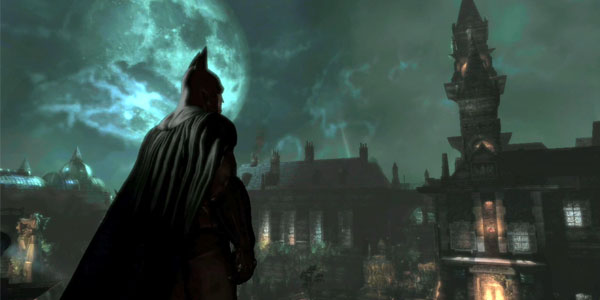
The Franchise: Rocksteady's Arkham series doesn't just have you playing as Batman; it makes you feel like you are Batman. Focusing as much on stealth and slowing picking off goons as much as face-to-face combat, the shadows quickly became your home, fear your main weapon. The franchise as a whole (even Arkham Origins, from developer Warner Bros. Games Montréal, which admittedly slowed the series' momentum) is a highlight from the past few years, giving us one of the best adaptations of the Dark Knight. If fans were a bit jaded by Nolan's real-world take of Gotham, the angular designs on show here should make up for that. But the series didn't just prove you can make a great superhero game; it showed a superhero game could tell a great, original story. Driven predominantly by the Joker (voiced in the first two games by Mark Hamill), the plot of the games is more than just a contrived way to get you fighting the best of the rogues gallery, with Arkham City ending with one of the biggest moments in Batman history, full stop. Why The First Was Best: Yeah, the ending of City, the second game in the series, was pretty damn exceptional. Unfortunately the open-world game couldn't match the excitement of its more confined predecessor; having Batman swoop through a big city was cool, but the game felt less-focused in the bigger map. Like Portal, Arkham Asylum was a perfectly measured game, never letting the plot overwhelm the experience and advancing combat options at just the right time. Will Arkham Knight dethrone Asylum? We'll have to wait until next year to find out.

1. Pokémon

The Franchise: It's impossible to emphatically describe Pokémon without making yourself sound crazy. To beam about a series that centres around pitting elementally-enhanced animals against each other in turn-based combat, with the main aim to capture all the creatures in tiny balls your character, a ten year old boy, carries on his belt or stores in a computer doesn't sound childish or boring; it sounds dumb. It really is the sort of game that needs to be played to understood. And you probably have; the series is second only in sales figures to Mario (and likely only because that guy got a fifteen year head start). An absolute phenomenon, there's been twenty-three versions of the game, an expanded roster of 719 variations of creatures and so much tie-in merchandise George Lucas would go green with envy. Why The First Was Best: Like Doctor Who, with Pokémon you're always going to gravitate to the notion of the one you first experienced being the best. But we're pretty certain that the first one wins out. Red and Blue (TV show tie-in Yellow just wasn't as good) were easy to pick up and impossible to put down, with the main story at its core taking around fifty hours to finish. That's a fully complete game right there; between a story doled out that's simple enough for young gamers to follow and combat that can be tweaked in pretty complicated ways, there's little need for anything else. And while new features like breeding and dual duels have been added, the core gameplay of Pokémon has stayed much the same, with the world-size and number of monsters getting bigger under the idea that bigger is better. For a pure Pokémon experience, the original games are the way to go. Do you share our views on these games? Which series do you think peaked at the very start? Let us know how you feel down in the comments.

Contributor
Contributor

Film Editor (2014-2016). Loves The Usual Suspects. Hates Transformers 2. Everything else lies somewhere in the middle. Once met the Chuckle Brothers.