10 Video Game Patches That Actually Broke Games
Red Dead Online's recent patch stopped players from being able to shoot their guns. WTF?

Patches are one of the many great things about modern video games - no longer do players have to simply endure whatever mistakes the developers failed to notice before a game was sent to print.
In the age of digital gaming, devs can push patches to players which rectify nagging issues and provide requested quality-of-life fixes.
But not all patches are created equal, and sometimes a lack of due diligence can result in a patch going to players before it's been sufficiently tested.
In a bout of painful irony, these 10 video game patches intended to fix performance issues, resolve stability problems, and just generally make the game better ended up actually breaking it.
Whether making the game literally unplayable, ruining beloved features, or otherwise contradicting the game's design philosophy, these ill-advised patches made all of these games demonstrably worse to the point that, in extreme cases, players ended up bailing out en masse.
Thankfully in some instances the developers were quick to respond and speedily roll the patch back, but in others these game-ruining patches still endure to this very day...
10. The 1.8.0. Patch Displayed Players' IP Addresses - Marvel's Avengers

Crystal Dynamics recently released the 1.8.0. patch for Marvel's Avengers, which was intended to add a few minor features to the game and also iron out some pressing bugs.
But within minutes of the patch being released, PS5 players began to report that the patch had a most bizarre side effect - it would place a string of text on the screen revealing the player's own IP address.
This was obviously extremely distressing for streamers, given that it allowed trolls to easily disrupt the stream with DDoS attacks directed at their IP, or even use the IP to dox the streamer and determine their physical location.
Reports quickly emerged of streamers being doxed, and Crystal Dynamics responded by advising players not to stream until the issue was resolved. The next day a revised patch, 1.8b, was released which mercifully rectified the problem.
Even so, an update that enables trolls to dox streamers is a special kind of screw-up. How did this make it through testing and certification?
9. Patch 1.05 Drastically "Rebalanced" Multiplayer - Uncharted 2

Naughty Dog may be modern engineering wizards, but they made a major mistake back in early 2010 when they released the infamous 1.05 patch for Uncharted 2.
While the patch left the glorious single-player campaign in tact, it offered a sweeping swath of changes to the surprisingly enthralling online multiplayer component.
In an attempt to "rebalance" the game and level the playing field, the range of damage across weapons was significantly lessened, in turn stripping most of the personality out of them as well as the incentive to experiment with new loadouts.
Far more egregious, though, was the decision to lower the time-to-kill (TTK), such that players now died much faster.
For starters, this didn't vibe with the game's map design at all - even the mere act of climbing a ladder was now massively risky given how quickly you could die.
Also, the reduced lifespan made Uncharted 2's multiplayer feel far more like a twitchy Call of Duty wannabe than the distinct experience it was pre-patch.
Unsurprisingly the community quickly upped and abandoned the game, and despite Naughty Dog insisting they'd heard the vocal feedback loud and clear, never bothered to roll back the balancing changes, even with a mass exodus of players.
8. Patch 1.1 Prevented A Mission Objective From Triggering - Cyberpunk 2077

It goes without saying that Cyberpunk 2077's launch across platforms was a big 'ol mess, and the hits just kept on coming as CD Projekt Red attempted to plug the holes and whittle the game into a polished state.
The 1.1 patch, the first big update for the game released back in January, was supposed to offer up a number of stability and bug fixes, laying the foundations for future patches which would further build on those improvements.
But the patch ended up causing a massive headache for many players who attempted to play the second-act mission "Down on the Street."
The player is supposed to receive a call from Takemura, but for many the patch simply caused Takemura to stare blankly at them over the call and not actually say anything.
This made it impossible for players to proceed with the mission and the main story, effectively breaking the game until CD Projekt Red released a follow-up patch three days later to resolve the issue.
For players eager to press on with the story, it would've naturally been completely infuriating that their game was turned into a digital paperweight for almost half a week.
7. The Season 3 Balance Update... Unbalanced The Game - Street Fighter V: Arcade Edition

Given the highly competitive nature of the fighting game community and how seriously they take it, developers have to be extremely careful when making changes to the meta.
But Capcom didn't do their due diligence when they released the season 3 balance update for Street Fighter V: Arcade Edition, which extensively re-balanced the move properties (namely damage output and wind-up speed) for most fighters.
Players en masse were infuriated that fighters had been nerfed and buffed seemingly on a whim without any clear logic as to why.
For example, the strong Cammy and Menat were buffed even higher, while the tepid Juri and Ed were nerfed even more.
This was all silly and confusing enough that when the patch notes were first released, some fans assumed they were actually an April Fool's prank.
Alas, they were not, and the chasm between the strongest and weakest combatants in the game was only crowbarred wider open.
A cynical person might assume that Capcom's seemingly random alteration of stats was an attempt to manipulate which fighters received more play each season, in turn allowing them to sell more Premium Pass costumes across the roster.
6. A 2021 Hotfix Broke Basically Everything - Star Wars: Battlefront 2 (2005)
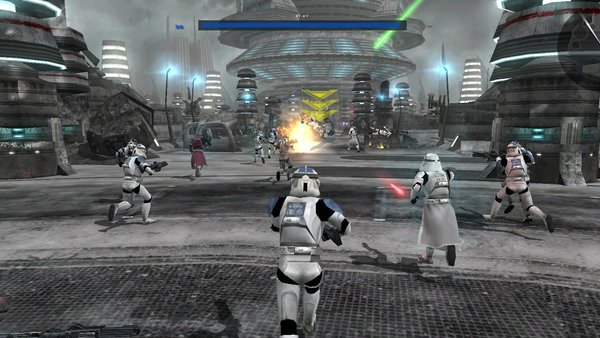
To clarify, we're not talking about DICE's Star Wars Battlefront II released in 2017, but the O.G. Battlefront II released by Pandemic Studios back in 2005.
Incredibly, patches continue to be released periodically by GOG, and earlier this year a new hotfix was rolled out - the first in three years. For a 16-year-old game, that's pretty damn good going.
Though the patch was supposed to resolve graphic resolution and controller support issues, it led to wide reports of crashes, field-of-view, resolution, and UI problems, and even some mods being rendered incompatible.
This led to GOG pulling the patch, before confirming that it had been given to them by Lucasfilm Games rather than being developed in-house.
Many months on, the patch still hasn't been reinstated, but at least you can't crash the game simply by pressing the print screen key on your keyboard anymore.
5. The "Flag Drag" Patch Nerfed The Flag Carrier's Speed - Tribes: Ascend
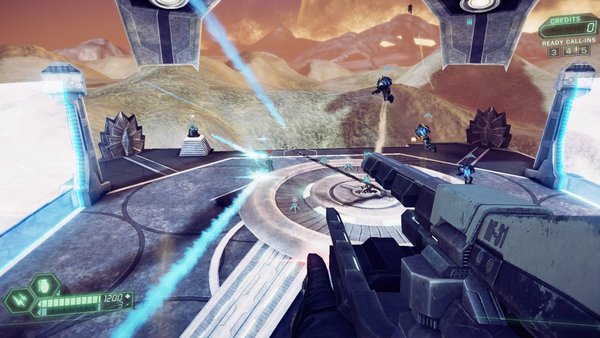
Free-to-play FPS Tribes: Ascend was quite the revelation for a short while back in 2012, but that all came crashing down when Hi-Rez Studios put out the 1.0.1103.1 patch a few months after the game's release.
This introduced so-called "flag drag," which limited the speed that a flag carrier could sustain at higher speeds, in turn making it easier for the flag carrier to be caught by the opposing team in the misguided interest of "balance."
Except, the feeling of fast-paced flight is exactly what people loved about the game, and so cranking things down just made it feel sluggish by comparison.
It would be disingenuous to say that Ascend died off quickly, but flag drag is what prompted players to start abandoning the game, feeling that it caused an otherwise thrilling multiplayer shooter to stray too far from what made it appealing in the first place.
By 2015 the game was basically clinging to life and the community more-or-less died off shortly thereafter. If Hi-Rez hadn't been so stubborn and actually listened to players, though, it could've endured as an FPS mainstay for many more years.
4. Update 1.3.3 Deleted Some Players' Save Data - Returnal

Housemarque's thrilling new roguelike shooter Returnal is one of 2021's biggest gaming successes for sure, though that success wasn't without a few hiccups.
In addition to many players complaining about the game's total lack of mid-run saves, Housemarque released a patch a week after release, 1.3.3, which caused some players to encounter a "CE-100028-1" error mid-game, which would then result in a corrupted save file.
Though some were able to fix their save when the 1.3.4 patch was released the very next day, or by using a backup save from the cloud, others weren't quite so fortunate, with many losing their saves permanently and having to restart the entire game from scratch.
Given the game's overpowering difficulty and the 30-40 hours it can take to beat the entire thing, that's a lot of potential time lost for paying customers.
While the offending patch wasn't online for long, it still ended up affecting a sizeable number of players during the game's busy launch period. Not good.
3. The 1.21 Title Update Update Prevented Some Players From Shooting - Red Dead Online
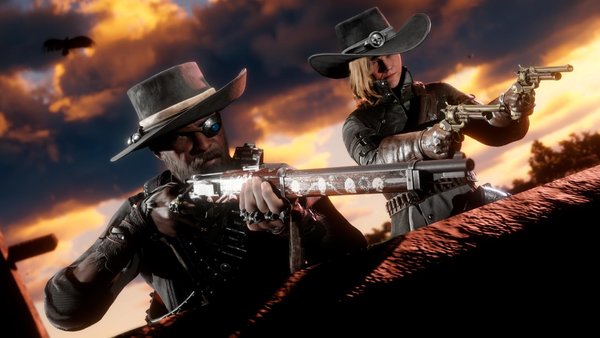
Last August, Rockstar released a 1.21 Title Update for Red Dead Online, which attempted to fix a number of pressing performance, networking, and stability issues.
Ironically, it ended up preventing many players from doing the most basic thing anyone expects to do in any Rockstar game - fire their damn gun.
That's right, in addition to introducing glitches which caused NPCs, animals, vehicles, and other objects to appear and disappear out of the game world at random, some players couldn't even shoot a pistol.
The option to shoot was simply greyed out for affected players, and after many took to social media to voice both their amusement and displeasure at the broken state of the game, Rockstar opted to roll back to a previous update until they could resolve the issue.
2. The Midwinter Update Introduced RNG & Simplified Gameplay - Gwent: The Witcher Card Game

In December 2017, while Gwent was still in beta and almost a year away from its full-fat release, CD Projekt Red released their much-anticipated Midwinter Update, which added more than 100 cards to the game alongside requested bug-fixes and quality-of-life features.
Fans were quickly left up in arms, though, when they realised that the update had also nerfed and "dumbed down" many of the community's favourite cards as well as removing flavour-text and changing the game's UI.
But by far the most complained-about aspect of the patch, and the one which caused many players to quit the game entirely, was the inclusion of RNG cards.
To many, the lack of RNG in Gwent was precisely its appeal, but in amping up the RNG aspect, CD Projekt Red were making the game skew to the more lucrative casual - some might say "unskilled" - crowd while ditching the highly-skilled "hardcore" players who it was initially marketed towards.
While nobody would dare call Gwent dead today, for those whom the game was initially designed to appeal to, it might as well be.
1. The May 2021 Update Stopped The Game Working On Xbox Consoles - Forza Horizon 4

The Series 35 update for Forza Horizon 4, released back in May, was supposed to add new cars and seasonal rewards to the masterful racer, but ended up temporarily killing the game for some console users.
Anyone who downloaded the update on Xbox Series X or S would find the game suddenly unplayable - the app would fail to launch and in some cases even cause the entire console to shut down.
Some were able to get around the issue by launching the game offline and then re-enabling online functionality once it had loaded, but many had to simply wait a few days for Playground Games to push a fix through.
As glorious as the online gaming ecosystem can be, sometimes it really is just a huge pain in the ass, right?