10 Video Games That Had The World's Attention (And Lost It)
How did EA mess up Medal of Honor so bad?
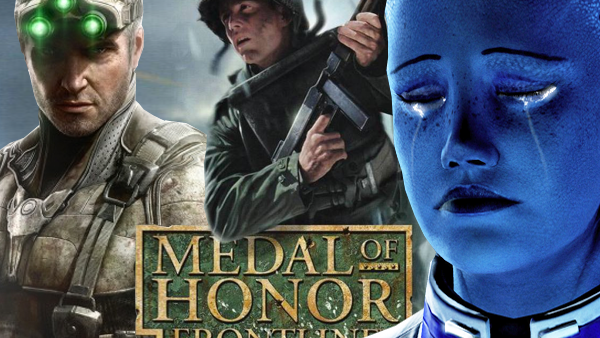
We're a fickle bunch, us gamers. One minute something is the "best ever", a real bonafide second coming of originality and innovation you must play, and the next... it's forgotten about as we move onto another month's fresh releases.
All it takes is one great game mechanic or badass looking character and we're set. Rocket League blew up into a cultural phenomenon because it was nitro-powered football delivered through the PS Plus service, and as the list of games that subsist off one release and constant updates is very small (that and Overwatch are two notable examples), it stands to reason that the word "consumer" is to be taken as ravenously as possible.
That said, which games had the whole world talking... until they didn't? And why is that? Why is games coverage so reliant on forward momentum and the "next big thing", rather than taking stock of recent events and truly appreciating them?
This dogged pursuit of hype and sensationalised headlines only sets various games up for a fall, though in the case of the following, they'd already began to stumble before that reality set in...
10. Halo

Man, 343 Industries - despite certainly having the best intentions - really ran Halo right into the ground.
After the admittedly phenomenal Halo remake, their first full outing was Halo 4, a pretty solid shooter in a mechanical sense. However, its changing of Master Chief's backstory to make him more of a traumatised lab experiment didn't sit well with long-time fans - nor did the altered control scheme, naff new Promethean villains and weapons or the overhauled control scheme. All of this was on top of the fact that the trilogy was done - we didn't need another Halo, especially from anyone other than Bungie.
Then there was the absolute unplayable disaster of the Master Chief Collection (which three years on to this day, does not work), not just doing a disservice to the ongoing canon, but sabotaging and ruining the experience of the classics for all to see.
By the time Halo 5 came around, 343 were implementing Call of Duty ironsights aiming alongside a blind loot box-powered multiplayer, topping the sh*t cake off with a story that ended on a cliffhanger, advertising to the world that they had no idea what to do next.
Halo 6 will likely come, but does anyone want it? HELL no.
9. Evolve

"The next game from the Left 4 Dead people!", "It's another multiplayer revolution", "We're giving it 9/10!" (the latter from IGN) - all the platitudes and hype came alongside Evolve, but the reality was a game that just felt horrible to play.
A unique idea in being asymmetrically-focused (a team of four players go up against one hulking beast, also player-controlled), in-game that manifested as a LOT of running around trying to "track" the monster, before being obliterated because in those scenarios, unless the team were working together, they didn't stand a chance.
Alongside this unbelievably soulless, plodding multiplayer was... nothing, as the Evolve omitted a single player and instead came with a marketplace full of microtransactions.
It was then widely circulated that Turtle Rock had developed the game "with DLC in mind", putting the final nail in the coffin as the overall package just wasn't worth it.
8. Brütal Legend

Okay, granted the appeal of Brutal Legend was entirely in its heavy metal hack n' slash aesthetic, but regardless of your musical taste, you'd be lying if the very notion of frying demons with guitar riffs wasn't mighty tasty indeed.
With the legendary Tim Schafer on writing and directorial duties, Brutal Legend looked to roll together heavy metal album cover-inspired worlds, various metal legends like Ozzy Osbourne and Lemmy and a blend of driving and action gameplay, into a phenomenal package.
How could that go wrong?
Well... because it wasn't the game. Or rather, it was... but the action elements had been brought front and centre during marketing, despite the reality of Brutal Legend being an real-time strategy. And not a good one.
Rather that direct units from overhead, you still controlled main-man Eddie Riggs on the ground, running to and fro as you managed meters and tried to thin the hordes of advancing armies. Sadly, these aspects just didn't come together, and once you got out of a still-phenomenal introduction the rest of the game was a repetitive, completely mis-marketed slog.
7. Crackdown

Super-powered cops flinging cars at perps and bounding around a city like the Hulk with a badge?
Crackdown was as enjoyable and accessible to play as its appeal was to hear about.
Such a potent combination of pure "I wanna do that!" gameplay footage and conversation was enough to catapult Crackdown into the top-spot of Microsoft's 360 roster, helping skewered Sony's chances at winning the console war last generation.
Indeed, all who played adored every second... then Crackdown 2 happened.
The sequel was a load of nothing. Essentially feeling like glorified DLC, the only markedly new "thing" was a wingsuit - something that didn't meaningfully alter gameplay, as progression fell back on more of the same tropes and mission structures as before.
It was enough to put the entire gaming populace off (remember what I said about being fickle?), and with Crackdown 3 suffering both a seven year wait and multiple delays with no confirmed release date, I wouldn't be surprised if it's actually been cancelled.
6. No Man's Sky
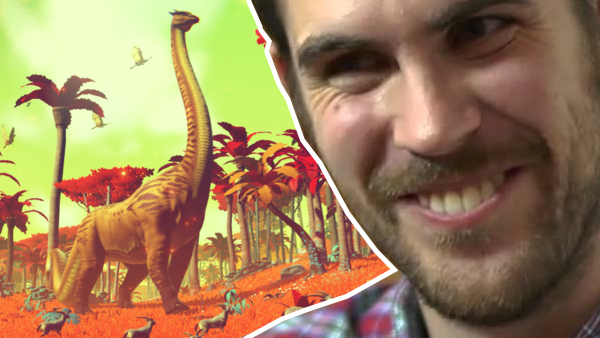
Future generations will look back on No Man's Sky as one of the main examples of what happens when the hype machine takes on a life of its own.
As almost like some Skynet bot learning how to fire a machine gun, the sheer devastation caused by No Man's Sky's runaway hype train vs. its launch state would take about a solid year of additional work to put right. Now we've got a game with thoroughly impressive world-generation, fantastic survival mechanics, a uniquely modular score and a gorgeous graphics engine - yet none of these things were present at launch.
"One Man's Lie" quickly became the go-to label, as it was clear the world paying attention to his game had gone to Sean Murray's head - or rather, there were many over-inflated promises and allusions to game features that simply weren't present in the final release.
Props to Hello Games, they continued to work on the game, touching everything up, adding fan-requested features and much more, the only problem was - they were far, far too late.
5. Medal Of Honor

The death of Medal of Honor came not necessarily by its own hand, but by drowning in a sea of identikit titles. The 1999 debut and its two quasi-spiritual sequels confused the marketplace a tad, but then MoH: Frontline made such a monumental impact - redefining the very nature of playable cinematics in video games - the entire industry shifted to get in on the action.
It really can't be understated how phenomenal that D-Day landing sequence was, as even EA couldn't top it, trying with Rising Sun's Pearl Harbour recreation and then the experimental MoH: Airborne letting you drop anywhere and proceed to the next checkpoint. Alongside this feeling of diminishing returns was everything from the birth of Call of Duty to the disastrous Hour of Victory, whose selling point was that bodies would fly through the air more emphatically.
Speaking of CoD, 2007 saw Modern Warfare arrive and thermo nuclear-detonate the FPS landscape, immediately making Medal of Honor look and feel beyond outdated. When EA finally brought the series back in 2010 it was a shell of its former self, dogged by a controversy surrounding a playable Taliban faction, and ultimately feeling like it was chasing a Call of Duty from three years prior.
The last instalment was 2012's Warfighter, topping off a solid 11 years of EA not being able to outdo their initial efforts.
4. Titanfall

Headed up by ex-Infinity Ward chaps Jason West and Vince Zampella, Respawn Studios' debut effort made so many waves, it forced Call of Duty to embark on a few years of wall-running and sci-fi chaos, just to combat future competition that never materialised.
Still, Titanfall remains a fantastic shooter - the sequel is one of the best games of all time - but the team haven't had an easy go, to put it lightly.
First they saddled with the complete wrong horse at the turn of the generation as the state of the Xbox One circa late 2013 and 2014 meant it was avoided like the bubonic plague. With naff sales and a generally tepid reception, the studio picked themselves up, dusted themselves off, and started making a sequel.
Once again the hype gears clunked into motion and "Is this the future of FPS?!" conversations started up - only for Titanfall 2 to drop - bafflingly - in the week between Call of Duty: Infinite Warfare and Battlefield 1.
Literally, slap-bang in the middle.
It simply didn't stand a chance sales-wise, and though Titanfall 2 more than deserves the attention, the series will most likely never reclaim its pre-launch stature.
3. Splinter Cell

The first trilogy? Three of the best stealth games of all time, going strength to strength with each release and peaking with the phenomenal Chaos Theory - a lesson in stealth game design that all subsequent titles can learn from.
Following that... Ubisoft split development of Splinter Cell so the original Xbox and 360 would receive two different games entirely, fracturing the story for a start, but also meaning the older edition was more in-line with the sort of straight-up sneaking you actually wanted to play.
As if that wasn't enough, they then took four years off, emerging with a trailer that showed a bearded, overcoat-wearing Sam brawling with guards and flinging tables at them.
Like, just... what?
Backtracking on the fighting game mechanics, Conviction stripped Fisher of his triple goggles for most of the game and forced a series of action-heavy set-pieces into the mix. Of course this wasn't received well at all, finally seeing 2013's Blacklist be the Chaos Theory sequel we all wanted - yet without Michael Ironside reprising his lead role, the world was past caring.
2. Mass Effect

How to Destroy your Franchise 101: Build years worth of hype and storylines across three games, and end it in a way that undoes the entire thing in 20 minutes.
Yes, the journeys we went on and the character relationships we forged will be remembered for the rest of time - but that's a rationale hardcore fans (myself included) use to reconcile how truly insulting the close of Mass Effect 3 really was.
Because for the rest of the world... that was it. The fair weather mainstream fans drastically outnumber those who know their Matriarch Benezias from their Rachni Wars, and to them, Mass Effect needed to go away for a long, long time, justifying any future sequel in a pitch-perfect way - if it ever came back at all.
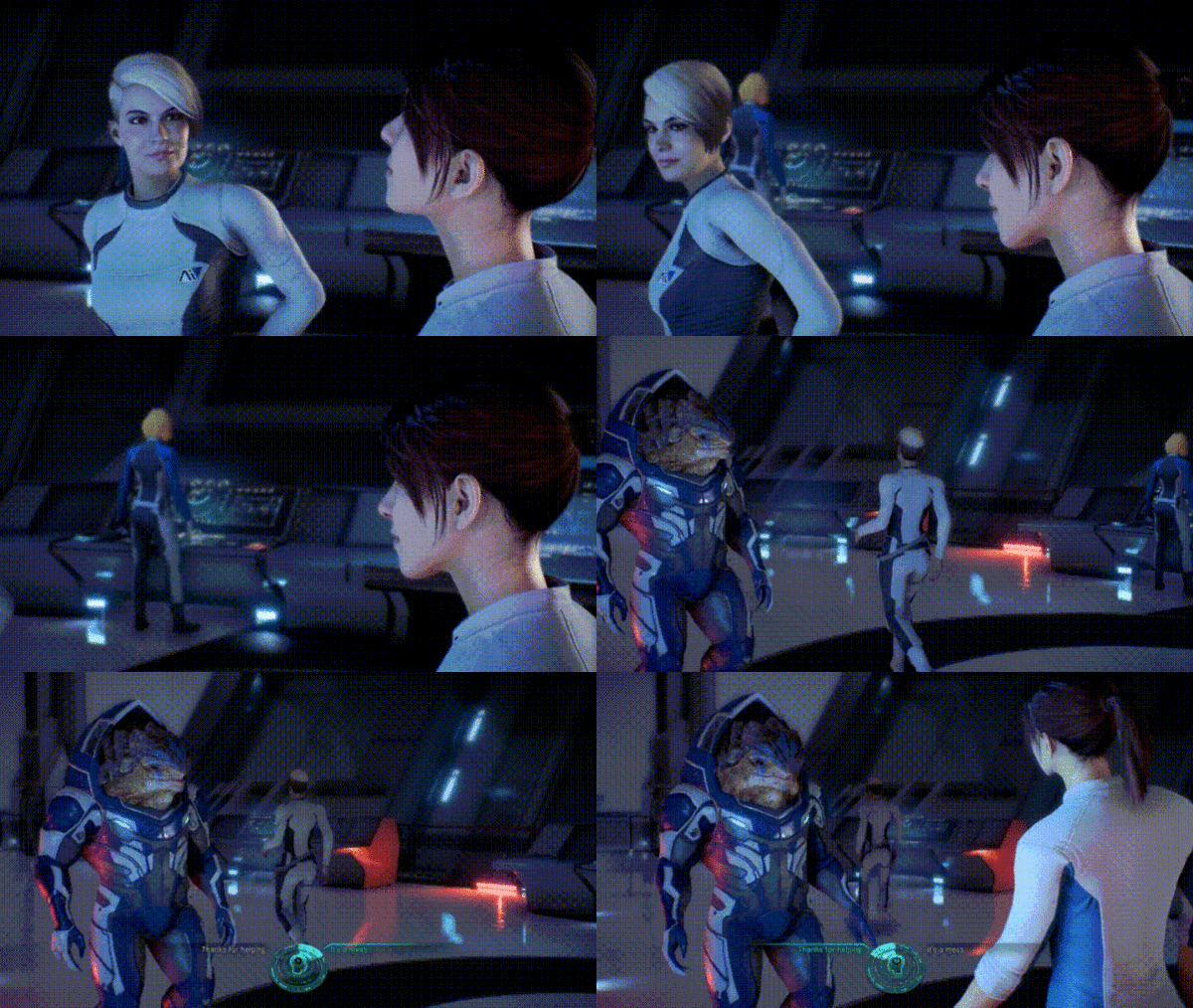
Naturally, EA couldn't resist another crack of the whip with Mass Effect Andromeda, though we all remember how that went...
1. Pokémon GO

I don't need to tell you how glorious Pokémon GO was; how absolutely, positively phenomenal the idea of being able to view our boring, earthquake-ravaged world was made that little bit more bearable by knowing you could catch a Pikachu felt.
Then, just as fast as it came, Pokémon GO was gone.
Too pure for this world, "PoGo" (as some affectionately called it) went from "Mate, you've gotta see this" to "Oh, they've broken it" in just two months.
The reason was developers Niantic removing the game's tracker functionality - the key component needed to actually locate the Pokémon themselves. It would take them months to put a replacement mechanic in, and even then it just didn't work as well as the original.
Everybody with a vague sense of sentience in 2016 has a Pokémon GO story or three to tell, but - in a way that only gets more maddening the more you look into it - the developers ruined their own work in the most amateurish and unnecessary way possible.