10 Video Games That Ignored The Industry (And Became TIMELESS)
These games refused to chase trends and entered gaming legend.

There's no denying that the video game industry is in a precarious state right now, especially given the devastating number of recent layoffs.
With belt tightening happening across the industry, publishers and developers are effectively incentivised to make hugely conservative business and creative decisions - that is to say, they're encouraged to chase the most obvious and lucrative trends in the pursuit of safe success.
But sometimes developers surprise us all by doing the least-obvious thing imaginable - they instead ignore the dominant trends of the time and strike out on their own with an idea that's wholly unexpected.
There are naturally innumerable horror stories of developers striking out by betting big on themselves, but these games all took the risk and it paid off handsomely.
These games all came out on their own terms, ignored what the industry was telling them to do, and released to critical raves in the very least, if not stonking commercial success too.
It's clear that each game is destined to be remembered a long time from now - long after all the trends which are currently being doggedly pursued have come and gone. In a word, they're totally timeless...
10. It Takes Two

There's been a pretty consistent sentiment in recent years that local couch co-op is dead, and any game hinging itself around in-person multiplayer is probably doomed to fail.
But director Josef Fares refused to accept this premise, and while It Takes Two could be played with a friend or partner online, it had no matchmaking options for playing with randoms.
Furthermore, the preference was for folks to play it together in one physical space, and given that the narrative revolves around a married couple co-operating to save their daughter, it was also a game designed to be played by couples above all else.
None of this suggested that It Takes Two would be anything but another niche co-op game, much like Fares' previous efforts Brothers: A Tale of Two Sons and A Way Out.
Yet Fares proved everyone wrong - It Takes Two wasn't merely a critical success, but went on to sell more than 20 million copies and also won Game of the Year at The Game Awards.
Couch co-op is dead, you say? Not quite.
9. Hades

Hades represented quite the departure for developer Supergiant Games, whose previous games Bastion, Transistor, and Pyre were more story-driven, linear experiences.
Hades, however, was a roguelike with procedurally generated levels, and released at a time where the market for roguelikes was beginning to become too crowded for its own good, and procedural generation was no longer a sexy buzzword.
Plus, Supergiant dared to release Hades in early access - a release model which came with its own set of stigmas and assumptions from players.
But the developer stayed on their path and followed through to the full retail release, where Hades received rave reviews for its ultimately innovative take on the roguelike formula, as well as its unexpectedly nuanced narrative, sublime art direction, and brilliant music and voice acting.
Despite many initially believing that it arrived late to a party that was already winding down, Hades sold 700,000 copies in early access, and this figure soared to 1 million within three days of its full launch.
8. Robocop: Rogue City
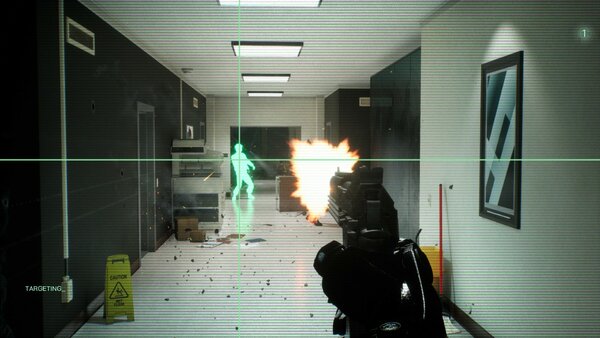
Though licensed video games were once the bread and butter of the gaming industry, games based on movies in particular have become increasingly rare in recent years.
This can be attributed to how long development cycles are getting nowadays, as well as the prohibitive cost of obtaining the license for the IP in the first place, both of which make a video game based on a film a bigger risk than it might seem.
And so, RoboCop: Rogue City was something of a rarity when it dropped in 2023 - a game that probably shouldn't exist going by conventional commercial wisdom, especially given that the original RoboCop film was over 35 years old when the game was released.
On top of this, it's a mostly linear, story-driven first-person shooter - the exact sort of game that seemingly went out of fashion in the PS3/360 era.
But beyond being well received by critics and players alike, Rogue City was a surprise commercial success, becoming publisher Nacon's biggest product launch ever. You love to see it.
7. Prey

The immersive sim genre has always been firmly niche, and by the 2010s it was dangerously close to being genuinely dead.
It didn't make much sense, then, for Arkane Austin to release a new immersive sim, Prey, in 2017.
Given that large swaths of players don't even know what an immersive sim is, and developers have to waste precious marketing real estate explaining it, it just doesn't seem like a particularly sensible decision in the modern gaming era.
And while Prey did admittedly disappoint sales-wise, its reputation has only gone from strength to strength over the past eight years, many even deeming it one of the greatest immersive sims ever made, standing toe-to-toe with the likes of Deus Ex, Thief, System Shock, and so on.
In light of the genre's commercial struggles, some analysts believe that publishers will stop using the term immersive sim altogether to market their games in the future, instead deferring to adjacent terms players are more familiar with, like RPG.
6. South of Midnight

At a cursory glance, South of Midnight might look like just another third-person open-world action-adventure game desperately vying for your attention.
But the truth is that the latest effort from We Happy Few developer Compulsion Games is actually a thinly-veiled throwback to the more straight-forward adventure games of the PS2 era.
For starters, South of Midnight isn't an open world game at all - it's a linear, seven-hour single-player romp that feels like an intentional throwback to the action-platformers of decades past.
That is to say, it doesn't feel mechanically cutting edge in the slightest - the combat is almost hilariously simple by modern standards, and the central gameplay loop is more-or-less repeated wholesale throughout the experience.
And yet, there's something refreshing about the game's steadfast refusal to inundate the player with exhausting progression systems, endless crafting, and other tiresome gumpth intended to bloat the experience out.
Instead, the relatively basic gameplay makes it easy for players to drink in the game's gorgeous Southern gothic vibe and just enjoy South of Midnight as the breezy ride it assuredly is.
5. Baldur's Gate 3
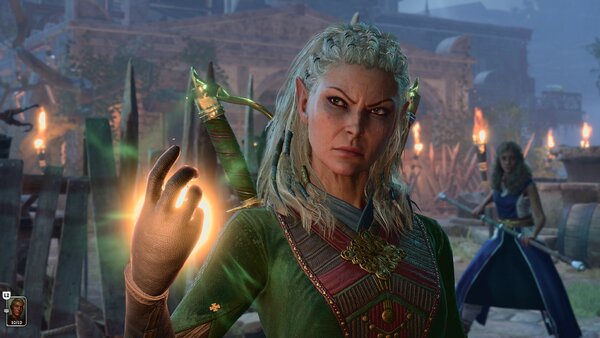
There were many observers who thought that Larian Studios were positively unhinged spending $100 million on Baldur's Gate 3, given the more niche nature of classically-styled RPGs (aka CRPGs), which tend to appeal to a more die-hard subset of RPG fans.
Giving a dice-based Dungeons & Dragons game the card-carrying AAA treatment was a massive risk, especially given that Larian's previous games - namely, the Divinity series - cost nowhere near this much.
That it did this while having no monetisation or live service aspects, made it even more of a gamble, to say nothing of the fact that the Baldur's Gate IP had been dormant for a long time, and the game also dared to launch in early access almost three years before its full-fat release.
It would've surprised nobody if Larian bit off more than they could chew with Baldur's Gate 3, or the game ended up an acclaimed flop, though it ultimately received rave reviews, became the first game in history to win all five major Game of the Year accolades, and sold 15 million copies within barely a year of launch.
Larian bet on themselves, did their own thing, and evidently believed that the end product's quality would be enough - which, thankfully, it was.
4. Teenage Mutant Ninja Turtles: Shredder's Revenge

Teenage Mutant Ninja Turtles: Shredder's Revenge was clearly inspired by classic arcade beat 'em ups, and to that end it seemed like it'd be a firmly niche offering which wouldn't make much of a dent outside of its nostalgic core.
After all, there's a clear commercial ceiling on retro-styled games like this, and in order to appeal to a wider set of players, a new Turtles game should probably be an open-world co-op live service romp, right?
But Shredder's Revenge was not only raved-about by critics, who praised its gorgeous art style, killer music, and addictive gameplay - it was also a stonking commercial success, selling a million copies in just a week.
For context, last year's Star Wars Outlaws shifted less than a million units in its first week, and given that Outlaws was clearly appealing to a much wider gamut of players than Shredder's Revenge - on paper, at least - it shows just how aggressively the latter broke out of its apparent niche.
In the 2020s a game like this is expected to be a mere passing fancy that makes a modest return and quietly goes away, but Shredder's Revenge was a bonafide smash hit.
3. Psychonauts 2
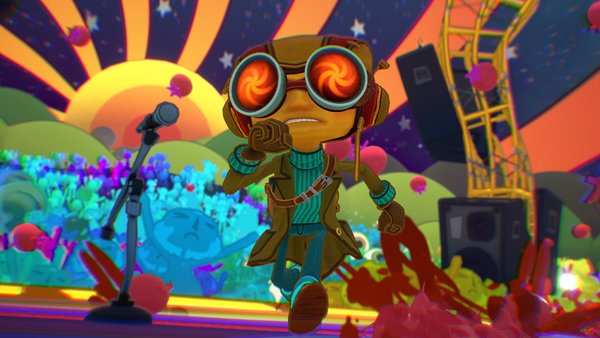
The industry - nay, the universe - really seemed to be telling developer Double Fine that they probably shouldn't make Psychonauts 2.
After all, the 2005 original was a beloved platformer but flopped hard enough commercially that it contributed to publisher Majesco Entertainment later exiting the business altogether.
Though director Tim Schafer repeatedly expressed his desire to develop Psychonauts 2, it simply seemed impossible - that is, until he acquired the rights to the original game and republished it, where it sold significantly more than on launch.
This, combined with a crowdfunding campaign and Microsoft acquiring Double Fine finally gave Schafer the resources to develop Psychonauts 2.
But there was no mistaking that the 3D platformer genre had largely died a death by the 2010s, and so the prospects were grim for a new game not in a majorly established franchise like Mario or Crash Bandicoot.
Psychonauts 2 aggressively stuck to its guns, refusing to deviate from the old-school gameplay and delightfully twisted execution of its predecessor, nor bloat itself out with modern accoutrements.
And Schafer ultimately had the last laugh, as the game released to strong reviews, while ending up Double Fine's best-selling game - an especially impressive result given that Psychonauts 2 also launched day-and-date on Xbox Game Pass.
Psychonauts 3 when, Tim?
2. Helldivers II
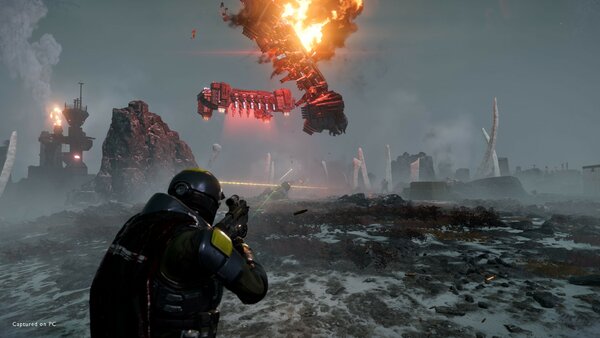
Helldivers II did so many things that should've made it totally commercially alienating to newcomers and die-hard fans alike.
For starters, it was a belated sequel to a niche action game, taking almost an entire decade to come to market.
Moreover, it did the thing almost no sequels do - it changed the gameplay perspective from top-down to third-person. Naturally, this presented a massive risk of turning off everyone who loved the original game.
Then there's the live service aspect - given that live service titles started struggling en masse in the months leading up to Helldivers II's release last year, it seemed like yet another perilous feature on which to hang the game's success.
And of course, the game also dared to launch for a mere £35 - a risky commercial gambit which could've backfired spectacularly were the game only a modest seller.
But Helldivers II defied so many obvious red flags to become one of 2024's most popular games, selling more than 15 million copies and swiftly silencing its many pre-release nay-sayers.
For all the mega-budget live service flops as of late, it was a trip to see a well-made AA game with a fun co-op element and clever marketing surpass them all.
1. Minecraft
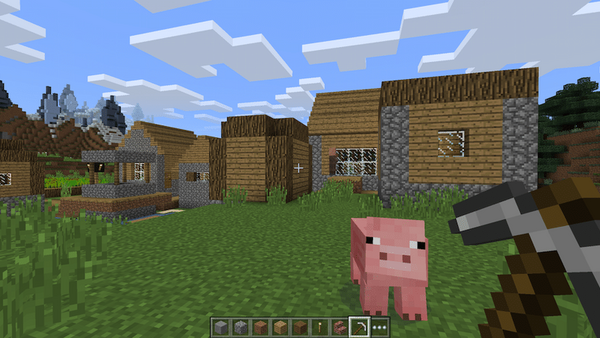
And finally we have Minecraft, which was released in 2011 during the peak of the PS3/360 era, where just about every hit video game adopted the sludgy grey-brown aesthetic of a rusty screw.
Why, then, would this ultra-colourful sandbox game with a blocky, unpolished visual style that has no real story nor any proper gameplay goals be anything more than a fleeting distraction solely "for kids"?
But Minecraft was one of the first video games to benefit majorly from streamer culture, with Let's Plays from prominent YouTubers allowing it to progressively become a word-of-mouth hit.
The game's hands-off approach to encouraging creativity evidently struck a chord with players of all ages, and 14 years later, Minecraft is the best selling video game of all time by a colossal margin, while its recent movie adaptation is closing in on $1 billion at the global box office.
For a game that could've so easily been a passing flavour of the month, initially created by a solo developer no less, its enduring pop-culture dominance is something nobody could've seen coming.