10 Worst Mass-Market Video Game Controllers Of All Time
Seriously, WTF was that N64 pad?!

It's very easy to get caught up discussing software over hardware when it comes to comparing consoles and looking over gaming history, but what of the hardware that got us here in the first place?
Nintendo, for example, are making a huge deal of how the new Switch is a hybridisation of every single controller they've made to date, combining the SNES's analogue buttons, the N64's analogue sticks, the Wii's motion controls, the Wii U Gamepad's touch screen, etc.
However, whilst Nintendo certainly gave us some incredibly innovative components that the industry would take and run with, both they and many other manufacturers are guilty of throwing out some duds too.
Now, it's not to say the following controllers didn't have any worth - many became childhood favourites in spite of shortcomings that even their respective companies would drop going forward - but there is a special place carved out in gaming history for the pads that never sat right with the vast majority.
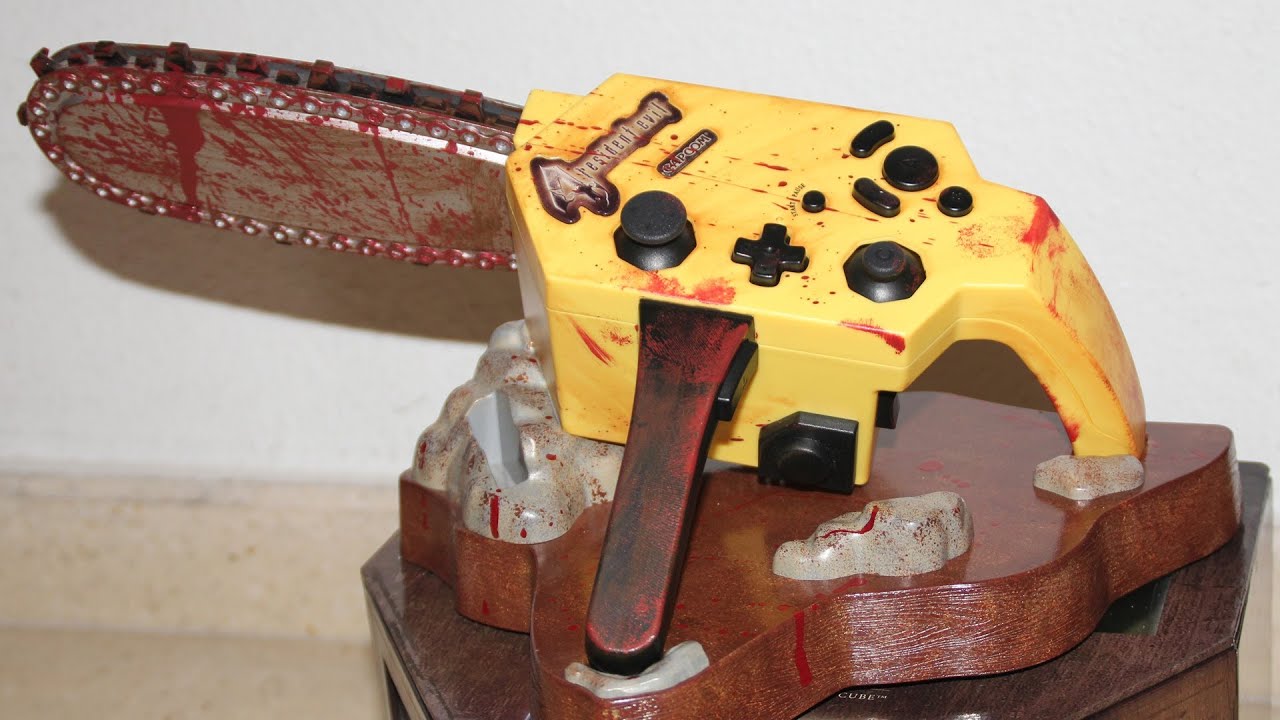
Lastly, it's certainly true that most terrible game controllers come from third-party iterations or developer-licensed promotional one-offs (the Resident Evil 'Chainsaw Controller', anyone?), but that doesn't mean the official iterations that got the widest circulation weren't almost ruined by their own crippling oversights.
10. The Kinect (2010)

Right from the get-go, we knew the Kinect just wasn't going to work. Early trailers showed forever-grinning families doing their best 'mass market wholesome fun!' faces, resulting in demonstrations of technical proficiency that even Microsoft must've known were bald-faced lies.
Come launch, the Kinect barely worked, failing to register even the most animated individuals and completely dropping the ball when it came to realising the 'vision' of a controller-less world.
Even worse, it would draw more heat from not being able to recognise any darker skin tones, meaning that depending on your ethnicity alone, the hardware might not even activate.
Somehow, Microsoft took all of this feedback and... built an entire console around it, resulting in the initially cack-handed Xbox One having one of the most embarrassing reveals and launch cycles of all time.
9. Wii U Gamepad

Sorry Nintendo, you were just too quick out the door with this one. Whilst the Switch refines and makes more appealing the notion of an all-portable home console, this half-step resulted in a controller that looked as though every major console feature had been thrown in a pot, the result being some flash-fried concoction of potential with zero execution.
To be totally fair to it, the Gamepad did allow you to turn off the TV and play something like Wind Waker HD on your couch, but the whole thing felt like a Fisher Price-esque, 'My First Controller'.
It was bulky, quick to make your hands ache, had zero design aesthetic other than the kitchen sink approach, and included a weird little 'lip' on the back that, well, I still have no idea what that was for.
Basically, if the horrendous mass of pulped flesh that emerges at the close of INSIDE was a game controller, it'd be the Wii U Gamepad.

8. SixAxis/Dualshock 3

It's VERY important when criticising the PS3's controller, to mention that it's not the Dualshock form factor that was an issue - quite the opposite. We'd already had two iterations on the exact same shape in the previous two generations, both of which were exemplary.
In fact, the original DualShock might just be the finest controller of all time.
No, Sony's third iteration failed because it dropped the vibration feature, releasing as the 'SixAxis'; a pad that prioritised motion-controls for games that never supported them, and even after restoring the vibrating functionality and re-releasing as the DualShock 3, it felt weirdly 'empty' and light, giving gamers some of the worst, spongiest 'triggers' we've ever had to use.
Come time for the PS4, it's a damn good thing Sony went back to the drawing board (or snuck a look at Microsoft's for the 360, anyway), as this was one hell of a step back after such an exemplary offering on the PS2.
7. The Original PSP's Analogue Nub

Sony still haven't come anywhere close to mastering the handheld market (probably because they tend to release something with all the support of a toothpick under a skyscraper) but on the iterative hardware side, it's not for lack of trying.
The original PSP went through two iterations in quick succession, both of which came with a just-plain-weird analogue 'nub' in place of an actual stick. Handling the thing, it was more like a trying to control an analogue 'disc', sliding across the surface of the PSP, mostly being functional, but forever making you wonder why they didn't just put a miniature stick on there instead.
Come time for the PS Vita, Sony would finally do what they should have years prior, yet by that point, the PSP/Vita name was so far buried under bad marketing and half-supported software, it never stood a chance against the 3DS.
6. Wiimote & Nunchuk

Yes, it revolutionised the way we play games and even helped millions of (filthy) casuals join our beloved medium, but for playing anything other than Wii Sports, the Wiimote and Nunchuk were pretty pants controllers.
Through sheer practicality, having the two halves of a standard pad split into what you'd hold in each hand never felt satisfying, and that was before you attempted to play anything with more advanced control schemes.
Such a tunnel vision focus on motion controls and first-party offerings would be the beginning of Nintendo's still-shaky relationship with third-party developers, producing a controller that soared higher than anything else when it came to mainstream acceptance, but didn't have a single decent utilisation outside of what was bundled in with the system.
Oh, and it gave us one of the worst Zeldas in history with Skyward Sword, too - one that Miyamoto himself couldn't control...
5. Nintendo 64

Console owners will forever defend the N64's terrible three pronged form factor as 'innovative' and 'unique', mentioning that "All you had to do" was hold the middle one in conjunction with a side-barb, to get on with whatever you were playing.
Naturally, this misses the fact that you should never have had to awkwardly hold 'half' a controller to play anything in the first place, and that's before you factor in the strange placement of the analogue stick, four buttons designed explicitly for camera controls, and a just-out-of-reach Z-Trigger that always felt cooler in concept than execution.
At the end of the day, the N64's software carried the system wholeheartedly, as whilst you have to hand it to Nintendo for inventing the analogue stick in the first place, Sony took the idea and paired it with more sensible ergonomics, resulting in the mighty DualShock.
4. The Duke - Xbox
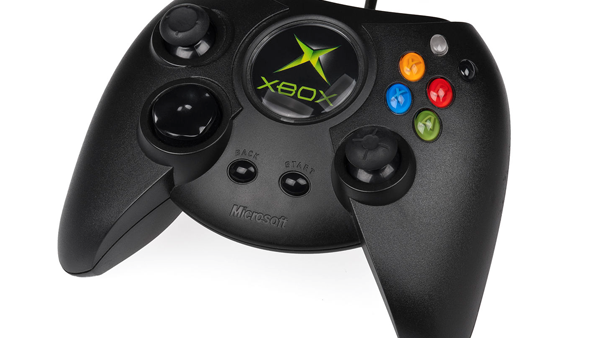
Despite the Xbox 360 being a generation-dominating behemoth of perfect technical specs and immaculate software, it took Microsoft half of their previous console generation before half of the populace could even pick up a pad.
Case in point: The original Xbox controller, nicknamed 'The Duke' due to its mammoth size. Clearly part of some sort of "Let's target older gamers" marketing push, Microsoft seemed to forget the part where that doesn't always mean said 'adults' will have hands the size of shovels.
Needless to say, many consumers literally couldn't get to grips with the thing, resulting in Microsoft releasing the Xbox Controller S; a far more considered, logical step forward for the remainder of the Xbox, which also carried onto the 360 and Xbox One's designs.
3. Philips CD-i Game Controller(s)
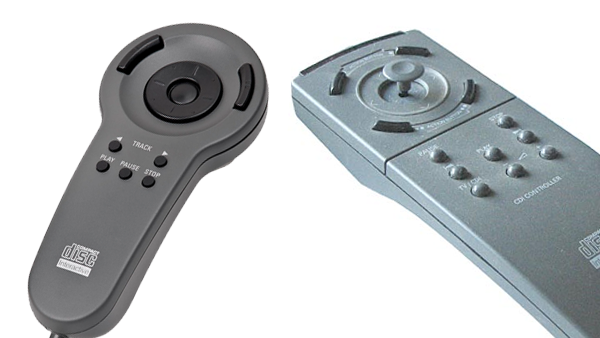
As we've already covered with the Wiimote, perhaps controllers shouldn't be awkwardly malformed and shoved into form factors that resemble TV remotes - i.e things that are used for a few seconds at once, and don't require both hands.
The Philips controller was so godawful, you can blame both it and the thoroughly naff CD-i in general for why Nintendo are still so protective of their IP.
Back in 1993, they actually allowed the otherwise-mighty Zelda to appear on a platform that wasn't their own, resulting in the shockingly bad, Link: The Faces of Evil, Zelda: The Wand of Gamalon and the hilari-terrible, Zelda's Adventure.
Needless to say, that stunningly 'lifelike' gameplay did little to paper over a feel of control that was already about as satisfying as licking brickwork, burying the dead-on-arrival CD-i and every possible 'innovation' with it.
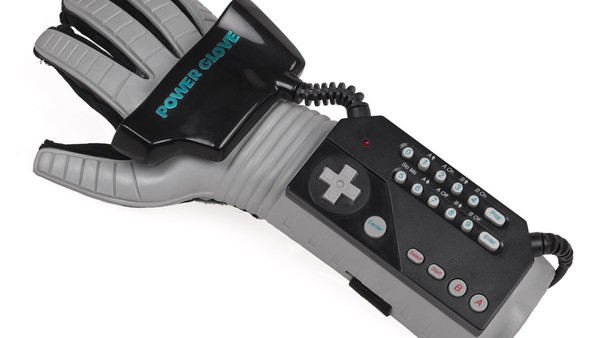
2. Nintendo Power Glove
"Everything else is... working."
Testament to just how cool Nintendo made the Power Glove in 1989 (they helped produce a whole movie around it called The Wizard), this completely ineffectual, 'the future is now'-style piece of tech failed more than miserably.
In part thanks to the tech of 1989 not remotely being able to deliver on the notion of a one-size-fits-all glove that lets you 'reach into the screen and control the action', it mostly sucked, because back in '89, games hadn't even gone 3D.
Nintendo touted all sorts of features like being able to waggle one finger that would trigger 'unique power-ups' or flicking your wrist to throw someone over your shoulder in Double Dragon - all the while saying the glove would be mapped in 'real 3D space', like how VR finally is now, some 25+ years later.
Needless to say, none of this functionality was present, and even if you did manage to get it to respond, chances are the motion you did had nothing to do with what just happened onscreen.
1. Dreamcast
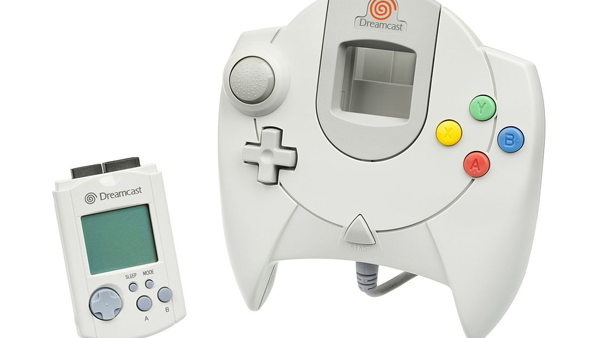
Blame marketing, blame bad timing, blame cack-handed third-party support or point fingers at all three - one of the biggest nails in the Dreamcast's coffin was its controller.
A truly blocky design aimed to support additional 'VMUs' (Visual Memory Units) - removable memory cards that doubled as miniature handheld systems with a basic LCD screen - Sega were clearly trying to one-up Nintendo when it came to innovation.
Sadly, their bulky shape made the controller quite the cumbersome thing to hold with confidence, and then you had the overly slippy analogue stick, cheap-feeling buttons and shape that couldn't hold a candle to the PS2's iterative DualShock.
To this day, the Dreamcast's form factor divides rooms depending on those who swear it was "just ahead of its time", but there's a fine line between that as a driving force, and total madness.
--
What's the worst controller in gaming history? Let us know in the comments!