11 Biggest Video Game Industry Lies You Still Believe

Thought Mario 64 was the first 3D platformer? Think again.

When you were a kid, did you have a friend who convinced you of some thing or feature existing or surrounding video games, but in order to get or see it you'd have to go on a wild goose chase? If the answer is no, you were that friend. There was nothing more exhilarating as a 90s kid than pursuing a secret item, character or story no other kids had any idea existed. Remember, this was in the days before the internet, so everyone believed anything remotely possible because they had no way to check otherwise. Imagine the thrill if you got it right - you'd be able to endlessly brag in the school playground and canteen about your successes, teasing your classmates about how you know something they didn't - it all created this beautiful culture where we'd eat up every little clue, puzzle and hint with no questions asked. But the sad truth is that pretty much all of these legends have been proven false over time - the hours you've pumped into certain games or hearsay were (ultimately fun) wastes of time, but now you're an adult it's time to look back, shake your head in embarrassment and marvel at the biggest myths or false secrets you once chose to believe.


11. Blowing Into A Game Cartridge Didn't Fix It - It Actually Harmed It

The first life hack you ever learned was a lie - sorry, but it was, even if it seemed like perfectly sound logic that'd save your prized games from oblivion. In theory, microscopic dust would gather inside the cartridge, so blowing on it would disperse the dust and make it work properly, right? Well, that was wrong - what you were actually doing was allowing the moisture in your saliva to interfere with the copper elements, causing them to break down. Nintendo even tried to warn you in the small print of game manuals, saying your breath could "corrode and contaminate the pin connectors", but who read that? Now let's take this opportunity to remember our fallen idols; many thought they were saving and reviving fallen comrades, but you were just pushing them closer to the grave.

10. There Was No Secret Cow Level In The Original Diablo

Cows have become a bit of a running joke in the Diablo series and it all started in the original game in 1996. Overimaginative fans were amused by the presence of the farmyard animals and they found that if you clicked on them a certain amount of times, your character would joke that he's "no milkmaid" or he's "not even thirsty". Player hysteria ensued as people believed the cows weren't all they seemed and if you kept clicking - hundreds or thousands of times - something different would happen. The most popular theory was a secret portal would open and take you to the hallowed Secret Cow Level. It's as ridiculous as it sounds, but that didn't stop gamers from trying. To be honest, they had no reason not to believe it; it's not like they could just jump on Google and find out. Come Diablo II, Blizzard did include a Secret Cow Level to satisfy their fans' craving for man-on-cow action. The level featured an army of polearm-wielding cows and a boss called the Cow King, who also made a cameo appearance as a ghost in the third edition.

9. You Couldn't Bring Aeris Back To Life In Final Fantasy VII

Aeris/Aerith's murder at the hands of Sephiroth was the first proper video game death; one that shocked and angered you in equal measure. It was a finely executed plot twist that reminded you no one was safe, but some people simply refused to believe it. Fans sent petitions to director Yoshinori Kitase calling on him to bring her back. Others took it upon themselves to find a secret outcome to save her, arguing that the game had hinted at her resurrection and you could change the outcome of the story entirely. That saw the birth of yet another treasure hunt, a bandwagon that Final Fantasy fans couldn't get off of. Of course, the vast majority of these secrets involved doing a series of random and irrelevant tasks, combing through the map for items that never existed and doing hidden quests. In hindsight, it's a bit silly but it just goes to show how tempting a good secret was back then - you'd literally go to the ends of the Earth and back, a thousand times clockwise - when you should've actually been accepting your grief and moving on. That's life people - you win some, you lose some.

8. There Were No 'Super Death Moves' In The SNES Mortal Kombat
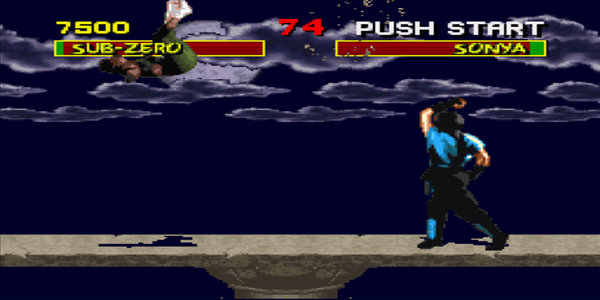
Mortal Kombat is well known for its emphasis on blood, gore and guts, especially when it comes to delivering a Fatality that completely destroys your opponent and leaves them a bag of bones on the floor. However, the original game's release on the SNES in 1992 didn't exactly live up to that; in fact, the blood was replaced with grey splats and the finishing moves were somewhat less violent. Meanwhile, players using the Sega Genesis were tearing spines out of backs and using them as skipping rope - just by typing in a cheat code. It all came down to Nintendo's "family friendly" policy that forced Midway to tone it down so parents and kids alike could beat each other to a pulp in a more tasteful way. But that didn't stop the rumours spreading that there was a hidden way of unlocking 'super death moves' that were way more brutal than the ones on the Genesis. Kids spoke of secret programming and code, that you could activate or unlock to pulverise your mates. Of course, it was false and it's just another example of fans getting carried with themselves, believing anything they heard.

7. Akuma From Street Fighter Wasn't A Hidden Character In Resident Evil 2

Back in yesteryear, gaming magazines were like monthly Bibles - information was king, and the likes of Electronic Gaming Monthly were sat on the prized throne. There is no modern equivalent of the excitement involved in opening up a new edition and reading all these hints and tips to find mind-blowing secrets, but like many of the publications, EGM had a wicked sense of humour. Their young and gullible readership relied on them to keep them up-to-date with the latest secrets and easter eggs, so the writers liked to have a bit of fun at their expense. In one edition, they convinced fans that Capcom - who developed both Street Fighter and Resident Evil - had included Akuma in Resident Evil 2 and he had the ability to go anywhere in the game while shooting fireballs from his hands. Any kid would've gone berzerk at the prospect of toasting zombies with fire so they set about unlocking him - but what did EGM say you had to do? Complete the game six times, getting A ranks on every stage whilst using only a pistol and a knife, then you'd start again for the seventh time, input his name on a computer and he'd burst out of a seemingly empty cryo tank. It's mean, but you've got to laugh; kids would've pumped serious hours into the game in the hope of playing with the Sotokan killer, all to find it was a hoax.

6. Mashing Buttons Didn't Increase Your Chance Of Capturing A Pokemon
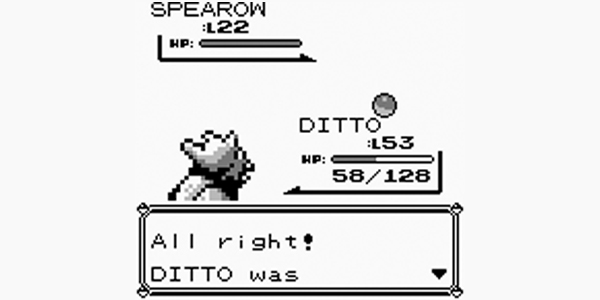
Think back to those times when you finally discovered a legendary Pokemon in the original games - you'd be a mixture of nervous and excited at the prospect of entering battle with Articuno in the Seafoam Islands or Mewtwo in Cerulean Cave. At this point, you saved the game, took a deep breath and prepared for battle. The aim was to make them yours and you'd paralyse them within an inch of their health, before throwing an Ultra Ball and furiously mashing the A and B buttons. If it worked, congratulations! If it didn't, that's just Pokemon. It never came down to your thumb speed; it was all numbers and random chance. Admitting the truth will destroy your inner child but it simply didn't matter. Some argue that the inputs confused the game and gave you a better chance, but there's no evidence. Sorry, but it was a massive lie that probably caused you some kind of finger strain in the process.

5. Super Mario 64 Wasn't The First 3D Platformer

There's no denying the effect Super Mario 64 had on the gaming industry back in 1996; it raised the bar for new titles and kickstarted a new era in video game development. But the idea for the game didn't actually come from Nintendo. As a concept it was pitched to them by Argonaut Games with one difference: they wanted Yoshi to front it. Nintendo refused to hand over their character but ended up producing Mario 64. Meanwhile, Argonaut Games would create the Croc franchise with Sony - so Croc and Yoshi are essentially brothers. But even before all of that, there was another 3D platformer already available. That honour fell to a game called Alpha Waves that was released six years before Mario. The game was developed by Infogrames and its gameplay is pretty simple: you guide a vessel around rooms, collecting items and moving onto the next challenge. It doesn't look great but the mechanics of 3D platforming are there and it can be regarded as the first of its kind.
It's a nice fact to remember, especially if it comes up in a pub quiz.

4. Nude Lara Croft Wasn't An Unlockable Feature

There's nothing quite like cubic boobs to get you hot under the collar! Looking back now, the furore over 'Nude Raider' was ridiculous, especially when you consider Eidos had to take legal action against a website who patched Tomb Raider to include Lara in her birthday suit. But fans became obsessed with the idea that you could somehow play the original game with a naked Lara. All kinds of rumours were floated about, spread by whispering kids at lunchtime as word spread that there was a way of seeing a bit of mild nudity. The rumours centred on players completing the game in certain ways to play in the nude. However the funniest "cheat code" involved the player tapping out the tune to Wannabe by the Spice Girls at which point, unable to resist the beat, Lara would start to dance and tear her clothes off. It sounds stupid - and it was - but people lapped it up and didn't think to question it, because their desire to be the first to do it amongst their friends was too strong, making everyone cave at some point. You were all as bad as each other, but that's ok - thankfully nobody knew any better.

3. Luigi Wasn't A Playable Character In Super Mario 64

luigi_beta_super_mario64_by_chacs

This is a rumour that spread like wildfire back in the 90s and it wasn't helped by Nintendo, who kept quiet and let fans' imaginations go crazy. All kinds of apparent 'clues' pointed to Luigi being a secret, playable character in the game that could only be obtained by doing ridiculous things such as running around fountains, jumping into cannons or nailing impossible button sequences. The hunt for Luigi felt like the world's biggest treasure hunt and you were a part of it. One theory centred on some hidden symbols which apparently read "L is Real 2041" and when Nintendo were asked about their meaning, they refused to comment. They were actually just random shapes, but the hype train went into overdrive and although the company eventually set fans straight, it was too late and the legend had begun. To this day, some still believe Luigi is hidden in the game code, but it's safe to say it was a lie.

2. The Triforce Wasn't A Collectable Item In The Legend Of Zelda's Ocarina Of Time
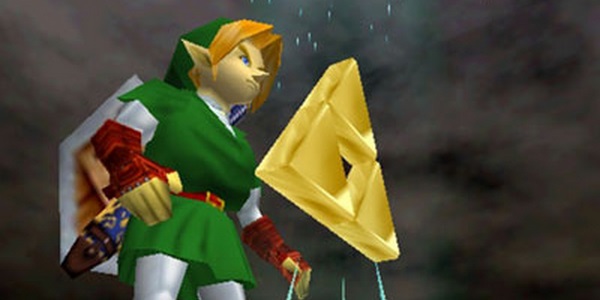
Another example of Nintendo inadvertently creating an urban legend came with the release of the Legend of Zelda: Ocarina of Time in 1998. An early trailer for the game showed a scene where Link stands in front of the Triforce, leading fans to believe it was an elusive treasure hidden within the game. Couple this with an empty inventory slot for the item and you can see how everyone was led to believe it was doable. It wasn't - Nintendo told fans the inventory slot was "purely decorative" but they didn't believe them. Players tried to track the Triforce down in hundreds of different ways and some convinced the masses that they had done it, uploading screenshots to old message boards. Back in a bygone era where image manipulation was a niche skill, it broke a burgeoning internet more than Kim Kardashian's oily backside as everyone scrambled around to see if it was true. When one solution was debunked, a brand new picture of a secret dungeon or level was posted and fans did the same merry dance all over again. Eventually, the hype died down and fans came to accept they'd be fooled by both Nintendo and the Zelda community; there was no Triforce, and they could go back to enjoying arguably one of the best games of all time.

1. Bigfoot Didn't Roam The Forests Of Grand Theft Auto: San Andreas
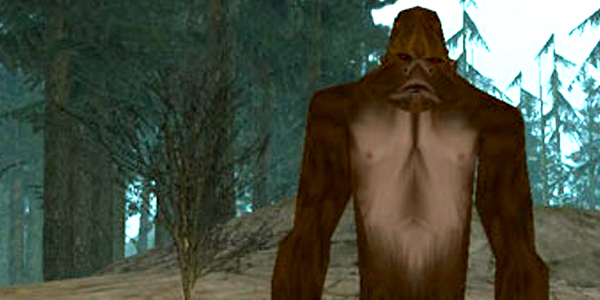
The world of San Andreas is still perhaps the most diverse in the Grand Theft Auto series. It combined the cityscapes of Los Santos, San Fierro and Las Venturas with forest and desert regions to play around in. However, when the game was released, word spread about a certain danger lurking in the countryside. Fans formed groups to search the woodland in the hope of finding the myth that is... Bigfoot. There were numerous sightings of the legendary beast that caused hysteria as everyone set about exploring the rumour for themselves. It was believed that if you roamed Mount Chillad and its surrounding regions at the dead of night, you'd stumble upon the walking carpet himself. He wouldn't interact with you and would flee if seen, never to be spotted again - and when you consider how advanced San Andreas was for its time, it's easy to see why the sight of a mythical creature in the rain could send chills down your spine. Fans posted images and videos of their encounters onto forums - but they were either mods or manipulations. There was even a falsified quote from Rockstar's Terry Donovan that claimed to say: "There is no Bigfoot, just like in real life. But there is something in the woods." It doesn't exist, but it just furthered the cause of the hunters. There was a reference to the episode in GTA V where - spoilers here - Franklin finds a man who says he's been tracking Bigfoot for nine years, only to turns out to be another guy in a furry suit. It's a fitting metaphor for all of this: you were all fooled by each other, time and time again. What other lies did the industry and its fans lead to you believe? Let us know in the comments!

Contributor
Contributor

Journalism graduate and now professional wordsmith, writing about games, film and sport.