12 Controversial Video Game Scandals That Rocked The Industry
Sex, bugs and financial woes.

You can't beat a good scandal, be it celebrity-related, Hollywood-centric, or something else entirely. When it comes to gaming though, thousands of developers being holed up in swelteringly hot offices doesn't lend itself toowell to anything other than bloody brilliant video games.
That said, the industry is no stranger to courting controversy regardless, and being that gaming is one of the most lucrative and visually stunning mediums of all time, when the media get their hooks in, they'll run with any angle simply for the sake of popularity.
Any gamer born before the 2000s will remember growing up in a world dominated by headlines about how gaming is the "downfall of the youth", how they "glorify violence" or how "they teach children how to kill." Have a quick gander back on any news report of the era and you'll be amazed by just how ridiculously uninformed everything truly was.
Although, then again, just look at Donald Trump's success and you'll see how we've not changed all that much... To that end, video games may not be the first port of call when it comes to controversy, but that doesn't mean there aren't some tall tales to tell.
12. Hackers Take Down PlayStation Network, Exposing 77 Million Users' Private Data

It comes to something when one of the world's biggest companies messes up so badly, they literally just have to hold up their hands and give away free products to get back in the public's good graces.
Such was the case back in 2011, when "an illegal and unauthorised person" gained access to around 77 million users' PSN accounts, including everything from names to addresses, even credit cards and financial information. Sony responded by assuring people their bank balances weren't at risk, but took the PSN offline for over a week as they attempted to rectify the issue and bolster security protocols.
Sadly, the damage was done. People were absolutely furious about such a breach of sensitive information, however, all Sony could do was offer a 'Welcome Back' program that gave free games to users, acknowledging a categorical failing on their part.
They promptly introduced insurance for PSN accounts and required every single user to create a new password as they'd rebuilt the PSN infrastructure entirely. The downside? Altogether, this entire debacle had cost them 171 million dollars.
Ouch.
11. Activision Vs. EA Over Billion Dollar Modern Warfare Case

Word to the wise: Even if you've just helped develop two of the most influential and important games in history, you're not safe from hair-trigger bosses getting annoyed if you start looking for work elsewhere.
Case in point: Frank West and Vincent Zampella, who were unceremoniously sacked after Activision's top brass discovered they were having secretive talks with EA in regards to funding an entirely new studio - one that would also take away key members of Modern Warfare developers, Infinity Ward.
The story goes that they were literally marched off the premises by security following their dismissal, to which they then sued Activision for withholding royalties that West, Zampella and Infinity Ward were owed all along - hence looking for other employment in the first place. This was initially set at $36 million, but boomed up to $2 billion for "owed pay and damages" after all was said and done.
Activision fired back by suing EA for going after their employees in the first place, and it took multiple delayed pre-trial hearings before Activision eventually ceded and settled everything out of court.
Literally, it took the eyes of the world and 7 BILLION dollars on the line for the company to think, "Yeah... we should probably pay our employees what they're owed", otherwise who knows how more out of hand this would have gotten.
10. Microsoft Completely Reverse Everything About The Xbox One

At some point in a galaxy far, far away, it won't be the Trillia Massacre two plucky young heroes are talking about, it'll be Microsoft blasting their own foot off with the Xbox One's launch.
Riding high at the close of the previous generation, the company promptly gave all manufacturing duties for the 360's followup to an entirely new team. Why? Because they wanted to make a play for your living room. The Xbox One was thus revealed as an "all in one" machine that could control your TV, record programs and play games, all with the power of your voice.
The problem was nobody on earth wanted this. Nobody. It didn't help that the initial reveal event featured pre-recorded footage, that the console would require a mandatory online server check every 24 hours or that it couldn't play pre-owned games without weeks of authorisation. Nope, the core functionality of a games machine was... controlling your TV.
Hilariously, after a month of nothing but abuse, confusing PR messaging and white-hot jibes from Sony, they relented. Every single practice was reversed and the console was left a broken, unusable mess. Only now in 2016 have Microsoft finally got back on the horse, having been dragged along the stirrups for three whole years.
9. DOOM Gets Blamed For The Columbine Massacre

When in doubt, blame video games.
Such was the mantra in 1999, as America searched for some semblance of rationale to account for the abhorrent Columbine High School shootings. The media did have a point... ish; the two boys responsible did claim to be fans of DOOM, Wolfenstein 3D and Duke Nukem - however it was DOOM that drew the most attention because of its overtly 'heavy metal' and Satanic themes.
And nothing says, "Shock horror, white picket fence America!" like heavy metal and Satan.
Naturally, iD Software's raucous gore-a-thon had about as much to do with inspiring young boys to kill as it did teaching them La Cucaracha, as the evidence for all video game violence has always come back that there's no direct, causal link between the two.
The Catcher in the Rye wasn't responsible for Mark David Chapman killing John Lennon, Pantera breaking up didn't provide adequate reason to Nathan Gale shooting guitarist Darroll 'Dimebag' Abbott, and DOOM should have been nowhere nearer this case than any number of contributing social factors.
Still, it didn't stop outlets of the time wading in and labelling it as such, even if they did look mighty ridiculous afterwards.
8. Peter Molyneux Does Nothing With $500,000 In Kickstarter Money
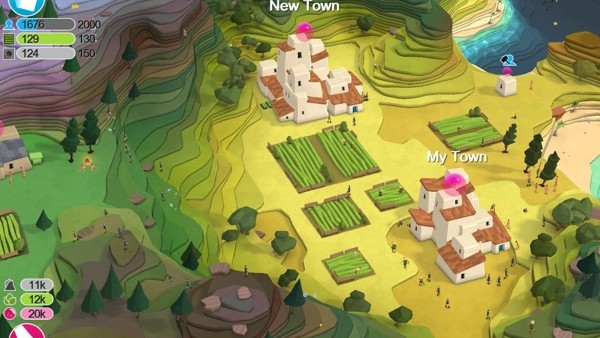
Kickstarter is a terrifying thing when in the wrong hands, and as much as I love the likes of Peter Molyneux, David Cage and all other creatively-minded individuals, Molyneux's disastrous efforts in relation to his Populous-esque 'god game', Godus, are the epitome of a disaster.
Starting with a widely-released app named 'Curiosity', it was declared that whoever got to the centre first (by tapping thousands of times) would be granted the role of God in the game. How? We didn't know, but what was clear was Godus (the game Curiosity was supposedly a gateway to) had amassed 500,000 dollars in Kickstarter-backed cash.
That would result in one of the finest games of all time, right? Wrong.
Work on Godus moved at a snail's pace, with Molyneux announcing the team had signed with a publisher (the sort of thing you don't do when you've already got the cash) as well as announcing multiple new projects, and not saying a word about when the game may be finished - or just what the hell all that money was spent on.
Curiosity winner, Bryan Henderson, revealed that "being a God" in the game amounted to getting shown around the studio's offices before being bought a pint down the local pub, and to this day, the game remains in Steam 'Early Access', having had various community/fan members head into 22 Cans' offices in an attempt to get it working.
You can read an scathing interview with Molyneux about all his failings over on Rock, Paper, Shotgun, but bring the burn ointment, because the opening question is "Do you think you're a pathological liar?"
I mean... there's "shots fired", and then there's a point-blank assassination. Damn.
7. Konami Prevent Hideo Kojima From Accepting His Own Award
The 'Konami V Kojima' scandal that rocked 2015 doubled in exposure thanks to the former's unremittingly anti-consumer business practices. First they announce a Silent Hill pachinko gambling machine, then they cancel Silent Hills - the most hyped entry in the series since its first sequel - then it's revealed they forced employees to work increasingly longer shifts, demoting any naysayers to janitorial positions - then Metal Gear Solid V releases with its ending cut off, only to appear on a bonus disc.
Yup, it's no wonder the "#F*cKonami" hashtag got so much traction.
Alas, it wasn't over yet, as thanks to some personal beef between the company's higher-ups and Hideo Kojima himself (who was probably a bit miffed The Phantom Pain's ending had been ruined), Konami's lawyers forbade Kojima to collect a statue at The Game Awards for his own game.
This resulted in a very public message being sent from host (and friend of Kojima's) Geoff Keighley during the broadcast where he ostensibly called the company out, and it contributed immensely to one of the industry's biggest companies essentially bowing out with zero grace whatsoever.
6. Fox News Labels Mass Effect A "Sex Simulator"
Trust Fox News to take one look at something and fabricate the most reactionary angle possible. Such was the case with Mass Effect, which if you've played, you'll know has about as much 'sex and nudity' as a Friends episode, yet was derisively labelled a "sex simulator" multiple times.
Because Fox News.
The best part came immediately after the incendiary and lie-filled 'debate' (seen above) when middle-panelist Cooper Lawrence admitted she hadn't played the game and was simply told it was "like pornography", before saying that in hindsight, there are "episodes of LOST more sexually explicit".
She was essentially wheeled on to support an agenda that would guarantee engagement through fear of the unknown - a backwards ideology that propped up almost all the media coverage of video games across the 90s.
It all ended with EA's Vice President Jeff Brown sending an open letter to Fox, where he quite rightly stated their report was "insulting to the men and women who spent years creating a game which is acclaimed by critics for its high creative standards".
Fox quietly took their finger off the trigger, and it was never spoken of again.
5. Everything About #GamerGate

Quite possibly the biggest stain on the history of gaming, unpacking precisely what Gamergate 'is' can be Herculean effort in itself.
Basically, it's two issues rolled into one. First, there was a lengthy blog posted online defaming indie developer Zoe Quinn, who had in her personal time, slept with Kotaku writer Nathan Grayson. So far, so fine - until people took it as a jumping-off point to accuse the press of literally being in bed with the games they review.
Every high-scoring game on IGN, Kotaku etc. you don't agree with? They were paid off, obviously.
Alongside this, we had the rise of Feminist Frequency, a Youtube channel headed up by Anita Sarkeesian; a rather vocal feminist who shot to the front of the public conscious by addressing many sexist issues prevalent in the industry. As a result of both things at the same time, Quinn started receiving a ton of hate mail, as did Grayson, Kotaku, Polygon etc., for the assumed relationships between press and product.
It blew up even further into all sorts of editorials being written about why forum posters are routinely so insensitive and barbaric in general when it comes to phrasing and treatment of women online especially, creating a tsunami of coverage that - at the heart of it - was an attempt to discuss favouritism when covering video games (probably).
Good luck finding that, however, as even an army of White Walkers couldn't surmount this ice-cold wall of sexism and vitriol.
4. Hot Coffee - Grand Theft Auto: San Andreas

Oh, Rockstar, sometimes I think you like courting controversy - I mean there's no such thing as bad press, especially when you need to get as many eyeballs on your games as possible.
Enter the 'Hot Coffee mod', a piece of code left on the disc for GTA: San Andreas, which let you take any of the various women you could date in the game to bed. Y'know, for sex. Fully clothed, awkwardly-animated, mannequin-like sex.
Rockstar clearly thought against the idea during development but somehow left the scenes in the game regardless, meaning they were promptly unearthed by PC players looking through San Andreas' code. This riled up the forever-infuriated 'soccer moms' and reactionary tabloid types, as not only was Little Timmy already being 'exposed' to a disgusting, violent video game, but now there were hidden sex scenes.
A call was put out for GTA to receive an AO rating (that which denotes something is for 'Adults Only', like retail pornography) which the ESRB actually granted, declaring that "sexually explicit material [does] exist in a fully rendered, unmodified form", despite this not being the case without extensive modding and know-how.
Regardless, Rockstar admitted their blunder and cleaned up all future pressings of the disc, which reverted the game back to a 'Mature (18)' rating... just long enough after the outcry for sales to go through the roof all over again.
3. Jeff Gerstmann And The Destruction Of Gamespot
If at any point after the GamerGate scandal, you wanted proof of what can happen when a reviewer really says what they think, look to Jeff Gerstmann's unprofessional firing during the 2007 release period for Kane & Lynch.
The act all but ruined Gamespot's reputation simply because of how beloved and treasured Gerstmann was as part of their team, and called into question the initial connection between paid advertisements on a given website, versus any relative editorial content.
It would take years of silence on Gerstmann's part as he instead founded Giantbomb, and was sworn to contractual secrecy as to why he was let go, but a collaborative video with Gamespot in 2012 finally spilled the beans.
Gerstmann was able to let the world know that he had been fired directly over coverage of Kane & Lynch, which thanks to his 'low' 6/10 score and a fairly 'rant'-like video review, it all led to a new boss at Gamespot accessing this coverage in relation to a premium ad package the company had set up with the game's PR firm.
It literally boiled down to this new boss "panicking" about the look of a site that was advertising the same game they were harshly criticising, and Gerstmann bore the brunt of a reactionary decision. It irrevocably changed Gamespot as the cultural arbiters of games journalism, and you can argue they've never truly recovered.
2. Mortal Kombat's Gore Leads To Creation Of The ESRB

Y'know, maybe the whole "Won't somebody think of the children?!" idea did have some legs, as before the ESRB ratings board, games were ostensibly thought of as toys; interactive play-things that didn't need to be classified the same way as film or TV.
Then came Mortal Kombat, and its blood-soaked visage stared that thought process right down to the ground. "This is NOT for kids" MK appeared to say, leading to an impasse for Nintendo's Howard Lincoln, who wanted the game on his company's systems, but knew it was too mature and controversial for their otherwise kid-friendly demographic.
Cue all manner of discussions about whether games could (or should) have mature themes, as everyone from industry experts to politicians weighed in on the 'influence' of violent games on the youth - although it didn't help that Midway's adverts all featured children in the first place, rather than late teenagers or young adults.
After all the hoo-ha and hotly-debated points, Senator Joe Lieberman declared that it was up to the industry itself to provide a suitable ratings board for their own entertainment, and thus, the Entertainment Software Ratings Board was born, declaring Mortal Kombat to be the first Mature-rated game in history.
See? Violence IS the answer. No, wait...
1. The Downfall Of The Entire Western Gaming Industry

1984 isn't just the name of a dystopian novel by George Orwell, it's also the middle year where video games dropped off the face of the Western hemisphere. Why? Well, in a move similar to where we looked to be heading across 2014 and early 2015 as there was nothing but broken titles in sight, the industry collapsed under its own weight just one year prior.
The means to create a game were at an all-time high, yet quality control and general testing was all but forgotten about.
"Just get it out the door and make some money!" appeared to be the mandate across every developer/publisher combo, and that resulted in a visible public backlash when 700,000 unsold copies of E.T. were buried in the Mexican desert, as Atari spectacularly misjudged the market.
Video games as you know them wouldn't even exist in a remotely positive light if it wasn't for the launch of the NES in 1985, which brought with it Super Mario and actual, well thought-out games, not just churned out products aimed to make a quick buck.
So say what you like about Nintendo's crazy ideas over the years, you genuinely have them to thank for the existence of the industry as we know it.
Cheers!
--
Are there any other monumental scandals that shocked the world? Let us know in the comments!