12 Hugely Underrated Open-World Games You Totally Missed

GTA and Skyrim could learn a lot from these guys.
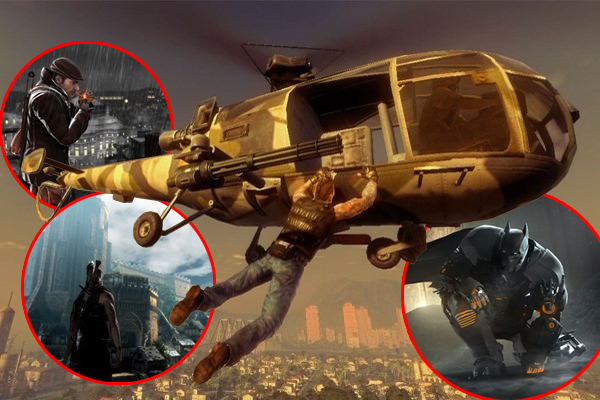
Seems these days everybody and their third cousin is having a bash at the open-world formula. First born by Rockstar back in 2001, you could argue it's the epitome of everything we love about video games. Encouraging you to experiment with all sorts of tools at your disposal, developers can strike a balance between free-form exploration and narrative, setting up a mix of well-designed set-pieces vs. dynamic events you'll end up spontaneously triggering yourself. Flash-forward almost 15 years since we first stepped foot into Claude's mute shoes and the games that bare the label now are genuine worlds to dive into and explore. Skyrim felt gargantuan for 2011, but have you felt the breadth of just one of The Witcher 3's areas? How about Metal Gear Solid V's twin landscapes or Mad Max's gorgeous wasteland? Each and every one of them revels in giving you a set of tools that are purpose-built to poke and prod at every part of the geometry surrounding you, the end results being authored by both the player and the developers simultaneously. For a while the backlash against games being recognised as art was down to the player having the supposed 'final say' on what happens - but those people missed the fact that when the right creative force is behind the puppet strings, that meshing of authorship produces some of the best experiences you'll ever have.

12. Mad Max

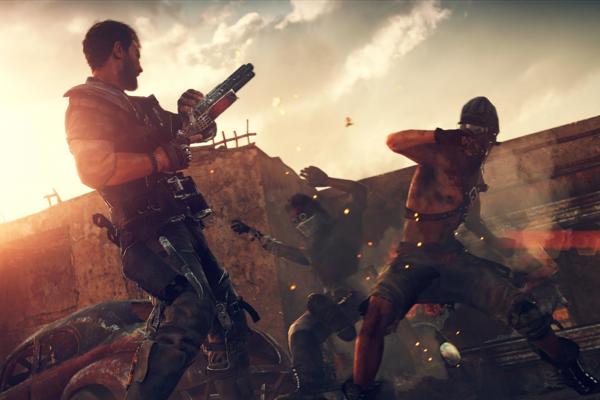
Despite being a frontrunner for Best Film of 2015, Mad Max's gaming equivalent got well n' truly buried under Metal Gear Solid V, thanks to releasing on exactly the same day. Quite possibly the perfect open-world title in everything from mission design to map structure, there's very little in the way of story other than "Go on... have fun!", but when that lets you pull a Shadow of Mordor and get stuck into a reactive world full of blood, guts n' visceral melee attacks, it's hardly worth complaining about. The core gameplay loop of 'spec car and unlock weapons, drive somewhere whilst shooting said weapons, beat the paste out of random people to unlock more and keep going' is a resoundingly fun one - an interlocking set of objectives whose mileage is entirely contingent on how much you adore the open-world setup in the first place. If you're up for getting lost in one of the best graphics engines on new hardware, coupled with fun Batman: Arkham-style combat that makes each and every hit connect with a meaty slam, Mad Max is one of the only games that presents a post-apocalypse waiting with open arms.

11. Halo ODST

It's easy to forget there's an open-world Halo out there; most likely because ODST arrived at a time when we were all bogged down with serious franchise fatigue - not to mention you didn't play as Master Chief, instead an assortment of specced-up ODST drop-troopers (the guys that help you out across the trilogy's campaign). Okay fine, it's not exactly GTA, but in terms of having a large map to explore (New Mombasa, from Halo 2), ODST used it to pepper your objectives across substantial distances, tasking you to survive exploring the expanse whilst also tackling all sorts of patrolling Covenant enemies along the way. It completely changed the way you approached every scenario, ushering in the sort of mentality we now have with things like Far Cry, where each installation or outpost is met with a mix of stealth and "I think I can get in that way" trepidation. Touted now as Bungie's precursor to Destiny, with its more open-ended levels or various environments that see you exploring and taking on objectives when you see fit, ODST is a far more robust package thanks to a solid story and another stellar score from Halo composer Marty O'Donnell.

10. Total Overdose

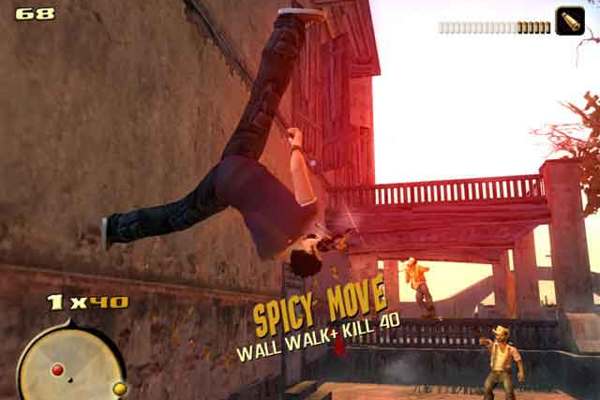
Sometimes we just need things like this to remind us that games can be games. Slow-motion gunfights complete with twirling moves that down entire rooms of enemies in one, overblown one liner-spouting protagonists - and a special attack called 'El Loco' that sees you ram head-first through any stragglers. Total Overdose was like if you took Just Cause and stir-fried it with some Mexican chillies. The resulting concoction would blow your head off if you weren't careful, but getting acclimatised with its frenetic gunplay, various evasive manoeuvres and special attacks only meant you ended up indulging more and more - until the whole thing becomes stupidly enjoyable. TD would see a more linear release called Chili Con Carnage two years later on PSP, but it's this original that took Max Payne's gunplay, True Crime's arcady car-handling and the stylish self-aware humour of Robert Rodriguez' El Mariachi trilogy, before stuffing it all in a shot glass and asking you to light the top. It was brilliant.

9. Batman: Arkham Origins

The forgotten stepchild of bigger brothers Asylum, City and Knight, Batman: Arkham Origins actually has more to offer fans of the character than any of Rocksteady's main entries - as crazy as that might sound. Where else could you have an entire mission dedicated to playing as The Joker as he comes to terms with his obsession over Batman? How about featuring every first encounter with the Rogue's Gallery, and the brilliant altercations that ensue? Hell, even Mr Freeze's DLC Cold, Cold Heart has more content and worthwhile scenes that the entirety of Arkham Knight's Season Pass - and that really is saying something. Thanks to being developed by Warner Bros. Montreal, Origins suffered from a spotty execution as the team were pretty much cobbling together their own story from someone else's game engine. There was also the fact that the public knew it wasn't Rocksteady behind the wheel, neutralising the vast majority of positive impact a fan-developed entry in the series could've had before it was even out the door. Now we've seen the last of Rocksteady's work on the character, pick up Origins with a fresher mindset and all the DLC for way cheaper - you'll not be disappointed.

8. Kingdoms Of Amalur: Reckoning

Some games - regardless of having the budget or will to succeed, the talent behind them or the appropriate release window - just completely fail. In Kingdoms of Amalur's case it was budgetary, and despite the team putting years into creating what would've been a landmark MMORPG with the help of author R.A. Salvatore, they ended up having to scrap the whole thing and release a fairly by-the-numbers (yet still supremely polished) third-person action RPG instead. Naturally it tanked, releasing in 2012 as what appeared to the uninitiated as a random Fable clone - a label that belied some supremely satisfying combat mechanics that let it play like an over-animated God of War. You weren't forced to stick to just hacking and slashing either; stealth, crafting various items and spells all came seamlessly, the story giving you enough leeway to keep exploring whilst slowly drip-feeding the notion that things would move forward considerably whenever you wanted to. The levels/world itself came across from the original MMO design, benefitting from being absolutely humungous thanks to originally being intended for hundreds of players at once. This helped give Amalur a pretty unique sense of scale, whilst reigning it in with solid third-person action-heavy controls - a spectacular combo that'll swallow up hundreds of hours if you let it.

7. The Saboteur

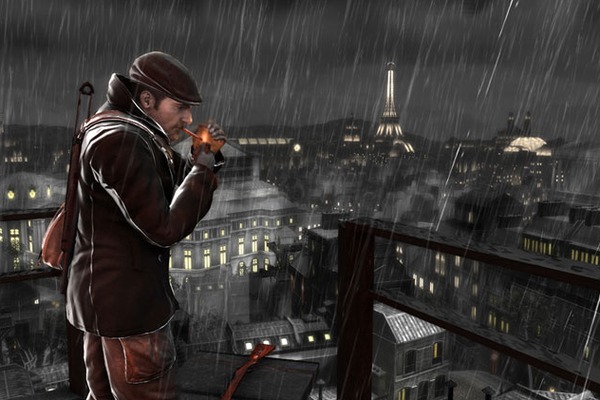
Talk about your delicious melting pot of ideas. How about Assassin's Creed's freeform climbing and mission design, Sin City's black and white aesthetic peppered with spots of colour - and third-person Just Cause-style hip-fire gunplay? Sound tasty? It is, very. Created by Pandemic Studios (who you might remember from the fun-yet-totally-overlooked Full Spectrum Warrior games), it's safe to say they know how to create worlds that balance your insertion options with some satisfying gameplay mechanics. The team had previously released the brilliant Mercenaries 2 in 2008, so for Saboteur's tale of Irishman Sean Devlin getting stuck into the underbelly of Nazi-occupied France and altering things one stealthy mission at a time, it immediately stood out both visually and especially in a narrative sense. For whatever reason this didn't catch on (possibly due to Assassin's Creed II releasing in the same year and dwarfing all other third-person action-adventures),The Saboteur is still a cracking late-2000s powerhouse of innovative visual ideas backed up with solid gunplay and rewarding experimentation.

6. Darksiders 2

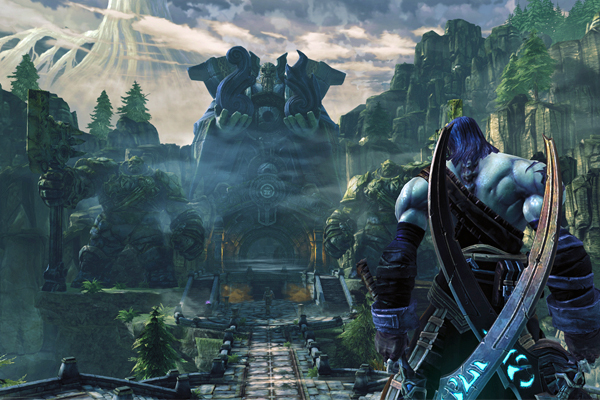
If you've read any number of my lists on underrated gems or overlooked titles, you'll have cottoned onto the fact that man, I love Darksiders 2. It's just such a well put together game from a franchise that really looked to be picking up huge amounts of steam - only to fall apart completely when THQ went under. A Devil May Cry/God of War-style combat engine twins your ground attacks with some very simple and effective platforming, but it's the world exploration and item progression that'll hook you in and command your derriere remain firmly stuck to the seat. See, Darksiders 2 has the best loot system since Diablo 3. A constant rollout of new gear and specced-up replacements for what you have allows for all sorts of visual customisation for Death himself (you're playing as another of the Four Horseman), but it doesn't come at a rate that makes you lose investment in everything you pick up. There's a far greater RPG bent to how you'll attack enemies and track what damage you're doing, and that evolving immersion in your character and the story itself is what'll take you everywhere from gorgeously-rendered gothic vistas to all sorts of colourful and hellish realms. Darksiders has one hell of an aesthetic that's almost like Warcraft head-butting Legacy of Kain, so if you like your characters big n' bulky, your combat gruesomely meaty and your stories epic and memorable, Darksiders is the Soul Reaver-esque experience you never knew existed.

5. Grand Theft Auto: Chinatown Wars

Like Halo, GTA's not a franchise that you'd regularly associated with the term 'underrated', but just try releasing anything on Sony's severely under-supported PSP - it's a recipe for disaster. Chinatown Wars actually first released on 3DS and came to PSP later, its big innovation being an assortment of touch-based minigames that tied thematically into you being the son of a Triad boss looking for revenge. You'd do everything from draw tattoos to unscrew car radios with the touch screen, and although the PSP version had to lose this control scheme, it did return for the iOS and Android releases. Chinatown Wars mostly fell apart outside of Nintendo fans initially whooping for joy that they had 'a GTA' on their system because Sony just didn't push it whatsoever. It didn't sell, it didn't chart - and it remains the only GTA that almost everyone who still identifies as a GTA fan haven't played. Oh, and on the iPhone/Touch version you can import your own custom soundtrack, just for kicks. Take that, GTA V!

4. Mercenaries 2: World In Flames

Just Cause 3 might be incoming in 2015, but it was Pandemic's Mercenaries games that first put the idea of absolute chaos and unabashed destruction at the front of the experience. Both Mercenaries games prided themselves on letting you level buildings, call in supply drops and ensure you were consistently stocked up on bullets and grenades, and it's the second one that started factoring in more vehicular-based experimentation to spice things up. The selling point was - and still is - the destruction, Mercs 2 actually featuring a pretty cool 'collect 'em all'-style setup to getting through the campaign. See, like the first game, each enemy leader is represented by a playing card, tasking you to go out into the field and either extract or kill them. If you've recently played or seen some of Metal Gear Solid V and enjoyed the whole "Sprinting through enemy ranks with a prisoner on your back" setup, Mercs has far more of that to get stuck into, the entire world around you collapsing to cinders along the way. These days the very notion of getting a stable frame rate on a game is one in a million, but somehow amongst all the carnage this managed to hold it together - for the vast majority anyway, giving you one of the best explosive sandboxes outside of Red Faction Guerilla or even Just Cause itself.

3. Dragon's Dogma

When done right, third-person action RPGs are just as incredible as the turn-based titles of yore. As such, Dragon's Dogma elects to tell the tale of one warrior stripped of their heart (a dragon eats it), before they embark on an large-scale quest to get it back... or something. Point is, although DD's story is fine enough to get you going, it's the Dark Souls-meets-Skyrim vicious combat and world design that'll enrapture you from start to finish. Standard RPG tropes like crafting and character customisation/progression are front and centre, but there's also a Shadow of the Colossus-aping grip system that lets you mount beasts for airborne kills or to clamber up a particularly sky-high giant for the win. Better yet, you'll have access to 'Pawns'; little customisable helpers that'll journey with you, and when your console is offline will venture off into other peoples' games to help them out too. Any spoils of war they retrieve are yours when you return, and it helps create this awesome sensation of everyone working together to achieve a common goal - something Dark Souls had the monopoly on until this came along.

2. The Yakuza Series

Played any of the Yakuza games? No? Didn't think so. Until Sony finally got behind the fifth instalment and announced they'd be releasing it in the west, Yakuza's initial PR spin was a bit of a mess, ending with the public thinking it was essentially what Sleeping Dogs would later be in 2013. The games themselves are actually way more brawler-focussed, putting you in the shoes of various characters interacting in accurately modelled sections of Tokyo, Osaka, Naha and more. You'll quickly develop a love for the irreverent and occasionally quirky eastern humour that makes them and their stories engaging, and it's twinned with some RPG-lite ability-unlocks and stat boosts to ensure each fight goes your way. The overarching story is brilliant, paved with twists, turns and "They're not dead?!" character-reveals that make even Metal Gear Solid look subtle, and it's all done for the sake of taking you on the most enjoyable ride possible. The upcoming (in the west anyway, Japan's had it since 2012) instalment has a whopping five characters to flesh out and master, and being Sega's dedicated development team have been nurturing it every step of the way, it's one of the best gaming franchises of all time that simply needs more exposure to be truly recognised as such.

1. The Witcher 2: Assassin's Of Kings

Speaking of fantastic franchises in desperate need of more exposure, The Witcher 3 saw CD Projekt RED break through to the mainstream and deliver this generation's first must-have RPG - but what of the previous two instalments? Chances are you'll not take to the original's behind-the-back fixed perspective for combat and its archaic menu systems, but Witcher 2 is a solid bridge between that and the completely open-world trappings of Wild Hunt. Still having Geralt struggle to know which of his past events are real and fiction, you can get caught up on Assassin's of King's story premise pretty fast, which then allows you to dive into another weighty tale of moral consequence and supremely polished dark fantasy. Author Andrzej Sapkowski's fiction places Geralt at the centre of everything from political intrigue to everyday village-saving tasks, and although it's Witcher 3 that did a 'true' open world with almost no load times, Witcher 2's is still a series of large expanses with sprawled objectives spaced out enough to sit comfortably in the genre. Let us know your favourite underrated open-world game in the comments, and sign up to write if you'd like to contribute to the Gaming section!

Gaming Editor
Gaming Editor

WhatCulture's Head of Gaming.