12 Pokemon Inspired By Real Historical Events
Gotta learn them all.
With designs ranging from frogs, to ice cream, to actual bags of garbage, you might be forgiven for thinking that Pokemon are created completely at random.
But in amongst the 721 that have been spawned to date, a number of them take their cues (both conceptually and visually) from real-world legends and cultures.
While there's never actually been a race of spritely yellow mouses that shoot electricity about their cheeks, a number of Nintendo's other pocket monsters find their origins in parts of the world, and parts of history, that will surprise and astound even the most hardened Pokemon trainer. Crack open your Pokedexs, we're going on an adventure.
12. Yamask And Cofagrigus
Yamask is inspired by an Ancient Egyptian death mask and has possibly the most disturbing origin tale of any Pokemon. In their Pokedex entry, it is said that Yamask became Pokemon when they rose from the graves of humans and that their masks used to be their human faces. As if this wasn't bad enough, the Pokedex then continues to inform the player that Yamask will occasionally look at their masks and begin to cry Its unnerving stuff.
At level 34, Yamask evolves into Cofagrigus whose design is based on an Ancient Egyptian sarcophagus. Cofagrigus are ghost-type Pokemon who hide in ancient tombs to punish unwary grave robbers. Their backstory is likely based on the rumours of cruses befalling people who entered the tombs of former Pharaohs. The most famous incident of a cursed Egyptian Tomb is that of King Tutankhamun. His tomb was discovered by an archeological team in 1922 and many members of this team suffered untimely deaths following their find.
11. Elgyem

The in-game backstory of Elgyem is paralleled by real life events that unfolded during the 1940s in Roswell, New Mexico. In 1947, it was reported that an unidentified flying object had crash landed on a ranch and that alien bodies had been recovered from the wreckage. The Pokedex entry for Elgyem states that it was rumoured to have been found in a desert after a UFO crash 50 years ago, perfectly mirroring the history of the Roswell incident.
This Pokemon was also first introduced in a Pokemon world region inspired by the United States of America; it could be caught in a desert area of the game which may be a reference to the alien conspiracy theories surrounding the United States Air Force facility, Area 51.
10. Jynx
The inspiration behind Jynx is a topic surrounded by controversy. When Jynx made her debut appearance in Pokemons first generation it was suggested that she was a negative racial stereotype due to her appearance and skin colour. The controversy led to anime episodes featuring Jinx being axed and its official artwork being re-coloured.
Controversy aside, Jynxs origin is believed to have been inspired by the Vikings with her clothes, armoured breast plate and long blonde hair closely matching the depiction on the Viking goddess Hel. Her colouring has also been suggested to have been a representation of frost-bite due to her ice typing and location in cold regions of the game.
9. Relicanth

Relicanth was first introduce in Pokemon Ruby and Sapphire and draws direct inspiration from the coelacanth in both appearance and back-story. The coelacanth is an ancient fish that was widely thought to have been extinct for over a 100 million years before being rediscovered by a submarine in the 1930s.
The in game Pokedex entry for Relicanth matches this story exactly and Relicanth is nearly identical to a coelacanth in design. The colouring of Relicanth closely matches that of the Indonesian coelacanth while its shiny form matches the colouring of coelacanth native to the West Indian Ocean.
8. Magikarp And Gyarados

Magikarp is pretty much useless in-game due to its weak stats and its ability (or should that be disability) to learn just four moves. Magikarps appearance is based on an Asian carp who are known for their ability to jump up to 10 feet in the air.
The evolution of a Magikarp into a Gyarados is inspired by an ancient Chinese legend that states that if a carp is able to jump over the mythical Dragon Gate then it shall be transformed into a dragon.
7. Baltoy And Claydol
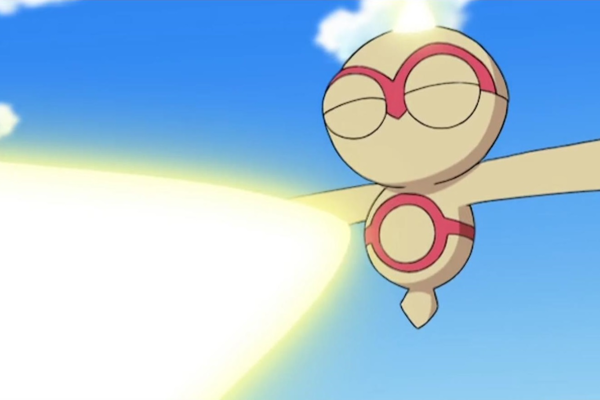
Their designs are inspired by the clay figures of Shakoki-dogu which originate from the Jomon period of Japanese history. The Pokedex entry for Baltoy states that the Pokemon can be seen in primitive wall paintings and that it was first discovered in ancient ruins. Claydol's Pokedex entry says that it began its life as an ancient clay figurine made over 20,000 years ago.
The Shakoki-dogu are often put forward as being proof of the existence of ancient aliens visiting earth due to their space man appearance. This supernatural link may explain why these Pokemon are dual Ground/Psychic types.
6. Lapras
Lapras is inspired by the reported sightings of a monster in Scotlands Loch Ness. Sightings of the Loch Ness Monster date back as far as 565 AD when Saint Columba reported that he was attacked by a monster while swimming in the river Ness. The sightings began to become more frequent in the 1930s with reported photographs of the monster beginning to surface, most of which have since been exposed as hoaxes.
One theory involving the Loch Ness Monster is that it is a plesiosaurs that survived the extinction of the dinosaurs and swims in and out of the Loch via a tunnel leading out to sea.
5. Kyogre, Groudon And Rayquaza

Known to fans as the Weather-Trio, these legendary Pokemon serve as the version mascots to the third generation games Ruby, Sapphire and Emerald and their recent remakes Alpha Sapphire and Omega Ruby. The design and in-game storyline of the Weather-Trio is inspired by an ancient Hebrew legend.
The legend tell of three beasts: the beast of the sea, Leviathan, who is a counterpart to Kyorge, The primal beast of the land, Behemoth, who mirrors Groudon and the beast of the sky, Ziz who matches up with Rayquaza. The Hebrew legend states that these beast would rise up and do battle at the end of the world, much like the Weather-Trio do in the games.
4. Bronzor And Bronzong
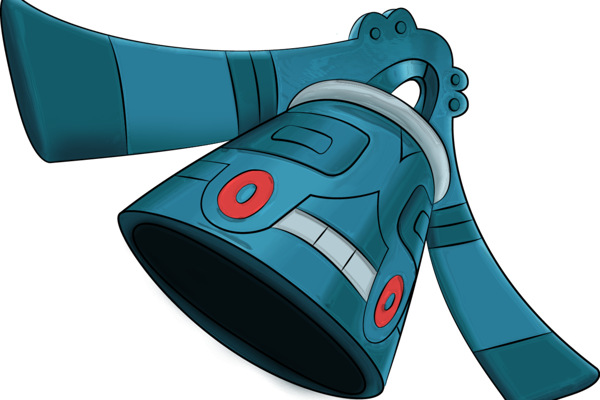
The appearance of Bronzor is based on a bronze mirror while Bronzongs appearance is inspired by a dotaku of Japans Yayoi Era. Dotaku are Japanese bells that were crafted from bronze and intricately decorated; the bells were then buried by priests in order to pray for a good harvest season. The link between Bronzors evolution into Bronzong is also inspired by a historical tradition as the Dotaku bells were often buried alongside bronze mirrors donated to the priests by women in their villages.
3. Fossil Pokemon
This one kind of goes without saying but Fossil Pokemon are directly inspired by real life dinosaur fossils. Introduced in generation one, Fossil Pokemon have been available in all of the main-series Pokemon games. So far, Game Freak have introduced Pokemon version of pterodactyls, trilobites, diplodocus and even the mighty Tyrannosaurus rex to name a few.
The main difference between Fossil Pokemon and real life dinosaur fossils is that real life fossils cannot be revived; although with the current rate of advancements in cloning and DNA research it is probably only a matter of time
2. Sigilyph

This strange looking Pokemon was inspired by the Nazca Lines, especially the set of lines resembling a stylised hummingbird. The Nazca Lines were created in the Nazca Desert in Peru by an ancient civilisation of people who lived in around the years 500 BC to 500 AD. Their location in the desert matches the desert location that Sigilyph can be found in in Pokemon Black and Pokemon White.
1. Spritzee
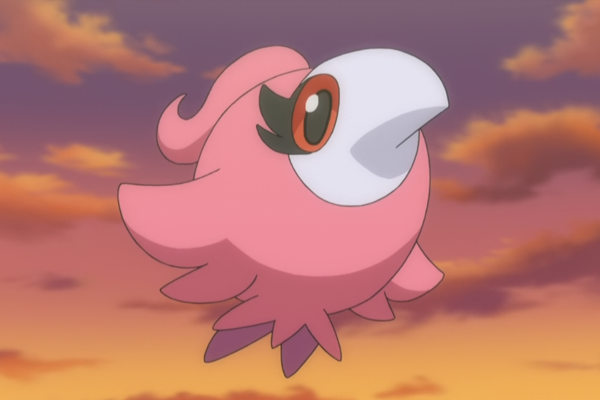
This small Fairy type Pokemon is inspired by a range of different historical events. Their Pokedex entry states that in the past royal ladies would carry a Spritzee around with them instead of using perfume. This is similar to the real life tradition of brides in the middle ages carrying a bouquet of flowers with them to try and mask the tell tale signs that they only had one bath a year.
The physical appearance of Spritzee draws inspiration from another, much darker, period of history. Despite its cute and pink appearance, the shape of Spritzees beak is based on the masks worn by plague doctors during the Black Death. The masks had long, cone like beaks that were filled with scented materials that the people of the 14th century believed would prevent the doctor from contracting plague by filtering bad air.