15 Most Disappointing Video Games of the Generation (So Far)
The most frustrating fumbles of the generation.
The current gaming generation has been one of the strangest and most polarising in history.
For one, it had the misfortune of kicking off during an especially brutal peak of the pandemic, while the last few years have seen layoffs sweep the industry, and the rise of AI has meanwhile caused hardware costs to skyrocket to unconscionable levels.
This is without even getting into the fact that many are disappointed by the lack of major technical innovation this generation - it hardly feels like the PS5 or Xbox Series X have even nearly showcased their full potential, and yet we may be barely a year away from their successors being released.
Now, that doesn't mean this generation hasn't served up its share of all-timer bangers, but it's also fair to say that it's delivered a sizable haul of gutting disappointments.
And so, from 2020 to today, these are the 20 games that fell furthest short of expectations. Not all of these games are bad, but each nevertheless whiffed it relative to all the pre-release hype and years, perhaps even decades, of waiting...
15. Starfield

Starfield has been one of the most anticipated video games of the entire 21st century to date, with Bethesda lending their peerlessly immersive RPG stylings to an epic sci-fi universe.
Director Todd Howard promised players "Skyrim in space," and while Starfield released to solid reviews from critics, the player response was decidedly more downbeat.
For many, Starfield simply lacked much of a personality or clear creative vision at all. This was a generic, often boring open world sci-fi RPG with a stupefyingly forgettable story, unremarkable characters, strangely empty world, and repetitious gameplay.
Is Starfield a bad game? No, but it fell far, far short of the epochal title Bethesda had led players to get excited for.
This was instead a dead ordinary space RPG that's ironically best remembered for how utterly flavourless and, well, forgettable it is.
Needless to say, Bethesda will need to knock The Elder Scrolls VI way out of the park to redeem this disappointment.
14. Final Fantasy XVI

Given that Final Fantasy XVI was the legendary RPG series' first mainline installment in seven years, of course fans couldn't wait to see what it was all about.
That was, until they spent a few hours with it and realised how thoroughly sauceless it was.
FFXVI's big issue is that Square Enix very clearly tried to court the most casual players possible, filing down the RPG mechanics in favour of a more formulaic hack 'n' slash character action style.
Many mechanics one would expect from a Final Fantasy game - like strategic action, party control, and deep progression - were switched out in the pursuit of a stripped down action game that offered desperately little pushback on default difficulty.
Beyond this, the attempts to craft a more "mature" fantasy game were tough to take seriously, and even the much-hyped Eikon fights were really just a whole load of empty, on-rails spectacle.
Thankfully Square Enix swiftly followed this up with the hugely superior palate cleanser that was Final Fantasy VII Rebirth, but FFXVI's failure suggests that they don't really know what to do with the main numbered franchise right now.
13. Redfall

Considering the mighty reputation of Dishonored, Prey, and Deathloop developer Arkane, there were high hopes that they'd deliver the goods with Redfall - a vampire-themed open-world multiplayer FPS.
And even though the game's marketing wasn't great, it was easy to have faith that Arkane would prove all the doubters wrong, just as they had so many times before.
Yet Redfall released to wildly mixed reviews, criticising its stock squad-based shooter gameplay, atrocious enemy AI, litany of bugs, and major performance issues at launch.
More than anything, though, this was a game without much of a personality at all - a staggeringly by-the-numbers experience that felt like a depressing far cry from Arkane's usual output.
The launch situation was dire enough that Microsoft even apologised for the state of the game just two days after release, and Redfall ultimately only lasted a year before support ended, all while Arkane's Austin studio was shut down.
12. Metroid Prime 4: Beyond

Surely no game on this list suffered more from the weight of expectation than Metroid Prime 4: Beyond, considering that this sequel was almost a full 20 years in the making and, per its strained development, came out almost a decade after Nintendo officially announced it.
And while the game was broadly well received by critics, the easy consensus is that it fell far short of the original trilogy's brilliance.
Fans vocally complained about the uneven level design, the utter tedium of the bloated Sol Valley hub area, and the general decision to veer away from the series' exploration roots in favour of a more linear, streamlined style, presumably in an attempt to appeal to a wider player-base.
Metroid Prime 4 sure looks nice and touts some fun boss fights, but in its bones this is a game fundamentally undone by its frustrating design choices, ensuring it never had a chance of paying off the long wait.
11. Overwatch 2

Overwatch is one of gaming's big success stories of the past decade - the Hero Shooter to rule them all, ensuring fans couldn't wait to get their hands on the sequel.
Blizzard's surprise decision to make Overwatch 2 free-to-play certainly ensured there were fair pre-release concerns about microtransaction implementation, but ultimately it was other business and design decisions which left the game failing to live up to its predecessor.
For one, the decision to switch from 6v6 to 5v5 matches at launch proved massively divisive, many felt the game was unbalanced, and it didn't help that a much anticipated PvE campaign mode was scrapped soon after the game's release.
And to top it all off, disgruntled players couldn't even go back and savour the O.G. Overwatch experience, because Blizzard shut it down when Overwatch 2 launched, and earlier this year the sequel was renamed to simply Overwatch.
Even though the ire has cooled considerably since release, with Steam user reviews now sitting at "Mixed" rather than "Mostly Negative," there's an easy consensus here that Blizzard pointlessly tinkered with a winning formula and made the game markedly worse.
10. Forza Motorsport

Forza Motorsport is one of those franchises that just has its formula so thoroughly on-lock that it honestly didn't seem like it could possibly fail, especially with such a strong track record behind it.
And so, it was assumed that 2023's reboot of the mainline franchise would be another visually stunning, compulsively addictive racer.
While the game is certainly a looker alright and cars handle well, that's largely where the praise ends, as Forza Motorsport 2023 is a thunderously boring, tedious experience.
Now sure, the mainline series has always been more straight-laced and serious-minded than the more arcade-y Forza Horizon spin-offs, but it still had a personality.
Yet the latest Forza Motorsport was just a big, vapid nothingburger - the career mode was a stamina-obliterating slog, the progression system was infuriatingly slow, it launched rife with bugs, and the multiplayer offering was scarcely fun at all.
If this soulless approach is what players can expect from the core franchise moving forward, then driving sim enthusiasts will surely go get their thrills elsewhere.
9. Dragon Age: The Veilguard
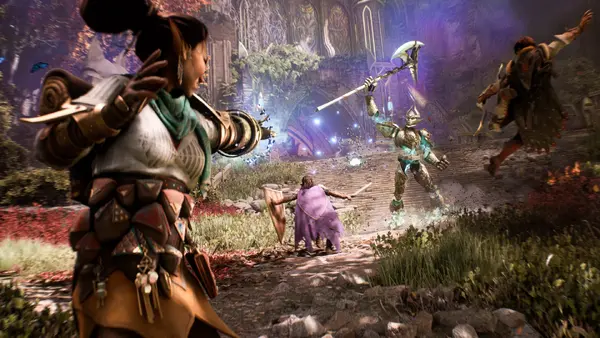
Dragon Age: The Veilguard was one of the most anticipated RPGs of the past decade, and ultimately one of its most crushing letdowns.
Releasing almost 10 years to the day that the previous entry, Dragon Age: Inquisition, came out, fans were hopeful for a generational banger of an RPG which re-established the series' good name.
Yet The Veilguard received heavily polarised responses from critics and fans, the dishwater-bland gameplay and repetitive quests clearly indicative of the game's strained development, where it was shifted from a live-service multiplayer title into a single-player one.
But The Veilguard's most egregious offense must surely be the ropey quality of its writing, with its exhausting amount of exposition and groan-worthy abundance of unfunny quips. For a developer with as much storytelling pedigree as BioWare, it was a seriously dispiriting outcome.
While the sequel certainly has its defenders, the consensus is that a just fine Dragon Age game wasn't nearly good enough considering both the franchise's rep and the long wait.
8. Skate

The hunger for a fourth entry into the beloved Skate franchise was undeniable, and so when EA finally announced it way back in the summer of 2020, excitement was at a fever pitch.
Yet in the months leading up to Skate's early access launch in September 2025, EA threw up red flag after red flag which only the most blinkered die-hards were entirely capable of ignoring.
For one, EA designed Skate as an always-online title, meaning it won't be playable if EA's servers go down and when, as is inevitable, the game is eventually shut down.
On top of this, there's the free-to-play model, which ensures the game is packed with microtransaction slop, which while largely cosmetic in approach, nevertheless integrates predatory monetisation into a game most Skate fans would've happily just paid to play.
But worst of all, Skate's moment-to-moment gameplay is just incredibly dull.
This is a soulless, maddeningly corporate facsimile of the original trilogy - a game that couldn't be much further from cool, and which offers up a barren open world with little worth doing.
7. Senua's Saga: Hellblade II
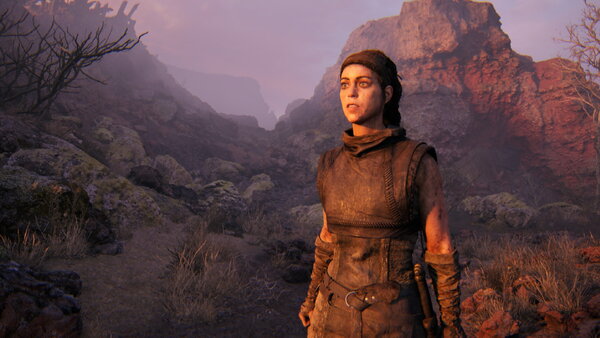
After many years of development and endless hype, the most damning indictment of Senua's Saga: Hellblade II is just how quickly it disappeared from the cultural conversation after releasing in May 2024.
Was the much-awaited action-adventure sequel a bad game? No, but given the somewhat understandable assumption that video game sequels strive to be bigger and better than what came before, Hellblade II was a strangely underwhelming shoulder shrug of a follow-up.
Though it's certainly gorgeous from an aesthetics and art design perspective and the performances are terrific, this sequel's gameplay is painfully rote and in some respects even feels like a step back from the original's already divisive approach.
Developer Ninja Theory basically doubles down on making Hellblade II a visually jaw-dropping walking simulator with laughably simple puzzles and uninteresting combat, alongside a more conventional story and characterisation than its predecessor.
Many were also left disappointed that the sequel was shorter than the first, ensuring many beat it over a day or two and then basically never looked back. What a shame.
6. The Callisto Protocol

The Callisto Protocol had a huge hype machine behind it, given that this AAA sci-fi horror game was directed by Dead Space series creator Glen Schofield and considered a spiritual successor to that franchise.
The marketing was certainly effective in cementing it as a visually stunning, ultra-atmospheric inheritor to Dead Space's legacy, but outside of its undeniably gorgeous style, it had little worthwhile to offer.
For one, the melee combat was clunky and frustrating, the game was linear to the point of tedium, and the gameplay structure was repetitive enough that it swiftly diminished the scare factor.
Couple all this with a lackluster story and a forgettable protagonist, and The Callisto Protocol felt like a half-baked, big-budget attempt to ride Dead Space's coattails - which is basically exactly what it was.
The hostile release reception ultimately caused the game to tank commercially, killing off the potential franchise before it even really got started.
5. Sports Story
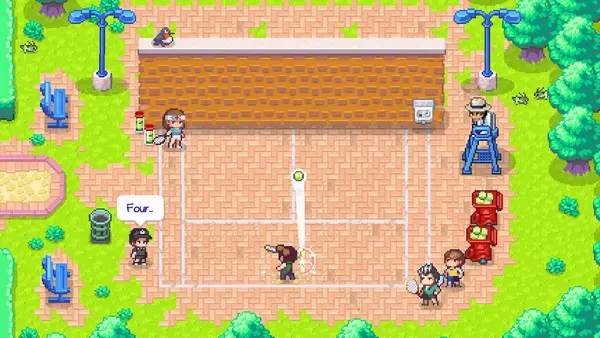
Golf Story was one of the best Nintendo Switch exclusives released during the system's first year on the market - a gorgeous retro-styled RPG that fused addictive RPG mechanics with genuinely tight golfing gameplay and a whole ton of witty humour.
Hopes were high for the long-awaited sequel Sports Story, then, but when it finally released with shockingly little buzz in late 2022, many fans were shocked at the sloppy product they ended up with.
From just playing a short sliver of the game, it clearly wasn't ready to be shipped, given the ludicrous number of bugs and generally unpolished feeling to the aesthetics and overall game design.
The many sports mini-games lacked the elegant simplicity of the first game's golf, and the original's charm was sorely absent throughout.
Shortly after Sports Story's release, players discovered a secret room with dialogue between NPCs which appeared to hint at the game's own strained development - a room which was soon enough patched out of the game. Says it all, really.
4. Battlefield 2042

The Battlefield franchise has been pretty damn consistent over the decades, so there wasn't much reason to doubt 2021's Battlefield 2042 being an easy banger.
But EA and DICE made a slew of own goals during the game's development, from cancelling its single-player campaign to removing Battlefield's much-loved classes in favour of a divisive new Specialist system, and worst of all launching the game in a blatantly unfinished, bug-filled state.
Due to all this, Battlefield 2042 swiftly became one of the worst-reviewed games on Steam and its player count cratered within a mere matter of weeks, as players returned in droves to previous titles Battlefield 1 and Battlefield V.
While 2042 was moderately improved by post-launch updates, many burned fans simply never bothered returning to it, having evidently lost trust in the brand. It wasn't until last year's terrific Battlefield 6 that the franchise well and truly redeemed itself.
3. Grand Theft Auto: The Trilogy - The Definitive Edition

There are few surer things than a remaster of a generation-defining game, right? All the more so when we're talking about a collection of three all-timer games, and more specifically, Grand Theft Auto III, Vice City, and San Andreas.
Given Rockstar Games' track record for delivering absurdly polished video games, there was little reason to be suspicious of the minimalist marketing campaign for this remaster compendium.
After all, it's a GTA nostalgia trip - that doesn't require the hard sell at all.
Yet when Grand Theft Auto: The Trilogy - The Definitive Edition launched in late 2021, it was clear that Rockstar didn't exercise sufficient oversight with remaster studio Grove Street Games.
The trilogy was widely panned for its myriad bugs and overly clean art direction, the shocking lack of love demonstrated throughout ensuring that few saw this collection as anything close to definitive.
Though the remasters were subsequently patched into better shape, the end product is still a far cry from the quality everyone understandably expected.
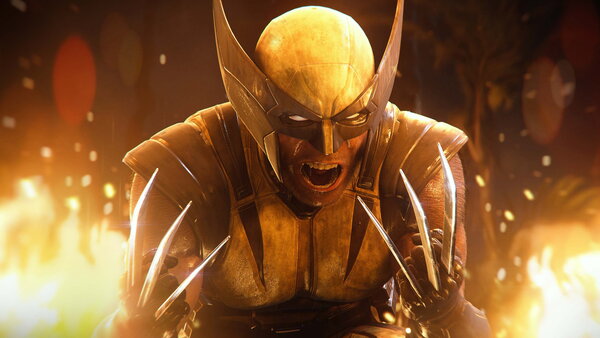
2. Marvel's Wolverine
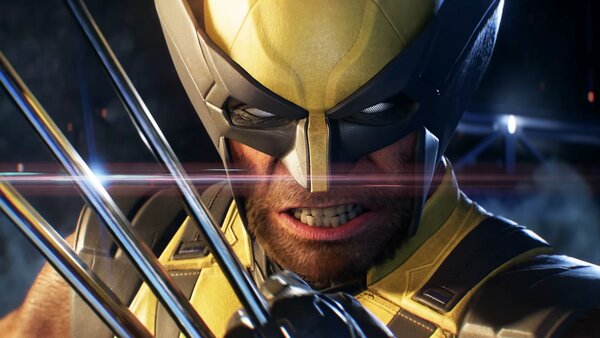
There was little reason to doubt Marvel's Wolverine considering that it was developed by Insomniac Games, who delivered some of the finest superhero titles of the decade with their three Spider-Man games.
Yet the game launched to only broadly positive reviews, becoming Insomniac's lowest-scoring release in years on Metacritic and and one of the most lukewarm first-party PlayStation titles of this admittedly undernourished generation.
While the game's visuals pop and its action is viscerally enjoyable, Wolverine is ultimately just too much of a generic, unremarkable action game that's going through the pre-ordained cinematic beats without much flair or invention.
It's a game deathly afraid to let go of the player's hand throughout its laudably brief 15-hour main story, and while in no way awful, it is a shame that a developer with pedigree like Insomniac has put out a rather competently pedestrian, forgettable game based on such a beloved superhero.
1. Halo Infinite

Even though it had some undeniable pre-release stumbles - namely the widely-mocked, low-poly Brute character known as "Craig" - fans were hopeful that Halo Infinite would mark a major return to form for the legendary FPS franchise.
With many feeling that Halo markedly declined in quality following the release of third mainline game, this bold new open-world chapter seemed like it might be just the shot in the arm the series so desperately needed.
Yet Halo Infinite was ultimately a classic example of a game that's wide as an ocean but deep as a puddle.
Mechanically the gunplay certainly felt great from moment to moment, yet the campaign was a dire slog which failed to offer up a compelling open world, while the content-lacking multiplayer ran its course in short order.
Within a few months of launch the game had shed most of its player-base, and so 343 Industries' original 10-year plan to make Halo Infinite an ever-evolving title was cut embarrassingly short, with the final content update dropping less than four years after release.