15 Most Influential Video Game Boss Battles Of All Time
From Mike Tyson to Mr. Freeze - who had the most to teach?
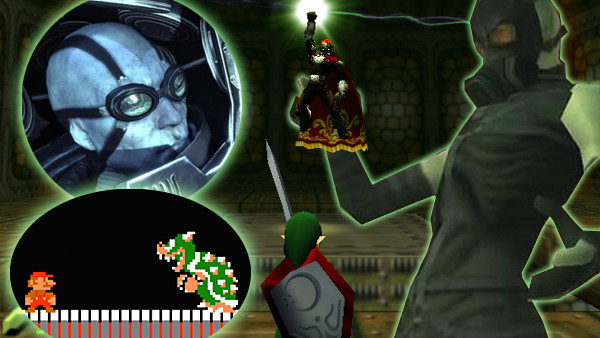
Love 'em or hate 'em, the idea of a boss battle - the hardened version of a standard enemy or a wall of difficulty you've got to surmount - is in gaming's DNA. For about as long as man could put finger to key and create code, they birthed challenge, and as that was the case, we only played games for the sake of testing our mettle against all sorts of digital concoctions designed to stretch your patience to the max (after all, arcades weren't going to hoover up quarters if you could play something once and then leave), but more recently, designs have changed.
A boss battle could relate entirely to the narrative, might have your legs for breakfast as you attempt to figure out a specific trick to defeating them, could simply be a bullet-sponge that laughs at your pathetic attempts to take it down, or a mix of all four.
Gaming as a medium is finally entering a time where technological ambition matches developer's intentions perfectly. It can create fascinating fusions of multiple mediums like Quantum Break... or it can be used to test that aforementioned mettle to breaking point.
Either way, we've come an awful long way, and these are the guys that continue to help give gaming its immortal identity as the most engaging medium of all time...
15. The Hydra - God Of War
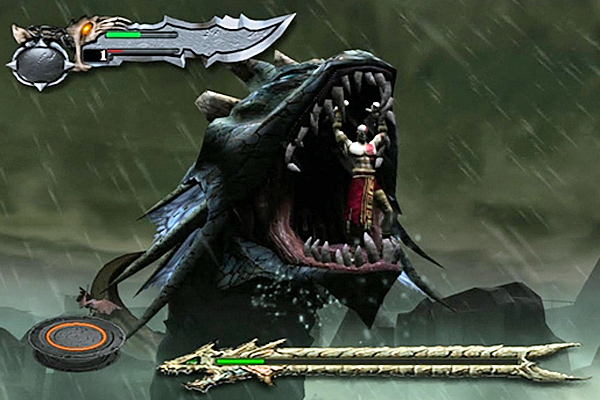
What It Did First: Popularised quick-time events as a means of defeating a boss.
Quick-time events have been used for everything from caving someone's skull in to performing hilariously-animated sex positions, but they all had to start somewhere. As Shenmue proved through its weirdly memorable forklift levels, simply adding a few button prompts onscreen during what would otherwise be a non-interactive segment, enhances the engagement tenfold.
Apply that ideology to boss battles, and God of War's terrific fight against the Hydra is one of the best. Button-mashing as a means to control scripted action was a new concept at the beginning of the 2000s, but doing so to pry open its jaws or skewer its eyes with a flaming chain-blade felt spectacular.
Since then, everything from Halo 4 to Beyond: Two Souls has implemented some sort of quick-time event boss - even if it then segues into regular gameplay. Other games may have done it first, but God of War etched itself into the history books as the one that got it right first time.
14. All Of Mega-Man's Original Bosses
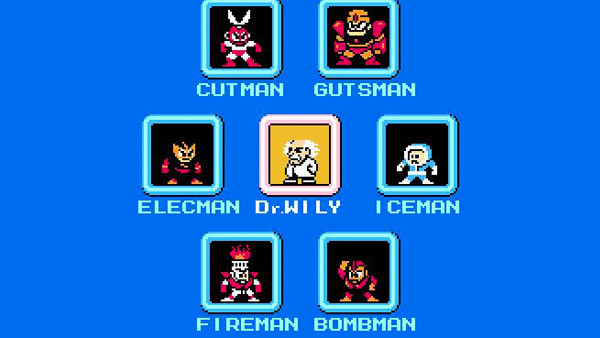
What It Did First: Beating a boss to unlock their ability.
Mega Man might look all cute and universally appealing, but his games are more difficult that completing Dark Souls in a blindfold. However, one thing Capcom did pioneer alongside a level of difficulty that was essentially par for the course in the 80s, was a boss structure that unlocked various weapons as you felled your foes.
Everything from Thunder Beam and Fire Storm weapons rolled out one by one, and it's a structure we'd later see in everything from The Legend of Zelda to Batman's Arkham games.
Any time you beat a boss and your character receives an upgrade, you've got Mega Man to thank.
13. Murai - Ninja Gaiden
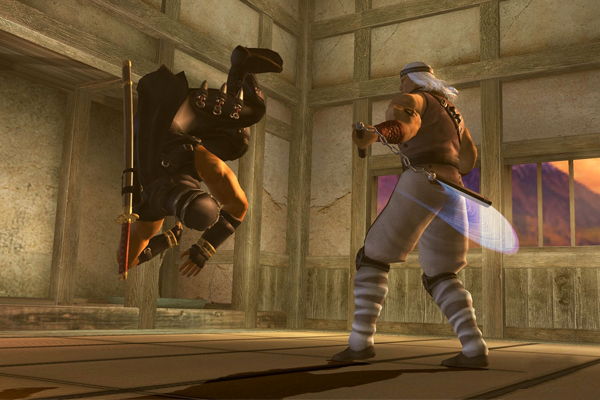
What It Did First: Opened a game with a brutally hard encounter.
Not since Dragon's Lair have we had a game open and be so openly disparaging about your time. "You can't figure this out immediately? Fine, away with you, come back when you've got the guts."
You have to admire that level of arrogance at some point, with no boss standing out as being such a stupidly tough first hurdle to get over than Murai.
Coming at you in a blur of twizzling nunchuck animations, life-depleting grapples and counter-attacks, if you didn't have a solid history of Devil May Cry and God of War under your belt - so as to at least be familiar with NG's brand of lightning-fast third-person action - he'd cut through you faster than you could say "I thought I knew what I was doing!"
12. Mike Tyson - Punch Out!!
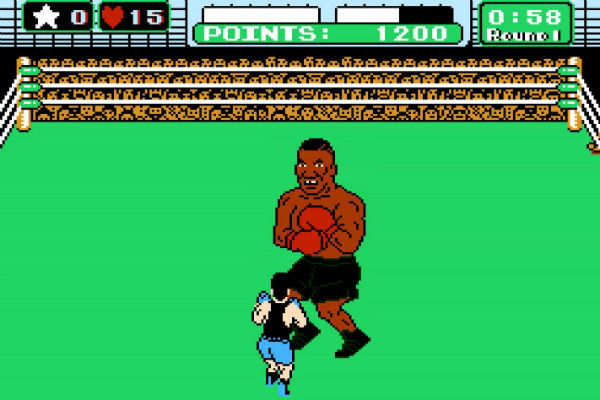
What It Did First: Put a focus on pattern-recognition, reflexes and timing.
Every game predicated on beating a boss through pattern-recognition and the stringent watching of when animations begin and end, comes from Punch Out. Obviously at the time of 1987, Tyson was on the form of his career, and he wasn't about to license a game and not maintain some real-world level of challenge in-game.
As such, fighting Tyson was an absolute nightmare. With difficulty being a far simpler concept to program than the expansive 3D extravanganzas of code we find today, Nintendo simply ensured there were very specific patterns to landing any hits on Tyson, whilst his attacks would devastate your energy in seconds.
Once you figured it out you could - in theory - make him eat the canvas in the first round, but getting there was nothing short of a Herculean feat of mental strength.
11. Psycho Mantis - Metal Gear Solid
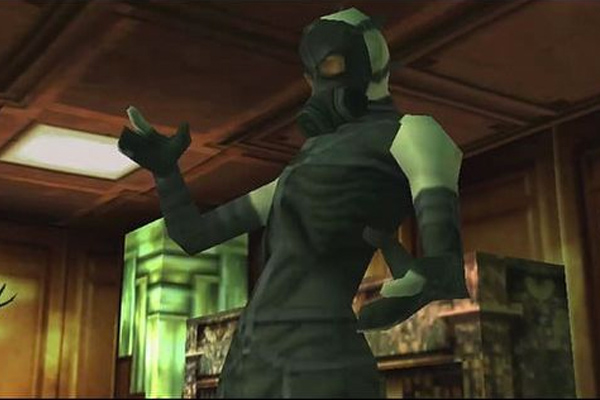
What It Did First: Made you break the fourth-wall to win.
No one has or ever will do fourth-wall breaks like Hideo Kojima. The genius behind Metal Gear Solid made his name with all guns blazing when the industry made the shift to 3D, as although there were a lot of elements within MGS that actually debuted eight years prior in MG2: Solid Snake, thanks to the limited power of the MSX, hardly anybody noticed.
Once Koj and his team were let loose on the PS1, all that changed. Looking on the back of the actual game's CD case for a radio frequency was genius, but tackling Psycho Mantis using the same school of thought revealed another challenge; how to overcome mind-control.
Mantis would dodge every punch thrown and every bullet sent his way - until you switched the controller ports on your console, that is. It was right there and then that every other developer kicked themselves for not thinking of this sooner, and it's gone down in gaming history - even being parodied by Kojima himself when you use a wireless pad in MGS 4.
10. The Bullet Sponge - Various
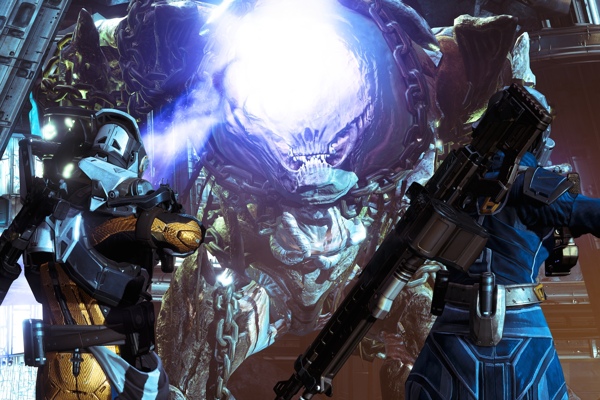
What It Did First: Increased health bars far past the expected amount.
The type of boss or mini-boss that games like Destiny and The Division are now synonymous with. 'Bullet-sponge' enemies are literally what their name implies; an entity that tends to display the same animations as their underlings, yet take hundreds upon hundreds of rounds to put down.
It's an easy way for developers to tweak difficulty without doing a whole lot more to the game's base formula; simply drag out any given encounter by forcing the player to chip away at the enemy's health for a lot longer than usual.
Originating in Perfect Dark Zero, bullet-sponge bosses aren't all that fun to fight - unless you can divide and conquer to find weak spots with friends or flanking manouveres - yet they've remained a mainstay of the industry for over a decade now.
9. Any Colossus - Shadow Of The Colossus
What It Did First: Showed spectacle can be a key part of battle.
A boss battle should feel epic. It should illicit the feeling of many hours being put into clambering up some metaphorical mountain to face what's at the top, and above all, it should be memorable.
Each and every one of Shadow of the Colossus' fights is that; a veritably enjoyable mixture of the game's gorgeous pastel art style, framing each encounter as something from an ancient text book.
You're but a speck on the land as you attempt to take down the mythical beasts themselves, and from beginning to end, every fight has a unique hook; a real exemplification of the warrior's journey as you overcome the impossible every time.
8. Mr. Freeze - Batman: Arkham City

What It Did First: Forcing you to use every move and tactic you've learned.
Games like Mega Man would unlock abilities based on who you took down, and various The Legend of Zelda games would introduce stages to the battles themselves, but it wasn't until Batman: Arkham City that we saw almost a blend of the two. Fighting Mr Freeze would require you to deploy every ability you'd learned in the preceding hours, alongside how you'd approached the stealth sections across Arkham Asylum and City.
Instead of going up against Victor in a straight fist fight, you had to fall back on using your cowl's sensors to pick apart his weaknesses. After that it was an awesome encounter where you pulled off every iconic takedown available, one by one.
You literally couldn't spam attacks or exploit animations, and Freeze would pursue you diligently until he was put down. This iconic encounter truly forced you to understand every move available in Batman's repertoire, as only then would you proceed.
7. Nemesis - Resident Evil 3: Nemesis
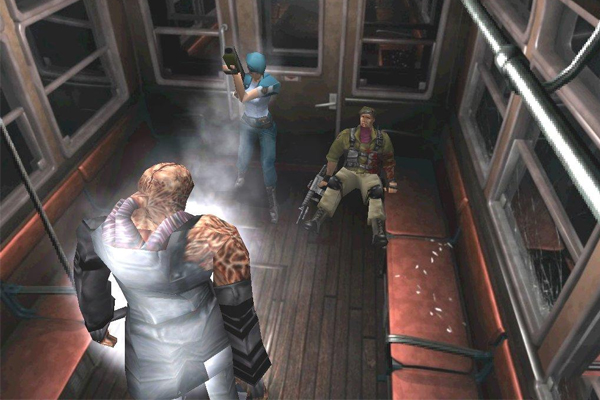
What It Did First: Introduced a boss that pursues you throughout the game.
It might be the first two Resident Evil games that get all the credit for inventing the survival horror genre and perfecting it, but the third, Nemesis, elected to introduce elements of real psychological horror to proceedings, essentially in the same way as Silent Hill 2's Pyramid Head. Nemesis just got there first.
Representing some primal display of unmatched power, we've all had random nightmares where unseen forces are baying for our blood, and Nemesis was that concept made flesh. He'd pop out the level design at random, would box you into corners and force you into attempting a fledgling escape - essentially he was an unrelenting, unstoppable slab of meat with muscles and a penchant to pound your face in.
He was completely terrifying, precisely because of this presence being felt throughout. However, he would directly influence this next entry that took it a step further...
6. The Xenomorph - Alien: Isolation
What It Did First: Made the entire game one long encounter.
Xenomorphs suck. Okay, I put it out there. If you didn't grow up watching Alien and thinking they were scary by default, going back and watching these acidic annoyances is something only reinforced by the fact they're always cannon fodder in video games - cannon fodder that gives you poison damage every time they die.
For Alien Isolation, Creative Assembly attempted to right that wrong, to create a Xeno that would instil genuine fear, and they did so by programming the double-mouthed wonder to wander the halls at all times. Through a variety of areas where the alien's appearance is completely random, you'll alternate between seeing a brief blip on your motion tracker, to scarpering out its potential field of view and preying it doesn't advance... only to watch its tail skewer you from behind as you run away.
Having the Xeno appear in such a sporadic way easily brought back the horror of that first movie, and got away from the guns-blazing approach that Aliens would take - a truly genius re-appropriation of a character that by all accounts, should be at the top of your fright list.
5. Sephiroth - Final Fantasy VII

What It Did First: Creating a real emotional, relatable connection to a final boss.
You can definitely point to older Final Fantasy titles as depicting incredibly-realised characters (FF VI's Kefka stands out as a highlight, for one), but there was something about Final Fantasy VII taking Square's exemplary world-building and making it 3D, that heightened those base qualities to another level entirely.
As such, scenes like the burning of Nibelheim, understanding Sephiroth's anger at his own creation and seeing it all be shown in his (admittedly simplistic) animations was revolutionary.
We actually cared on multiple levels about challenging his reign of terror and eventual world-ending plans, alongside having an in-world connection through Cloud/Zack that paid off whenever the two would meet.
4. Ganondorf - The Legend Of Zelda: Ocarina Of Time
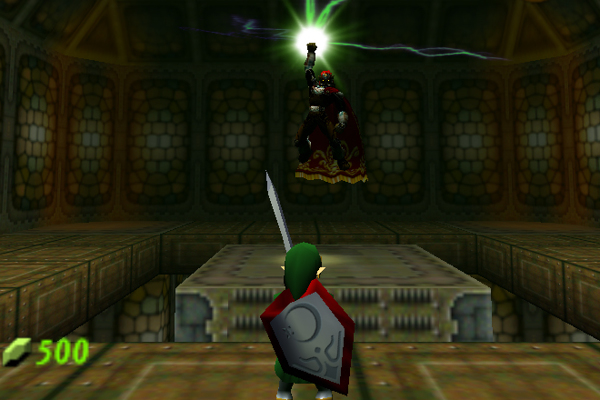
What It Did First: Stages to a battle, and learning to apply past moves/rules to win.
As Nintendo are keen to remind us all by remastering the franchise, The Legend of Zelda might just supercede Mario as their true magnum opus. Ocarina especially withholds one of the most iconic narratives in all of gaming, one spread over multiple timelines that - for anyone growing up in the 90s - gave them memories for life.
As for battling the evil Ganondorf, he was one of the first and most prolific bosses to provide stages to his conflict. Many know of his 'beast form' that you'd eventually tackle if you could thwart his initial appearance, but even doing that required knowledge on how to deflect energy blasts and riposte with specific arrows, before diving in for the kill.
Arkham City might have taken this one step forward by insisting you know your character's entire repertoire, but it was Ocarina that gave us stages, multiple forms and specific attack patterns to contend with at once.
3. The End - Metal Gear Solid 3: Snake Eater
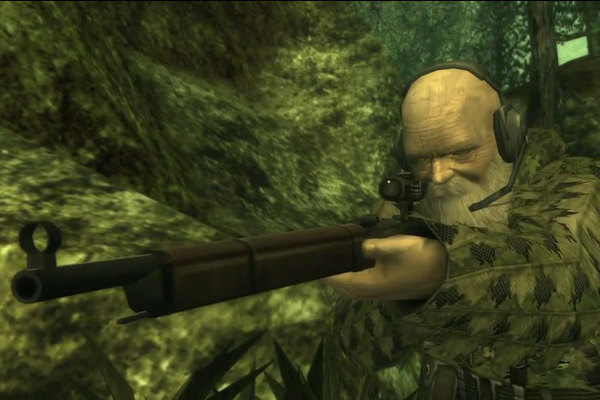
What It Did First: The longest boss fight in gaming history (designed to be two-three hours long.)
As mentioned earlier, Hideo Kojima is quite the outside-the-box thinker when it comes to boss designs. MGS 1 had the unique likes of Psycho Mantis and Grey Fox (who you had to fight hand-to-hand), but where MGS 2 mostly stripped things back, Snake Eater introduced The End, and the nearest thing to a 'proper' sniper duel we'll ever get in a video game.
By setting the encounter on three vast expanses of land filled with hiding spots, places to break line of sight and plenty of opportunities to wait it out and see if your opponent made a move first, it was an incredibly intense affair that regularly gets mentioned as one of the best battles of all time.
Kojima deliberately designed the encounter to take place across multiple hours, and would allow you to take out The End through other means including sniping him in an earlier cutscene, or setting your PS2's clock forward so much that he dies of old age.
If you were playing the way you were supposed to though, The End's showdown is the most intentionally long boss fight in gaming history.
2. Bowser - Super Mario Bros.
What It Did First: Established the threatening size and multiple design aspects of every future battle.
Whilst another game actually pioneered the very idea of a boss being a one-on-one encounter with a foe far stronger than yourself, chances are the earliest bosses you'll remember are of the Bowser or Doctor Robotnik/Eggman kind.
As such, Shigeru Miyamoto's idea of a gigantic lizard-like turtle-thing standing in your way at the close of Super Mario Bros. etched itself into the minds of multiple generations going forward. Bowser's design had angular spikes protruding from his back and head, along with an assortment of screen-filling moves that further set in stone what a boss should 'do' or 'be'.
Every ostentatious design choice for every boss afterwards owes something to Bowser and the childlike impressions those designers had when coming up against the character, an influence you can see to this day in something like the brutally hard Dark Souls series.
1. Gold Dragon - Dnd

What It Did First: Introduced the concept.
Look at that, ladies and gentleman, as that, is the first ever boss fight. Taken from 1975's 'dnd' (stylised appropriately in lower case), creators Gary Whisenhurt and Ray Wood loved the real Dungeons & Dragons so much, they coded their own version into the primitive PLATO System.
Comprised of a file size smaller than the text of this here article, you'd face off against the dastardly (for the time) Gold Dragon, the first enemy to be marked out with increased health, and appropriately isolated status as a boss.
So there you have it, the first ever boss battle, and the game that set in motion the very idea of a formidable foe being tackled one-on-one.
Let us know in the comments which other boss battles you think are the most influential, and which are your favourites!