20 Best Video Game Controllers Ever

You can't save the world without the right hardware.

Video game controllers come in many forms - gamepads, joysticks, steering wheels, dance mats, musical instruments, guns, paddles, head tracking VR and these days even body movements. They've been evolving for decades and along the way designers have occasionally come up with something new, innovative, something brilliant - be it in the shape of technology, form, function and complexity. During this evolution mice lost their balls and gained optics, leaf switches turned into microswitches, hardwired controllers cut their tails and thousands of smart folk played with all manner of shapes, sizes, colours and ergonomics. What differentiates a good controller from bad is subjective, but sometimes a device comes along that is universally lauded and loved. From the single button gear stick from Atari to the familiar multi-buttoned Xbox and Playstation controllers, today is the day to showcase the best controllers from the annals of gaming history. Regardless of whether it was designed for a single game or versatile enough to be used for anything from sports to driving - if it's a winner then it's on this list. So it's time to get the trackball rolling and avoid repetitive strain injury - what's your favourite controller of all time?

20. Steel Battalion

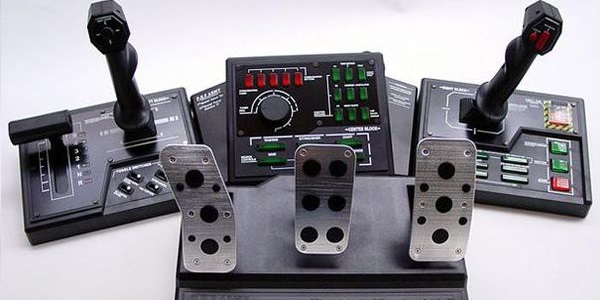
At the beginning of the last decade Capcom had a vision and that was to create the most insane controller ever - and with over forty buttons, two joysticks and even some car pedals they succeeded. This beast really only worked with one game, Steel Battalion, a mech game so hard that if the player didn't start the mech's engines correctly via a complex sequence of button presses the game would permanently wipe the save game. Yes it cost $200 on launch, could only be used on a single title (and its sequel) and was frankly rather silly, but its sheer size and audacity has to make it worth including.

19. Atari 2600 CX40

Iconic - one word that describes Atari's "gear stick" controller. It was a clunky, four-way digital, uncomfortable affair with a single orange button in the corner that worked for lefties and righties. Millions of them were made and very few improvements were done over the years, Atari apparently decided it was perfect. And in fact for the time it was, as many other PC and console makers copied it making it the standard of the day. Ask any old school gamer which original controller instantly comes to mind and there's a good chance the Atari CX40 joystick will be the answer.

18. Logitech G27 Racing Wheel

There have been scores of racing wheels created before Logitech made the G27 but none of them truly nailed the feel of driving. With the G27 came incredible force feedback, 900 degrees of rotation, a real gear shift, adjustable pedals and more. This controller is so well thought of that third parties have made adapters so it can be used on the latest consoles and G27 owners customize theirs by installing real car steering wheels on it. Despite current gen consoles being out over a year nothing comes close to last generation's G27, and it's still king of the races.

17. Kempston Competition Pro

Kempston created an industry standard in the shape of their home computer joystick interface. It was a small black box which permitted lots of third party joysticks to work with the most popular PC - the ZX Spectrum. This standard allowed Sinclair owners to use the Atari CX40 for example (see number 19) and so it made financial senses for Kempston to "borrow" elements of it and create the Competition Pro. Its pommel style controller with two bright red arcade buttons soon sat along side the CX40 as icons of the early joystick era. Whether a player owned a C64, Spectrum, Amiga or any other computer of the time there's a good chance they also owner a Competition Pro or indeed one of its many third party knock-offs.

16. Konix Speedking

In the mid 1980s a designer by the name of Wyn Holloway broke all the rules with the Konix Speedking. It wasn't held like a traditional controller at all and it certainly didn't look like one. Instead of placing the button on top of the stick or even near the thumb it was on side requiring the player's index finger to be in control of firing, jumping and so on. It was so unusual that gamers initially balked at it. However as soon as anyone tested it they could never go back to firing a gun in a game with their thumbs. The Speedking felt so natural, so ergonomic that it's fair to say that all controllers that followed owed some debt to Holloway's crazy design.

15. Simraceway SRW-S1

Awash with buttons, dials, paddles and adorned with a slew of LEDs the Simraceway wheel looks the real deal. It's part gaming wheel, part concertina and a player has certainly got lots of options to choose from. What makes it unique for the PC is it has no steering column and no pedals. It's perfect for the speeder who doesn't have space for a permanently mounted wheel and prefers to ride in style hunched on the couch. Thanks to inbuilt accelerometers and quad paddles that function as both gear change and acceleration/braking it serves up a full driving experience held in the palm of the player's hands. Whilst the wheel lacks force feedback (obviously) it's an excellent way to casually race without needing a complicated set up.

14. Saitek Pro Flight Simulator Cockpit

The Steel Battalion controller may seem over the top at its crazy price of two hundred pounds but how about spending five thousand dollars on a controller? Yes the Saitek Flight Sim cockpit costs just that and despite it being only compatible with around three current PC simulators it's still very sought after. While this cockpit is really a whole slew of various sticks, screens and readouts combined to make a single ultra realistic cockpit, it has to be the most costly and brazen gaming controller ever brought to market.

13. Dreamcast Controller

Sega's final console release included a controller that was simply ahead of its time. Yes, it was rather bulky but it did include some interesting features along with the now de facto standard of multi-coloured buttons in diamond shape and an analogue stick. In the centre of the device was an area for the VMU (Visual Memory Unit), a small box with LCD screen and basic controls. It allowed for multiple uses including feedback from games as well as being able to be removed and played like a Game Boy. It was crude in terms of tech but when compared to the Wii U's controller it's easy to see how forward-thinking Sega's designers were.

12. Super Nintendo Scope

A successor to the NES light gun, the Nintendo "Super" Scope offered a near full sized bazooka along with some bundled games. It utilized the raster scan method of hit detection and although fairly inaccurate out of the box, it could be calibrated sufficiently to offer decent hit detection making it a lot of fun. The bundled games were somewhat bizarre though - Tetris clones, basic duck hunt style mini games and side scrollers. Thankfully third party developers came out with on-rails shooters, something the Scope was much more suited for. This controller is notable as it blatantly appeared in the Super Mario Brothers movie wielded by Dennis hopper. It also marked the end of "light gun" era as gamers increasingly purchased HDTVs which couldn't work with the raster scan technology.

 
Posted On: 
Contributor
Contributor

A Welsh semi-retired television producer and actor known for low end work that astonishingly people actually watched and even garnered some awards. Originally residing in the electrically-challenged Amish areas of Pennsylvania he has written a few books (Hollywood Pants and Hollywood Horrible Hints and Terribly Fake Tips vols 1 & 2) which you can buy on amazon and all great book stores. After a brief stint in Australia he now finds himself back in the Welsh valleys of his home country noting that it hasn't changed a bit!