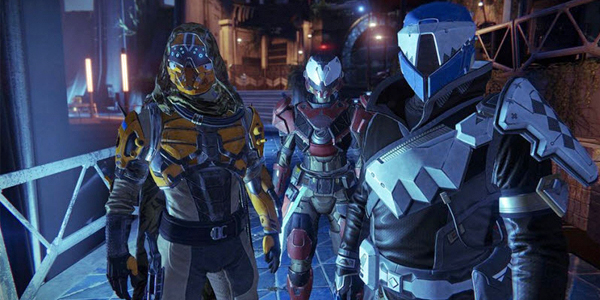
Easily the most divisive game of the year, many a thing has been written about Destiny, and with the first of the two pricey expansions dropping right now, much more will inevitably be coming about what state it should have been in at launch. Let's leave aside delving too deeply into how Bungie's '10 year plan' has affected them gutting content from the pre-release trailers to sell back to fans down the line, and instead focus on the positives, and the reason Destiny has upwards of three million players blasting each others' faces off every day. First off the gunplay, feel of movement, general scope of the worlds you get to play around in and loot-based sense of continual reward are spot on. Game critic Matt Lees dove into the actual psychology behind why players will seek out rewards if they're more spaced out, apart rather than being a continuous stream, and Bungie's mind-tingling execution of this idea is what ties it all together nicely. Play more matches, get more credits, buy more armour, find a rare item, trade it for a better gun, use said gun to play more matches - rinse, repeat, cheer very loudly. In the end Bungie's long term plan was obvious from the start, and there's just not enough on offer here. Nowhere near. If there was, this would've been top three material without question.
10. Transistor
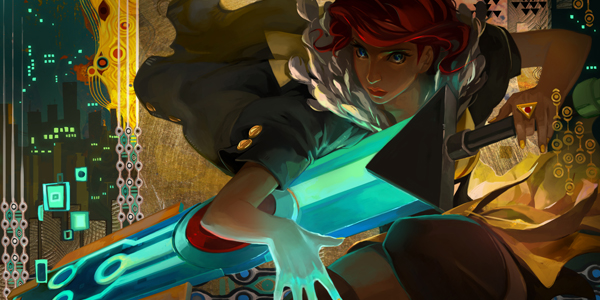
SuperGiant Games were always going to have a tough time following up one of the downright coolest games of all time in 2011's Bastion - a tale of 'a boy and his hammer' that's narrated by one Logan Cunningham, a man with a voice so cool his beads of sweat don little trilbies and blacked-out shades. Cunningham returns again in Transistor, this time as the titular blade, a talking sword of sorts that's picked up by mute singer, Red, to which the two of them set off investigating exactly what happened leading up to the night they met. It's very high concept stuff that surrounds the isometric Diablo-style combat, but one of the most genius things SuperGiant do is make the story itself unlockable, intrinsically tying it to how you wield the Transistor itself. As you travel through the lands you'll come across different programs you load into the blade, and it's through assigning them to one of three different positions - in relation to a heap of others than also sit alongside - that unlocks more passages of the story itself to read and take in. It helps that at any time you can pause combat and program in a string of attacks, the execution of which sees Red dart across the battlefield taking everything out in a blur of pixels and light-streaks - something that hasn't been done effectively since little-known PS2 fighter Alter-Echo. The only way you'll figure out what's going on in this techno sci-fi world gone awry is by ensuring you play with the most variety possible, and that in of itself is one of the best innovations seen in gaming for a long time.
9. Call Of Duty: Advanced Warfare
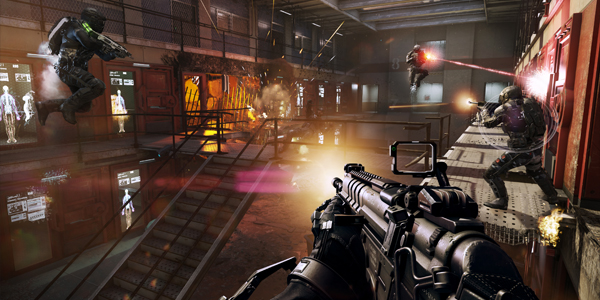
Last year's COD: Ghosts was more likely to pop up on peoples' Worst Games of the Year lists than the opposite, but thankfully by having newcomer Sledgehammer Studios take over the reigns behind the first proper next-gen debut, Advanced Warfare is a return to Modern Warfare 2-style form for a change. It's all down to revamping the core mechanics of the game and building on an entirely new foundation; that of increased movement - something that takes Destiny on at its own game, minus superpowers of course. By giving every soldier an 'EXO Suit' they're free to bound higher up than ever before, landing from any height with a forceful blow and air-dashing in any direction to catch up with (or distance themselves from) enemies, radically changing the way you approach a fight, as now vertical plains are completely up for grabs. Along with some new multiplayer modes - one of which is an American football-style score-a-touchdown ballgame - and Kevin Spacey heading up the campaign's cutscenes, giving control of the series to another developer is the best thing Activision have done in years.
8. Bayonetta 2
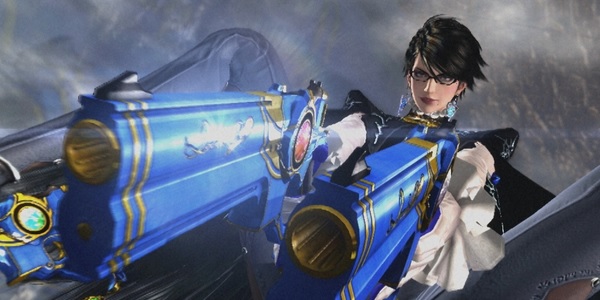
One for all the lovers of crazy out there, Bayonetta's heady mix of a scantily clad sexually-dominating heroine with bullet-spitting high-heels and a gigantic dragon named Gamorrah is exactly what you need if you're a bit sick of games that tend to have weighty reasoning behind everything. The first Bayonetta quite simply flicked a demonic-handed V at the competition, before proceeding to unleash not only a combat engine that revelled in its own ridiculousness, but also with Bayonetta herself, gamers got a character that would forever split consumers down the middle. For all the ridiculous crotch-first shots, suggestive posing and that over-animated walk, the sexual politics of which have been dissected and analysed by all and sundry at this point, nowhere does Bayonetta come across anything remotely resembling a victim, or someone who isn't in a position of power. Instead she exists as the manifestation of all the uber machismo you've seen for decades in almost every other action game applied to the female form, with the sensibilities behind it all translating across into some of the most downright crazy set-pieces and boss fights you'll ever have the pleasure of being stuck in the middle of.
7. This War Of Mine
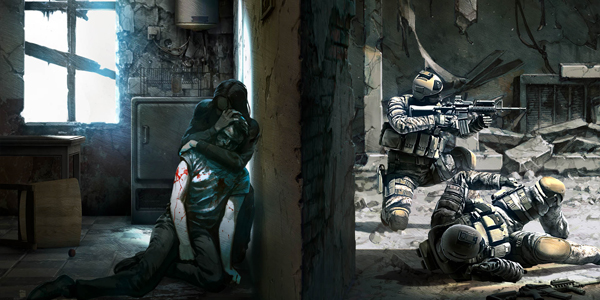
Switching gears in the most severe way possible from Bayonetta, 11 bit Studios' landmark effort is an extremely personal title that delves into the realities of civilian life in a post-war city, ending up as one that'll stay with you for years after playing. By portraying the aftermath of a fictional war and asking you to embody a group of people who have zero combat skill, it amplifies that question of 'what would you do?' to unprecedented heights. Your day-to-day responsibilities will be to clear away rubble and debris from around the bombed-out shelter you're attempting to make into a home, as well as ensuring everyone is well fed, windows are boarded up to avoid random raids, and even things like a radio are crafted to keep spirits above zero. However it's at night when you're allowed to go out into the city to hunt for supplies that opens up a plethora of possibilities, such as encountering other survivors scavenging for food, small gangs that are inhabiting areas, and innocent civilians who are attempting to ride the whole thing out with a stash of supplies. Things can then go from bad to worse, as say you attempt to kill someone for the sake of taking a much-needed can of food - chances are your character will end up committing suicide out of sheer consumption of guilt. Or if you've refused to help board up a neighbour's windows - if something then happens to the children inside, it's your characters' mental states that will suffer in the long run. That exploration of what does humanity mean when everything that symbolises it is broken and taken away is key here. What will people do to survive when there's no foreseeable end goal, and how far will they go about trying to make one appear? There is a finality to War of Mine, but the journey to see it will take as much out of you as it does your band of survivors.
6. The Banner Saga
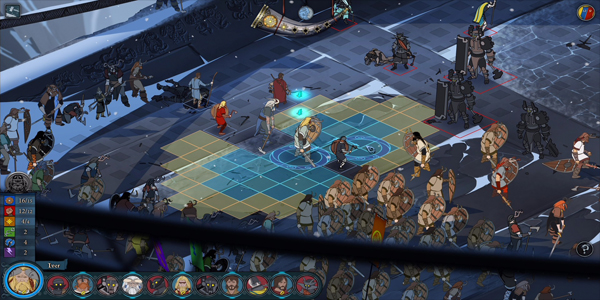
Back in 2012 Fireaxis games reinvented the idea of squad-based real-time strategy with XCOM: Enemy Unknown, and again with their re-release Enemy Within last year, and it's from this mould that the sumptuously delicious Banner Saga has emerged, jumping into your retinas with a fantastically unique art style, yet retaining a very hard learning curve and a balancing act of core mechanics that'll undercut you if you're not paying attention. Thanks to the sun stopping in the middle of the sky in this vastly detailed, fantastical world, both humans and the giant 'Varl' have teamed up to trek across the land both in search of answers, but also to rid the surrounding villages of evil Dredge; armoured up demons who are essentially Tolkien-esque Orcs in terms of their numbers and penchant for wanton destruction. The accompanying art style is staggeringly gorgeous whilst combat is on turn-based on a tiled grid, and there are a few core change-ups that make playing so addictive. Firstly, all friendlies and enemies have both shield and health stats, the latter of which doubles as strength; so when attacking, you have to make a decision between chipping away at some armour to do damage over time, or targeting health directly which can reduce an enemy's strike, but their armour will be taken off your attack number. That might sound a tad complicated, but it's this pendulum-swing of effectiveness that makes for incredibly tactile decisions some two or three moves ahead of yourself, and with the addition of a modifier that lets you pool from a finite resource to buff certain attacks, you can go for broke if you're certain, but the consequences will be dire if not.
5. Shovel Knight
Forget overblown set-pieces and forget in-depth narratives that'll make you question the very fibre of your being. Hell, just forget 3D graphics altogether, Shovel Knight proved earlier this year that when you've got a character, presentation and soundtrack that genuinely sweats rivers of charm, the very act of controlling the thing is like some primal cortex-activating pleasure switch. There's definitely been a great many naff 2D side-scrollers this year, something that doesn't help when both Sony and Microsoft seem intent on throwing them at consumers as monthly freebies despite the vast majority looking more at home on a phone screen. However, like last year's Rogue Legacy, when the team behind a project know exactly what they're doing, there's nothing quite so instantly pleasurable as an old-school side-on platformer. The score too as mentioned, is a righteous celebration of all the blips, bloops and bounces of old school midi-soundboard creation, helping to bring Shovel Knight and his glorious sense of humour to life. With a base level of challenge that'll give you a run for your money, alongside the ability to smash checkpoints you've cleared if you're feeling confident enough, SK is the gamer's game, an incredibly cerebrally-engaging title you'll never forget.
4. Far Cry 4
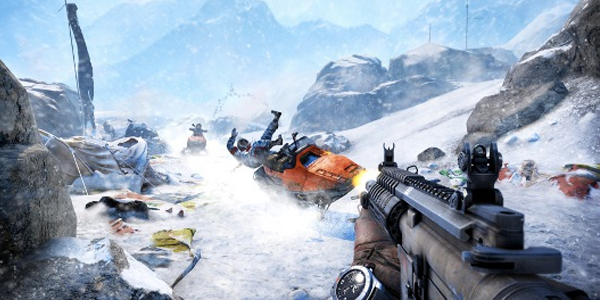
2012's Far Cry 3 was finally the game that perfected all the smaller ideas present in the past, delivering an engaging romp across a tropical island that didn't let up for a second. However for all that game did right, the story was a bit of a garbled mess outside of main villain Vaas cementing himself in the memorability books - and it's here that Far Cry 4 succeeds in leaps and bounds. Free from the shackles of trying to do a meaningful tale about one student's descent into hell by way of spooky indoctrination techniques, the other side of which produced a world-weary warrior ready to take on the planet, FC4 instead lets you play as the son of a family of revolutionaries, the combat abilities of which are easily assumed. From then on out it's more of the same as before, yet with small refinements to make things even more enjoyable. You're free to hijack moving convoys of vehicles with the push of a button, toggle an auto-pilot option so you can freely engage in many a cliffside speed-chase-shootout, and even gain access to the brilliant wingsuit; a piece of equipment that makes you leap off any cliffside into the abyss with confidence. When villain Pagan Min is played wondrously by the chameleonic talents of Troy Baker and every major beat of the story makes you into an even more ruthless killing machine, this is pure escapist fantasy at its finest.
3. Dark Souls II
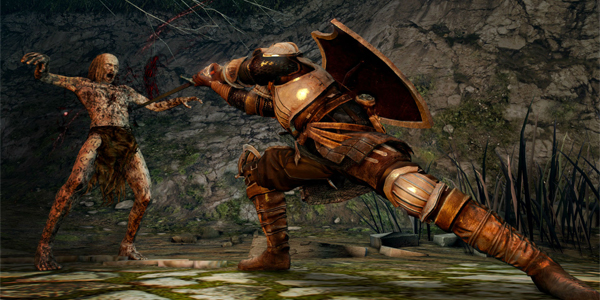
Although the mainstream opinion on the Souls series is that it's something akin to being voluntarily water-boarded, those who can cleanse their mind of a reactionary controller-throwing exclamation of "F**k this!" have found a beautiful extension of one of the most rewarding games of all time. By continuing the general penchant for killing you in one swift blur should you not be paying attention, the tone of DS II is still a very tense one, but there's absolutely nothing like your first journey through Drangleic, hiking up your shield as you wander trepidatiously into a new room before whirling around to block something that would otherwise have taken your head off. Gone is the layout of the world from Dark Souls where you'd accidentally stumble upon somewhere you'd been before, rediscovering an old checkpoint or finding a new angle into a place. Instead it's replaced with a much wider sense of variety, as journeying through the various locales of DS II will take you everywhere from atop a lava-stuffed castle to sprinting cave-to-cave with a swarm of dragons circling overhead. Essentially it's more of the same winning formula from both Dark and Demon's Souls, but with a great many tiny refinements that help make the core experience more accessible. For a completely unique take on exploration in video games, the idea of death being a core mechanic and a sense of peril that doesn't let up until the final credits, there's still nothing quite like Dark Souls.
2. Middle-Earth: Shadow Of Mordor
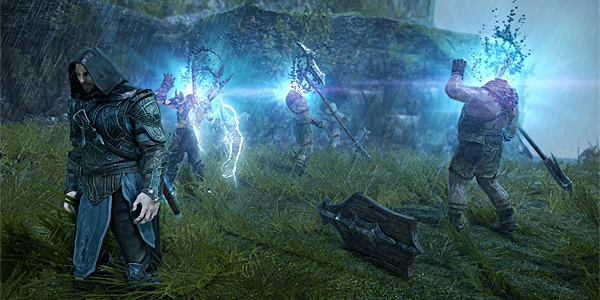
Imagine what Assassin's Creed was always trying to be; that idea of a seamless experience where a perfectly-animated hero darts up and down some stunningly realised structures, plotting exactly how to take out a target and disappearing off into the night - the only remnant of their passing being one silenced foe. Shadow of Mordor nails it, taking equal influence from both Assassin's Creed and Batman's Arkham games, but ties them together with a phenomenally original game mechanic - the Nemesis system. Chances are you'll never make it through any game without dying, but Shadow elects to make that a core part of the experience. Where other developers reconcile you to replaying a part over again, fail states in Mordor give you enemies to hunt down later on. By creating personal enemies for every player it means you'll get consumed in carving your own way through the enemy ranks for hours, interrogating lower-ranked goons to exploit weaknesses and fears in whoever brought you down. It's a superb system, and acts as something that gives Shadow more replayability than a vast number of releases this year combined. This is all alongside a brilliantly fun story that although it's nothing to write home about, sees you journeying across some gigantic expanses of land as well as meeting up with Gollum for a bit too. In the end although Middle-earth's influences are plain and obvious for all to see, but the simple fact is there's barely been a game this year that wrapped everything up in such a downright fun package as this one.