20 Games Nobody Thought Could Live Up To The Hype
These games didn't just match unrealistic expectations but surpassed them.
Hype is a very dangerous thing when it comes to the gaming industry. Even though Skull and Bones, Daikatana, and Fallout 76 were built up like crazy, each of them were met with catastrophic disappointment.
Hype is looked at more cautiously nowadays since modern AAA titles take forever to come out. After spending up to a decade in development, prospects for a game can be unrealistically high, especially if the developers and studio repeatedly emphasise that the product will be a game-changer. If the promotions aren't great, it strengthens the argument the RPG, sandbox title, or platformer in question is being oversold. Even if the project is solid, it can be met with cynicism after being pumped up for so long.
That's why it's satisfying when a bigged-up game doesn't just deliver, but exceeds the wildest expectations. Whether it's the spellbinding narrative, gorgeous graphics, unique mechanics (or a combination of all three), some games pull players in straightaway, to the point where it's hard to believe there was ever any doubt surrounding them.
Though gaming hype is a genuine problem, these 20 entries gave us the experience we were hoping for, but didn't actually expect to receive.
20. Street Fighter 6

Even compared to modern fighting titles, Street Fighter II stands shoulder to shoulder amongst the best of the best.
As such, it was heartbreaking to see Street Fighter V fail to maintain the standard. Although Capcom tried fixing the game with major updates, it felt like the damage was done and Street Fighter's best days were behind it. Despite the fact Capcom vowed Street Fighter 6 would be a return to form, many were deservingly dubious.
But almost immediately after SF6's launch, any negativity towards the fireball-blasting extravaganza dried up. SF6 presented a well-balanced roster, an open-world single-player, bonus modes to spare, and a smorgasbord of constantly updated content. Thanks to the thoroughly structured online Battle Hub, SF6 also fostered a rich community.
But the most praise goes to the combat, more specifically the Drive System. This mechanic takes a different approach with combos, counters, and parrying, completely reinventing combat. Though new systems can be overwhelming, the intuitive combat and simplified controls should come natural to anyone.
Even though some people assumed Street Fighter 6 would be another disaster - or worried they'd let themselves dream too much about a proper return to form - it ended up being the best instalment since Street Fighter II.
19. Final Fantasy VII Remake
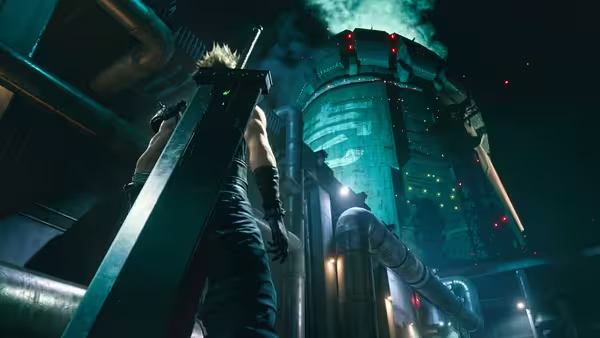
Final Fantasy VII is the most celebrated entry in Square's RPG saga, hence why there've been rumblings about a potential remake since the early 2000s.
When FFVII Remake was officially greenlit, it should've been a dream come true. Nevertheless, concerns quickly arose. Even though graphics and mechanics had moved on leaps and bounds over the years, it seemed unfeasible for the 2020 reimagining to replicate the same awe and investment as the classic version.
To be fair, the remake was different since it was the first chapter of a trilogy, so it only delved into FFVII's first act. However, this aspect, which was initially met with criticism, became a blessing. Although it looked exquisite and the updated battle system played marvellously, the developers understood the ensemble's personalities and connections with one another were central to the game's success. Playing FFVII Remake is deeply meaningful since every story beat is broadened and each character is given more room to breathe.
Rather than taking the easy route and churning out a straightforward recreation, Square went above and beyond to evolve the Final Fantasy VII experience without hindering its legacy.
18. Mortal Kombat (2011)

Though Mortal Kombat was a powerhouse in the arcades during the '90s, the bloodsoaked IP's reputation became tainted by abysmal spin-offs, trashy ports, and bloodless crossovers. The overarching narrative became so messy, MK had little resemblance to how it started. So when publisher Midway filed for bankruptcy, the spine-ripping franchise appeared to be finished.
But the co-creator, Ed Boon, wasn't done yet. Under a new company called NetherRealm Studios, Boon and his team got to work on MK9, which served as a reboot for the original trilogy. Rather than being pure nostalgia-bait, 2011's Mortal Kombat reinvigorated the brand. The redesigned kombatants showcased vivid detail and fluid animation, making each move, fatality, and the newly introduced X-ray attacks visceral and impactful.
Plot has never been MK's strong suit, so it was inspiring to see the Story Mode flesh out every fighter, retool the lore, and make each rivalry feel palpable. Although death is normally inconsequential in Mortal Kombat, you actually care this time whether EarthRealm's champions lived or died.
Mortal Kombat has had its ups and down, but there's no question this entry was when it was at its peak.
17. Silent Hill 2 Remake

Resident Evil may have popularised survival horror, but Silent Hill perfected it. The first few titles were praised for their subtle scares, unnerving imagery, and psychological terror.
Sadly, the later instalments failed to match the early entries time and time again. (Konami even screwed up the remaster of the classic games.) Because of this, there were mixed feelings surrounding Silent Hill 2 Remake. Though long-time fans were psyched about revisiting what's often deemed the series' crown jewel, Silent Hill hadn't been on its A-game for an eternity.
And yet, the remake was the most refreshing experience to come out of the nightmare-inducing brand since the good old days. Combat and exploration was smoother and more responsive, yet the oppressive tension remains intact. The over-the-shoulder camera enhanced immersion without falling into the trap of prioritising action over scares.
Narratively, the remake stays faithful but adds depth through improved voice-acting and motion capture. Environmental storytelling and extended character interactions accentuated the experience without diluting the original’s ambiguity.
Even though the pre-emptive cynicism surrounding Silent Hill 2 Remake was understandable, the future is looking bright for the chilling IP for the first time in ages.
16. Hollow Knight: Silksong

Hollow Knight has been a dominant force in indie circles for years, so of course the inevitable follow-up faced enormous pressure to deliver a comparable experience.
The hype was so off-the-scale for Hollow Knight: Silksong, most online gaming stores crashed when it came out. With a fanbase that fervent, how could the game itself ever satiate the masses?
Well, Silksong couldn't have turned out better. Players control a new protagonist called Hornet, whose faster movement and silk-based abilities create a more dynamic combat system than the first game. These mechanics allow for greater mobility, vertical exploration, and creative strategies, making the gameplay more technically refined. On top of that, Silksong provides a monstrous challenge that'll test even the biggest advocates of precision platformers.
In addition, the game broadens the scale of the world and narrative. New quests, characters, and environments give players a deeper sense of progression and world-building, while maintaining the atmospheric style that made the first title special.
Along with the beautiful art direction, flawless soundtrack, and ambitious scope, Hollow Knight: Silksong managed to be everything fans could've hoped for.
15. Marvel's Spider-Man

After the success of the Batman: Arkham games, it was only a matter of time before other superheroes got their own open-world title. So, when Insomniac announced they were helming Marvel's Spider-Man, comic book purists were beside themselves.
Although the project could've fallen victim to overhype, Marvel's Spider-Man was everything we could've fathomed and more. Webbing through New York City felt intuitive and exhilarating, making the simples movements across the map thoroughly enjoyable. The combat is a joy to behold, making every encounter with the wallcrawler's rogue gallery engrossing.
But the real reason why the game surpassed expectations is because Insomniac put so much effort into humanising the characters. Rather than just making Peter Parker churn out wisecracks, Insomniac bent over backwards to make him feel like a real human being. Sure, it's badass to thwip around skyscrapers and batter supervillains, but Peter's internal and external struggles are likely to resonate with players more.
Even though Marvel's Spider-Man could've been a reskinned Batman: Arkham game, it stands on its own merits and should make any gamer proud to be a Spider-Man fan.
14. Metroid Prime

Since its inception, Metroid has been renowned for its tight 2D exploration and precise platforming. So, when Retro Studios announced Metroid Prime would transition to a first-person perspective, there were worries this instalment would be a generic shooter.
It took six months for Retro Studios to complete Metroid Prime's first level, which didn't give Nintendo much confidence. When Retro Studios cancelled multiple projects and their creator was let go, the cosmic shooter seemed primed for failure.
Luckily, Metroid Prime knocked it out of the park. Rather than abandoning the franchise's roots, this prequel reinterpreted them. Exploration remained central, with the planet Tallon IV designed as an interconnected world full of secrets, upgrades, and environmental storytelling. The first-person view enhanced immersion, making players feel like they were truly inside Samus’ helmet, while subtle elements reinforced the sense of isolation.
Crucially, the game resisted becoming a fast-paced blast-a-thon. Combat was methodical, puzzle-solving was integral, and scanning objects expanded the lore.
Despite the overwhelming skepticism it received since Day 1, Metroid Prime was an utter triumph, redefining what first-person adventure titles could achieve.
13. Alan Wake 2

Though Alan Wake's unique approach made it difficult to market, its eccentricities also helped it cultivate a massive cult-following. The episodic detective title blended horror and psychological storytelling in a way that had rarely been done before or since, so players lapped it up.
Although a sequel was demanded, it seemed unlikely due to Alan Wake's underwhelming sales. But 13 years later, Alan Wake II was released. The build-up was borderline mythical, seemingly setting up players for disappointment.
Fortunately, the follow-up enhanced everything that made the first one iconic without being samey. First off, Alan Wake II leaned more towards survival horror. This change inspired slower pacing and limited resources, strengthening the atmosphere and storytelling.
The sequel follows dual protagonists, so the clues in the case are approached from two different perspectives, compounding the mystery. Players can swap between both leads' storylines at any point, diversifying the gameplay immensely.
Furthermore, the use of live-action footage, dreamlike sequences, and meta-storytelling created an experience that felt closer to a psychological thriller TV series than a traditional game.
It may have underperformed, but Alan Wake II has most certainly made its mark in the gaming horror circuit.
12. Hades II
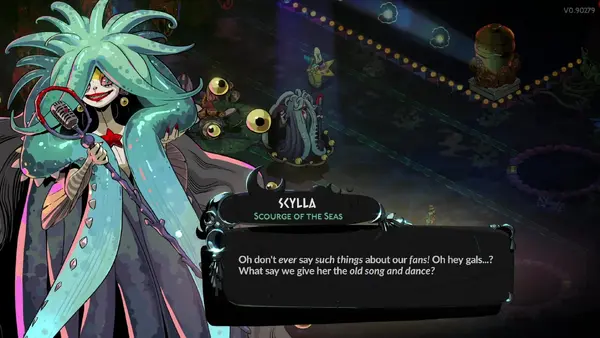
Supergiant's dungeon-crawling hack-and-slash, Hades, was a monumental success, inspiring the developers to get to forge a follow-up. In this rogue-like sequel, a new heroine called Melinoe must navigate through the underworld to save her family from the Titan of Time, Chronos.
Anyone who worried Hades II would be a rehash should not fear, since Supergiant did everything to make Hades II not feel like a carbon copy. After all, it has different levels, characters, power-ups, weapons, enemies, bosses, spells, and so forth.
But that's not all. After several playthroughs, Melinoe should discover a sealed area has opened, effectively doubling the size of the main campaign. In this moment, players have the choice of venturing to the bowels of Tartarus or climbing Mt. Olympus, each presenting significantly different challenges, rewards, and bosses.
But it's not just extra content for the sake of content. What Melinoe accomplishes in one area affects the other, impacting her skills, upgrades, and her bond with her kin. This encourages experimentation, making the gruelling gauntlet more captivating than tedious.
As a result, Hades II didn't just recapture the epic scale and emotional complexity of the original but magnified it across the board.
11. Resident Evil 4
Experimentation is pivotal when it comes to keeping any ongoing gaming IP fresh.
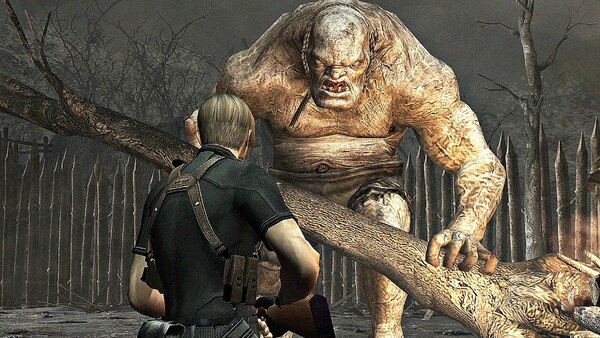
Having said that, Resident Evil 4 seemingly took things too far. This sequel stepped away from the survival horror and head-scratching puzzles that made the previous instalments a household name, focusing more on action, action, and more action. Instead of facing shambling zombies like before, Leon Kennedy deals with enemies who could think, run, and use weapons. For this reason, it appeared as if Capcom was losing sight of what made Resident Evil work in the first place.
Thankfully, the skepticism towards RE4 was for nought. Boasting diverse combat, varied environments, and cunning villains, it was tough to find a single fault in the revered sequel.
RE4 wasn't conventional horror, but it was still an adrenaline-pumping, heart-pounding experience from beginning to end. Whether you're being chased by boulders, targeted by lasers, or hunted by chainsaw-wielding maniacs, there's never a dull moment. Ammo isn't scarce, but the elaborate weapon upgrades require a lot of strategy, making the gameplay more satisfying.
RE4 was meant to be a GameCube exclusive, but its popularity led to the sequel being ported to every system imaginable (even the Zeebo).
2023's Resident Evil 4 Remake was top-tier, but the first iteration still serves, not just as the best entry, but among the greatest games in history.
10. Donkey Kong Bananza
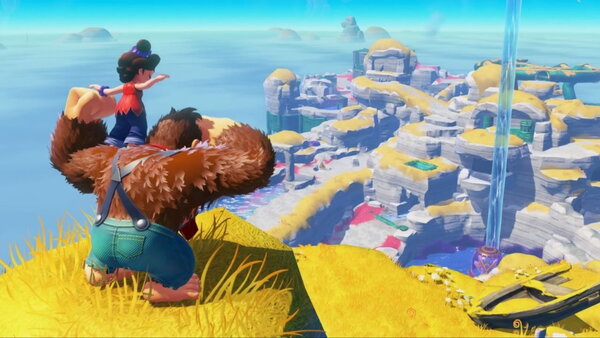
During the '90s, Donkey Kong and Super Mario were almost neck-and-neck in terms of critical acclaim and sales. Though the Italian plumber has maintained his success, DK had a noticeable dip over the last few decades. Donkey Kong Country Returns and Donkey Kong Country: Tropical Freeze were well-received, but they didn't put the barrel-chucking ape back on top.
So, when Donkey Kong Bananza was revealed, players were overjoyed they were getting a three-dimensional DK game for the first time in 25 years. But at the same time, expectations had to be kept realistic to avoid being let down.
Luckily, the tie-sporting simian's latest escapade single-handedly brought DK back in the spotlight. Bananza built itself around its destructible environment mechanic, allowing the titular gorilla to burrow his way through almost any surface.
With the transformations, upgradable abilities, and avalanche of collectibles, Bananza offered a level of adventuring that gave Super Mario a run for its money. It also felt like the developers saved their best ideas for last, since the main campaign builds to an epic and surprisingly emotional showdown.
It was a long time coming, but we're relieved to say Donkey Kong is back.
9. Elden Ring
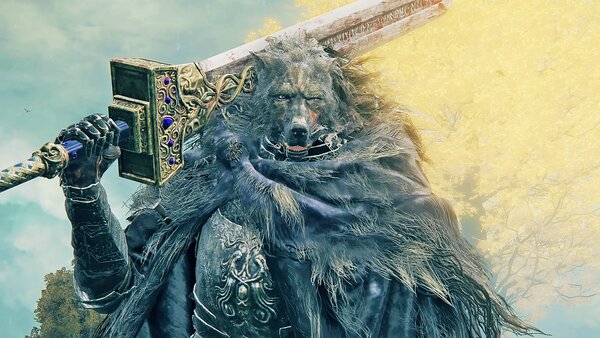
After directing Dark Souls, Bloodborne, and Sekiro: Shadows Die Twice, Hidetaka Miyazaki cemented his status as a gaming auteur. After supposedly perfecting the Soulsborne formula, he and his FromSoftware team collaborated with legendary fantasy writer, George R. R. Martin, for Elden Ring, which was touted as his magnum opus.
Simply put, every factor in Elden Ring was balanced to a tee. The game was astonishingly accessible, yet still proved to be immensely challenging. Players had a diverse range of strategies against every obstacle, so brawls and quests rarely felt repetitive.
Replacing the mostly-linear progression system of its forebearers with an open-world approach was a welcome change, since it offered more freedom. Having players stumble upon hidden dungeons, bosses, and quests at their own pace made the gameplay more organic and reactionary.
As expected from the Game of Thrones' author, Martin enriched the lore, fleshing out its characters, history, and factions. The result was a world that felt ancient, complex, and intriguing.
Although Soulslikes tend to be for a certain demographic, Elden Ring sold 30 million units, making it a staggering success, as well as one of the most critically acclaimed games in recent memory.
8. Half-Life 2

After the groundbreaking success of Half-Life, hype for the sequel was through the stratosphere. Knowing the fanbase were desperate for more, Valve could've done the bare minimum for Half-Life 2 and still turned a profit.
Instead of copy-and-pasting the original, Valve took drastic measures to advance the fundamental game design, which led to Half-Life 2 having realistic textures and startling character AI. Facial animation and character expressions were dramatically improved, giving emotional depth to characters. Enemies adjusted tactics in accordance with the players' actions, so they felt like living creatures instead of pre-set programs.
Of course, the one component that everybody remembers is the physics engine. Unlike previous shooters where objects were mostly static, nearly everything in the environment obeyed fundamental scientific principles. As a result, players could manipulate objects, solve puzzles, and fight enemies using physics-based mechanics.
The Gravity Gun transformed gameplay by allowing players to pick up and launch objects as weapons. This system made combat and puzzle-solving creatively dynamic in ways that were previously unseen.
Rather than simply improving on its predecessor, Half-Life 2 set a new industry standard, influencing countless games since.
7. Star Wars: Knights Of The Old Republic

Star Wars: Knights of the Old Republic is placed on such a high pedestal, it's easy to forget BioWare's prized role-player was formally perceived as just another entry in George Lucas' dense universe. Furthermore, KOTOR was set millennia in the past, meaning it contained none of the iconic characters from the films. Though BioWare promised a bold new chapter in the Star Wars saga, the project seemed overhyped.
Ironically, KOTOR is arguably the most underhyped Star Wars title since... well... Star Wars. The characters were richly developed, heightened by tight writing and strong voice-acting.
The gameplay combines traditional RPG mechanics with easy-to-pick-up combat, appealing to hardcore and casual players. The moral alignment system was a major selling point, letting players embrace the Light or Dark Side, drastically altering character relationships and story arcs. Even though The Empire Strikes Back's twist was the most shocking moment in Star Wars, the Darth Revan reveal in KOTOR might be a close second.
Knights was hugely successful, going gold on the PC and becoming the fastest-selling Xbox game upon its release.
Even if the rumoured remake sees the light of day, it'll be tough for it to hold a candle agains the original KOTOR.
6. The Legend Of Zelda: Breath Of The Wild

Due to The Legend of Zelda's remarkable consistency, it's safe to assume any upcoming entry should fulfil expectations.
But the hype for Breath of the Wild was on another level. This entry offered a drastically different experience, due to its minimal narrative, non-linear structure, weapon durability system, and of course, huge open world.
Though it was nice how LoZ wasn't being shackled by its formula, there were concerns Breath of the Wild was taking too much of a departure. (Link doesn't even have a hat!) BOTW was also a launch title for the Switch, so there was a lot riding on Nintendo, especially after their previous system, the Wii U, bombed big-time.
Fortunately, BOTW redefined pretty much everything, including The Legend of Zelda franchise, Nintendo, hybrid consoles, sandbox titles, and gaming as a whole. While experiencing the cel-shaded graphics, jaw-dropping level of freedom, or intricate mechanics, there are times where you just have to sit back and admire it all. There's little to no hand-holding either, making combat and puzzles all the more satisfying.
Although Ocarina of Time was the gold standard for The Legend of Zelda for the longest time, Breath of the Wild may have usurped that mantle.
5. Persona 5

Persona 5 was delayed numerous times, causing veterans of the beloved series to grow increasingly restless. Even though Atlus was taking its time to fine-tune the sequel to perfection, it seemed unlikely Persona 5 could justify its eight-year development.
But Persona 5 turned out to be the quintessential JRPG of its generation. The anime-inspired visuals and head-bopping soundtrack give every interaction and battle a mesmerising flair. The strategic dungeon bouts mesh with the life-sim sections seamlessly, making players engrossed in the ensemble's personal struggles. The heroes aren't just rewarded for delving into new areas but exploring personal bonds (hence the title), making the friendship-themed side-quests feel warranted.
The narrative is complex without being convoluted, constantly upping the stakes while dealing with themes that are epic but frighteningly relatable. The main campaign clocks in at over 100 hours, yet rarely comes across as laborious.
Despite its daunting scale, Persona 5 is impressively digestible. For this reason, it's the perfect game to start with for anyone not well-versed in JRPGs. Not only is Persona 5 easy to pick up, it happens to be among the best the genre has to offer.
4. Red Dead Redemption 2

Although games centred around the Wild West were once considered niche, Red Dead Redemption changed all that overnight. The grounded story and well-rounded characters allowed the American Frontier title go mainstream while maintaining the authentic Old West theme.
Though follow-ups are always welcome for great games, Red Dead Redemption 2 was risky. The first instalment culminated in the death of John Marston, completing his story arc. Marston was such a captivating protagonist, it was unlikely Rockstar could manufacture a character quite as appealing.
But not only was this prequel a masterpiece, the new lead, Arthur Morgan, was just as compelling as Marston. His moral journey dives into themes of loyalty and redemption in a way that resonated with the masses.
Wildlife behaved realistically, towns changed over time, and NPCs react dynamically to the player’s actions. Hunting, camping, and interacting with strangers were designed with outstanding complexity, creating an environment that feels authentic.
The story elaborates on character conflicts and motivations that were only glimpsed out in the original, creating a nice cohesion between the two games and expanding the backstory as a whole.
3. God Of War (2018)

In hindsight, it's silly how there were reservations over 2018's God of War.
But at the same time, Kratos' background was entrenched in Greek mythology, so it seemed odd to insert the aggressive demi-god into a Norse story. There were many other changes, including the removal of Kratos' Blades of Chaos, implementing an over-the-shoulder camera, and having the normally lone warrior team up with his son, Atreus.
Even though it looked like Santa Monica Studio bit off more than they could chew, this iteration of God of War fully delivered. Putting Atreus at the forefront raised the stakes and highlighted Kratos' growth as a nurturing father. The relationship between Kratos and Atreus evolves throughout, creating a narrative that feels intimate, mature, and heartfelt.
Though the semi-remake refuses to fixate on spectacle like its predecessors, it doesn't compromises it either. Instead of utilising a button-mashing combat system, fighting requires precision, timing, and patience, encouraging layered strategy. Puzzles and role-playing mechanics expand the experience further, making the world more immersive and rewarding.
Instead of tanking God of War as the naysayers believed, the 2018 instalment ended up revitalising it.
2. Baldur's Gate 3
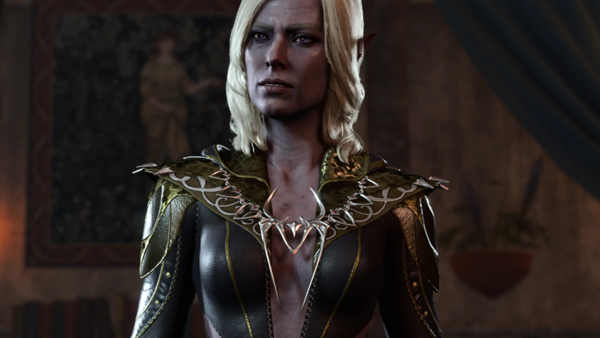
Okay, there was no hint Baldur's Gate 3 was going to be anything but awesome, especially since the D&D spin-off was being helmed by Larian Studios, who oversaw the Divinity series. But at the same, Baldur's Gate had been dormant for 20+ years and mainly catered to tabletop purists, limiting its broader appeal.
Against the odds, Baldur's Gate 3 was monumentally successful. Fully voiced characters, cinematic cutscenes, and detailed environments elevated the storytelling beyond typical RPGs. Based on the sharp writing and character development, it was obvious Larian Studios spared no expense.
The game also launched in a breathtakingly polished state compared to industry norms. Combined with strong post-launch support, Baldur’s Gate 3 set a new benchmark for role-players.
With that said, the most significant feature is player agency. Nearly every choice in dialogue trees, combat approach, or exploring has meaningful consequences, so everything appears reactive. These mechanics stop the gameplay from feeling rigid and also amplifies story beats, which offers a ton of replayability.
Though previous instalments had a smaller audience, Baldur's Gate 3 was recognised worldwide, being the first title ever to win all five major awards for the Game of The Year.
1. Metal Gear Solid 2: Sons Of Liberty

Metal Gear Solid revolutionised gaming in many ways, including tactical gameplay, cinematic storytelling, enemy AI, and meta-puzzles. Hideo Kojima's stealth title was such a game-changer, it didn't seem possible for the sequel to top it.
However, Metal Gear Solid 2: Sons of Liberty didn't just blow the competition out of the water, but blindsided the entire gaming community. Based on the advertising, players expected to control the previous hero, Solid Snake, throughout the main campaign.
Instead, the story shifts to a new protagonist, Raiden, after the prologue. Although this decision initially came across as a misleading gimmick, it fits with Sons of Liberty's themes about identity, perception, and the manipulation of information.
Now, it goes without saying that MGS2 showcased the PS2's graphical capabilities, in terms of dynamic lighting, character models, and interactive models. Even though these qualities are magnificent, it's the complex themes that stand out the most. MGS2 is borderline prophetic, considering how it delves into digital censorship, social media, and the dangers of AI decades before such technology became a reality.
Though it seemed impossible for Metal Gear Solid 2 to match the hype, it's now considered a work of art, and hasn't lost an ounce of its power or relevance.