20 Remakes and Remasters That Are Worse Than The Original
When you would rather fire up the PS1 than the PS5, something has gone terribly wrong...

Time was, you could rely on a remastered or remade edition of a game to add something substantial to the experience, but more and more frequently over the past couple decades we've been seeing lacklustre and poorly executed efforts from developers. Indeed, it seems many studios aren’t interested in bringing back classic games in all their glory, so much as just filling their pockets a second time around.
Be honest: Did Tony Hawk Pro Skater HD rekindle the flame or kill the franchise? Did Sonic Colours Ultimate give you a good time or an epileptic fit? And did Return to Arkham have you reaching for your old consoles instead?
We want better graphics and textures, more modern gameplay and mechanics, expanded content and features, and the overall sense that, rather than returning to something from the past, we are bringing it into the future. And yet.
Either outright, by introducing glitches and faults, or merely on balance of good vs bad, so many remasters and remakes have made promises they just couldn’t keep – and these twenty in particular have ended up being worse than the original.
20. Secret of Mana (2018)
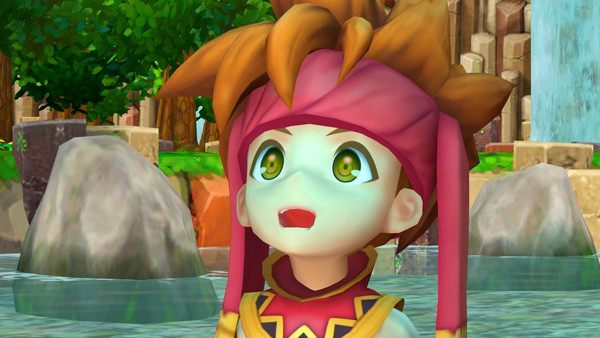
16-bit, nineties RPG Secret of Mana (Seiken Densetsu 2 in Japan) offers players the opportunity to step into a rich high fantasy world hovering in the space between Mana proper and Final Fantasy. We play as three unnamed heroes – the hero, the girl and the sprite child – who journey out on a quest to restore mana (a sort of magic energy) power to the legendary Mana Sword.
It’s fun, it’s cute and offers a good thirty-plus hours of playtime, with plenty of story and surprises to keep it chugging along. So it may have seemed an easy win for Square to dig this old SNES game out of the archives and remake it for modern systems. Except the systems in question are the PlayStation 4, PlayStation Vita and Windows…
Q Studios jumped in to handle development of Secret of Mana 3D, and they managed to go too far without going far enough. The danger, of course, in turning a 2D game 3D is having to overhaul the look of the entire thing, and if you’re not careful you can lose the unique aesthetic of the original. And that’s precisely what happened with Secret of Mana, with the remake broadly maintaining the same story and gameplay but giving it sixth-gen Pokémon game graphics. The mechanics feel thoroughly out of place on current hardware, with none of the upgrades to combat or controls that could have made it worthwhile, and thus it winds up being the worst of both worlds.
19. Final Fantasy V (2013)
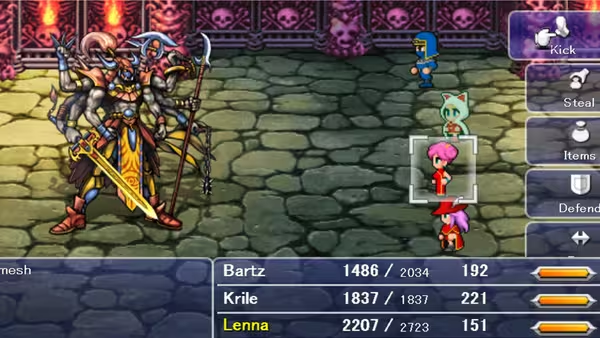
Another classic RPG from the nineties, Final Fantasy V is the penultimate FF game to feature the 2D sprite graphics. V follows adventurer Bartz Klauser as he investigates a fallen meteor, and finds himself drawn into a quest to prevent the world’s four elemental Crystals from releasing and empowering the evil sorcerer Exdeath.
This is a game that has had various ports and remakes over the years, as the franchise has grown and earned a diehard fanbase worldwide. But among its various iterations, there is no greater offender than the 2013 version in terms of failing to honour the legacy and producing something that makes us wonder why we aren’t just playing the original.
First developed by Matrix Software for iOS, and released onto Steam in 2015, this remake takes liberties with the property, particularly in the graphics department. While de-pixelating the game may have seemed like the way to update it twenty years on, the result is a game that has a little more freedom in character commands, but looks blank and hollow, scrubbing away the small details in the same way as some of the first Blu-rays tried to airbrush out the grain.
This was eventually rectified by the Pixel Remaster edition in 2021, first released on Steam, iOS and Android, before migrating to the PlayStation 4 and Xbox Series X/S in 2023/24. But we can’t say it’s exactly better than the original game either…
18. The Chronicles of Riddick: Escape From Butcher Bay (2009)

While the Vin Diesel-starring film The Chronicles of Riddick may not have been up to scratch, its video game tie in certainly was. Serving as a prequel to Pitch Black, Escape from Butcher Bay sends us into action as Diesel’s incarcerated alien murderer Richard B Riddick. Taking place inside the titular maximum-security prison, from which no prisoner has ever escaped before, Riddick must do the impossible and break out using all tools at his disposal.
The hand-to-hand combat and stealth systems make it a game worth returning to, and it’s regarded as one of the greatest games of all time, which rose far above the standard of movie tie-in games to become a piece of art in its own right. Developer Starbreeze Studios sought to capitalise on this by remaking the game for PC, Xbox 360 and PlayStation 3, as Assault on Dark Athena, with new and expanded content.
Unfortunately, it got kicked around various publishers and didn’t see the light of day until 2009. By then, the game had morphed into something else, with Butcher Bay being more of an add-on to the Dark Athena story. Gone are the things that make Butcher Bay such a great play, and here to stay are garish, overlit scenes that lose the detail and mood of the original. The altered visuals and stealth mode change the feel and vibe of the thing, and in all it lacks the finesse of the original.
17. Batman: Return to Arkham (2016)

Few titles have done more for superhero video gaming than Rocksteady’s Batman: Arkham series. Grabbing the look and feel of the Dark Age of comic books with both hands, Arkham went hard from the get, starting out for the Arkham Asylum game with a largely free-roaming space featuring some more restrictive levels on Arkham Island, before moving into a fully open world environment for its sequel, Arkham City.
The combination of exhilarating stealth, seamless combat, an expansive rogue’s gallery of villains and actual detective work set the standard for games of this type, while cleverly ignoring whatever was on the big screen at the time – a move replicated by games like Marvel’s Spider-Man in the years since. The only downside? Both games are seventh-gen console releases.
Return to Arkham promised to remedy this issue by releasing the games in a remastered set with next-gen compatibility and new graphics, following the release of trilogy closer Arkham Knight. But developer Virtuos failed to deliver. The frame rate is capped at just 30 fps; the graphics aren’t any great improvement, with inconsistent textures and oversaturated colours; and there is a pervasive unfinished quality, particularly in City, that makes the whole endeavour meaningless if you have the original releases.
16. PaRappa the Rapper (2017)

NanaOn-Sha and Sony’s PaRappa the Rapper is one of these games that you might not believe really exists, never mind was successful, if you hadn’t lived through its arrival, success and dispersal into obscurity. But we did, and it does.
Fundamentally a rhythm game – a genre which has gone in and out of fashion over the years with the dance mat, Wii and other fad tech – PaRappa allows us to control the titular, uhh, dog? boy? thing? as he learns to rap and do karate from a, well, a sentient onion, in order to win the affections of a sort of half-flower half-girl named Sunny Funny. It sounds like an acid dream, and it also sounds terrible. And it is – but despite all this, it’s downright addictive.
Now, we didn’t expect to see a return from PaRappa, but Sony reckoned the culture had come full circle and was ready to let the dogs out again in 2017, setting their own Japan Studio the task of bringing the game to the PlayStation 4. After all, how hard could it be adapting a fixed camera game with simple, repetitive animations? Well.
PaRappa the Rapper Remastered has hella lag, and while the visuals are upscaled, bright and shiny, the game itself is actually just an emulated port of the 2007 PSP version! Shocking, shameful, and not worth any discount they can put on it. Don’t pack your PS1 away just yet.
15. Diddy Kong Racing DS (2007)

Of all the nineties racing games based on other hot properties, Diddy Kong Racing is not exactly top of the list. It feels more derivative and less innovative than obvious competitors like Mario Kart and Crash Team Racing, and yet we’d be lying if we said it wasn’t a good time. But a good time enough to warrant it coming to the Nintendo DS? Developer Rare and publisher Nintendo sure thought so, when they released Diddy Kong Racing DS.
Reuniting us with Diddy Kong, while replacing several of the original’s non-entities (Banjo the Bear, anyone?) with more grounded characters like Tiny Kong and Dixie Kong, we take to the ground and air in cars, hovercraft and aeroplanes, tackling racetracks built in the image of the Donkey Kong worlds we know so well.
Unfortunately, despite featuring what at the time seemed like exciting new customisation options, like the ability to record character voices, plus an online multiplayer, the game is pretty awful. The battle modes are restricted to multiplayer only; most of the new features are hollow, adding little or no value; and the touchscreen controls – surely the most important feature for a DS remake – are unforgivably sensitive, making it barely playable if at all.
14. Dead Rising: Chop Till You Drop (2009)

Capcom’s Dead Rising is one of the games that helped make the Xbox 360 competitive against the PlayStation 3 back in 2006. Offering up zombie carnage in the mode of Zack Snyder’s Dawn of the Dead, we play as photojournalist Frank West, who is trapped inside a shopping mall in Willamette, Colorado during a zombie apocalypse.
And what can be said except that it’s all-out, open world (or, open mall) zombie-bashing fun. Sure, there’s a story and a mystery element to it, but most of us would be lying if we said we were there for more than a zombie smash-a-thon.
A remake for the Wii in 2009, then, was welcomed with open palms, but things didn’t go as planned. Dead Rising: Chop Till You Drop was damned by limitations from the outset, due to the console's weaker hardware, as this is a downgrade from the game's native 360. The maps are smaller, the enemies fewer, the photo system gone. Sure, you can use the Wii remote to aim, but what we have to sacrifice for this is just not worth it.
Thankfully, things have finally been rectified some fifteen years later with the Dead Rising Deluxe Remaster for PlayStation 5, Windows and Xbox Series X/S, with new mechanics like the ability to move whilst shooting; excellent new voice acting; and the improved graphics we would expect from a remaster, including some very impressive work on the character models.
13. Blade Runner: Enhanced Edition (2022)
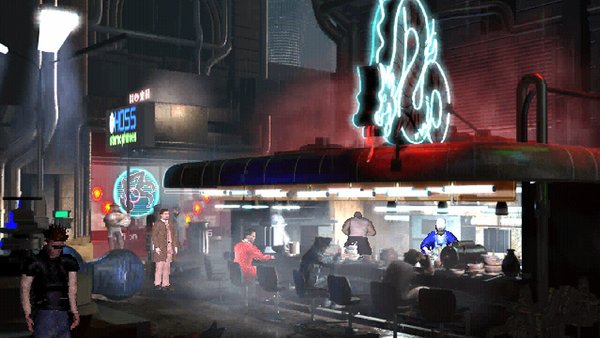
Like Escape from Butcher Bay, movie tie-in game Blade Runner made the wise choice of sidestepping the film’s narrative and carving out its own story in the same universe. Developed by Westwood Studios and, perplexingly, released some fifteen years after the film, the game is set in 2019 LA, and follows Ray McCoy, a detective hunting a group of dangerous replicants in much the same way Harrison Ford’s Rick Deckard does in the film.
Blade Runner was an early adopter of 3D character rendering, alongside the rarely seen but innovative device of having events in the game world progress in real-time. And, despite being in the normally tedious point-and-click format, it’s surprisingly good, in particular thanks to several randomised elements that give it strong replay value.
The remaster, Blade Runner: Enhanced Edition, was handled by Nightdive Studios, and arrived on Windows, Switch, PlayStation 4 and Xbox One in 2022, but any hopes of stoking some nostalgia while enjoying a heightened gaming experience on modern tech were misplaced. The game’s graphics range from being slightly sharper, to being the same, to being weirdly blurry and unrefined throughout – with the result being that it’s dimmer, inconsistent and looks pretty iffy most of the time. For a point-and-click game, getting the visuals wrong is tantamount to destroying the game, but the issues don’t stop there, because the game was riddled with bugs and glitches on launch, and no autosave to rescue you.
12. Grand Theft Auto: The Trilogy – The Definitive Edition (2021)

If you have even a passing interest in video games, chances are you’ve played one of the classic trilogy of Grand Theft Auto titles: Sand Andreas, Vice City and III. And while they’re not what they used to be, at the time of release these were game changers for open world gaming, giving us the opportunity to mete out street justice, go joyriding across cities, and spawn jetpacks and tanks to take on a never-ending army of US authorities.
So, then, who wouldn’t want to return to Liberty City, Vice City and Los Santos, in HD, with the gameplay, mechanics, physics, textures and other features we are used to on modern consoles? Nobody, that’s who. Enter Grand Theft Auto: The Trilogy – The Definitive Edition, rounding up the games under one title, and putting us to work on the mean streets again.
But what could have been a triumphant return has instead been an international embarrassment for original developer Rockstar Games. The Windows version crashed on launch, and since then it has all been downhill. The games are buggy and glitchy; the graphics are nothing like what we were expecting; the overall lighting is a noticeable downgrade from the originals, removing the games’ distinctive feel; and the changes to character models look silly at best. And this is thanks in no small part to Rockstar farming this out to Grove Street Games, a twenty-five-person studio responsible for developing nothing you've ever heard of.
11. GoldenEye 007 (2010)
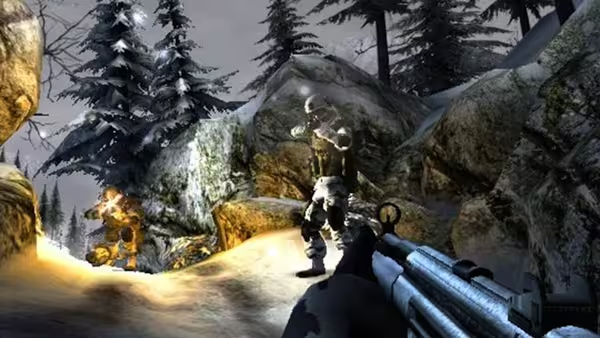
Nintendo 64 owners were blessed in 1997 with exclusive access to one of the best games of all time. GoldenEye 007 adapted Pierce Brosnan’s first Bond movie as a first-person shooter, and quickly went down in history for all the right reasons. It doesn’t just have killer action, levels and story, but also used to be one of the essential party games for any console.
And so, as a twofer, the remaster of the game ought to have been an easy win: on the one hand, it’s a modern reimagining of the 1995 film with Daniel Craig as the lead; on the other, it’s an update of the iconic N64 game. And, in many senses, it was a success. The graphics and animations are way better than the original game, the modern shooter mechanics are more intuitive and easy to get into, and online multiplayer expands the action out of your living room.
But it lacks several key qualities that made the original a classic in the first place. Remaking the game in the contemporary shooter mode somewhat misses the point of the original, edging the title closer to Call of Duty than a classic Bond game. Plus, Brosnan’s Bond feels like an essential component to this game and era, and to make it more like the gritty Craig titles and scrub Bond #5 from it feels like taking a pneumatic drill to Mount Rushmore.
We’ll stick with the N64 version, if you don’t mind.
10. Metal Gear Solid: Master Collection (2023)
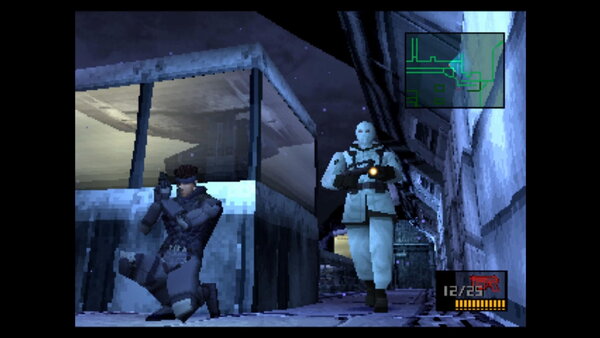
For the Metal Gear series’ 35th anniversary, the folks at Konami compiled the Metal Gear Solid: Master Collection, with Volume 1 uniting the first five main entries in the franchise: Metal Gear, Metal Gear 2: Solid Snake, Metal Gear Solid, Metal Gear Solid 2: Sons of Liberty and Metal Gear Solid 3: Snake Eater, plus a whole host of tidbits and extras for our gaming pleasure.
Anyone who has played these games knows how immersive they are, taking control of various iterations of Snake as they sneak and shoot their way to victory against terrorist, Soviets and other nefarious types. And, of course, a big ol’ bundle sounded like welcome news – until the release date.
Dropping on Switch, PlayStations 4 and 5, Windows and Xbox Series X/S in October 2023, the Master Collection was a major letdown. Sure, the bonus content was expansive and, on the whole, great – but that’s not what we came for. The display settings were lacking, several of the games were, at best, a mess of pixels on modern screens, and also locked at a woeful 720p. Amongst many other issues were loading glitches, subtitle typos and the absence of the ability to switch between screen formats. Konami rushed it out way too soon, and while some load-bearing patches have since been released, the definitive experience is still on the games’ original console releases.
9. Crysis (2020)

Crytek’s first-person shooter Crysis launched back in 2007, when a lot of developers were innovating and attempting to launch new franchises with cool USPs. Crysis’ key feature is, of course, the technologically advanced Nanosuit, with its play-changing abilities and modes, including damage deflection, super strength, enhanced speed and invisibility.
As US Army Delta Force soldier Jake “Nomad” Dunn, we drop into action in the Nanosuit just off the coast of the Philippines, taking on North Korean and – spoiler alert – extraterrestrial enemies. And what can be said about the game except that, for its time, it had excellent graphics, next-level physics and a lush visual style that was obviously a labour of love.
It took four years for a port to the PlayStation 3 and Xbox 360, but by and large it was worth the wait. The remastered edition, however, which took thirteen years to materialise (on Switch, PlayStation 4, Xbox One and Windows), was not. The main issue? Crytek based their remaster on the port rather than the original, dumping at least one level, and adapting the controls for a simpler, more controller/console-focused approach, rather than the finer control and movement from the original Windows version. The graphics were also slaughtered by fans when the game trailer leaked, and while Crytek pushed back the release date in response, the actual game release wasn’t all that much better – and certainly not worth playing or buying over the original.
8. Assassin's Creed: The Ezio Collection (2016)

Despite being around for almost two decades now, action-adventure stealth series Assassin's Creed has arguably never surpassed its initial run of games. After a solid if repetitive first entry, Ubisoft Montreal seriously stepped up with 2009’s Assassin's Creed II, introducing us to assassin Ezio Auditore da Firenze in a fully-realised Renaissance Italy. Following Ezio’s journey from rich boy to rogue, we uncover a conspiracy by the Templar Order, develop weaponry with Leonardo Da Vinci, and explore a massive open world of cities and keeps, stealing, slaying and uncovering secrets as we go.
The game’s sequels, Brotherhood and Revelations (released in rapid succession in 2010 and 2011), continue Ezio’s story through the Italian Wars, and out to Constantinople (or Istanbul?) in the aftermath. They’re tight, pacey, look great, play seamlessly, and offer a continuous story that feels as fulfilling as any other game’s narrative we can think of. As such, it was almost mandatory that these games be collected, remastered and released as The Ezio Collection.
Released on the PlayStation 4 and Xbox One in 2016, the collection dashed our hopes and dreams from the get. Despite being presented on the next generation of consoles, the graphics are basically unchanged, with plenty of questionable visuals that aren’t present in the originals; the gameplay is also the same, with no attempt to bring it up to current standards; and the framerate is capped at 30fps. Nuff said.
7. Devil May Cry HD Collection (2018)
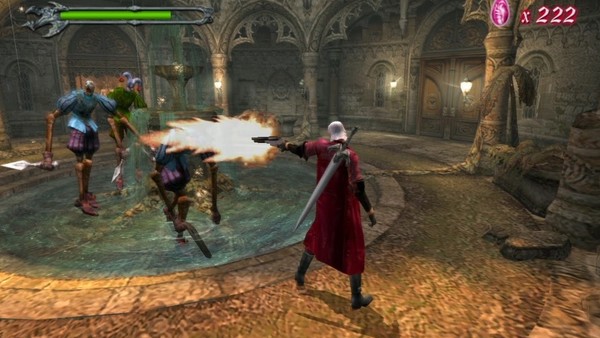
Hideki Kamiya and Hideaki Itsuno’s Devil May Cry games have been a touchstone in Japanese gaming since the first title dropped in 2001. The story of white-haired warrior demon hunters Dante, Nero and Vergil, plus the games’ ranked, high-speed combat system, have helped translate the franchise into a minor pop culture sensation, with merch, shows and other media flying out the door.
Following the release of Devil May Cry 4 in 2008, which introduced us to Nero and made a big impact on seventh-gen consoles, Capcom sought to double-down on their successes by collecting the first three titles together as the Devil May Cry HD Collection. Unfortunately, rather than handle this themselves, they handed it off to Pipeworks Software and Double Helix Games.
Perhaps originally intended as an attempt to honestly bring the previous-gen games onto current hardware, in alignment with number four, the 2012-released game is a barebones port. No effort was made to improve the graphics or gameplay, and several glitches and bugs soon made themselves known, leaving this feeling, at best, like the original games played through a janky emulator. Those of us who still have our PlayStation 2s are better off keeping the old discs on rotation.
6. Star Wars Episode I: Jedi Power Battles (2025)
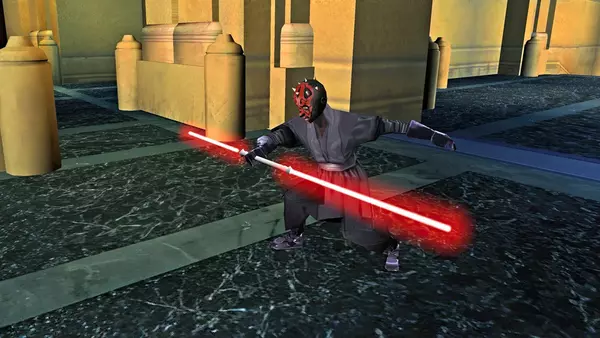
Star Wars video games come in many shapes and sizes, and while there have been some duds – usually the titles that directly adapt the films – some have risen far above the source material and entered into the annals of video game legend. And then there are games like Star Wars Episode I: Jedi Power Battles.
While far from being Jedi: Fallen Order, Knights of the Old Republic, or Battlefront II, Jedi Power Battles is its own brand of brilliant. Taking charge of Obi-Wan, Qui-Gon, Mace Windu and several other Jedi Council members, we tackle the broad story of Phantom Menace, with a heavy focus on, well, battles. It’s fast, it’s fierce, and it was a great Star Wars party game of days gone by. But it was not without fault.
Thus, when we heard Aspyr were remastering it for seventh- and eighth-gen consoles, we were ready to be wowed. But what we got last year was the same old glitchy, infuriating game it has always been – now with added frustrations. This was an opportunity to fix the issues (getting caught on textures and dying, going offscreen and dying, zero depth perception, no-strategy combat against Darth Maul – and dying), but instead they just ported the game to current consoles, touched up the graphics ever so slightly and charged £15-20 for the privilege. This is a game that makes sense on PlayStation 1 and a CRT TV, not PS5 and a 4K.
5. Call of Duty: Modern Warfare 2 (2020)

For so many of us, Call of Duty: Modern Warfare 2 is the game that changed it all. Building on the characters and story of the first Modern Warfare, this title branched out with Infinity Ward’s 4.0 game engine, a bigger, better online multiplayer, a frankly spectacular narrative full of twists and turns, and all the coop goodies we could hope for.
This is the game that set the template for the CoD game as we know it, and dominated the first-person shooter scene, while courting just enough controversy (gunning down airport civilians in the “No Russian” level, anyone?) to boost its notoriety without getting an all-out ban. And the hours we sunk into it. So modern CoD developer Beenox being put in charge of the 2020 remaster, on a more advanced version of the engine used for Advanced Warfare, seemed like an easy win. And yet.
While the remastered campaign is a solid effort, and a definite update from the original, this is all they delivered. No multiplayer. No Spec Ops. These were the two features that made Modern Warfare 2 really stand out in its original iteration, providing a game that still feels impressively expansive, especially when the story is one of the first that offered reduced playtime (heading toward subsequent titles that could be completed in four-to-six hours). Without these play modes, it is literally half the game it used to be.
4. Warcraft III: Reforged (2020)

Developer Blizzard Entertainment have not exactly showered themselves in glory over the past couple decades, with various lawsuits and legal issues dogging them, but for many fans their worst offence is Warcraft III: Reforged. The 2020 remaster of Warcraft III: Reign of Chaos and its expansion The Frozen Throne was supposed to give fans of the high fantasy series a return to the old days using their new hardware.
Many of us dreamed of being able to enter Azeroth and wade into battles between orcs, humans and night elves in high definition, with a full complement of extras at our fingertips. But that would have been too simple. Reforged instead offers a half-baked, half-digested stumble through the old property with more bugs than improvements.
The level of graphics and improvements showcased at Blizzcon do not match up to the final product, alongside a worse user interface. But this pales in comparison to the technical issues, with bugs and crashes the norm, issues with connecting online, and obliterated multiplayer features. Some key features of the original game have simply not been included in the remaster and – here’s the kicker – because it shares its game client with the original, all existing copies of Warcraft III: Reign of Chaos have been required to update to a newer version, locking in the negative changes introduced in Reforged. So it’s not just worse but retroactively alters the gaming experience of the original.
3. XIII (2020)

The cover of XIII is one of those indelible images of the noughties. Despite not gaining the same popularity, sales or traction as its most comparable contemporaries, Grand Theft Autos Vice City and San Andreas, the game nonetheless permeated the culture, and it seemed there was a copy of it – and its red and yellow imagery – wherever you went.
Adapted from the graphic novels of the same name, the game puts us on the ground as an amnesiac known only as XIII, who must contend with assassins, special forces groups and the law in order to find out who he is and what the hell is going on. It’s a compelling conspiracy story, marred only by the often over-simplistic combat and flawed level design – ripe pickings for an overhaul. Right?
PlayMagic’s 2020 remake manages to take an imperfect game and amplify the issues rather than correct them – and nowhere is this more apparent than the visuals. Now, there’s no denying the graphics, textures, lighting, models and scenes are a step into the future when held up against the original game. But it doesn’t manage to retain the heavy-outline, comic book style, replacing it with something more realistic and considerably less aesthetically accomplished, robbing XIII of what makes it unique.
Two years on, Tower Five developed a remake of the remake, which is probably the best version to play if you have the choice. But if it’s between PlayMagic’s and the original, we go original all the way.
2. Sonic Colours: Ultimate (2021)
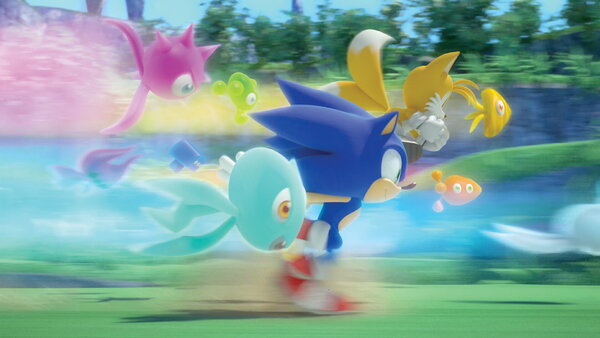
Sonic Colours gave Wii and DS players the chance to hit the ground running once again in 2010, controlling electric blue hedgehog Sonic to stop – you guessed it – Dr Robotnik from taking over the world. As per, the game was about top speed runs and gathering gold rings, but also included the first appearance of energy-based aliens the Wisps, used to power-up, boost attacks and access new areas.
Easy fun, and a marked improvement on the scattershot previous entry, Sonic Unleashed, Colours was something of a return to form. But anyone with a piece of more advanced hardware (re. PlayStation/ Xbox) was excluded from the party. Enter Sonic Colours: Ultimate.
The remastered game arrived on Nintendo Switch, PlayStation 4, Windows and Xbox One in 2021, and suffice to say it didn’t go down well. The game wasn’t ready for release, and was plagued by iffy cutscene visuals, choppy audio and, worst of all, myriad bugs and issues. The Switch version in particular fared poorly from the technical faults, and even had flashing glitches that could induce epileptic seizures, making it basically unplayable, unless you were feeling super spicy. Sega and Sonic Team have released numerous patches since, but there’s still no getting away from the fact that the remaster is flawed – and, even if this were not the case, it’s hard to settle into it without the motion controls that made the Wii Sonics so fun.
1. Tony Hawk's Pro Skater HD (2012)

A bolthole of noughties gaming where we could kick back and unwind, Tony Hawk’s Pro Skater skateboarding titles gave a generation of gamers access to some of the coolest parks, boards, skaters and songs going. Between 1999 and 2002, we got four main games, before it branched off into exciting new story-driven territories like Underground.
By the early tens though, the focus on motion-control had sapped the series of what made it so iconic, and a return to form was in order. And Tony Hawk’s Pro Skater HD promised to be just that, remaking Pro Skaters 1, 2 and 3 for Xbox 360 and PlayStation 3. No prizes for guessing things didn’t pan out.
Sure, we got to tear up Warehouse, School II and Mall again, but this wasn’t enough to patch the cracks. The biggest issue is that, rather than a revival of the three original games, this is just a taster pack of each, with only a few levels, modes, characters and songs, and all content from 3 as download-only. But add to this that the riding physics feel flimsy, sluggish and at times gravity-less; that some of the levels look nightmarish, with the colours and tones all wrong; and that you spend half your time ragdolling around the maps, and it’s not even worth a look – even in HD.
Thankfully we now have the Pro Skater 1 + 2, and 3 + 4 remakes to slake our thirst for the proper Tony Hawk gaming experience.