7 Legal Decisions That Changed Gaming History
"Games are for kids"? Well, they certainly used to be.
As one of the most profitable and widely enjoyed mediums on the planet, gaming's history is fraught with controversy, genius business moves and cutting edge technology. It is hands-down, the most fascinating medium to watch unfold in terms of how we tell stories, twinned with new forms of hardware that actively make users a core part of the experience.
That said, 40+ years of progress in the public eye isn't without hiccups, and occasionally - whether it be down to copyright infringements, awkward firings or any number of contentious issues - things can escalate to the point of legal action.
In modern times it's nigh-on impossible to keep a high-profile lawsuit secret - what with social media and active fan forums digging for info around the clock - but back in the days before broadband? The industry had quite a few contentious issues that even after being resolved, went unnoticed.
Of course there are many modern examples too, but with so many furtive and impactful decisions shaping the industry at any given time, it's fascinating to pick apart how things have gone.
7. Sony & Microsoft Controllers Almost Didn't Have Rumble
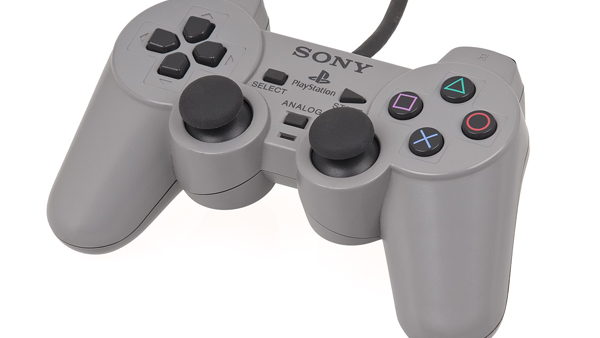
As industry-standard as going wireless, at one point both Sony and Microsoft were caught in a class-action lawsuit over the very idea of a rumbling controller functionality.
Coming from company Immersion, who claimed in 2002 that both Sony and Microsoft were infringing on their patent, first filed in 1998, Microsoft eventually settled out of court by buying shares in Immersion to make peace.
Sony though? They wouldn't budge, contesting the case and ultimately losing $90 million in the process.
While Nintendo evaded being skewered by this same lawsuit as their rumble tech was different enough to have its own patent, Sony were forced to suspend sales of hardware that included rumble functionality, giving us the thoroughly underwhelming SixAxis controller, instead of a DualShock 3.
With everything going sideways and vibrating controllers being something both the PS1 and PS2 already gave consumers, Sony caved. Their solution was to pay up (to the tune of $97.2 million) securing a new set of patents with Immersion, green-lighting the DualShock 3, and quelling the fires around who owned what for good.
6. Why More Titles Don't Have Games As Loading Screens
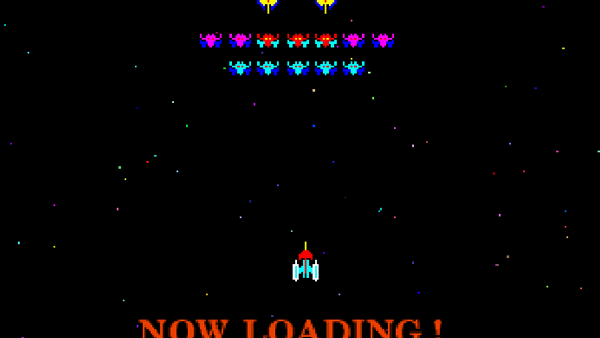
Anyone who played Ridge Racer will remember being able to have a few bouts of Galaxian whilst the game was loading. It felt like a revelation at the time, but quadruply so now, because only a fraction of games in history have ever done the same.
Interestingly, the reason why we can't play Snake, Tetris or anything else on a loading screen is actually down to a patent filed by Namco back in 1995.
This alleged that the very idea of having anything playable while a game was loading was copyrightable by Namco, so even if you owned the lower-res game in question, companies still had to cough up the cash to include it before the main event, so to speak.
Thankfully, this patent expired in 2015, opening up a host of future titles to finally give us something to do when they're booting in.
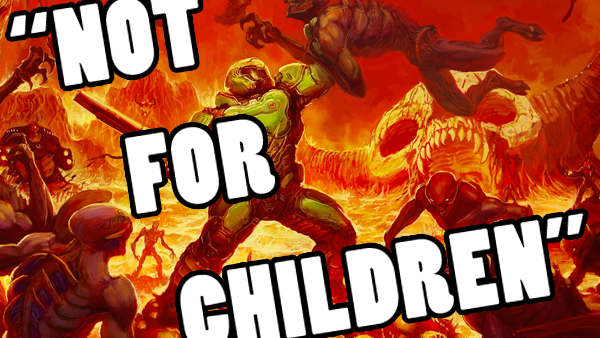
5. Video Games Start Being Age-Rated & Legally Stated "Not For Children"
Ever wonder why video game gore or risqué content ever gets tagged with the assumption that children will have access to it? Anti-Rockstar lawyer Jack Thompson seemed obsessed with the notion, correlating the mature content of GTA with the likes of a small child wiling away the hours.
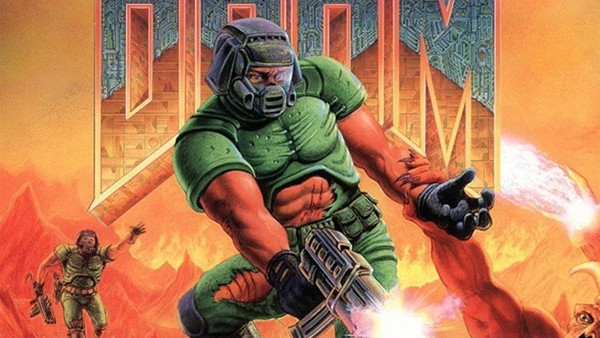
The reason behind this misconception harkens back to the 90s, back when games were classed as "toys" or "products", rather than works of entertainment or fiction. Such an idea of literally any video game being thought of as a "toy for kids" was promptly blown out the water when DOOM and Mortal Kombat came along; challenging any notion of "child-friendly content" with buckets of gore and endless dismemberments.
Naturally, various parent groups were outraged (as they had right to be, given the state of the law at the time), leading to the formation of the ESRB (Entertainment Software Ratings Board), and the re-classification of video games as anything but "toys for kids".
4. Setting A Precedent: Genres Cannot Be Copyrighted

Assumedly you've heard of Asteroids, Atari's phenomenal shooter from 1979 where you play a tiny ship rotating through space, blasting debris to pieces every five seconds.
What you likely haven't heard of, is 1981's Meteors, a game that came only a few years after and was at the centre of a lawsuit from Atari, alleging copyright, being both games were nigh-on identical. Combing the case itself you can see everything from HUD placement to base gameplay, even the colour of the buttons on the arcade cabinets were the exact same, yet the judge ultimately ruled that limitations in technology and interface usability were to blame for the similarities instead.
Meteors creator Steve Holniker actually won the case, cementing for the first time that genres, represented as sets of game mechanics, can't be copyrighted.
Sadly, due to the amount of money required for Amusement World to even uphold their side of things in court, Meteors never saw the light of day - save for one wayward cabinet finally being turned on in 2012:
3. The 2016 Voice Actors Strike & Changing The Landscape For Video Game Performers
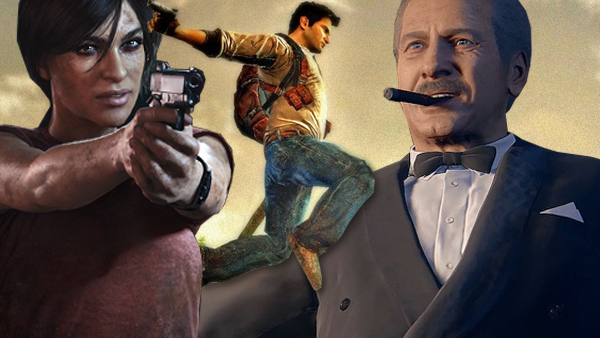
This was less a filed lawsuit and one that was threatened for almost a year, the 2016 SAG-AFTRA (Screen Actors Guild‐American Federation of Television and Radio Artists) strike shook the industry for 340 days, seeing thousands of voice actors band together to better the working conditions and benefits afforded to their craft.
Their main bone of contention surrounded residual payments, and earning off a given performance for certain periods of time after launch. That, and how many voice actors aren't told the full ramifications of what a given performance entails, meaning they could be asked to perform stuntwork, use slurs or racial language in a script, endure prolonged scenes of shouting or anything in between, even if none of this was outlined beforehand.
The latter is a major problem if your entire line of work is contingent on keeping your vocal chords in tip-top shape, and it was a longtime coming for various industry professionals.
Eventually, in September 2017, SAG-AFTRA and various game company representatives agreed on a new set of terms, granting more transparency to how jobs are posted and agreed upon.
Though the fallout still saw many actors claim there is much to be done when it comes to residual payments, this fundamentally altered the way voice actors and actors in general interface with the industry, and will forevermore.
2. West & Zampella Vs. Activision (How Call Of Duty Lost Its Identity)

Less overarching mechanics and more the state of multiple franchises, the case of Jason West and Vince Zampella vs. Activision is almost legend at this point.
Coming after West and Zampella (two pioneering creatives who worked at Infinity Ward on various Call of Dutys, including Modern Warfare) secretly met with EA to discuss setting up a new studio, they were sued by Activision for breach of contract.
Things quickly turned ugly when allegations of employee treatment were thrown in to justify West and Zampella's decision, but ultimately, EA settled with Activision out of court. West and Zampella then formed Respawn Entertainment with EA, and the ramifications from this case still have repercussions for millions of fans.
Not only did Call of Duty as a franchise lose its creative driving force, but because Respawn's first game was set to be the sci-fi FPS Titanfall, Activision looked to counter this by changing Call of Duty to focus on futurism and hyper-kinetic movement.
Of course, Titanfall's assumed success didn't come, nor did the franchise even really catch on whatsoever, leaving Call of Duty to struggle with its science fiction focus to this day.
1. The "Nintendo PlayStation" That Never Was

The business decision to end all business decisions.
Yes, at one point Sony's "Godfather of PlayStation" Ken Kutaragi actually worked for Nintendo, where he had the idea of a disc-based gaming system. Pursuing Sony and also talking to the heads of Nintendo, they eventually decided on a hybrid console dubbed the "Nintendo Play Station" (space intended).
Everything was going smoothly, until both companies couldn't come to legal terms on how to split revenue at retail. Because the system would play both Sony's CDs and Nintendo's cartridges, this posed an un-answerable question as to how one console could service two companies.
Not to be defeated by an idea he was sure on, Ken Kutaragi left Nintendo and continued working on what would become the PlayStation with Sony.
Of course the rest is history, but that history could've turned out VERY differently.