8 Over-Hyped Video Games (That Actually NAILED It)
Halo 3 was lightning in a bottle.

It has LONG been said that video games have a hype problem, and honestly, scanning the 8th generation's releases... that adage only holds more true.
Think of the phrase "disappointing video game" and TONS come to mind.
Cyberpunk 2077, Star Wars: Battlefront 2, No Man's Sky, Fallout 76, Watch Dogs, Mass Effect: Andromeda - it's honestly pretty ridiculous how much hype and excitement we collectively generate for a given game every year, only for the whole thing to implode at launch.
All that said though - and with the rule definitely being to temper expectations - which games received such overblown levels of hype... and then capitalised on it?
Which titles unified their coding and marketing departments, knowing precisely how to advertise what was coming, while reigning things in on the design side to hit their lofty goals?
I'll tell you, putting this list together was hard, because it truly does skew towards the stinkers once we start talking about over-anticipated titles.
8. Grand Theft Auto: San Andreas

It's hard to describe what it felt to live through Rockstar dropping GTA III. Suddenly all the walls surrounding a level or environment were collapsed, the open-world genre was born and everybody wanted a piece of the pie.
With Rockstar dropping the iconic Vice City just one year later - and it too being another five star game - once we got word of what was next, the run-up to San Andreas was something else.
Magazine previews detailed "RPG systems" for character CJ, they described the biggest game world yet; one where not one but three major cities would be included, and there'd be rural expanses in between Los Santos, San Fierro and Las Venturas.
To an industry still exploring open play-spaces in general, it felt like Rockstar were building another world for us to live in.
Come launch, it all paid off. The voice cast, soundtrack and production value were outstanding, but Rockstar bolstered these macro elements with micro detail. Minigames like playing pool, basketball, arcades and a casino, car customisation, CJ's body customisation and so on.
Today it's a toss-up between whether San Andreas is better than Vice City overall, but there's no question it's one of the most impressive titles Rockstar have ever put out.
7. The Witcher 3: Wild Hunt

Witcher 3's inclusion here is slightly mired in launch-day conversations surrounding its presentation. Which is to say: The version of Wild Hunt we were shown across trailers and marketing was a significant visual improvement over what people bought on day one.
Still though, as is evident by the stellar reputation Witcher 3 has today, this ultimately didn't matter when what people were playing was so well done.
Even though a fraction of Witcher 3's player base had touched part 2 and especially part 1, Wild Hunt felt like the next evolution of large-scale RPGs. Telling an epic, character-driven story of Geralt searching for surrogate daughter Ciri, in between you were free to literally be a Witcher; a supernatural bounty hunter tracking whatever twisted creatures you come across.
The mix was RPG gaming perfected. A meaty main mission campaign with TONS of payoff if you saw it through, or the most detailed dark fantasy world in gaming history, where every side-mission was more well-written than the majority of full-blown titles.
6. Final Fantasy VII

We could almost talk about the fact Square Enix pulled off Final Fantasy VII's remake over the original, as that was a feat they'd been attempting for two decades, until 2020's release.
Instead though, it's the original Final Fantasy VII that felt like the second coming. A game largely marketed off its pre-rendered cutscenes, showing a level of graphical detail that was FAR from what characters looked like in-game, but blew the minds of those not only experiencing the rollout of 3D titles in the 90s, but what a Final Fantasy game might look like.
Now, whilst there are totally valid conversations to have about those misleading trailers, there's no getting around the reality of just how much of an impact Final Fantasy VII made.
Singlehandedly getting the other half of the globe into Japanese RPGs, the environmentalist tale of Cloud and the gang going up against the evil Shinra corporation is one for the ages; still one of the best games of all time today.
5. Overwatch

All-things Overwatch felt like a cultural movement across 2016, but the hype established itself overnight when Blizzard first debuted footage of their hero shooter in 2014 and 2015.
Coming as Marvel's Cinematic Universe entered full steam after the moviegoing event that was the first Avengers movie, while there were no licensed superhero games to speak of, combining that energy with a Team Fortress 2 aesthetic was a match made in heaven.
Gorgeous-rendered sex appeal-fronted characters invited millions of us to at least try a round or two, and then we were hooked. Blizzard got Overwatch's balance and roster so right, they've now gone half a decade without releasing a sequel, simply because they don't need to.
It's a genuine feat of game design to make you want to play every last character - something that combined with a great variety of levels and effective team tactics, made Overwatch dominate the second half of the eighth generation.
4. Resident Evil 4

Resident Evil 4 had a notoriously rocky development - a process of "finding the game" that went through so many iterations, prototypes were turned into entire other franchises along the way. A more melee combat-driven build became Devil May Cry, a more monster-slaying variant became Onimusha, and even "Resident Evil 4" in its first iteration was more corridor-crawling with a static camera.
Then, it all changed. Legendary designer Shinji Mikami must've had enough of working within a certain set of boundaries, because the next time we saw RE4, the camera was over Leon's shoulder, a brand new shooting model was implemented, and the game's opening village scene was written into the history books overnight.
Resident Evil 4 remains an essential game, and it became the reason to buy a GameCube, as I cannot put into words how mind-blowing this approach to action was, and how it felt to finally control it in real time.
3. Metal Gear Solid 2: Sons Of Liberty
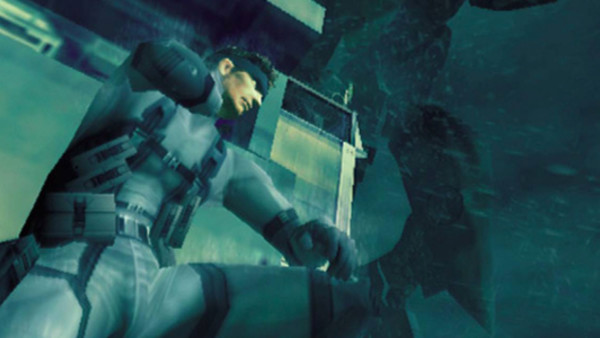
The first Metal Gear Solid was a revolution in game design. Seeing Hideo Kojima "shoot" cutscenes and frame a narrative that put you right in the middle of a Hollywood blockbuster, it came right alongside Ocarina of Time and Final Fantasy VII also the first titles to truly make you emotionally involved in what was happening.
For the sequel then... Kojima pulled a fast one and lied to our collective faces, framing an entire marketing campaign around Solid Snake's return, only for that to be around half an hour of the game at most, and the rest to focus on newcomer, Raiden.
The point was to enhance Solid Snake's reputation and abilities from a different perspective, but as a video game, MGS2 was outstanding. An unprecedented level of detail had glass shattering and guards reacting to your shadow, production values were off the scale, creating a visual punch that remarkably still holds up today.
Shifting away from Snake was certainly an awkward bump in the road, but as its reputation attests, Sons of Liberty got way more right than wrong.
2. The Elder Scrolls V: Skyrim

Another game that felt like a social movement in waiting until we were collectively let out the gates to enjoy it as one, Skyrim was certainly janky as all hell back in 2011, but we just.didn't.care.
What Bethesda accomplished with this title - bringing in a tighter combat model and more effective waypointing to actually take in everything they'd created - pushed Elder Scrolls far into the mainstream.
Where Oblivion had gone down nicely as an Xbox 360 launch title, Skyrim landed in an age of broadband connections and social media. The anticipation for what the next Bethesda RPG could be was already at fever pitch, and that was before scores of mods and memes took everything to the next level.
You'll likely remember your first time visiting Skyrim, the first time a Giant launched your character into the clouds or the first time a game-generated radiant quest let you see a part of the map that felt completely unique.
Putting it out there: This is the nexus of Bethesda's creativity and mainstream-reaching business mandates delivering a title they themselves haven't come anywhere near since.
1. Halo 3

Every time I go back to Bungie's original run on Halo; every time I listen to Halo 2's main theme or those beautiful piano stabs that made for Halo 3's debut, it's a feeling of disbelief.
I cannot believe how ludicrously on-point Bungie were, during this period. Yes, we can grumble about Halo 2's campaign ending too early, but that game's multiplayer easily upheld its end of the bargain quality-wise.
Come time for Halo 3, Halo as an IP was on top of the world. It was like Beatlemania for gamers, Times Square shutdown to accommodate its launch, and many movie chains reported a drop in ticket sales, because EVERYONE was playing.
In every respect though, Bungie NAILED this game. The story wrapped up nicely, multiplayer innovations like pieces of "Equipment" let you drop a bubble shield to evade campers or trip mine an oncoming Warthog.
Running like butter on the most popular system of the time, the Xbox 360, there was nothing like it.
Halo and Bungie, the greatest team-up of all time.