8 Popular Video Games That Fell Apart After Incredible Openings
What matters more? First impressions or value for money?

Weirdly, various studies have shown that the majority of people - 9 out of 10, in fact - don't finish video games. Though, the gaming industry itself is forever searching for that perfect sweet spot between 'value for money', pacing and a given game's mechanics evolving over time.
Very, very few games actually get this balance right, with the likes of Ubisoft's more recent output giving you every possible attack animation and item within the opening couple hours, only for the back half to regress into wash, rinse, repeat. But hey, at that stage you've got more than a movie's worth of time from said game and Ubi have your cash, so who cares if it falls apart, right?
Wrong. We care. I care, and I'd wager after dropping 60 bones on a new game that should last you a few weeks, starting to feel as though the developers just gave up can really hurt a title's reputation in the long run.
First impressions count for a lot - they count for pre-orders and justifying full price at launch the most - but honouring that initial rush of positivity is something even some the biggest games have failed to do...
8. Fahrenheit/Indigo Prophecy

The game that first touted David Cage as this 'revolutionary narrative mastermind' of gaming, the opening couple hours of Fahrenheit are some of the best in gaming history.
Literally seeing you take control of one Lucas Kane after he's murdered an innocent man in a diner's bathroom (while under a trance), you're then given free reign to decide what do to. Hide the body, mop up the blood, do a runner, phone the police - it was all up to you, with this very grounded, film noir-influenced detective-perp drama unfolding masterfully.
... until Cage decided he wanted to write a story that used this as a jumping-off point to invoke warring interstellar entities and supernatural forces.
Yup, we literally go from "Man hides body in bathroom" to discovering Lucas is a Matrix-like 'Chosen One', busting out martial arts on rooftops and - at one point - fighting the living embodiment of the internet.
Thankfully, David Cage toned down the ridiculous for Heavy Rain, only to have a beat in Beyond: Two Souls where you fight a giant possessed wall of sand.
Yeah, Detroit: Become Human is either going to be incredible, or a complete laughing stock.
7. Assassin's Creed III

Back when Ubisoft knew what the living frog-f*cking christ they were doing with Assassin's Creed, this third instalment was set to wrap up - or at least meaningfully continue - the modern day story of Desmond Miles.
That, and we were getting a window into the American Civil War through the lens of native American Connor (or Ratonhnhaké:ton in his native tongue) - a setup that was throughly flipped on its head, thanks to AC III opening with you playing as Englishman, Haytham Kenway.
Brilliantly, Haytham was later revealed to be a Templar in a move that thoroughly made all of us go, "Okay, yup, they know exactly what they're doing" - only for his story to fade away, Connor's to be a rote revenge tale, and the Desmond stuff to end with him dead for no reason.
By the close of Assassin's Creed III, we'd had endless cutscenes about literal Gods discussing meteor collisions, genocidal previous civilisations and the idea of a vengeful deity being trapped unless Desmond touched an orb of power - which also killed him. Because reasons.
Needless to say, this marked the first game without Assassin's Creed's original Creative Director and visionary Patrice Desilets, and was the beginning of the bad times for the franchise overall.
6. Star Wars: The Force Unleashed II

A game that felt entirely like glorified DLC, The Force Unleashed II was a paltry selection of levels that were all over far too quickly - though being the concept of 'infinitely powerful Sith lord goes on a rampage' was mighty appealing, that didn't stop it selling like crazy.
Even then, there's immortal fun to be had ping-pong'ing Stormtroopers off walls and introducing TIE Fighters to entire platoons of screaming henchmen, but following this, we saw one of the most forced and '80s TV show'-style twists in recent memory:
You had a clone!
Yup, at the close of TFU II, if you chose the Dark Side ending (a truly random choice for the sake of forced 'replayability'), Starkiller would be skewered from behind by a hooded figure - who it then turned out was another Starkiller, with Vader claiming they had now "passed [their] final test".
The game ends immediately after, everybody dies, and you're free to 'enjoy' all the alternate-reality DLC as this no-nonsense Anakin-channeling 'bizarro' take on the character, where the original trilogy cast also perish.
It was toss.
5. Deus Ex: Mankind Divided
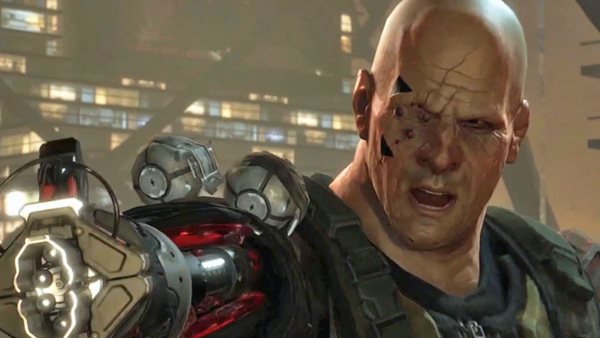
Speaking of glorified DLC, Mankind Divided's development was fraught with suffocating publisher demands and timeline restrictions, resulting in a product that considering its substantial potential, is one of the worst games of 2016.
Ask precisely why, and you get to the heart of the problem: The completely broken pace.
Whilst it opens with a brilliant excuse to deploy all your bio-augmented powers and hints at being able to unlock a bonus set of abilities, you're then plunged into several open spaces that quickly devolve into treading water, forcing you to complete side mission after side mission.
What the game classes as the 'story beats' come and go as part of this steak-chewing progression, eventually zeroing in on the big bad, Viktor Marchenko, as the game finally throws out what feels like its first 'proper' mission. You're up against scores of guards, security cameras, there are multiple ways to play, infiltrate and take them out - it all leads into a boss fight against Marchenko himself.
"This is great, and I'm so glad we're finally getting goi-" oh, that was it?! The game has Adam Jensen utter something about the mission being complete, then cut to black - you've literally, somehow, just finished the game.
No satisfying plot wrap-up, no character arcs being concluded or even cliffhanger'd either - just the result of a studio/publisher partnership coming down to "I don't care, ship it!"
4. Psi-Ops: The Mindgate Conspiracy

There was a weird point in time back in 2004 where two games with the exact same premise (man uses telepathic powers to fling enemies around) released within two months of one another. Where Second Sight had all of Free Radical's budgetary clout, Midway's Psi-Ops was a far-better playing game, opening with a series of levels that demonstrated outstanding use of Havok physics.
You could slam enemy goons off roofs and walls, pop their heads through sheer mind-power, immolate or squish them with any part of the environment.
In short, spectacular, and this momentum carried through the majority of the game... until you got to the 'From the Ether & Beyond' level. Set inside a temple and forcing you to find invisible, damaging ghosts with a specific power, it was a complete departure from everything that went before.
Following this, the last level was way too corridor crawl-heavy than any of the wide open physics sandboxes that came before, and to top it off, The Mindgate Conspiracy literally ends on a cliffhanger; its characters facing certain death, only to pop up with "To be continued".
Now 13 years later and with Midway down the tubes, it goes without saying we'll never see the conclusion to such an initially fantastic game.
3. Bioshock Infinite

Coming after one medium-changing instalment and a sequel hardly anybody played, Bioshock Infinite was supposed to be the 'return' of that Bioshock quality we associated with the 2007 original.
Though, even in the run-up to release we saw numerous prototypes and trailers showcasing a version of the game that - in retrospect - clearly never made it to store shelves. No, the release version of Bioshock Infinite started exceedingly well, introducing a number of mysterious plot threads and characters ("Bring us the girl and wipe away the debt"/the Lutece twins), only for the closing revelations to contain some of the most haphazard and forced rug-pulls in gaming history.
Where to begin?
Firstly there was the 'interaction' between protagonist Booker and the game's villain, Comstock, which ended with Booker killing him in a cutscene and not receiving any answers. Then the various dimension-hops give you combat arena after combat arena, the story taking a backseat until it's revealed that Booker IS Comstock, the resultant supposed-to-be-mind-blowing finale taking you on a walk through the fabric of time and space itself, literally showing that the series could have infinite sequels, or none at all.
We even had a non-reveal of just what the hell Songbird was. It could be gleaned from environmental clues that the building-sized creature was a different-universe take on a Big Daddy, but that didn't explain its gargantuan size.
By the time Infinite closed out, yes, it had some grandiose ideas and concepts, but were they tied together with any modicum of confidence? Hell no.
2. Uncharted 2: Among Thieves

Easily the best Uncharted by a country mile - though A Thief's End comes mighty close in spots - the thing that's seldom talked about with Among Thieves is just how far it falls in the third act.
Coming right around the time you realise the ancient Guardians are actually humans (despite their more OTT movement and noises), Nate then descends into the ancient city of Shambhala, only to find that not only are its protectors still alive, but they're - wait for it - a race of superhuman blue n' purple warriors.
O... kay? Did Naughty Dog not learn anything from having the "dead Spaniards are now zombies!" twist from the first game?
Alas, the final nail the believability coffin comes from main villain Lazarevic huffing some ancient tree sap - which turns him invincible, because video games - reducing the final fight into literally running away until he walks close enough to some explosive parts of the environment.
It's testament to just how impeccably written Uncharted is as a franchise, that this game's third act doesn't get raked over the coals more.
1. Metal Gear Solid 2: Sons Of Liberty

Leapfrogging over the fact MGS 2's most replayable and downright best part was the completely optional Tanker level, even as the story unfolded we hoped there'd be more of that socio-political analysis that makes the franchise tick. And it did come - the messages at the heart of MGS 2 surrounding the dominance of technology on a mass populace are more resonant today than ever - but the execution of its final third leaves a lot to be desired.
Retrospectively ridiculous is how the Russian mercenary Olga became the athletic forward-flipping Cyborg Ninja, how completely random Raiden being naked for part of his final level looked and felt, how Arsenal Gear's rooms are named after parts of an anus, and how the Colonel and Rose aren't only A.I. constructs, but literally the will of American patriotism given sentience and form.
Seriously, check out this dialogue:
"We're not what you'd call "human." Over the past 200 years, a consciousness appeared layer by layer at the crucible of the White House. It's not unlike life started in the oceans four billion years ago. The White House was our primordial soup, a base of evolution. We are formless. We are the very discipline and morality that Americans invoke so often. How can anyone hope to eliminate us? As long as this nation exists, so will we. "

The game's final cutscene literally feels like Hideo Kojima getting the actors to read his high school dissertation, and whilst our younger selves were thoroughly entertained and there IS some good in there, it's not a series of events that hangs together well the more you think about it.
Let us know in the comments which other games started with a bang and ended on a whimper!