8 Ways The Video Game Industry Punishes Its Most Loyal Consumers
Know when you're being taken for a ride.
Loyalty is a funny concept when you really think about it, because somewhere along the line, it can just as easily turn into 'blind obedience'.
Case in point: The gaming industry. It's very easy when your favourite pastime is indulging in ethereal fantasy realms or blasting alien hordes, to acknowledge that you're being taken advantage of. Not in a truly nefarious, necessarily damaging way, but the various industry's playmakers didn't learn how to let billions of dollars slide through their fingers on a daily basis without exploiting some nigh-on genius business tactics.
On the one hand, you've really got to admire something like microtransactions. They're so effortlessly effective and implementable across every genre, there's a twisted fascination to just how much money they make on a daily basis that is certainly worth understanding and respecting.
That said, microtransactions are but one of many various negative realities of playing video games on a regular basis; realities that have certainly changed drastically over the past few decades as the industry has grown exponentially, but not always for the betterment of the consumer.
Don't let loyalty mean you get cheated out of a better gaming experience, because if the industry can take advantage of your spending habits, it will.
8. Any Launch Day Version Of A Console Is Always The Worst One
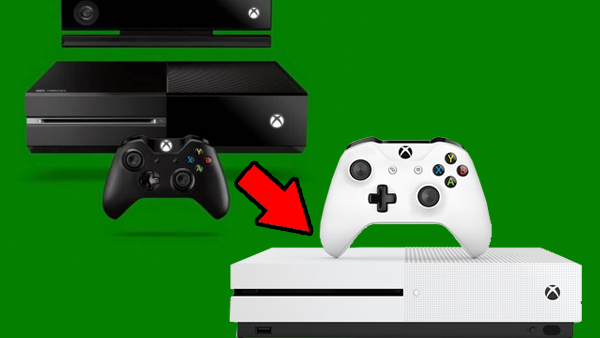
One that's very much plain to see, simply down to the sheer amount of firmware patches that get released every few months, there's no way that the version of a system you purchase on day one - which is also happens to cost the most - gives the best value for money.
A notably egregious and recent example is of course, the Xbox One; a system that's had multiple complete dashboard reworks, with another planned in the near future. Its bundle deals have been upended to remove the Kinect - which was then gutted from the system's core functionality - and in terms of how the various menus and transition animations, they're far smoother now than back in 2013.
And that's just the firmware.
As console manufacturers spend more time with shippable hardware, we see things like re-released, smaller and better optimised versions of key systems - the PS3 had the Slim and Super Slim, with the Xbox 360 getting its own Elite edition. Nintendo are notorious for this in the handheld market, though Microsoft and Sony's newest efforts (the Xbox One S and PS4 Pro) have stood out as being 'half-step' systems, providing the necessary processing power we should've had back at launch.
Then there are genuine faults like the 360's 'red ring of death' or the Switch's busted left Joy-Con. Both were fixed in time, though everyone who coughed up the cash and bought through sheer faith remains worse off.
7. No Reliable Refund Process On Consoles Whatsoever
Though console manufacturers are forever trying to convince us that digital is better than physical, one of the biggest issues comes with refunds, of which neither the PS4 or Xbox One offer an adequate solution to.
Microsoft are currently doing the best, though their idea is still in testing and has been for months, but would allow full games to be refunded if you had played less than two hours across a 14 day period.
So far, so good... in theory.
However, Sony's PlayStation policy might as well not exist, as it reads:
“If you change your mind about a purchase made from the PlayStation®Store, you can request a refund to your PSN wallet within 14 days from the date of transaction, provided that you have not started downloading or streaming your purchase.”
Basically, you can claim a refund if you accidentally ordered something and didn't follow through on the download. Not if a game is broken at launch, isn't as advertised or has any other issue that would necessitate being unhappy with your purchase.
Simply put: Consumers need to know that their money isn't going to waste and that there is some safety net - a feature that neither consoles can provide.
You need only look to something like the disastrous launch of Assassin's Creed Unity or No Man's Sky to see why this is such an integral feature.
6. Midnight Launch Servers NEVER Work

Another kick in the face for those who pre-order, actually trying to play your purchase when it unlocks at midnight will 99% of the time result in a disconnect screen.
Even the mighty Destiny 2 - which actually broke the trend back in 2014 when its original dropped - launched with elongated load times on PS4, leading to it being taken offline altogether whilst Bungie sought out a fix.
At this stage it's common knowledge that there's no way for real-world server load to be adequately tested, but should the consumer even care? Don't advertise your game as functioning - and hoover up pre-orders or Deluxe Edition profits in the process - only to not deliver in the end.
Launch individual platforms at different times or stagger accessibility, but communicate this to the buyer. There's no real excuse for a broken product not working when its advertising stated otherwise.
5. If A Project Is TOO Broken, Destroy, Forget And Try Again

Props to them, at least when their name was worse than dirt, Hello Games spent an additional year making No Man's Sky into a far more respectable video game.
The same cannot be said for 343 Industries, who once they realised the Halo: Master Chief Collection had too many bugs to fix, simply abandoned it to work on Halo 5.
Peter Molyneux's Godus is one of the most egregious examples of a Kickstarter that took the money and ran, and if you look to EA's handling of Battlefield 4, it once again ended with them washing their hands of the whole production and moving on. After all, they had another sequel to prepare...
Obviously, there's a specific 'window of opportunity' for a game's release that makes it the most profitable (unless you can build a 'platform' of content or you're a runaway success like Rocket League and Overwatch), but when you have people actively trying to play your game that have invested full price, the least you can do is uphold your end of the bargain.
4. Season Passes & DLC Rip-Off Early Adopters; Get Packaged Into GOTY Editions Anyway

We've all invested in DLC and additional content, only for a 'Game of the Year'/'Definitive' edition to release with everything bundled together at a drastically reduced price. Yes, it's good business and remains one of the only ways to make an older project profitable again, but where's the kickback to early investors? Where are the discounts given to those who facilitated said 'GOTY Editions' in the first place?
They're ultimately forgotten about, unless you want to buy another version of the same game to access additional content that is now being priced for less than the 'vanilla' version you bought in the first place.
Continuing on from the idea of building not a game but a 'platform' of mechanics that can support a few year's worth of content, more and more we're seeing games ship with 'Season Passes', even if the developers don't actually have a year's worth of additional assets worth making.
Most notably was Rocksteady asking for money before they'd outlined what we were paying for in Arkham Knight, or Bethesda similarly announcing a season pass for Fallout 4, without any specifics.
Both these examples tap into the notion that it's the 'done thing' to ask consumers to invest in a season pass, despite the length of said 'season' sometimes only lasting a few months (just ask Mass Effect Andromeda's early adopters). Couple the previous point about a game being canned if it doesn't catch on with the assumedly 'guaranteed' content promised by a season pass, and you have something like Mass Effect Andromeda, which profited nicely from fans up front, and fell apart immediately afterwards.
3. Microtransaction Systems Are Only Ever Designed To Exploit
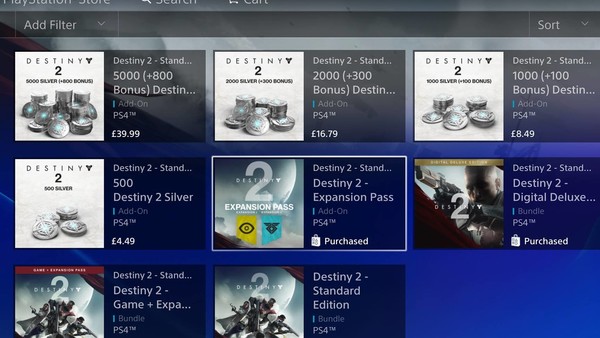
You have to imagine that despite the torrents of negativity levelled at their existence since day one, many top-tier publishers resigned to biding their time until a suitable change in generations occurred, as now you have many teenagers and younger gamers actually expecting or trying to justify the existence of microtransactions.
And why? Because they're the new standard. It's assumed that there'll be some sort of storefront or additional 'currency' in a video game that'll allow you to bypass a particular level, acquire a piece of gear or pull off a specific ability.
Couple this assumption with the proliferation of 'blind boxes' and 'loot grinds' - something even the single player-only Shadow of War now has - and you genuinely have a gambling ethos embedded in your video game.
Want to "get lucky"? Pay a few coins, roll the dice and hope for the best. If it doesn't work, try again.
These mechanics are only geared at the young and impressionable or those with tons of disposable income - both of which keep the business practice alive, and getting around the fact that full price should equal full product.
2. Games Are ALWAYS Better After Launch

Like the consoles they're accessed on, a game will only ever get better once its out in the wild.
There's no substitute for an entire planet's worth of feedback, and though many games tend to ship with bugs and glitches from day one, the amount of fixes that get rolled out addressing specific issues go hand-in-hand with burgeoning communities pointing them out.
Even something like The Witcher is a demonstrably different and more technically proficient game now than at launch; the result of various frame rate and animation improvements, alongside a complete menu overhaul. Other titles like Rainbow Six Siege and For Honor receive copious amounts of additional content, refinements and balances to their mechanics, putting in stark relief the question of just why you would buy on day one.
How much do you value being in on the launch day conversation? Because that unquantifiable amount is a huge part of what the industry trades off, letting them get away with the majority of points in this article.
1. Prices Can - And Will - Drop Immediately For 95% Of Games

As mentioned, that key launch window is when prices skyrocket, mimicking whatever level of interest you'll see across the mediasphere for a given product.
However, once that's gone - and it only takes a couple of weeks to a month - prices will drop considerably. Double-so if there's a major holiday round the corner.
Games like Mass Effect Andromeda and Dishonored 2 only stayed at full cost for a minimal amount of time, and as we can identify the sorts of games that can sustain selling for £60 (your GTAs and Zeldas of the world), if you only wait until the 'buzz' has dissipated just a tad, you'll be far better off.
Waiting for a week or two nets you a cheaper version of the game (even if it's from a trade-in second-hand) that's also had the benefit of multiple immediate patches applied, and there'll be stable servers.
It's a no-brainer.