9 Reasons You Should Be Thankful For The Nintendo Switch
What, you wanted another Call of Duty-machine?
It's a weird old business, this video game industry lark. One minute we're waiting for games to drop with any degree of consistency, then there are floods of them. The next we're marvelling at 1080p resolutions, then it's 4K and HDR support or your game isn't even worth looking at.
In amongst this endless race to plumb the depths of consumers' wallets comes the Nintendo Switch. Bursting out of the gate with one of the most positively-received teaser trailers in quite some time, Nintendo roundly burst their own hype-bubble during a lengthier reveal, where a lacklustre set of games met with a truly boring presentation style to send all but the staunchest supporters to sleep.
Thing is though, the Switch is everything the industry needs right now, and for as much as Nintendo's stocks are down and people are pronouncing it dead already, how about we analyse a few things about its existence first?
--
9. It's Bringing Back Couch Co-Op

When was the last time you played a game with an actual friend? Y'know, like, in person?
Exactly.
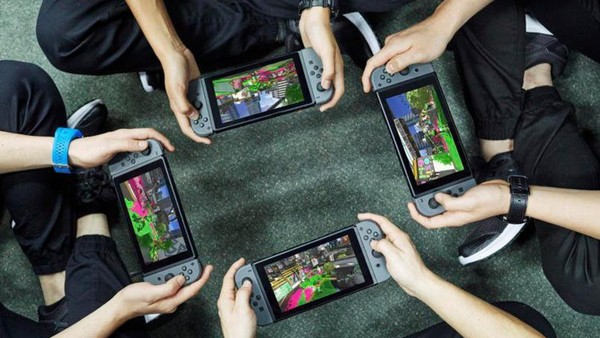
The online revolution certainly took hold across the end of the 2000s, and even franchises like the mighty Halo ditched their offline split-screen in Halo 5: Guardians. It's a real shame, as you just can't beat in-person gaming, a fact Nintendo have ostensibly built the Switch around, as at any point you can detach the two controllers, hand one to a friend and enjoy an impromptu game of Mario Kart.
The possibilities for this are pretty endless, especially when you factor in just setting the Switch up on a lunch break or round a mate's house.
Get Rocket League or Overwatch on this thing and it'll be fantastic - all it takes is a little cultural 'acceptance' of what the Switch is, and we'll all be itching to play a few rounds face-to-face.
8. Nintendo Will Actually Support Their 'Gimmicks'

Unlike the PS VR - which continues to gather dust on many a shelf as it appears Sony have all but forgotten they released the damn thing - Nintendo dedicated huge chunks of time to making sure the world knew what 'HD Rumble' did, or how the new 3D space-tracking IR Sensor could be used.
Granted, that amounted to "try to guess how many ice cubes are in a glass/balls are in a box" and "Let's play rock, paper, scissors/eat a fake sandwich", but they're trying. They're at least trying to show the industry new ways to interact with digital experiences, rather than pushing something out the door and letting it slowly whither in the sunlight.
You don't have to champion the end result of these tech demos if you don't want to, but for sheer innovation in a sea of corporate copycatting or half-baked support of peripherals, their approach is a godsend.
7. A Refreshing Take On Releasing Video Games
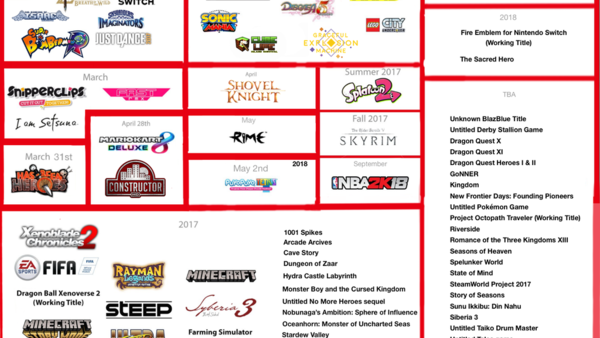
It's entirely possible that the Switch's meagre launch lineup is literally all that's left after Nintendo burned the vast majority of their third-party relations with the Wii U. I mean it is just five games, and only one of which, anybody truly cares about (the new Zelda).
That said, when was the last time you bought a console and snatched up more than a couple of titles, anyway?
The N64's launch came with a laughable two games, but one of those was Super Mario 64, which went on to become one of the most fondly revered titles of all time. Why? Because alongside some revolutionary 3D technology, thanks to this element of scarcity it was put in front of far larger audiences than ever before.
By staggering their release calendar and dropping things like ARMS, Super Mario Odyssey, Snipperclips etc. a few weeks and months apart, it keeps consumers' eyes on release charts, keeps us hungry for that next game, and best of all, gives us time to play through the ones we already have.
6. A Monthly Service That Makes You Care About Its Games

There's a divisive opinion amongst many industry commentators that discounting games en masse - like say, in a Steam sale or for free over PS Plus/Xbox Live - devalues them as products.
Personally, I don't mind myself ever going back to these games after the initial few hours of play, and instead they're relegated to the archive of 'stuff I own', a far cry away from the same level of respect and attention I put on something I've actually bought.
In an attempt to make you care about which games you're getting each month, Nintendo are making them timed offers. You'll gain access to two NES or SNES games per month - with additional online functionality, adding scoreboards for a competitive element - and then they're gone again. It's somewhat divisive to say, but by doing this, it does force you to 'make the most' of the games themselves, as oppose to treating that month's slew of freebies as what you'll 'get back to' somewhere down the line.
Maybe it'll fail. Maybe it's simply ridiculous to compare the two ideologies, but there's something to be said for how monthly payment models can make games feel disposable. Something that Nintendo could upend.
5. A Return To Simplistic Old School Game Design
Nobody makes games like Nintendo. Born from their lineage as a trading card manufacturer, they've always seen the inherent escapist entertainment value in crafting games as games. Not 'immersive cinematic experiences' or 'story-driven narratives', but real, honest, pure fun video games.
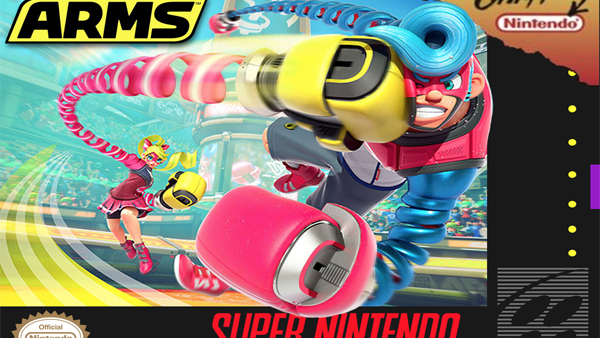
You need only look at the likes of ARMS - a title where you batter opponents from across the screen with extending limbs - to get the same vibe as the likes of Balloon Fight or Ice Climbers; games that had one solid mechanical premise, before enough of a 'world' was then built around them.
Not everything has to be a Last of Us or a whizzbang shooter campaign. Nintendo can deliver the other side to that coin, and chances are, the games you played as a kid were precisely these sorts of experiences.
4. A Palm-Sized Console Experience Is Just Freakin' COOL

For as much as the Wii U was a retrospective failure on almost every level, from marketing to product recognition, video game library and units sold, there was something insanely neat about a lot of its dual-screen capabilities.
Being able to beam something like Wind Waker HD to your portable tablet while another family member or friend used the TV and you continued playing felt great, and that's before you realise you can operate all the system's core functionality from the Gamepad, too.
To that end, there's something insanely cool about having a 'home console experience' in the palm of your hand. With the Switch, that mentality extends outwards, removing the need for any data to be displayed on another screen whatsoever, and giving you a far larger games library encapsulating everything from Skyrim to Super Mario Kart.
3. Prioritising Games Over Power Is Essential

Read my digital lips: "Power does not matter in video games".
It never has.
Yes, rendering tech can aid in the telling of a story or the playability of a thing if a little visual clarification is necessary to what the game's design is shooting for in the first place (see the original NES Zelda vs. Link to the Past, for example), but all this 'PS4 Pro/Xbox Scorpio is the future/Time to get a 4K TV' stuff is hogwash.
Honestly, we've reached a point in the industry where Sony and Microsoft insist on trying to convince us that style is greater than substance, and it just isn't the case. The Switch will carry forward the sweet spot of graphics, a great balance between hardware strain and the realisation of any developer's vision.
Because as you can see with the PS4 Pro's disastrous reception, we don't need shinier environments and 'dynamic lighting', we need good games - something the Switch will be positively swimming in.
2. A Proper Home Console Pokémon Game

Calling it right here, right now: The Switch version of Pokémon - possibly called 'Pokémon Switch' - will be the biggest thing since Lara Croft's chest. There's simply never been a home console version of Pokémon, and that's before you start looking at the sorts of strengths the Switch brings to the table, and the lessons learned from Pokémon GO.
Even if none of the following is correct, people will flock to purchase Switches if there's a full-screen Pokémon experience available. It's that simple.
Case in point: Nintendo have the opportunity to release a followup to Pokémon GO that feeds into your Switch progress, meaning you can get home after a good day's Pokémon-hunting (or walking your Pokémon to train it, HeartGold/SoulSilver-style), only to continue working your way through the game. You could play catch or frisbee using the IR sensor with your favourite creatures, and fling Pokéballs using one of the detachable controllers.
The functionality for this thing writes itself, and although it isn't confirmed just yet, Nintendo are not going to make the followup to Sun & Moon a 3DS exclusive once they've got the install base for Switch up and running.
Oh, and if they could bring Monster Hunter to big screens for the first time since 2011, that'd be just swell.
1. No Installations Or Load Times
Remember when one of the biggest boons to console gaming was knowing you could just go grab a disc, pop it in the drive and play?
Yeah... that's almost never the case anymore, as both launch day patches and continual updates will make you sit for hours before getting to go hands-on with any particular title.
Hell, if you've bought a game anything more than a few months after launch, expect to sit down and soak up a good 10+GB of pent-up data, before you can play it in the state the developers now want.
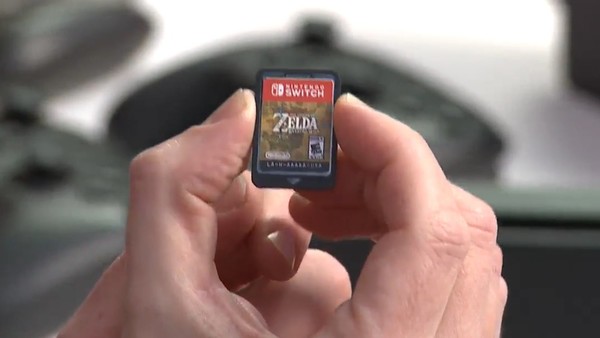
Contrasting this, the Switch has moved away from discs entirely, instead pioneering a new type of cartridge that stores the entire game for instant play, and doesn't need to sit on load screens afterwards to pipe in new levels, either.
Maybe in practicality there will be pauses or other delays as the system processes all that data, but for now, the idea of a seamless, old-school setup where playing the game is of utmost importance feels like absolute bliss.
-
Where do you stand on the Switch? Buying day one, waiting or thoroughly put off? Let us know in the comments!