Assassin's Creed Syndicate - 10 Major Historical Events That Must Influence The Story

Pax Britannica.
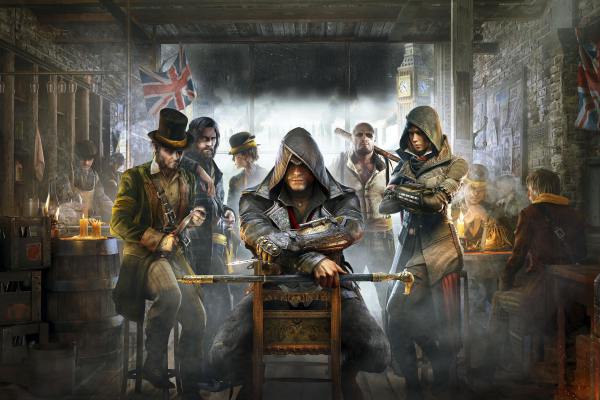
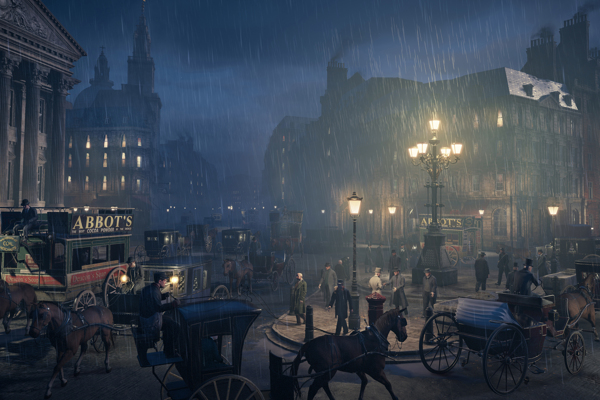
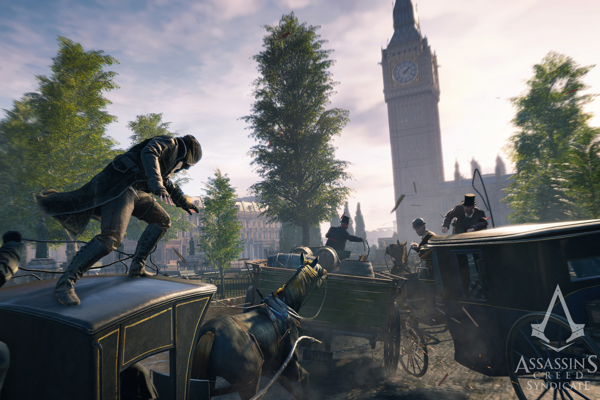
Among the most tumultuous eras of History, the Victorian era spanned across the 19th century and saw Great Britain expand its empire at an alarming rate, facilitating conflict on a mass scale and in turn defining the country for decades to come. The 'Scramble for Africa' saw the British Empire enter direct competition with other European states such as the Netherlands, France and Belgium, vying for control of Africa's vast mineral resources, whilst the nation was also expanding in the middle east and Asia, seeking to colonise past India and present day Pakistan. Though Britain in this era is much remembered for its foreign excursions, the Victorian period itself facilitated a great many changes in the (then) world's largest power, both political and social. The working classes experienced something akin to a social awakening and electoral reform was ushered through to extend the franchise to many men, irrespective of their property rights. With the rapidly advancing pace of the British Industrial Revolution came a stronger working class, suppressed by the upper echelons of society and situated in terrible working and living conditions. Whilst this may sound like an allegory for the current state of Britain's domestic affairs, the time period in which this takes place in is far from the present. Assassin's Creed: Syndicate's storyline will no doubt intersect with many of the historical events of the era, as is the usual AC style. Victorian Britain has an abundance of events to manipulate, and Ubisoft would be mad to neglect them.

10. The 1832 Reform Act

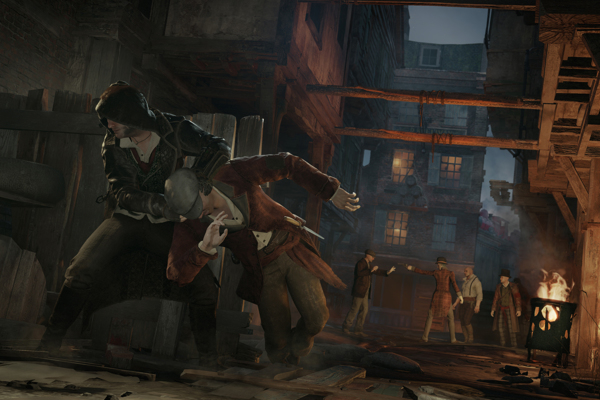
Whilst several years prior to Victoria's ascension to the throne, the 1832 Reform Act's significance will still hold a great amount of influence over the events of AC: Syndicate - namely in relation to the Frye twins' attempts to galvanise the workers and gangs of London to oust Templar influence. The Act itself, ushered in by then prime minister Earl Grey (who you can also thank for that lovely blend of tea), saw the then restricted voting franchise extended to thousands more Britons - bringing politics to more than just the gentry of the United Kingdom and engaging them with decisions they once had no control over. Though the act did nothing to further the rights of women, it did introduce a number of measures in an attempt to further democratise the political system - namely the secrecy of the ballot box and the elimination of property holdings holding sway over voting rights. The fact that the act didn't go far enough is more important than the reforms it did introduce, as the tone of Syndicate will no doubt be one of political and social unrest - perfect conditions for the Assassin's to gain support to oust Templar control of both houses of parliament.

9. The Crimean War

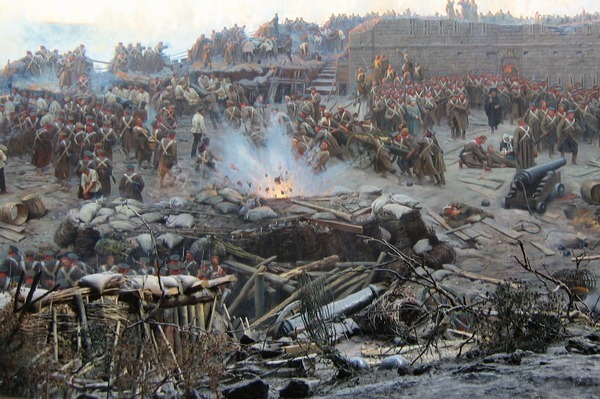
Though often referred to as 'Pax Britannica' (or peace via Britain), the Victorian Era itself was far from devoid of international conflict - even in the European theatre. The rather precarious 'balance of power' in the continent was upset when Britain and her new ally, France, declared war on a rather combative and abrasive Tsarist Russia. The conflict itself saw mass amounts of casualties on both sides, and despite resulting in a decisive British victory, experiences of the war did little to quell the growing anger emerging from the slums and docks of cities like Liverpool, Glasgow and London.
The victory also meant that Britain enjoyed a relatively unchallenged position at the top of the world stage for many years to come. If as was alluded to in Black Flag, that the houses of parliament are under Templar control, this would mean that their grip on power would be further consolidated than before. On top of controlling the most expansive empire on the globe, they would be able to command a presence on Europe that would make Assassin interference extremely difficult. Considering the strength of the British Assassin faction is relatively unknown, the historical context of Syndicate's time place may infer that they're not in a very good position indeed.

8. The Dissolution Of The East India Company

The notorious company that assured Britain's dominance of much of the Middle East and South East Asia along with it, the East India Company's formation is bound to have some impact on the way in which Syndicate's narrative is constructed. Though created centuries prior to the time at which Jacob and Evie operate as Assassins, the company lasted well into the height of the Victorian age, dissolving in 1874. However, the company's demise was well underway by the time of 1857, with the Indian Mutiny forcing the Crown to nationalise its holdings for allowing unrest to stir at such an unprecedented level.
Whilst the company had ceased to exact control over the Asian sub-continent with its private armies, it did continue to exist in a somewhat neutered capacity. This would be the perfect opportunity for Ubisoft to implicate the Assassins in its downfall and have the Templars continue to manipulate the company from the shadows. Conspiracy and espionage would feel right at home in London - it's even where the company held its headquarters.

7. The First Trade Union Congress

An annual occurrence in the Britain of today, the first TUC appeared around the time Jacob and his sister operated as members of the Assassin Brotherhood. 1868 saw Britain's trade unions come together in Manchester to discuss ways of better organising the working class, namely against exploitation by the bosses of their factories, mills, and shipyards. This involved campaigning on a plethora of issues, ranging from working hours, wages and safety conditions, to the issue of getting greater representation of working people in the British parliament - something that would later result in the creation of the Labour Party. This all contributed towards a greater engagement of the public with politics - something the Templars would not be too fond of at all. Taking their usual liberties with the historical canon, Ubisoft may depict the Assassins having a hand in the creation and the rise of the Trade Unions across the country. Either way, politics will most certainly be on the agenda for Syndicate's storyline, though the matter of where certain politicians' loyalties reside will be a key element to look out for.

6. The Great Exhibition

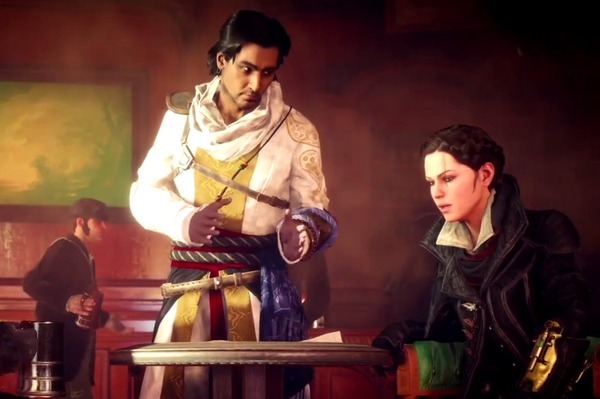
The first of the various World's Fairs to grace the nation in the 18th century, the Great Exhibition brought all the corners of the British Empire together under the Crystal Palace. Never before had so much culture found itself in one room, and though it may be seen as a shrine to the barbarism and oppression the Empire carried out for much of its existence, the exhibition would make for a perfect set piece for one of the signature chases the Assassin's Creed series is known for. Included within the demo was our first look at an assassin called Henry Green, who may in fact hail from British administered India - a prime example of Syndicate's full usage of the Empire in its plot. Jacob also brandishes the famous Kukri knife used by the world renowned Gurka regiments of the British Army, showing the imperial influence that will take hold in the Assassin order. The empire is bound to be paramount to the way the story progresses in the latest AC game, so don't be surprised if it makes an appearance.

5. The Advent Of The Repeater

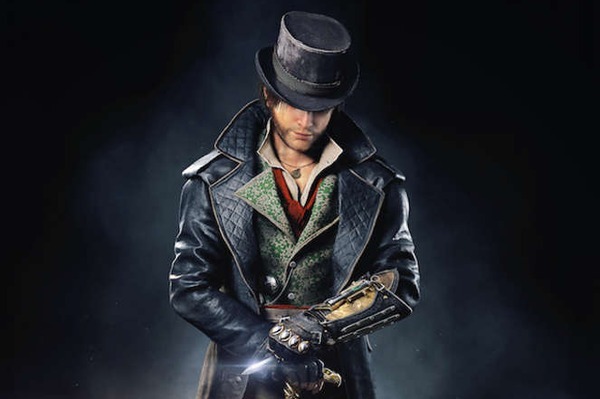
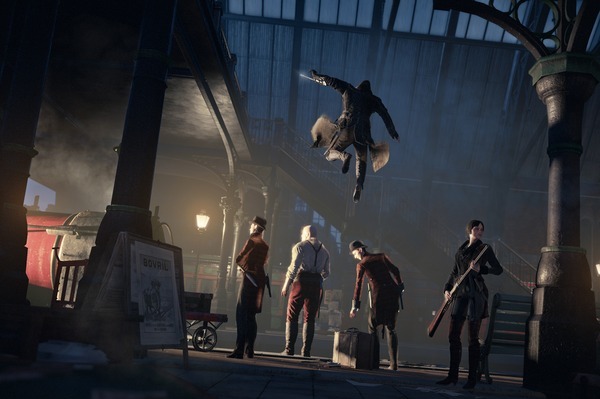
Though not exactly an 'event' so to speak, Assassin's Creed: Syndicate will be the first of its kind in the franchise for one key reason - the invention of repeating firearms. Until this point the most advanced piece of weaponry at an Assassin's disposal was the musket - a clumsy weapon that more often than not exploded in the face of the user rather than hit its target. Flintlocks and muskets are of a bygone era by the time of Syndicate's events, as we can now see Jacob himself brandishes a revolver, and that his enemies are equipped with lever-action repeaters. This poses a new threat and dynamic to the usual Assassin's Creed gameplay. Whereas before players had to be weary of columns of infantry lining up to deliver volleys of artillery and maybe the odd sharpshooter, they now have to contend with enemies that can unleash a barrage of shots in a very short space of time. It'll be interesting to see how the series tackles this to say the least. The more cynically inclined may assume that they will offer a simple aesthetic change, but there is a big chance that these weapons could really alter the flow of a combat system that has changed little since its début.

4. The Purchase Of The Suez Canal

Another huge event that coincides with Syndicate's time, the purchase of the Suez canal by then prime minister Benjamin Disraeli dealt a massive blow to French designs on Africa and the Far East. The canal itself was (and still is today) a lifeline for the transportation of goods between East and West. As the bulk of Britain's imperial trade came from India and China, the canal was invaluable to maintaining the Empire's survival. Disraeli took the liberty of pursuing a hostile takeover from the French firm that had majority control of the canal, in an action that just screams Templar at the highest volume. In the Assassins' efforts to undermine the British Empire, the purchase of the Suez Canal could come to be another key defeat for the brotherhood. Whilst it seems as though the Frye twins exploits will be primarily focussed on Britain's domestic affairs, the purchase of Suez could come to form a key aspect of the Assassin-Templar war.

3. The Scramble For Africa

The name given to the mad imperial push to acquire African territory, the so-called 'scramble' occupied much of Britain's imperial exploits in the latter half of the 19th century. The nation found itself in a mad rush to carve up the African continent, as Britain was faced with the prospect of French dominance of an area ripe with natural resources. Indeed, the effects were felt up and down the country, with dockworkers in places like Liverpool facing a mad rush to import minerals and materials such as rubber, to ensure the empire could maintain itself effectively. The more literary inclined may be aware that the 'scramble' was the subject matter of Joseph Conrad's 'Heart of Darkness', which offered a scathing critique on European imperialism in Africa. Though the tone of Syndicate will deviate little from the horrors of British Imperialism, expect imperial expansion to form a big part of the Assassin-Templar conflict.

2. The Indian Mutiny

A turning point in Britain's domination of India, the rebellion of 1857 facilitated mass amounts of casualties and highlighted the East India Company's woeful administration of the province. Though there had been resistance before, the Indian Mutiny sparked an entirely new wave of opposition against British rule, and despite it being quelled in time by a British force, the effects were long lasting. In its immediate aftermath, the 'mutiny' spurred on both debate and literary romanticism that has almost come to define the Victorian Era in many ways. In the muddied waters of the war between the Assassins and Templars, it's not at all impossible that either of these shadowy groups had a hand in the rebellion, or indeed its result. Along with the fact that the fate of the East India Company would appear to be at the knees of either the Assassins or Templars, the Indian Mutiny was the event that began its slow descent into corporate oblivion. It's not as if the franchise hasn't traversed India before - the recent side-scrolling 'Chronicles' DLC has a segment in the country, and the Indian Assassin order has been explored in the various comic book spin-offs from the franchise. It'd be a great shame if Ubisoft were to neglect it now - after all, it wasn't called the 'Jewel' in the crown of the British Empire for nothing.

1. Charles Dickens' Big Secret

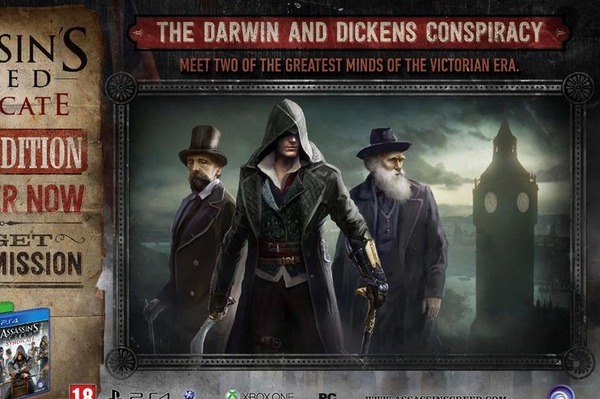
By far one of the most famous figures of the Victorian era, Charles Dickens' tales captivated a nation, with his 'Dickensian' qualities coming to encompass stories that focussed on poverty, social misfortune, and comically sinister characters. However, some will probably be a little confused as to why the man who penned Oliver Twist is popping up in an AC game - but there may be a reasonable explanation as to his appearance. Dickens lived a rather tumultuous life - one burdened with ill health at one moment and monetary hardship at the other. The man was also an advocate of social justice and engaged in a wide array of philanthropic endeavours, but he also had a very secretive side. In 1860 it is believed that Dickens burnt all of his letters that he had received up until that point. Though that may be little to go on in the way of inferring Assassin and/or Templar involvement, it will more than likely form a part of why he has a part to play in the story of Jacob Frye. Coupled with the fact that Dickens also survived a rather traumatic train crash, there is a lot in the way to go on in placing the Assassins' storyline right at his feet. Are there any historical events that you think could influence Syndicate? Or do you think Assassin's Creed should try to stay away from big events? Be sure to post a comment and let us know!

Content Producer/Presenter

WhatCulture's very own resident movie guy, Ewan has been working in the content creation biz for over 10 years now, having started as a freelance contributor to WhatCulture Gaming all the way back in 2015. After graduating with a First-Class Honours in History from Northumbria University in 2017 (where he won a prize for a totally killer dissertation on the Watergate years), Ewan took on the role of Comics Editor at WhatCulture and quickly developed WhatCulture Comics into one of the biggest superhero-focused channels on YouTube. He followed this with a brief hiatus at Screen Rant in 2021, where he worked across the Gaming and Film sections as a writer and editor, before returning to WhatCulture as a Senior Content Producer / Presenter in 2023. He started his own podcast, We Love Dad Movies, in 2022, and has contributed several written pieces to the Eisner-nominated comics website Shelfdust as well. In his current role, Ewan incorporates his love of cinema, comic books, and history into written pieces and video essays for WhatCulture's Film & TV channel, as well as WhatCulture Gaming and WhatCulture Horror, with a particular focus on nineties-era Dad Movies, old school Westerns, and Golden Age Hollywood Noir. John Carpenter is his fave, and he thinks Batman Beyond should never have been cancelled. If that's your vibe, you'll probably like his stuff.