10 Famous People Who Never Actually Existed
Uncle Sam wants you!
If someone is famous then everyone naturally assumes they must have existed. Winston Churchill, Adolf Hitler, Genghis Khan - these are figures who are remembered because they made a huge contribution to human history. Yet other well-known historical figures are famous despite having never existed at all. Myth, legends and stories become so commonly told that people just assume those mentioned and venerated within them were real living beings.
Sometimes identities are deliberately invented for specific purposes - for example patriotic means and as a way to bind an entire nation - but in other circumstances these "famous people" have become historical legends merely due to miscommunication or misunderstanding.
Certain religious, political and historical figures became the stuff of myth and legend and their stories are told on such a regular basis and to such a huge volume of people that their existence is widely believed.
Robin Hood, King Arthur and William Tell - did these legendary characters ever actually exist? Or has history merely merged the lives of several people together and then combined that with the myths associated with them to create completely fictionalised characters?
Well, here are 10 examples of famous historical figures who didn't - or, in some cases, almost certainly didn't - exist.
10. Uncle Sam
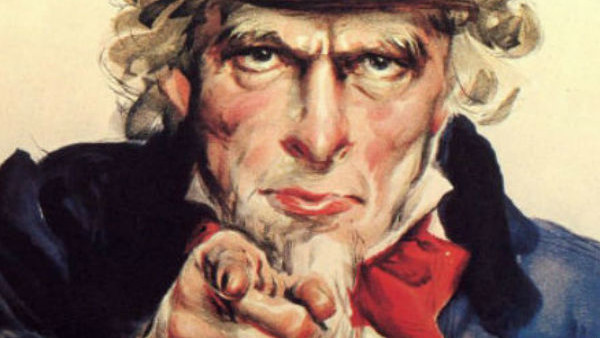
He may be the iconic image of American patriotism - yet "Uncle Sam" never actually existed. But his initials - "U" and "S" - are intended to personify the "United States". It is believed Uncle Sam was the nickname given to entrepreneur Samuel Wilson, who supplied meat rations to American soldiers during the War of Independence, but it was first used in literature in the allegorical book The Adventures of Uncle Sam in Search After His Lost Honor in 1816.
However, the more common image of Uncle Sam recognised today became prominent during World War I after he was depicted on to American propaganda posters. Political cartoonist JM Flagg used his own face to replicate the British recruitment posters which displayed Lord Kitchener, and added white hair, a long beard, as well as blue, white and red clothing to the figure in order to create "Uncle Sam".
Uncle Sam is still used to this day to represent patriotism and freedom in the United States of America - but he was actually not the father of the USA, as some believe.
9. Robin Hood And His Merry Men

Robin Hood robbed the rich to give to the poor, didn't he? Well, he certainly did in countless literary and big-screen adaptations, but the likelihood is that Robin Hood and his band of "Merry Men" never actually existed. The heroic outlaw - who, while clad in Lincoln green tights and a silly hat, resided in Sherwood Forest - was renowned as the finest archer of his time and was said to steal from the rich in order to feed the poor.
Interestingly, though, the terms "Rabunhod" and "Robehod" were often given to criminals as early as the 12th Century, and that's where the myth could arise from. Yet Robin Hood and his Merry Men - including Little John, Friar Tuck, Maid Marian and Will Scarlet - are mythical characters who no historian has ever been able to prove existed, despite the fact they appear in numerous poems and ballads from the 14th and 15th Century.
Most accounts suggest Robin Hood was a peasant who led a gang of defiant bandits against the loathed Sheriff of Nottingham - but he has also been described as a follower of King Richard I (the Lionheart), a member of the Knights Templar, or a nobleman-turned-outlaw who was actually the Earl of Huntingdon.
Unfortunately, Robin Hood probably never existed - it seemed too good to be true that a person could be that selfless, didn't it?
8. William Tell
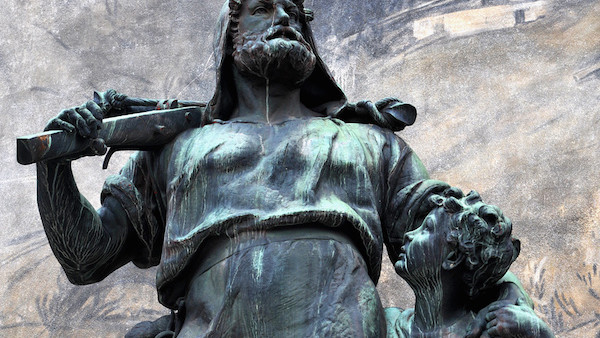
Switzerland's greatest folk hero is simply that - a fictional character. First mentioned in late 15th-Century chronicles, the precise marksman supposedly assassinated a tyrannical Austrian warlord named Gessler and gave birth to the Swiss Confederation during the 14th Century. The story goes that Tell was so accurate with a crossbow that he shot and split an apple positioned on top of his own son's head in order to gain his own freedom. However, Gessler reneged on his promise to fee the prisoner and had Tell bound and taken on to a ship.
When the ship got caught in a storm on Lake Lucerne though, the soldiers became petrified and unbound Tell, asking him to use his unrivalled strength to steer them to shore. Using the opportunity to escape, Tell jumped ashore at a rocky site that has come to be known as "Tellskapelle". The legend ends with Tell then assassinating Gessler on a stretch of road now known as "Hohle Gasse" - and that this then sparked a rebellion in 1307 which gave birth to modern-day Switzerland.
A great story, but all a load of rubbish unfortunately.
7. Donald Kaufman
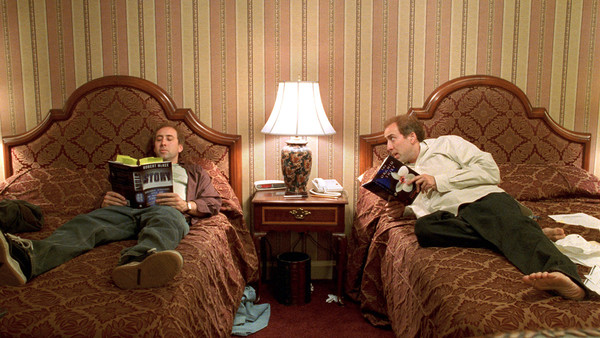
In the film Adaptation, directors Charlie and Donald Kaufman are the main protagonists - yet there is one major problem in that the latter never actually existed. Charlie's "twin brother" Donald was actually a completely fictionalised character - even though he is listed as having written the film in the DVD's credits, which close with the words: "In loving memory of Donald Kaufman."
Portrayed by Nicolas Cage in the screenplay, Donald Kaufman was even nominated for a Best Adapted Screenplay Academy Award for his role in creating the film - becoming the first fictional character to receive an Oscar nomination.
The brother of the director of Being John Malkovich and Eternal Sunshine even dies in the film - having struggled in life to get his screenplay The Orchid Chief off the ground - but obviously this too is fictionalised, seeing as he never actually existed in the first place...
6. King Arthur And His Knights Of The Round Table
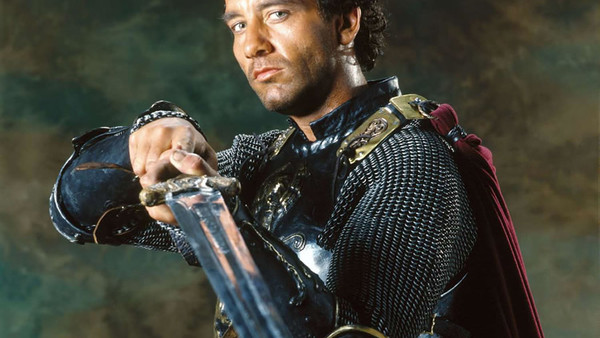
King Arthur - Britain's legendary monarch, who supposedly defended his kingdom against Saxon invaders in the early 6th Century, aided by his Knights of the Round Table of course. Well that's the myth anyway - but nobody is quite sure whether or not he ever actually existed.
The central figure in the mythical literary works now known by the collective name "Matter of Britain", King Arthur is portrayed either as a great warrior who defended his lands from supernatural enemies, or as a magical figure. Supposedly having developed an empire which spanned Britain, Ireland, Iceland, Norway and Gaul (France), King Arthur led his Knights of the Round Table - including Sir Lancelot - in defending his realm.
Other mythical people who appear in the stories include Arthur's wife Guinevere, his father Uther Pendragon, the wizard Merlin - as well as the legendary magical sword Excalibur, whose owner was rightfully the King of Britain.
Despite various historians trying to find historical basis for the tales of King Arthur, no consensus has ever been agreed upon - and it appears Britain's legendary monarch is merely just a figment of medieval imagination.
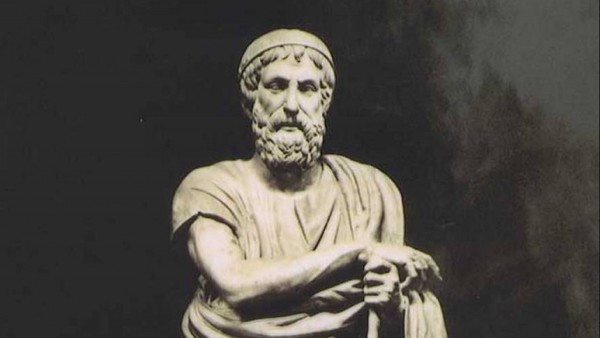
5. Homer
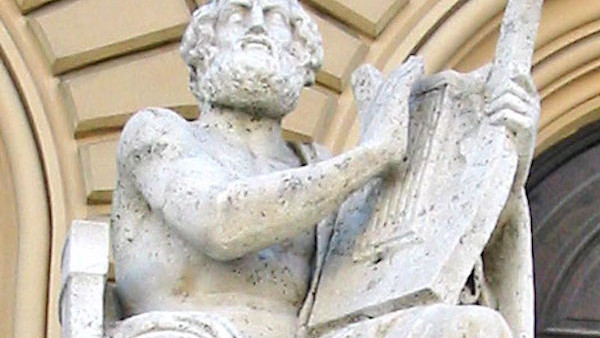
Greek poet Homer has become synonymous with the works of the Illiad and the Odyssey - yet whether or not he penned them, or more importantly whether he actually existed at all, remains a topic of fierce debate. Some ancient Greek scholars claimed the writer lived around 850 BC, while others believe he was born earlier in 1102 BC - but many modern-day historians do not believe such a figure existed at all.
Plato describes Homer as the "leader of Greek culture" - but even if he did exist, it is highly unlikely that he was the sole author of both the Illiad and the Odyssey. Often described as a blind man born on the island of Chios, Homer probably did not exist in the form he is now known - and his poems were probably written by a collection of people.
They were certainly both standardised at a later date, which would given weight to the theory that Homer did not actually exist. So the author of the first-known literature of Europe did not ever actually ever step foot on Earth - now that really does confuse the mind.
4. Pope Joan
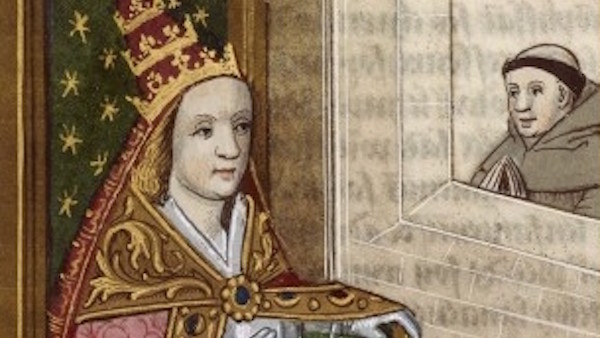
The myth of the infamous Pope Joan lasted in the far-flung corners of Europe for centuries - but it is now widely believed that the female "Holy Mother" never actually reigned during the 9th Century. Supposedly Joan was a pious and talented woman who disguised herself as a man named John Anglicus and, due to her undoubted abilities, rose quickly through the Catholic Church and was eventually elected to the papacy. Then, as the legend goes, Joan gave birth while riding on horseback and died shortly afterwards - either through natural causes or due to murder.
The Vatican were apparently so appalled by this episode that they deleted her existence from papal records and crafted a ritual that would mean only males could rise to the position of Pope. Statues and busts of Joan were even erected - including one in Siena Cathedral - and she was mentioned in numerous medieval works, although some scholars now claim she was a satirical figure used to represent Pope John XI. This may or may not be true - but what is known is that Joan's existence was not clarified until Pope Clement VIII officially denied the story in 1601. Things are never straightforward with the papacy, are they?
3. Alan Smithee

The second director to appear on the list, Alan Smithee has been involved in the creation of at least 91 films - yet he has never actually existed as a person himself. Instead, Alan (or Allen) Smithee was the official pseudonym adopted by film directors who wished to disown their own work between 1968 and 2000.
Smithee's first "direction" was Death of a Gunfighter (actually Don Siegel) and, although officially dropped by the Director's Guild of America in 2000, he has still claimed at least 20 film credits since as a kind of tribute. When a director did choose to use "Alan Smithee" instead of his own name during its official days, they were required by guild rules not to discuss the circumstances behind this or ever to acknowledge they were the actual person behind the film.
An Alan Smithee Film: Burn Hollywood Burn drew unwanted attention to the fake director, and so the Director's Guild dropped the official use of the pseudonym as a result. Despite this, historically Smithee has still been responsible for such "classics" as City in Fear, River Made to Drown In and The Birds II: Land's End. Undoubted masterpieces, that's for sure...
2. Saint Christopher
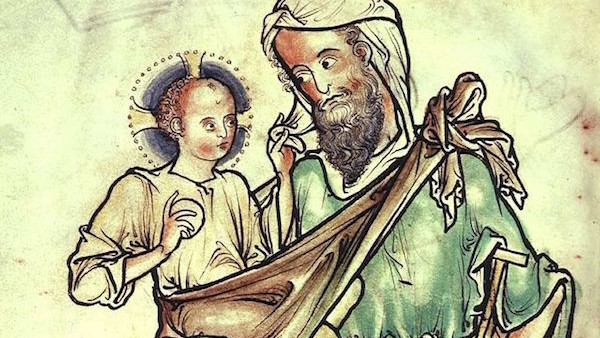
Saint Christopher is such a venerated Roman Catholic, Eastern Orthodox, Lutheran, Oriental Orthodox and Anglican figure that he is often commemorated on necklaces and bracelets - yet the 3rd-Century martyr is probably fictional. Supposedly killed by Roman Emperor Decius in 251 AD or Emperor Maximinus II Dacian in 310 AD - yeah, it's already sounding a shaky story at best, isn't it? - Christopher is remembered as the patron saint of travellers.
"Christopher" - literally meaning "Christ-bearer" - is believed to have carried a child, who was unknown to him, across a great river before the small person spoke to him and told him he was Jesus. This is likely to be based on a Greek myth, though, and St Christopher probably never existed - or could in fact just be an alternative name used for Saint Menas.
The Roman Catholic Church have even removed the official St Christopher Day from their calendar, although his feast is often still observed by some followers of the faith.
1. Prester John
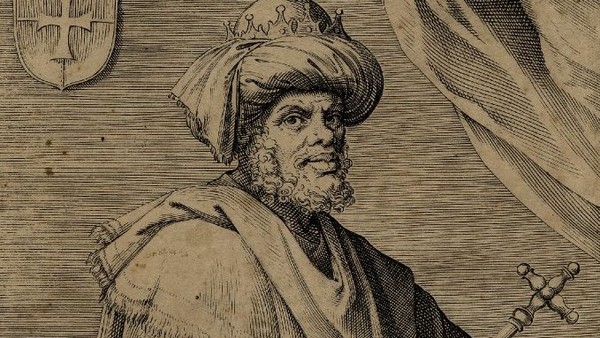
A legendary Christian King who ruled the Orient between the 12th and 17th Centuries, Europeans believed in the existence of Prester John for more than 500 years... Letters were forged to prove the existence of this Oriental King who supposedly ruled over parts of India (or latterly Ethiopia, on an entirely different continent...) - and an area which contained the "Fountain of Youth", which if bathed in would restore a person to a youthful state.
Despite the complete lack of evidence to prove the existence of a Christian monarch named Prester John, Europeans completely bought the story of the mythical king - and Christopher Columbus cited this as one of the reasons he decided to pursue a life of exploration and discovery. Prester John was supposedly a descendant of the Three Magi - or three Biblical Kings - and his realm was said to contain the Gates of Alexander (a legendary barrier to keep the barbarians out to the north) and border the Earthly Paradise (the Garden of Eden).
Among the treasures he was also said to possess was a mirror through which every province in his kingdom could be seen. And people actually believed this for 500 years - just plain bizarre.