10 Fascinating Historical Artefacts (That Weren't Real)
Is this a blagger I see before me?

History is littered with documents, objects and places with the potential to shed light on the murky corners of the past. When a new one is discovered, observers flock to see what it can tell us and historians wipe tears of frustration on tweedy sleeves as they try to rewrite everything they thought they knew.
History is also littered with people who really want something to be true, whether the facts support it or not. Some of those desperate souls are taken in by forgers who gleefully foist upon them the fabricated artifacts they desire. Sometimes they manufacture such forgeries themselves, thinking that if other people believe them they will magically become right.
And finally, fiction and myth can become confused with reality, leading presumably sane people to speculate endlessly or even go in search of things that were never claimed to be real in the first place.
Some fakes or fictions were exposed as such early on, but some have continued to be massively influential, often long after they have been proven false. Nonexistent historical artifacts teach us not only about the human capacity to deceive, but about the human willingness to believe.
10. The Dropa Stones

The Dropa stones, uncovered in Tibet, consisted of more than 700 stone discs inscribed with spiral patterns of tiny, dense hieroglyphs. Scholar Tsum Um Nui translated the hieroglyphs and wrote down their startling story of the extraterrestrial Dropa tribe, who landed in spaceships and came into conflict with local tribes.
The fact we're not all bowing down to our benevolent Dropa overlords has probably spoiled the outcome of all this, which is that the Dropa stones weren't real. They weren't even fakes - there are no physical stones anywhere. All the Chinese museums and universities attested to have stored them have no record of them and they have never been exhibited anywhere.
Russian scientist W. Zaitsev tested them in 1968 alongside Tsum Um Nui, except neither Zaitsev nor Tsum Um Nui seem to have actually existed let alone conducted experiments on stones that didn't exist either. 'Tsum Um Nui' isn't even a Chinese name and seems as made up as everything else.
The Dropa Stones belong to a rare category of historical fakes that didn't even falsify a physical artifact. The fraud, which seems to have been invented for a German vegetarianism and new age publication in 1962, exists purely in the minds of the inventors, with any potential evidence (in)conveniently lost or destroyed.
9. Protocols Of The Elders Of Zion
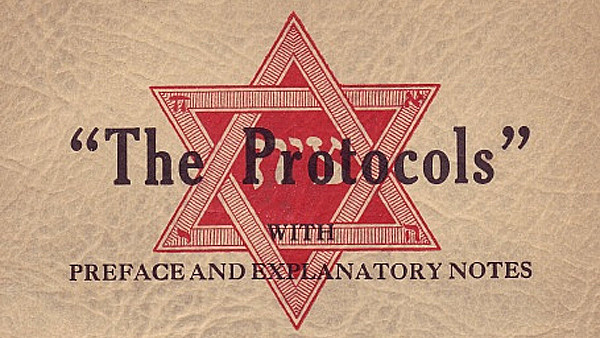
The Protocols of the Elders of Zion was a fake anti-Semitic document that turned up in Russia at the start of the 20th Century, which by a stunning coincidence was just before a series of pogroms displaced huge numbers of Russian Jews.
The document purported to be a plan by a Jewish cabal to take over the world, and was either completely made up or cobbled together from similarly bigoted diatribes from previous works.
The Protocols are an example of how even an obvious fake can find adherents as long as it tells them something they want to hear. The document has turned up again and again, being distributed by notable anti-Semite Henry Ford, being taught as fact in schools during the Third Reich, and even showing up as justification for terrorism and hate crime today in the hands of Hamas, right wing extremists and others.
All this is in spite of the Protocols being proven an obvious and not even very good fake in the 1920s.
8. The Salamander Letter
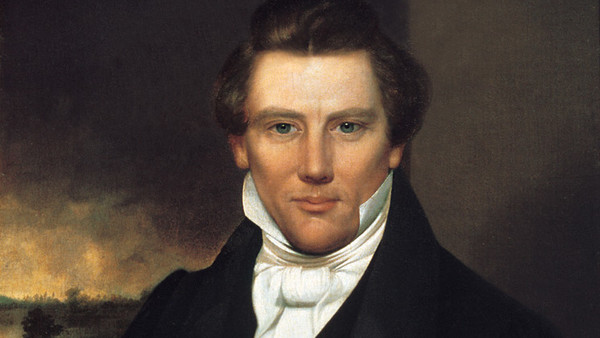
In the early 1980s, the Church of the Latter Day Saints, also known as the Mormon Church, acquired a letter that cast a stunning new light on the story of its founding.
According to this document, Joseph Smith, who received the 'golden plates' holding the writings on which the church was founded, got them from a magical 'white salamander' and not the more conventional and PR-friendly angel as existing versions of the story had maintained.
The 'Salamander Letter' was poised to turn the LDS on its head. It was part of a huge cache of early Smith-related documents sold to the church by a rare book dealer named Mark Hofmann.
The sheer number of documents originating with Hofmann should probably have rung some alarm bells. When they didn't, a couple of letter bombs did the job, which killed a document collector who was looking into Hofmann's shenanigans along with an innocent woman targeted solely to cloud the motive.
Hofmann almost killed himself with another bomb, was arrested and exposed, and the Salamander Letter ceased to be a historical document and became a footnote in one of America's strangest murder cases.
7. The Hitler Diaries

Adolf Hitler (né Shicklgruber) continues to exert a creepy influence over a darkly fascinated public, which means idiots will pay huge amounts of money for anything associated with the insecure Austrian art school dropout.
One of the people selling such Nazi memorabilia was a West German chancer named Konrad Kujau, and Konrad was on the lookout for a big score. Perhaps purely to see if he could get away with it, he wrote sixty volumes of diaries allegedly by Hitler's own hand, and managed to sell it to the German magazine Stern for the equivalent of almost £2.5 million.
Unfortunately, everyone at Stern was too busy revelling in their scoop of the century to actually check if the diaries were real, or at least weren't blatant fakes.
Their enthusiasm was quickly revealed to be no more than wishful thinking when the Diaries were tested and shown to be such crude forgeries Kujau might as well have written them with a Biro, and everyone involved ended up looking like a Nazi-obsessed imbecile.
6. Vortigern And Rowena
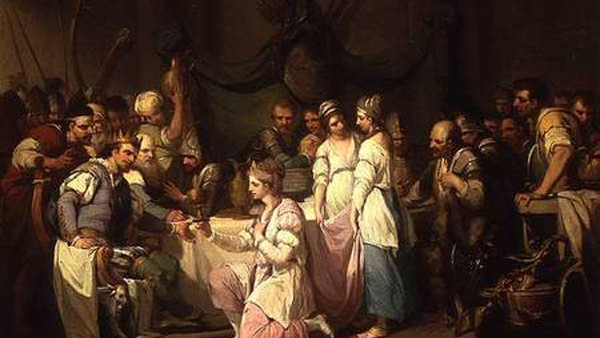
You'd think we'd have a pretty good hold on everything William Shakespeare wrote, and you'd be right, but that didn't stop 18th Century forger William Henry Ireland from claiming he'd found a brand new play by Shaky himself.
His story was that he had received a bunch of documents from a wooden chest found by his friend that no one had met, including letters from Shakespeare to his wife Anne Hathaway (no, not that one).
Obviously one of these documents had to be a brand new Shakespeare play, which Ireland had premiered in 1796. The first problem with 'Vortigern and Rowena' was that it sucked like Jupiter's Hoover, partly because the actors knew it was a fake and played the whole thing for laughs, but mainly because William Henry Ireland couldn't write a traffic ticket.
The performance only lasted one night, which was just as well as fights broke out at the end of it. The whole thing was such an appalling farce it ended up being at least as funny as one of Shakespeare's actual comedies.
5. The Allen Papers
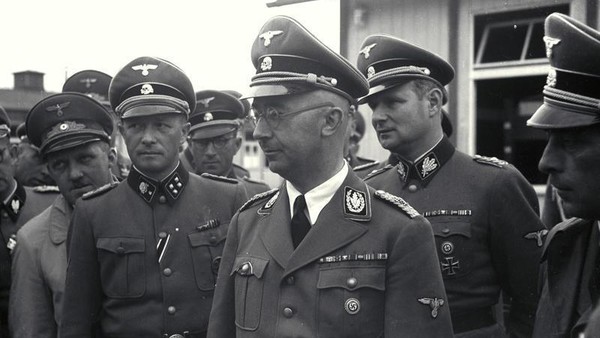
Every now and again, previously secret files will be declassified and cast an intriguing and often shocking light on the covert activities of yesteryear. Historian Martin Allen released a series of books, starting in in 2002, describing a slew of such revelations concerning the Royal Family and their relationship with the Nazis before and during the Second World War.
Among the facts revealed were the Duke of Windsor's personal correspondence with Hitler, British spies using the Royals to plant misinformation among the Germans, and most shockingly, Winston Churchill ordering the assassination of Heinrich Himmler at the end of the war instead of Himmler committing suicide as was believed.
Except they weren't, because they were less 'facts' and more 'things Martin Allen made up'.
He had planted the faked documents he used as source material in the National Archives over the course of a few years, apparently unaware he was the only person to have taken out those files and hence was the only possible suspect for a total of 29 forgeries.
4. The Donation Of Constantine

From the 8th-13th Centuries, the Papacy really wanted to be as important as possible and a succession of Popes sought to become not just funny-hatted religious leaders, but temporal rulers of the Western world.
Fortunately they had a document that said they owned said Western world, courtesy of the Emperor Constantine. Connie had converted to Christianity on the battlefield in the 4th Century AD and according to the Donation of Constantine, he gave the whole Western Roman Empire to then-pope Sylvester I in 315.
The Donation of Constantine was used to argue why the Papacy should be even more powerful than it was, right up until the point it was exposed as definitely not in any way real in 1440. It was probably made in the 8th century at a monastery, to help Pope Stephen II bargain with the unfortunately named Frankish nobleman Pepin the Short.
The Catholic church quietly stopped mentioning the whole Constantine thing and concentrated on more pressing matters, like Protestantism suddenly existing.
3. Atlantis
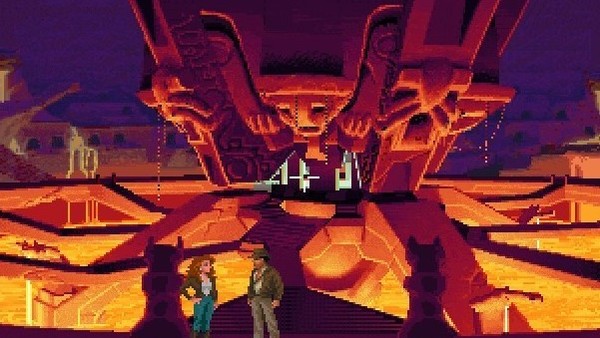
The Ancient Greek Philosopher Plato loved being right more than zombies love brains, so after describing his perfect state (which, coincidentally, he should rule), he went on to describe how this state was so awesome it would totally kick all the other states' asses. His example was a made up country he called 'Atlantis', which Plato's state obviously battered into submission like Hulk Hogan squashing a jobber.
From these obviously fictional beginnings emerged the myth of Atlantis which conspiracy theorists and history deniers have constantly claimed was real, even though Plato never said it was.
The psuedohistorical Atlantis has been populated by the forerunners of the Mayans and Aztecs, perfect Aryans, ancient super-technology and just about everything else that obviously doesn't exist and needs a similarly nonexistent place to put it.
Enthusiastic debate has raged over the centuries about where Atlantis was, from the traditional 'middle of the Atlantic' the North Sea, and the Mediterranean Ocean. This is in spite of the fact that Plato was very clear about where it was - nowhere, because he made it up.
2. El Dorado
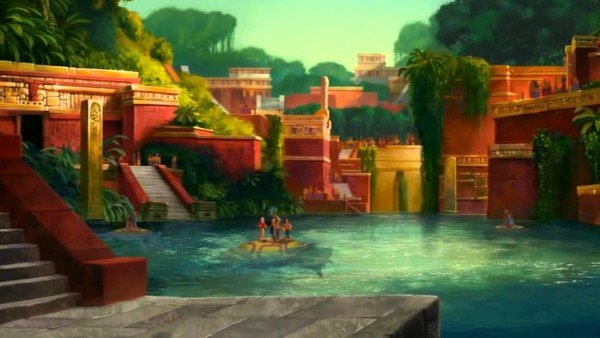
'El Dorado' either meant 'Golden Dude' or 'City of Gold', and the confusion between the two should have been enough of a warning that there might not have been a real one of whatever it was supposed to be. But the Spanish Conquistadors weren't hearing any of that. They just wanted that sweet, sweet gold.
In the 1500s the Spanish Empire was rife with rumours of El Dorado, whose description ranged from a mythical king who covered himself in gold dust to a fabulously wealthy city hidden somewhere extremely inconvenient.
A band of German conquistators all died while wandering around South America looking for it in the 1530s. Subsequently huge numbers of Spanish treasure hunters mapped big chunks of the continent hunting for gold and killing off the natives. Expeditions to find El Dorado, including a couple led by Sir Walter Raleigh, were all unsuccessful, but they just kept coming.
Lakes were drained, villages were wiped out, patrons were bankrupted and a whole mess of people died not only looking for something that wasn't there, but without really knowing what that something was supposed to be in the first place.
1. Piltdown Man
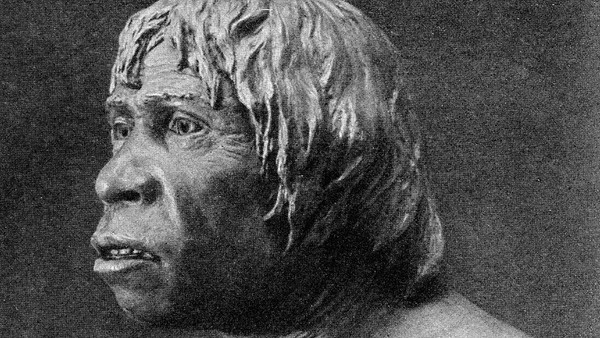
In 1912, an amateur archaeologist named Charles Dawson uncovered fossilised human remains near the village of Piltdown in England.
Except he didn't - they were artificially stained orangutan bones - but Dawson didn't know that and neither did anybody else until 1949 when the Natural History Museum used new dating techniques to work out there was no way they could represent the missing link they were claimed to be.
No one knows who the forger was, not that there is any shortage of likely culprits. A more pressing question might be why anyone would want to undertake such an audacious hoax, and one which could so easily be proven fake.
It was potentially intended to make the scientific community think the 'missing link' was to be found in Europe, specifically Britain, to humiliate the scientific establishment, or just to see if the forger could get away with it.