10 Incredible Ways People Faced Up To Their Own Death
Last wish before your execution? To command your own firing squad.

"How would you react if faced with almost certain death?" It is a question that every person avoids trying to think about, but from time to time they can't.
Most people will never have to actually face up to death because the likelihood is they will die when they least expect it. But for military personnel, for pilots of aircraft and for crewmen on a ship, this is a question that they must think about and face up to on an almost daily basis. The very nature of each of those jobs brings their own mortality into constant doubt.
History has provided numerous examples of humans who have cowered in the face of death - almost certainly the most natural and common reaction - yet there have also been those who have dealt with their own mortality head on.
From captains and commanders honourably going down with their own vessels in a chivalric manner, to soldiers facing up to their enemies and fighting to the death during battle, certain figures have performed a valiant last stand when forced to confront their own mortality.
Here are 10 examples of the most honourable and most courageous ways in which people have faced up to death throughout human history.
10. Sempronius Densus (69 AD)... Died Valiantly Fighting Alone, Protecting Emperor Galba
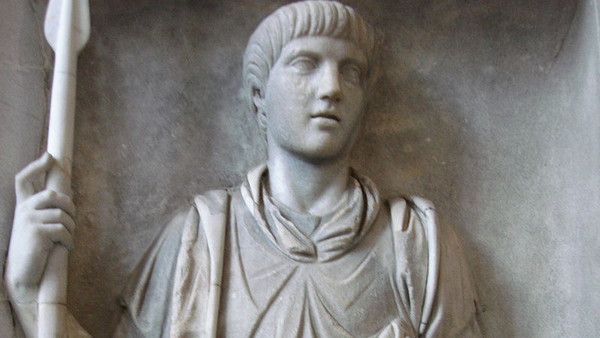
Few men have ever shown such loyalty and courage when faced with impending death - but Roman Centurion Sempronius Densus was determined to save his own soldiers before he perished.
A centurion in the Praetorian Guard, Sempronius was the personal bodyguard to Emperor Galba's deputy, Piso Licinianus. Piso had been an unexpected choice to make deputy, however, and his rival for the role - Marcus Otho - instead conspired to assassinate the Emperor in order to seize power in 69 AD.
When Galba and Piso were being paraded down the street, a large group under Otho's orders attacked the pair - only for Sempronius to singlehandedly stand in their way. While his colleagues either fled or assisted in the murders, Sempronius threw himself in the way of Piso and allowed him to find a safe hiding place as the centurion fought off the group of assassins.
Sempronius fought off the assassins with just a single sword for several minutes before he was felled - and the group then murdered both Galba and Piso. Yet the centurion's brave and honourable stand was immortalised in many contemporary Roman works.
9. William Lewis Herndon (1857)... The Captain Who Saved 152 Women And Children Before Insisting On Going Down With His Own Ship
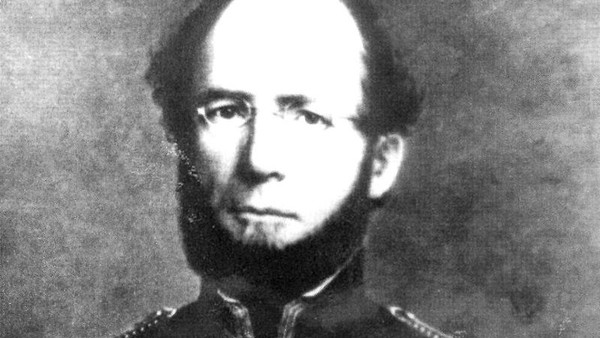
"The captain goes down with his ship" - that is a Navy officer's motto, and one which has been about since 1852 and the sinking of HMS Birkenhead. Commander William Lewis Herndon epitomises that motto.
While he was commanding the SS Central America in September 1857, a three-day hurricane struck the commercial ship off the coast of North Carolina. During the fierce storm, the ship lost power but Herndon did not panic - instead he calmly arranged for 152 women and children to be rescued.
The ship was carrying 15 tons of gold and 575 passengers in all and was sinking fast due to the fact water was bursting through several holes in the hull. Recognising the ship was doomed, Herndon helped 152 women and children into lifeboats and on to the West Indian brig Marine - even giving his watch to one survivor, asking her to send it on to his wife as he would not leave the ship unless everyone else got off.
Unfortunately 423 people died in all, and witness accounts claim Herndon stood by the wheelhouse in full naval uniform with his hand on the rail, hat in the other, with his head bowed in prayer as the ship lurched forward and into the water.
So inspiring were Herndon's actions that towns in Virginia and Pennsylvania have been named after him, while two American ships are now called USS Herndon. Also, his brothers erected the Herndon Monument in his honour at the US Naval Academy.
8. Dian Wei (197 AD)... Killed Dozens Of Men With His Bare Hands In Order To Protect His Leader
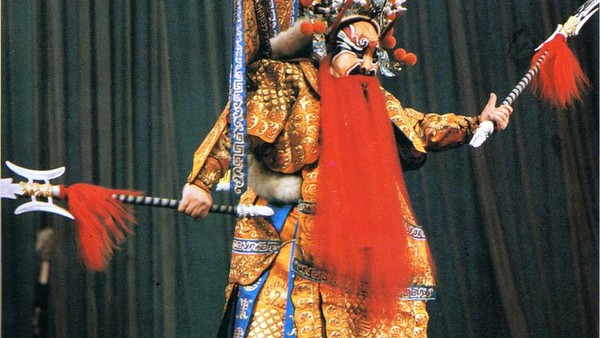
Dian Wei was one of the most feared military officers in the late Eastern Han dynasty - renowned for his strength due to the fact he carried around two huge "jis" (halberd-like weapons) in order to kill his enemies.
Serving under the warlord Cao Cao, Wei was killed during the Battle of Wancheng as he heroically covered his leader's escape from Zhang Xiu's forces. The rebellion, led by Xiu, forced Cao Cao into a quick retreat - with Wei and just 12 men bravely standing in the way of the enemy soldiers.
Wei broke more than 10 enemy spears with just one swing of his ji, but his 12 soldiers were quickly killed - leaving him all alone to face the onslaught. Undeterred, Wei grabbed and killed two of Xiu's men with his bare hands - before rushing into the heart of the enemy soldiers and attacking them.
He suffered mortal wounds but continued fighting and swearing until his death - with Xiu's soldiers only prepared to decapitate him once they could be certain he had perished. Cao Cao ordered his men to recovered Wei's body and the leader personally honoured his bodyguard's grave every time he walked past it in the future.
7. Benjamin Guggenheim (1912)... Dressed In His Best Suit, Smoked Cigars And Drank Brandy As The Titanic Sank
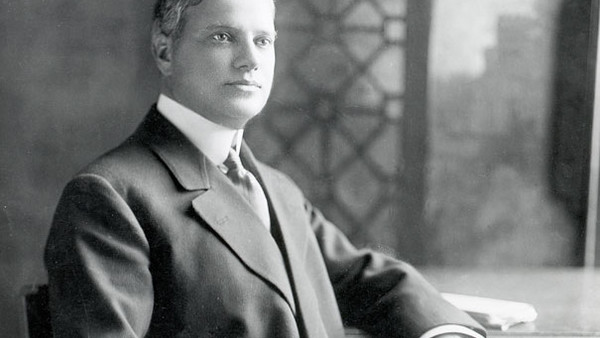
Not so much a brave act - more just a cool way of dying. Yes, American business tycoon Benjamin Guggenheim went down with the Titanic - but he made sure he did so in style.
After ensuring that his mistress, French singer Leontine Aubart, and her maid Emma Sagesser had been placed on Lifeboat No 9 of the ship, Guggenheim quickly realised he would be saved even though he had whispered to the pair: "We will soon see each other again. It's just a repair. Tomorrow the Titanic will go again."
Returning to his cabin with his valet, Victor Giglio, the pair changed into their evening wear, walked up the Titanic's Grand Staircase and closed the door behind them, with Guggenheim remarking: "We've dressed up in our best and are prepared to go down like gentlemen." Interestingly, he also asked a survivor to pass this message on to his wife: "Tell my wife, if it should happen that my secretary and I both go down, tell her I played the game out straight to the end. No woman shall be left aboard this ship because Ben Guggenheim was a coward."
Retreating to the foyer of the Grand Staircase, Guggenheim and Giglio smoked expensive cigars and sipped brandy as the ship went down. Both drowned in the accident in 1912.
Guggenheim's final act was to write this message: "If anything should happen to me, tell my wife I've done my best in doing my duty." What a way to go.
6. Lieutenant Frank Luke (1918)... Shot Down Three German Zeppelins Singlehandedly Before Crash-Landing And Continuing The Onslaught With A Hand Pistol
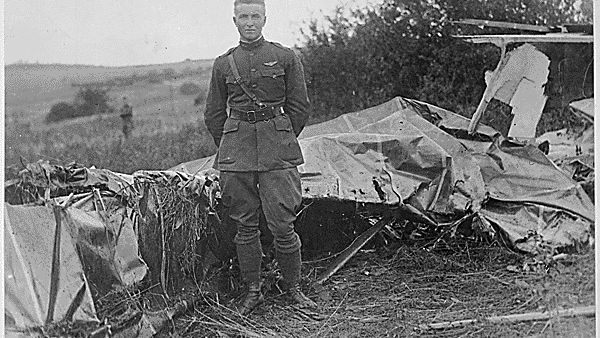
United States Army Air Service Lieutenant Frank Luke was an extremely adept fighter, shooting down enemy Zeppelins and planes for much of World War I.
However, he met his untimely death while fighting the enemy above Murvaux in France in 1918 - after finding himself completely alone, deep behind German lines.
Instead of attempting to turn back though, Luke decided to try and down as many German aircraft and balloons as he could - so he flew his plane low, just above the tree tops, and destroyed two enemy Zeppelins.
At this point, a squadron of eight German fighter planes attacked him from behind and pursued him across the countryside - but Luke then turned around and headed straight for the third and final Zeppelin, intent on grounding it too.
Shot down after taking out six further enemy fighters, Luke crash-landed in a field but escaped from the wreckage and continued to shoot at the Germans with merely a hand pistol rather than surrendering. As a result of his fearlessness, Luke became the first USAS member to receive the Medal of Honor.
That is one brave and patriotic human being right there.
5. King Agis III (331 BC)... Ordered His Own Spartan Soldiers To Escape As He Fought Off An Entire Army By Himself

Often we think of monarchs as selfish beings, but King Agis III of Sparta proved he was anything but that by dying in battle in order to save his own men.
With Agis' forces besieging the Spartan city of Megalopolis, a Macedonian battalion led by Antipater came to rescue the populous - and in the process they inflicted huge losses on the Spartan army. Knowing that defeat and certain death for his entire army was close, Agis attempted to gain time for his surviving soldiers to withdraw by bravely fighting until the bitter end.
The chronicler Diodorus recollected Agis' death as follows:
"He had fought gloriously and fell with many frontal wounds. As he was being carried by his soldiers back to Sparta, he found himself surrounded by the enemy.Quite the noble act from a King - dying in order to save his own men."Despairing of his own life, he ordered the rest to make their escape with all speed and to save themselves for the service of their country, but he himself armed and rising to his knees defended himself, killed some of the enemy and was himself slain by a javelin cast."
4. Michel Ney (1815)... Used His Last Wish To Command His Own Firing Squad To Shoot Him
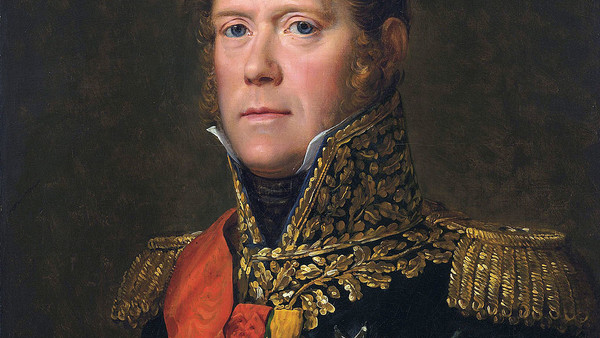
If Napoleon Bonaparte, who is hardly a man renowned for his niceties, labels you "Le Brave des Braves" ("the bravest of the brave") then you must be doing something right. And that is exactly how he referred to his military commander Marshal Michel Ney.
A man who had fought bravely during the Napoleonic wars, Ney was arrested and captured when his leader was defeated, dethroned and captured in 1815. Ney was tried for treason and refused to stand trial in a Prussian court, instead being found guilty in Paris in December 1815.
Sentenced to death by firing squad, Ney was granted one last wish - which he used to ask for control over his own execution.
Refusing to wear a blindfold, as is customary, Ney then reportedly told the firing squad:
"Soldiers, when I give the command to fire, fire straight at my heart."Wait for my order. It will be my last to you.
"I protest against my condemnation. I have fought a hundred battles for France, and not one against her... Soldiers, fire!"
Ney intended to send a message to many of Napoleon's other marshals who had decided to abandon their former leader's legacy in the manner of his death. He was a Napoleonic servant until the very end.
3. Thomas A Baker (1944)... Refused To Put His Comrades In Danger And Insisted On Being Left To Die, Before He Killed Eight Japanese Soldiers With His Last Bullets
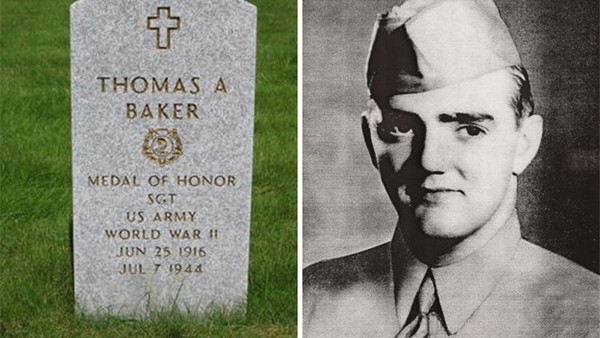
Another recipient of the US Medal of Honor, US Sergeant Thomas A Baker served in the Far East during the Second World War.
While in Saipan on the Mariana Islands in July 1944, Baker aimed to protect his whole company - who were held up by machine-gun fire - by voluntarily running 100 yards behind enemy lines with a bazooka. Even though he was shot several times, Baker ensured he took out the strong point of the enemy's machine-gun line, allowing his fellow soldiers to advance.
Just a few days later, Baker's group were attacked from three sides by close to 5,000 Japanese soldiers, and the sergeant was gravely wounded. He refused to withdraw, however, instead insisting on remaining with his fellow soldiers until his ammunition ran out.
Another injured soldier carried him forward 50 yards before Baker refused to be moved any further, insisting he would rather be left to die than risk the lives of his friends. At his request, he was propped up against a small tree and given a pistol with just eight rounds of ammunition remaining.
Baker was last seen, still propped up against the tree, with eight dead Japanese soldiers around him. Even in his dying moments, Baker's shot remained impeccable.
2. The Giant Norse Axeman At Stamford Bridge (1066)... Singlehandedly Held Back The Entire English Army, Killing At Least 40
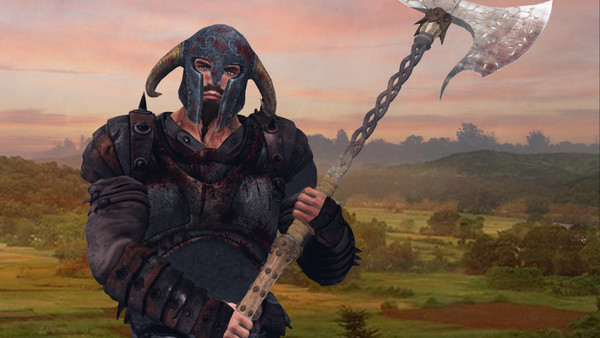
The year 1066 proved to be a pivotal one for British history - yet the Battle of Hastings was preceded by another huge battle, that of Stamford Bridge.
English King Harold Godwinson rode up to East Yorkshire in order to see off the threat from his brother, Tostig, and Viking King Harald Hardrada - and a huge battle ensured at Stamford Bridge.
Although the British eventually claimed victory, the battle went down in folklore due to the actions of one giant Norse axeman in particular. Likely armed with a Dane Axe, the huge warrior stood in the middle of the bridge crossing the River Derwent and gave his fellow Vikings time to retreat as he blocked the English army's passage.
The Anglo-Saxon Chronicle claims the huge warrior wielded his axe with precision and ferocity, cutting down at least 40 Englishmen - and that he was only felled once an enemy soldier sneakily crouched underneath the bridge and thrust his spear through the gaps, mortally wounding the axeman from below.
In fact, the axeman had held up the entire English army for such an extended period that the Norse troops were able to form a defensive shieldwall on the bank behind the bridge and await an enemy attack. Talk about a one-man army...
1. Gurmukh Singh (1897)... Was Immortalised By His Enemy After Valiantly Killing 20 Men Before Perishing At Saragarhi
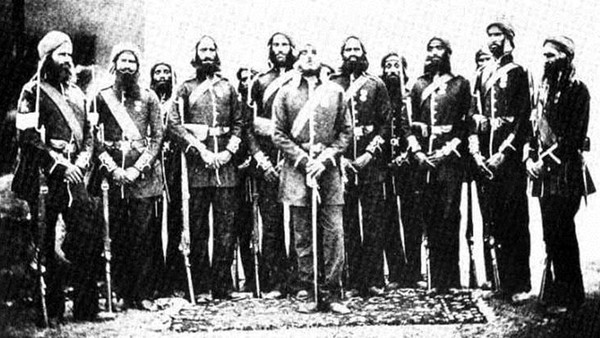
While serving in the Sikh regiment in the British Army in 1897, Gurmukh effectively laughed in the face of death and confronted it head on at the Battle of Saragarhi.
Stranded with 20 of his fellow soldiers and surrounded by a huge Afghan force in northern India, Singh found himself outnumbered by 500 to one. Having picked off many Afghans with simply a bog-standard rifle, Singh's time appeared numbered once his fellow soldiers were killed.
Frustrated and determined not to be captured, Singh jumped out of the tower he was shooting from - which had been set on fire by the Afghanis - and yelled the famous Sikh battle cry of "Bole So Nihal, Sat Sri Akal" ("whoever utters shall be fulfilled, eternal of the Holy Timeless Lord").
Facing an inevitable death, Singh ran through head-first into the Afghan forces and killed as many as 20 men before he was eventually shot and mortally wounded. So impressive was Singh's stand that it was actually the Afghans who recorded his heroic final moments for everyone to hear about.
Gaining the respect of your enemies in death is certainly no mean feat, that's for sure.