10 Incredible What-Ifs That Could Have Changed The Course Of History
What if Hitler had died on the battlefields of World War I?

"What ifs" are prevalent in all walks of life. Music fans may inquire: "What if Jimi Hendrix had lived for longer, would he have produced even more phenomenal records?" Lib. Dem. members may query: "What if we hadn't made a coalition with the Torys, would we still have relevance today?" And football fans might ask: "What if England weren't utterly hopeless, could they have managed to prevail over a country with a population totally fewer than Wigan?
There will never be a definitive answer to any of these questions, but that is the beauty of "what ifs"; they can be applied to just about every single scenario, and most particularly with key historical events. It does not take a genius to work out that if the odd decision had been made differently here or there, or if certain people had not been elevated to positions of power, then history could have taken a very different course.
For example, what if the USA had seen two Presidents assassinated on 22nd November, 1963? What if Emperor Napoleon Bonaparte had invaded the British colony of Australia? And what if Adolf Hitler had died on the battlefields of World War I?
Read on to see 10 incredible examples from history where the course of the future could have been altered significantly, as we ask: What if...?
10. ...Lyndon B. Johnson Had Been Assassinated On The Same Day As JFK?
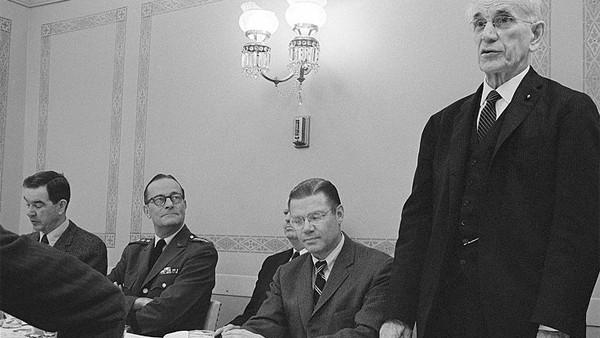
President John F Kennedy's assassination in Dallas on 22nd November, 1963, shook the world - but the fallout from it would have been far greater had his successor, Lyndon B Johnson, been killed on the same day.
Just hours after LBJ had assumed Presidential office after being sworn in on Air Force Once in the immediate aftermath of JFK's assassination, the new President of the United States was almost shot too - and by a Secret Service agent, no less. With the Secret Service on high alert following JFK's assassination, one particular agent named Gerald Blaine was patrolling LBJ's estate in Washington that evening when, out of the corner of his eye, he spotted a figure walking around the corner. Blaine readied his machine gun and put his finger on the trigger, ready to fire - until he finally noticed it was a visibly-scared President Johnson, who quickly rushed back into the house.
If Johnson had also been assassinated on the same day, then the Speaker of the House is constitutionally the next in line for the American presidency - and in November 1963 that was 71-year-old Democrat John William McCormack. It's fair to say that, if McCormack had been elevated to the Oval Office, the USA's future - having just endured two presidential assassinations in a single day - would have been very, very different.
9. ...William The Conqueror Had Invaded England Two Months Earlier?
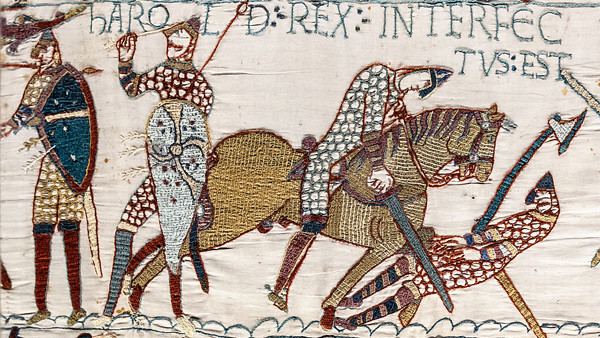
On 14th October, 1066, William the Conqueror led a Norman army into England and defeated King Harold Godwinson at the Battle of Hastings - the last time the British shores were successfully breached and the monarch overthrown. Yet things could quite so easily have been so, so different.
The soon-to-be King William I had been planning his invasion of England for nine months, and originally intended to set sail across the Channel by about 12th August, 1066 - only for strong winds and wet weather to delay him. Now it is the timings that are particularly important here, because if William the Conqueror had invaded during August then King Harold would have had a far stronger and fresher army at his disposal than he did two months later.
In fact, when the Normans did eventually meet Anglo-Saxon forces at Hastings on 14th October, the latter army had only just fought off a Viking invasion from Harold's exiled brother Tostig and King Harald Hardrada of Norway in the weeks previously. Harold had lost a great number of men at both the Battle of Fulford and the Battle of Stamford Bridge, meaning he had depleted forces with which to defend against William the Conqueror's invasion. Instead of being able to call upon the 25,000 men as he could have done earlier - with many having died or been sent home due to their service the month before - Harold had only 10,000 soldiers to face a Norman invasion totalling 13,000.
If the winds had blown differently, then King Harold may have remained on the English throne for a little while longer - and William the Conqueror's Norman revolution may never have occurred.
8. ...The British And French Had Warred Over Sudan?
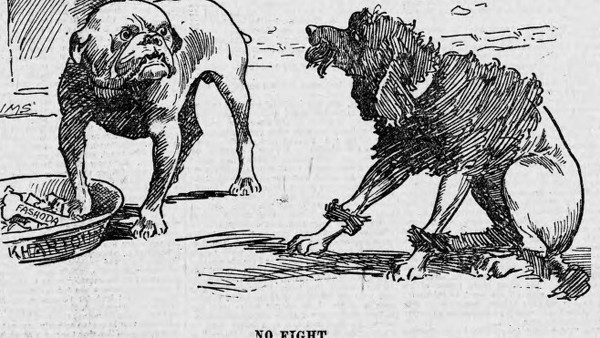
Both the British and French Empires were advancing through Eastern Africa throughout the late-19th Century, and once their paths crossed on the continent, they almost engaged in a huge war during the Fashoda Crisis of 1898.
While Britain controlled much of Eastern Africa, the French sent an expeditionary force (led by Major Jean-Baptiste Marchand) to Fashoda on the White Nile in 1898 in order to prevent their rival empire from having any influence at all over what is now modern-day Sudan. In response, Sir Herbert Kitchener sent a powerful flotilla of British gunboats to head off the French advance.
Newspapers in both France and Britain printed sensationalised stories about how warfare was close - and both attempted to drum up patriotic support. However, the newly-appointed French foreign minister Théophile Delcassé did not believe there was any benefit to going to war with another colonial power over African territory. Under heavy pressure from the foreign minister, and fearing an embarrassing defeat due to the undoubted superiority and size of the British Navy compared to their own maritime forces, the French eventually withdrew humiliated - ensuring Anglo-Egyptian dominance over Eastern Africa.
In the aftermath, the British agreed to recognise France as the dominant force in Morocco, while the former was acknowledged as controlling Egypt. The French did come out of this dispute with one positive though - the realisation that they needed the British and their powerful navy on their side should they become entangled in a war with Germany. And hence, the successful resolution of this dispute without warfare allowed Britain to join the Great War on the side of the French.
7. ...Lincoln Had Been Murdered On Route To His Inauguration?
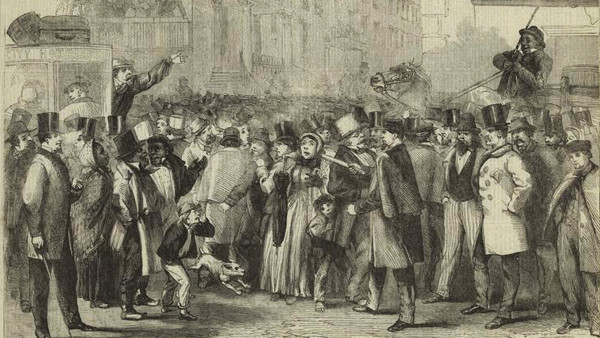
'The Great Emancipator', 'Honest Abe', 'The Liberator' - three nicknames which the 16th President of the United States Abraham Lincoln would never had been given had he been assassinated before he ever assumed the highest office in the land.
Never far from an assassination attempt - he received more than 10,000 death threats during his four years as President - it was the Baltimore Plot of February 1861 that came the closest to killing Lincoln before he ever resided in the White House. The Republican President-Elect was en route to his inauguration - in the immediate aftermath of the Southern states' declaration that they would secede from the Union and form the Confederacy - when a plot was discovered that suggested conspirators were intending to stage a riot as Lincoln's train passed through the city before assassinating him.
Having learned of the plot, Lincoln's travel route was altered at the last minute so that he was secretly transported to Washington, D.C. via several different trains. Lincoln was finally inaugurated on 4th March, 1861 whilst being protected by a standing army in order to prevent him being murdered.
Obviously, Lincoln was eventually assassinated by John Wilkes Booth while he was attending the theatre on 15th April, 1865, but had he been killed while President-Elect then it is extremely likely that the US Civil War would have had a very different outcome - and the emancipation of slaves in America may not have happened until a long time later than it did. Lincoln's four years in office are arguably the most important ever served by a US President as a result.
6. ...The USSR Had Invaded Japan?
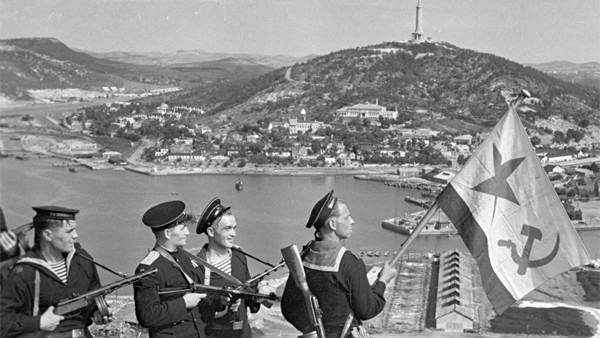
For the longest time after the USA had joined World War II in December 1941, they had been bugging the USSR to assist the fight in the Far East, and likewise the Soviets had regularly pleaded with the Americans and British to open a Second Front in Europe long before D-Day in June 1944. The Russians eventually agreed, but it was not until just a week before the Japanese surrender that the Red Army invaded.
The Soviets and Mongolians invaded the Japanese puppet state of Manchukuo (in north-east China) on 9th August, 1945 - three days after the US dropped an atomic bomb on Hiroshima - and on the same day the Americans decimated Nagasaki with a second nuclear warhead. Although the Red Army's rapid defeat of the Japanese army in Machukuo, Mengjiang, Sakhalin, the Kuril Islands, and northern Korea greatly weakened the Kwantung Army, it was the US atomic bombs that proved decisive in forcing surrender and the eventual peace treaty signing on 2nd September.
The intention of Soviet leader Joseph Stalin was to partition Japan in the same way in which Germany was split between West and East. Stalin planned to secretly invade the northern Japanese island of Hokkaido, and could have insisted on the Soviets keeping control of this area of the nation, with the southern Island going to the Western Powers, as well as Tokyo being partitioned just as Berlin was, if he had done so.
Thankfully, the Japanese surrendered before this could occur and Japan did not become a hotbed of the Cold War like Berlin did. Korea, Vietnam, Cambodia, and Laos were fought over in Asia during the Cold War - imagine if you added Japan into that mix too...
5. ...Charlemagne Had Married Irene Of Athens?
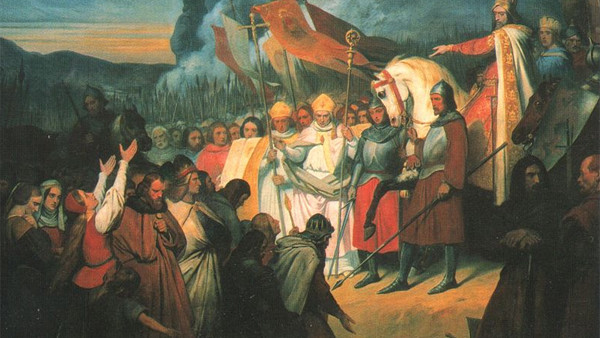
You don't get a name like the 'King of the Franks"'or 'Charles the Great' for nothing - and yet Emperor Charlemagne could have ruled over an even greater portion of Europe had his marriage to Irene the Athenian happened.
Charlemagne united most of Western Europe during the 8th Century, as well as laying the foundations of modern-day France and Germany, having ascended to the Frankish throne in 768 AD before acquiring the Kingdom of Italy in 774 AD, and then becoming the first Roman Emperor in Western Europe to be recognised by a Pope in more than three centuries.
Yet, in 802 AD - two years after Pope Leo III had acknowleded the legitimacy of Charlemagne's claim over that of Irene the Athenian as Emperor of the Roman Empire - he very nearly became married to his former rival. However, Irene, the widowed Empress of the Byzantine Empire, was deposed and exiled to the Greek island of Lesbos by Nikephoros where she died in 803 AD before the marriage could occur.
Irene's death ensured that Charlemagne was unable to unify the Western Roman Empire with the Eastern Roman Empire (Byzantium), therefore preventing him from creating an even larger Carolingian Empire. Charlemagne's empire eventually collapsed when his grandsons divided it into thirds. If there had been a greater number of lands to divide, might his legacy have survived even longer, perhaps?
4. ...Shots Had Been Fired During The Cuban Missile Crisis?
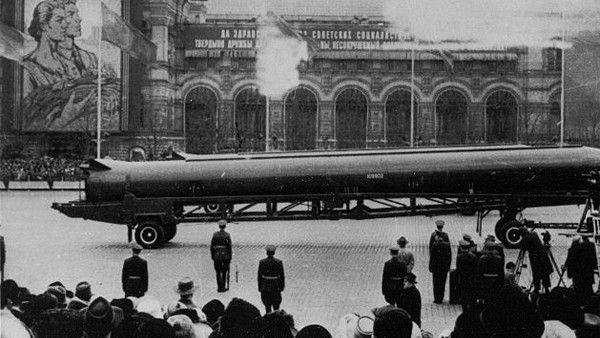
This fact doesn't really need to be hammered home any further, but just in case it wasn't well-known enough, of the many occasions throughout the Cold War when tensions arose and the world almost descended into a nuclear war, at no time did the globe come closer to an atomic apocalypse than during the Cuban Missile Crisis of October 1962.
The 13-day confrontation between the USA and the USSR lasted from 14th October until the 28th October, and arose out of a conflict over the Soviet Union deploying ballistic missiles in Cuba, which is just 90 miles off the coast of Florida. With the USA having embarrassingly failed during the Bay of Pigs invasion of Cuba a year previously, President John F Kennedy wanted to make a point to Soviet leader Nikita Khrushchev that he would not be bullied - but the latter wanted America to withdraw their Jupiter ballistic missiles from Italy and Turkey.
In order to reduce tensions during the US blockade of Cuba, the Soviets agreed to publicly declare that they would dismantle the weapons and return them to the USSR, while privately Kennedy also insisted that all American-built Jupiter MRBMs in Europe would also be destroyed. Although negotiations tried to prevent a nuclear World War III from occurring, if just one American, Soviet, or Cuban soldier had fired upon the other side during the Missile Crisis then it is almost certain that the globe would have descended into conflict.
Nuclear war would likely have completely destroyed the planet - thankfully, it hasn't happen...yet.
3. ...Napoleon Had Invaded Australia?

Admiral Lord Horatio Nelson's dominant and impressive British naval victory over the combined fleets of the French and Spanish forces on 21st October, 1805 at the Battle of Trafalgar not only proved crucial in preventing Emperor Napoleon Bonaparte from threatening the supremacy of the seas, but also in stopping the latter from invading Australia.
Napoleon had already given up hope of invading the British Isles themselves, realising this was folly as he tried to conquer the majority of Europe, but he continued to harbour ambitions of gaining control of the Pacific Ocean and of Australasia. Indeed, in 1802, explorer Nicholas Baudin reported to Napoleon that the colony of Australia could thrive better under their French governance than it was currently under British control - and that an invading force of more than 1,800 soldiers should set sail for the huge island, before acquiring support from Irish prisoners once they arrived in order to achieve this.
However, the loss of 11 ships (10 were captured by Nelson's forces and one was destroyed) during the Battle of Trafalgar off the coast of Spain to Britain's none meant that Napoleon's naval resources were greatly depleted. It is extremely likely that the Battle of Trafalgar directly influenced Napoleon's decision against eventually invading Australia. If he had, then it is likely the Napoleonic Wars would have spread further than just Europe - effectively establishing a global conflict more than 100 years before the start of World War I.
2. ...Aaron Burr Had Established His Own Nation?
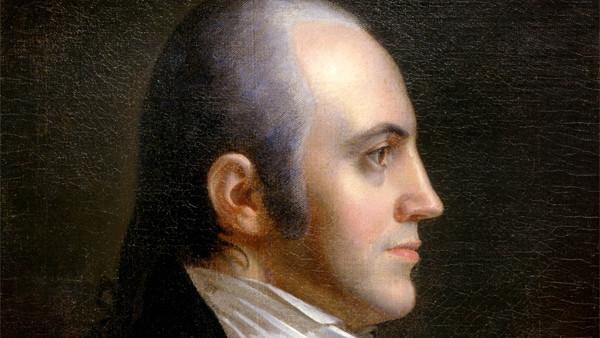
Aaron Burr may be most famous for killing his political rival Alexander Hamilton during an illegal duel in 1804, but the former Vice-President of the United States also contemplated establishing his own country in the early-19th Century.
President Thomas Jefferson, under who Burr served, alleged that Burr plotted with Commander-in-Chief of the US Army at News Orleans and Governor of the Louisiana Territory General James Wilkinson to create a new, independent nation in central or southwestern America - in areas of Louisiana and Mexico which had yet to be conquered by the USA at that time.
Ohio's governor learned of the conspiracy from Jefferson and sent his state's militia to Blennerhasset Island on the Ohio River, where the supposed headquarters of the alleged plotters were based, and had the two men arrested, before the district attorney of Kentucky brought him to trial for treason. At the time, treason (as of Article 3, Section 3 of the US Constitution) could only be permitted if it was admitted in open court, or if two witnesses came forward and, as neither of those things happened, Burr was acquitted.
Imagine though if he had established this supposed rival nation? It would almost certainly have brought the American Civil War forward 50 years, potentially preventing the USA from ever becoming the dominant North American force it became in the succeeding century.
1. ...Hitler Had Died On The Battlefield In World War I?
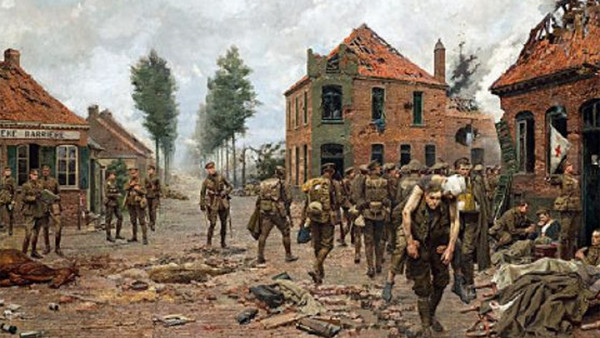
Adolf Hitler brought destruction to the entirety of the planet, killing some 6 million Jewish people during the Holocaust and tens of millions of soldiers, civilians, and PoWs during World War II - but all that could have been so different, if Private Henry Tandey had pulled the trigger on 28th September, 1918.
While the future Führer was serving in the German Army during the Great War, he was wounded near the French village of Marcoing and was left sprawling on the battlefield. At that moment, Private Tandey of the Yorkshire Regiment discovered the 29-year-old German Lance Corporal, but he decided to spare Hitler's life, rather than shoot at him.
Tandy later revealed: "I took aim but couldn't shoot a wounded man... so I let him go." Supposedly, Hitler then nodded his approval at Tandey and ran off. When a photo emerged in British newspapers of Tandey carrying a wounded soldier across the battlefield at Ypres in 1914, Hitler reportedly had a copy of the resultant painting by Italian artist Fortunino Matania made and, while showing the piece to Prime Minister Neville Chamberlain in 1938, said: "That's the man who nearly shot me."
Obviously, right-wing tensions and ultra-nationalist sentiment arose in Germany post-World War I anyway, but without the leadership of Hitler it is difficult to see how the radical Nazi Party could have risen to power and then re-assumed Prussian dominance over Europe. If Hitler had been shot that day, millions upon millions of lives could in theory have been spared.