10 Kids TV Characters Who Were Totally Gay Icons

There goes your childhood!
As adults, we look at children's programming today and silently shake our heads and chuckle to ourselves when we notice that the voice actors, writers, or even animators have carefully added in adult jokes, themes, or innuendos that completely go over the intended audience's heads, giving a subtle wink or nudge to others out there who may be casually watching. This normally wouldn't be a problem until we realise that hindsight is truly 20/20 and we take a look at the programming that was around during our own adolescence. Suddenly, the fabric of our childhood becomes frayed as we realise the adult nature, dirty jokes, or sophomoric adult humor sprinkled throughout popular children's shows from back in the day such as Salute Your Shorts, Rocko's Modern Life, or even Josie & The Pussycats. Whether done on purpose or completely coincidental, some of these subtleties from television characters left an undeniable impression on a contingent of the television audience who would grow up to discover - or already knew - that they were gay. This invariably left the aforementioned character with the legacy of becoming a gay icon. In this article, we list ten characters from television shows aimed at children who became gay icons. Please be advised, being a gay icon does not necessarily mean we feel the character themselves were gay (although, in some instances, that can definitely be up to interpretation as you will soon find out on this countdown).

10. The Gromble (Aaahh!!! Real Monsters)
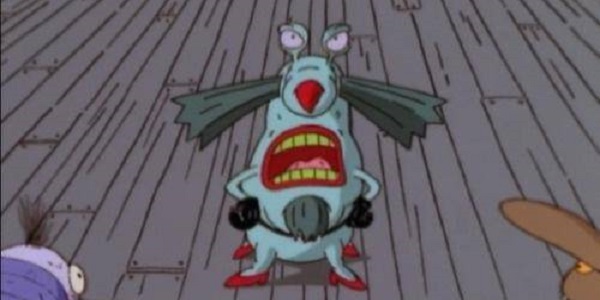
Kicking off the countdown of gay icons in kids' television is none other than the Headmaster of the Monster Academy in Nickelodeon's Aaahh!!! Real Monsters, The Gromble (voiced by Gregg Berger). A hard taskmaster and flamboyant character, The Gromble is exceptionally stylish as he's famous for wearing his signature quartet of red stilettos. Proving that the shoes aren't a mere mutation or part of his monster form, the show - at one point - revealed The Gromble's fully-stocked closet of pumps. A shoe collection that could definitely put Carrie Bradshaw on Sex & The City to shame. The Gromble also bears a striking resemblance to that of Tim Curry's legendary character from The Rocky Horror Picture Show, Dr. Frank-N-Furter. What's really interesting is the fact that The Gromble's assistant, Zimbo, is actually voiced by Curry.

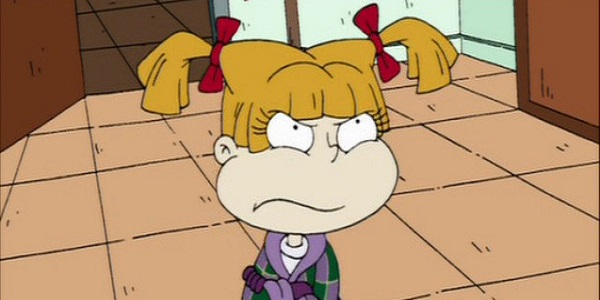
9. Angelica Pickles (Rugrats)

Cheryl Chase voiced the character TV Guide listed (in 2002) #7 on a list of Top 50 Greatest Cartoon Characters of All Time, the spoiled and crafty Angelica Pickles of Rugrats fame. If Melrose Place had been turned into a cartoon about toddlers, Heather Locklear's character definitely would have been the character of Angelica; a conniving, scheming, and egotistical blonde with a wild meanstreak. To put it bluntly, Angelica was a diva long before the word was adopted as a positive term among gay circles and a princess long before Toddlers & Tiaras came into existence. While she may not have been the most positive of role models - or icons - Angelica, deep down, proved to have a good heart (often coming to the aid of the other characters if they were being bullied by others) and had an especially quirky relationship with her doll, the rather ratchet-looking Cynthia (who very well could have made the list herself given her high visibility on the show).

8. Kimberly - The Pink Power Ranger (Mighty Morphin' Power Rangers)
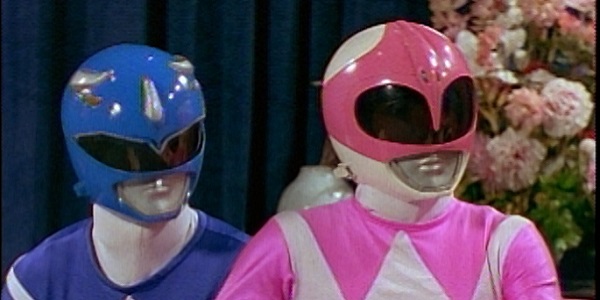
Despite David Yost (Billy Cranston/The Blue Ranger), being a confirmed homosexual, gays have always flocked to Amy Jo Johnson's mighty morphin' maven. Johnson is known for her roles on the WB hit Felicity and the Disney Channel original movie Susie Q., but no role on her demo reel has had more of an impact on gays - or the public in general - than her role as Kimberly Hart, the original Pink Power Ranger (everyone who has followed in her footsteps has been irredeemably basic). Beautiful and tremendously graceful, Kimberly was the Power Ranger all the straight boys and lesbians wanted to date, and the Power Ranger that most gay men wanted to be. After all, the character was romantically-linked for a while to the hunky Tommy Oliver, who first appeared as the villainous Green Ranger before becoming the leading White Ranger. Kimberly was also the group's stand-out fashionista; in fact, she was the only one who was allowed to wear a skirt with her uniform while fellow female Rangers Trini Kwan and later Aisha Campbell were left sporting regular tights.

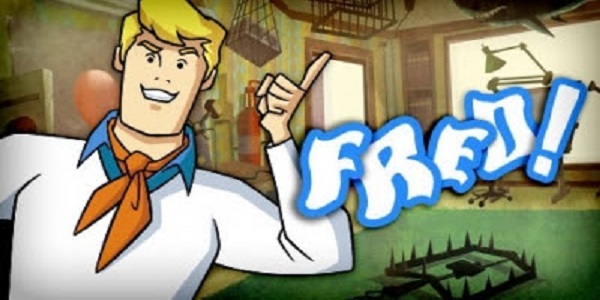
7. Fred Jones (Scooby-Doo)

Here is the first character on our list that we may actually think might be a possible homosexual; and that's saying a lot considering The Gromble's obsession with ruby pumps and he still doesn't set off our Gaydar. Fred Jones, the leader of the mystery-solving Scooby Gang (long before the term became associated with Joss Whedon's Buffy the Vampire Slayer), has appeared in every incarnation of the Scooby-Doo franchise, and generally he's dressed to the nines and rocking that curious-looking ascot. If that's not enough to set off your suspicions, check out What's New, Scooby-Doo? where a teenage version of Fred shows interest in things such as creating traps (like how to escape a closet, perhaps?), wrestling, and weight-lifting. It should also be pointed out that Fred often ignores or seems oblivious to the obvious romantic overtures from the beautiful Daphne, despite always teaming up with her when the group splits up to solve mysteries. While Fred's sexuality has been a mystery for years, his relevancy as a gay icon is not.

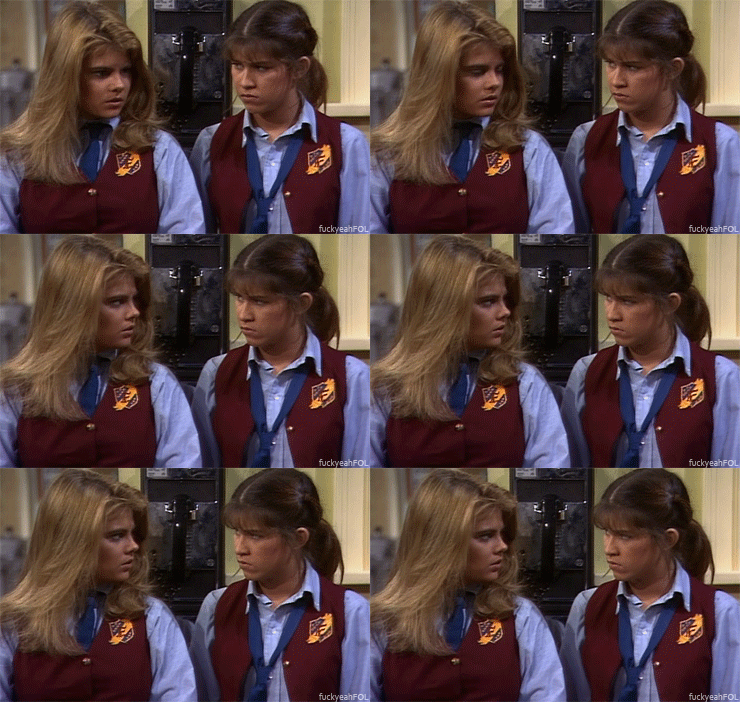
6. Blair Warner & Jo Polniaczek (The Facts Of Life)
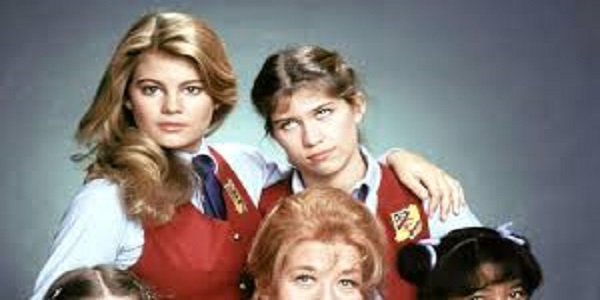
The Facts of Life was a coming-of-age sitcom that lasted for nine years and revolved around a group of young girls at an all-girl school; it also just happened to be a spin-off of Diff'rent Strokes and geared toward a younger audience with its after-school special like episodes that centered on moral dilemmas. While Charlotte Rae got top billing as Edna Garrett, the weight of the show - by season two - was carried on the shoulders of Lisa Whelchel (Blair Warner), Nancy McKeon (Jo Polniaczek), and the dynamic of their character's relationship. Jo was the tough-talking motorcycle-riding tomboy from the Bronx while Blair was the boy-crazed wealthy debutante. Needless to say, they butted heads, exchanged quips, and stared daggers at one another on more than one occasion. The chemistry they shared was palpable and electric, and even when they were sniping at one another, you expected them to kiss at any moment (and no matter your gender or orientation, you wanted them to because they were that awesome together).
The great irony of all of this is the fact that Whelchel, a born-again Christian, is against homosexuality; this is truly saddening considering her character always had the best clothes, boots, hair, and attitude on the show that endeared her to gay fans.

5. Jem/Jerrica Benton (Jem & The Holograms)
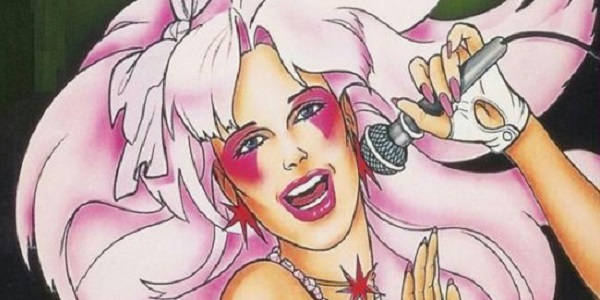
Before Miley Cyrus started leading a double-life on Disney's Hannah Montana, there was Jerrica Benton and her pop star alter ego Jem. Created by the same people who created GI Joe and Transformers, Jerrica was the owner of a record label who juggled her identities thanks to the help of holographic earrings known as Synergy. That's right, not only did Jem become a gay icon for literally living two separate identities and trying to find the perfect balance between both... she was rocking high-tech earrings that could effectively change her appearance and help keep her secret. What's even more amazing is that aside from being a career girl and a rock star, Jerrica also saw her fair amount of action thanks to run-ins with rival bands like The Misfits and The Stingers; all while being caught in a love triangle with her alter ego and her boyfriend Rio Pacheco and being the foster mother of twelve foster kids that lived with her and her band, The Holograms. Can we also mention she earned icon status for those wild clothes and totally righteous hair?

4. Ariel (The Little Mermaid Television Series)
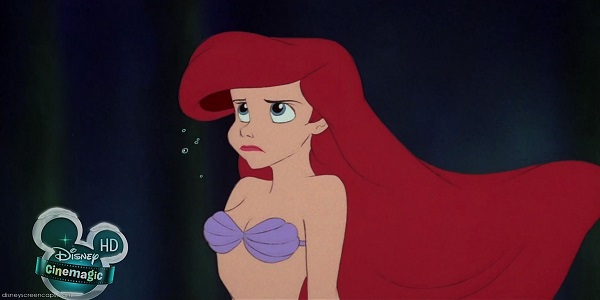
Some may consider this to be cheating, including a Disney Princess on the list, but it's fair game when said Disney Princess was the star of her own television series following the success of her debut feature film. With The Little Mermaid becoming a hit, Disney ordered the creation of this animated show that revolved around Ariel, Sebastian, Flounder and, yes, even Ursula prior to the events of the actual film. Ariel's popularity has withstood the test of time - among the general audience and gays alike - because everyone identifies with her desire to be "part of that world" and accepted by a world she finds intriguing and fascinating. It also helps that the gay community - for the most part - has an affinity for mermaids, where part of the credit goes to Ariel and the rest to Madonna's music video for Cherish.

3. He-Man (He-Man & The Masters Of The Universe)
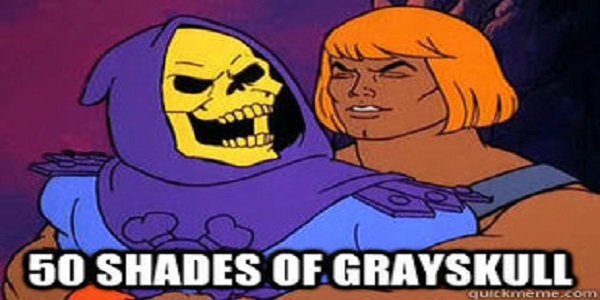
At first glance, many would dismiss He-Man as just a Conan knock-off, but you'd be wrong considering his main story arc throughout his history revolves around Skeletor's obsession with him. In fact, most people have equated their feud with that of a bitter, one-sided break-up, but we digress. He-Man possesses the physique that many gay men drool over... perfectly tanned, taut, and toned, with beautiful blonde hair to go with it; and let us not forget the fact that as He-Man he runs around in a barely-there loincloth and a harness that would make any Leather Daddy blush; and as Prince Adam he's usually seen wearing pastels. It doesn't help at all that some of the people He-Man has surrounded himself with include the aforementioned infatuated Skeletor, the lisping bunny-looking Plundor, the 70s porn mustached Man-At-Arms, and two men named Ram Man and Fisto. Then, of course, there are his questionable antics, such as straddling a "liquid-filled rocket" (no, that literally happened, we didn't make it up) and his first encounter with Fisto in Fisto's Forest, where Fisto subdued his enemies by covering them in a suspicious white goo (again, not a euphemism). If there is any question about He-Man's gay icon status, we should also remind you that this was the character that gave us She-Ra and the rest of the cast of the Princess of Power, like Bow, Castaspella, and Mermista (and we did just mention gays loving mermaids in the previous entry).

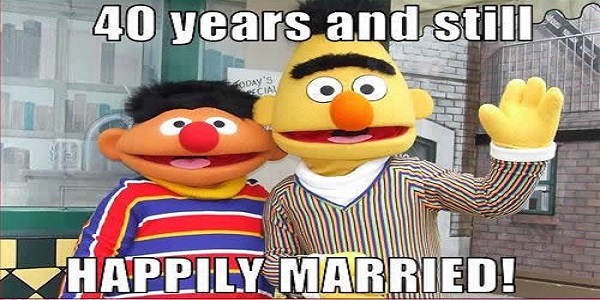
2. Bert & Ernie (Sesame Street)

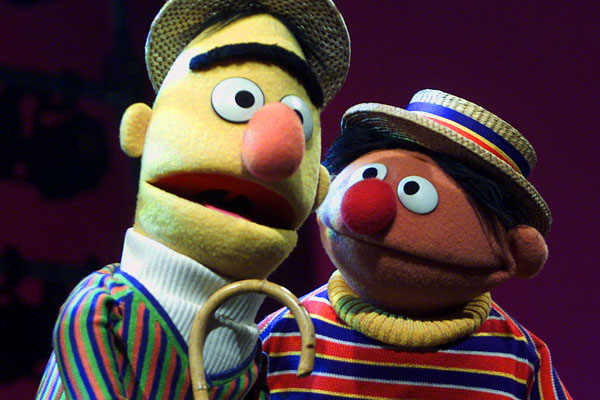
It's been a long-standing rumor that roommates Bert and Ernie of Sesame Street are actually a gay couple. The basis for this lies in the fact that they share a bedroom together and have been roommates for 40+ years. This, no doubt, has caused them to become unintentional gay icons, whether they are gay or not, as some gay advocates consider them a great representation of a normal, monogamous, healthy relationship... although most wouldn't consider a couple sleeping in separate beds to be "healthy" or "normal." The Sesame Workshop has gone on record as stating that Bert and Ernie are puppets who aren't gay or straight because "they don't exist below the waist." Furthermore, The Sesame Workshop has made it clear that they were created to educate preschoolers that people can be best friends/roommates despite their differences and that the relationship between Bert and Ernie was actually inspired by the real-life friendship of Jim Henson and Frank Oz. This only strengthens the duo's status as gay icons because as roommates who tend to bicker and drive each other crazy on Sesame Street, they promote tolerance and the forming of friendships with those who are very different from ourselves. In a world driven by materialism, no one in this world is too rich to turn down the chance to make a real friend.

1. Tinky Winky (The Teletubbies)

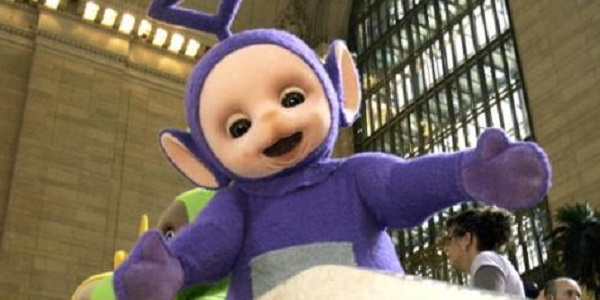
Quite possibly one of the most controversial characters to hit kids' programming and the only fictional character to launch the late Jerry Falwell into a fit of remarkable homophobic rage: Tinky Winky, the leader of the Teletubbies, tops out our list of ten kids' TV characters that were gay icons. In the late 90s, the Teletubbies graced our screens and while no one understood what the hell they were supposed to be, children got swept up in their adorable appearances and cute (but nonsensical) language. When Falwell caught wind of this craze, he targeted poor Tinky Winky and pointed out that the Teletubbies were promoting homosexuality because Tinky Winky was purple (the gay pride color), had an upside-down triangle on his head (the gay pride symbol), and carried around a magic bag that looked like a ladies bag (to be perfectly fair, that bag was fabulous). The creators of the Teletubbies - much like the creators of Sesame Street's Bert and Ernie - made it clear that their character was not gay or straight, he was simply a fictional character on a children's television show. As it turns out, Falwell had hurt his own cause. By bringing attention to such a pointless matter, he inadvertently made Tinky Winky more popular and cemented the Teletubbies' gay icon status. The very fact that Tinky Winky bothered the hell out of Falwell was enough for the gays to embrace the sexless character. What did you think of our selections? Do you think other kids' TV characters were more deserving of gay icon status? Let us know in the comments below!

Contributor
Contributor

Tommy Bobby Watanabe is an aspiring American novelist, stage actor, playwright, former LGBT rights activist, and has three years of independent professional wrestling experience and has been a big fan since 1998. An avid horror movie buff and comic book aficionado, TBW is honored to be featured on WhatCulture with some of the Internet's most talented writers and looks to spread his own knowledge and wit to WhatCulture's loyal readers.