10 Mythical Creatures That Actually Existed
Dragons, griffins, and krakens, oh my! These cryptids were actually real animals.

Over the thousands of years humanity has developed into the world-sprawling civilization it is today, stories of fantastic and mythological creatures abound. Every civilization has its own version of everything from the boogeyman to dragons, and we still enjoy these mythological creatures in movies and games like Dungeons & Dragons.
You have to wonder: where did these creatures come from in the first place, and why do they exist in different regions of the world, where people never met one another? Like most stories involving things too incredible to be true, every mythological creature or cryptid has its roots in something real.
Whether it's a tall tale about something discovered in Australia, or Central Africa, there's a good chance someone returned home with more than a few embellishments on what they actually saw. Everyone has a "fish that got away" story, and no matter what, it's a whopper. Sightings of mythological beasts are no different.
Because of this penchant for people to embellish their stories, some mythological creatures truly do exist in nature. There's a reason dragons are found all over Europe and Asia, and the real creatures those beasts are based upon make a lot of sense when you stop to think about it for a moment.
These ten mythological beasts were based, at least in some ways, on animals that truly did exist.
10. Moby Dick

The Myth: Moby Dick isn't a myth in the traditional sense of the word, as he's the bane of Captain Ahab's existence in his eponymous book by Herman Melville. Still, the idea of a vengeful and vindictive whale has permeated the modern zeitgeist as the target of one's obsession, which is mythical in its own right.
The Reality: In 1820, Captain George Pollard Jr., was in command of the Essex when it was sunk by a whale. He survived and returned to Nantucket, where he was given the Two Brothers to captain, but after two years, he crashed it on a coral reef and was thereafter determined to be unlucky at sea.
Pollard's troubles with the Essex came from an 85-foot albino sperm whale, which directly attacked and smashed into the ship. The whale returned to attack the vessel at greater speed, and the Essex began taking on water, leaving the men to flee. Pollard was away from the vessel when the attack occurred.
When he returned shortly after the whale slammed into the vessel a second time, he saw his first mate, Owen Chase, who told him, "we have been stove by a whale," and with that, the legend that would become Moby Dick was born.
9. Dire Wolves

The Myth: In games like Dungeons & Dragons or television series such as Game of Thrones, Dire Wolves have been depicted as gigantic wolves capable of easily taking down a large man. They are often described as vicious, hard to train, and efficient killers, but the myth of the Dire Wolf doesn't exactly line up with reality.
The Reality: Dire wolves (Canis dirus) were real animals, which went extinct around 9,500 years ago when the last major Ice Age came to an end. Dire wolves weren't gigantic monsters, but they were big animals. Most specimens that have been studied show the dire wolf to be about the same size as modern gray wolves.
They weighed around 132 lb (60 kg) and were capable predators. Their teeth were larger and had a better shearing ability than their modern cousins. They had the strongest bite force at the point of the canine of all Canis species.
This made it possible for them to prey on horses, camels, mastodon, bison, and humans living during the Ice Age. It's likely tales of their ferocity gave life to the mythological abilities of the animal, which persist today. Sadly, dire wolves are long gone, even if they do sometimes pop up in our nightmares...
8. Imoogi

The Myth: Imoogi are Korean dragons, which resemble all forms of Chinese dragons. They are often depicted as long, snake-like reptiles with four legs. Unlike European dragons, Imoogi do not have wings and are considered benevolent creatures related to water and agriculture.
The Reality: While there is no such creature in the fossil record, there is something similar called the titanoboa. Titanoboa was the largest snake to ever slither across the ground, and various specimens have been found indicating they could grow up to 42 feet (12.8 meters) in length and weigh as much as 2,500 lbs. (1,135 kg).
It's highly unlikely anyone in Korea would have ever seen the bones of a titanoboa, as the creature's range was throughout the rainforests of what is now South America. They died out around 58 million years ago, so the comparison between the myth and reality is entirely coincidental.
Like most dragon myths, the Imoogi likely arose from ancient people who found bones belonging to extinct species. Korean findings that gave rise to the myth of dragons likely came from marine reptiles or dinosaur fossils. Additionally, tall tales spread about creatures like Imoogi until they explode into mythological beasts.
7. Dragons

The Myth: Dragons are one of the most pervasive creatures in all of mythology. They have been depicted in various ways throughout Europe, Asia, and Africa with some of the earliest examples including the mušḫuššu from ancient Mesopotamia, Apep in ancient Egyptian mythology, and the dragon from Beowulf.
In nearly every depiction, a dragon is a large serpentine creature with four legs and two wings. Almost all dragons can fly, and many breathe fire. Over the centuries, dragons created for fiction have included variations on color and ability, including the ability to breathe frost, survive in lava, and just about anything else people could imagine.
The Reality: There isn't a scholarly consensus regarding how cultures all over the world came up with dragons, but there are theories suggesting ancient people found dinosaur fossils, and they were the inspiration for these gigantic beasts.
Of course, it didn't necessarily have to be extinct dinosaurs that provided the inspiration for these mythical creatures. The bones of misunderstood fauna that were extant at the time could have led to similar conclusions. There are contemporary animals that could also have served as a source for dragon inspiration such as the Komodo dragon, iguanas, alligators, Gila monsters, and other large reptiles.
6. Rocs

The Myth: The Roc is an enormous bird of prey found in mythology originating in the Middle East. The giant bird was popularized in various fairy tales and folklore from the region, and there's a Roc in One Thousand and One Nights as well as many other popular stories.
Descriptions of the Roc vary somewhat, but in most, it's an eagle large enough to pick up an elephant like the one pictured above. The Roc represents a fear of being picked up and carried off without any means of defending oneself, which has its roots in numerous paleolithic cultures.
Marco Polo recounted his identification of a Roc in the 13th century:
It was for all the world like an eagle, but one indeed of enormous size; so big in fact that its quills were twelve paces long and thick in proportion. And it is so strong that it will seize an elephant in its talons and carry him high into the air and drop him so that he is smashed to pieces; having so killed him, the bird swoops down on him and eats him at leisure.
The Reality: The Roc as it has been described didn't likely exist, but there are analogs in the fossil record, which could easily have given birth to the myth. One such creature was the Elephant Bird of Madagascar, though the myth could have easily been borne by sailor's accounts of large eagles capable of carrying off newborns lamb.
5. Griffins

The Myth: The Griffin is a mythological beast, which has the body, tail, and hind legs of a lion while the wings, forelegs, and head are that of an eagle. Griffins have been around since classical antiquity, and they were often depicted as honorable guardians of important artifacts and treasure.
As the myth developed through the medieval period, it evolved into a Christian symbol of divine power, which was used as a guardian of the divine. Symbols of Griffins can be found throughout Europe, North Africa, and Asia, with the earliest examples being found in the Egyptian city of Hierakonpolis. That find was dated to between 3300 and 3100 BCE.
The Reality: Like most of the mythological creatures on this list, the Griffin may have been the product of early dinosaur fossil finds. Adrienne Mayor of Stanford University posited that Scythian nomads of central Asia may have discovered fossils of protoceratops, which likely gave them the impression of an ancient flying beast.
Protoceratops weren't avian dinosaurs, but if people unfamiliar with dinosaurs discovered their bones thousands of years ago, it makes sense that the myth of the Griffin would soon follow. The skull has a beaklike snout, which appears birdlike and the creature was about the same size as a lion.
4. Blemmyae

The Myth: Sailors brought back tales of so-called "wild men" of Asia and Africa, which gave rise to the tale of the Blemmyae. These people were described as "headless men" in Herodotus' The Histories. They were said to be covered with hair, and they didn't have heads, which left their facial features on their chest.
Europeans were fascinated by what they heard, and the legend grew for centuries. The Blemmyae were written about by Pliny the Elder, Sir Walter Raleigh, and there was even mention of them in Shakespeare's Othello.
The Reality: There are two possible sources for the Blemmyae with the first, and most likely being farfetched descriptions of gorillas. These days, gorillas are found in zoos all over the world, but they weren't described in scientific journals until the mid-1800s. Poorly told tales of enlarged primates may have planted the seed that grew into the myth of the Blemmyae.
Another possible source may have been African tribesmen, who would lower their heads as they walked. This could give the appearance of people without heads and facial features on their chests. It's possible the myth arose from descriptions of both the tribesmen and gorillas, only they morphed into a single mythological beast over time.
3. Platypus
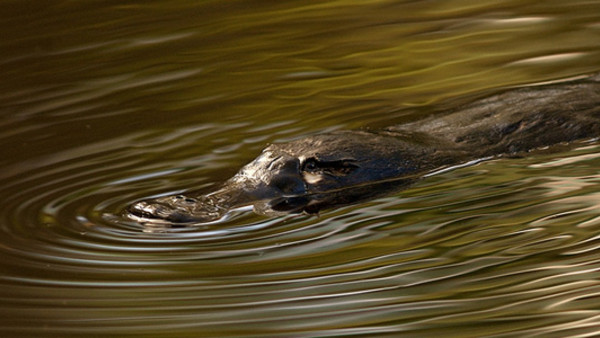
The Myth: The myth of the platypus is an interesting one due to the obvious fact that the creature exists, but what we know now, and what people believed in Europe in the 18th century is a different story. The platypus was first described by Captain John Hunter in 1798.
Hunter sent a platypus pelt and a sketch of the animal to Britain, which was a common thing for sailors and naturalists to do when they found a new species. Unfortunately, the naturalists in Britain didn't believe the animal could possibly exist, and as a result, a myth grew surrounding a very real animal.
The Reality: The platypus was finally described in scientific literature by George Shaw, who wrote:
"A degree of skepticism is not only pardonable, but laudable; and I ought perhaps to acknowledge that I almost doubt the testimony of my own eyes with respect to the structure of this animal's beak; yet must confess that I can perceive no appearance of any deceptive preparation; ... nor can the most accurate examination of expert anatomists discover any deception in this particular."
The platypus is such a strange animal that its first description in scientific literature came with a caveat regarding its authenticity, which makes perfect sense when you think about it.
2. Kraken
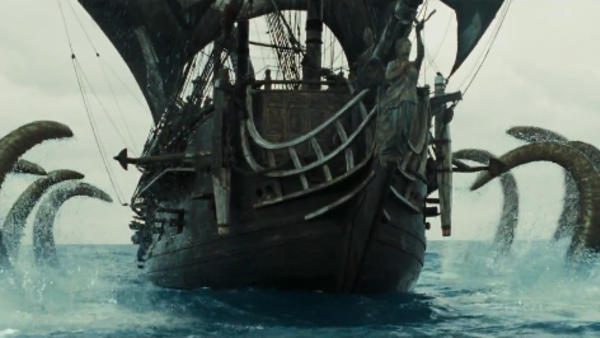
The Myth: The Kraken is a massive and mighty creature from deep beneath the sea that pulls ships down to the depths with its mighty tentacles. Tales of the Kraken can be found throughout European literature, and it is often described as a massive creature that resembled a floating island or was so large, its tentacles could pull entire vessels under the sea.
The Reality: Sailors have been describing strange creatures for millennia, and while most beasts described by them over the years proved to be wildly inaccurate, not everything was. The Kraken may have been described as a violent creature that sank ships, but in reality, it was likely a colossal squid.
They can reach lengths of up to 33 feet (10 meters) and weigh in at 1,500 lbs. (700 kg). They have strong tentacles, which are filled with suction cups like other squid and octopus, but these nasty buggers feature large hooked claws, giving it a grabbing advantage over others of its kind.
These animals have been known for thousands of years, but they were only first described in 1925. The first live specimen wasn't captured in 2007, but tales of the beast's mighty tentacles likely gave birth to the myth of the Kraken, as they have washed up on beaches around the world throughout history.
1. Unicorns

The Myth: Unicorns are white horses with a large, spiraled horn sticking out from their foreheads. They are often associated with magic and have been described for most of history throughout many world cultures. They were described in ancient Greece by Pliny the Younger and others, and the re'em, as it is described in the Christian Bible, resembles the unicorn.
The Reality: The myth of the unicorn has evolved over time from various descriptions of real animals, and the most likely source in European history stems from Pliny the Elder's description of the rhinoceros. He wrote in the 1st century CE that it "has the head of a stag, the feet of an elephant, and the tail of a boar ... it has a single black horn which projects from the middle of its forehead."
Over time, this description morphed through tall tales into the unicorn, but another source in Europe also helped push the belief in the majestic beast.
Norse Vikings would take narwhal tusks to Europe, and sell them to people as unicorn horns. Because they had never seen a narwhal or a unicorn, the explanation worked, and people traded in so-called "unicorn horns" for centuries.
How Well Do You Know These Uber Powerful D&D Monsters?
