10 Novels Strongly Connected To Stephen King's The Dark Tower
There are other worlds than these...
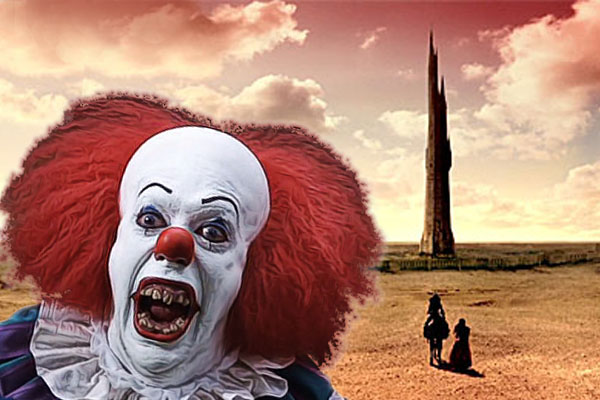
The man in black fled across the desert, and the gunslinger followed. That iconic lined opened up The Gunslinger, the first novel of what would become a multi-volume series spanning decades until its completion: The Dark Tower.
Stephen King's The Dark Tower series is his magnum opus; the culmination, in a sense, of his life's work. It's a gathering together of all the worlds he has created through dozens of novels spanning multiple decades, and at some point in the next few years, a massive feature film adaptation of the series will be launched. An epic fantasy crossed with a Sergio Leone western mixed with sci-fi elements and horror, it's unlike anything else in King's catalog even while binding his voluminous output together.
The journey to make the series into a big screen production - a journey that, after many long years finally comes to an end next year - makes this a perfect time to examine some of the books connected to The Dark Tower, which itself spanned seven novels, plus an eighth standalone story (The Wind Through The Keyhole) published after the conclusion of the original series.
If you want to just read the core novels of The Dark Tower, go right ahead. If you want to connect the dots, here are ten other important works linked to the series.
10. Black House (King/Peter Straub)
Stephen King and Peter Straub (who found fame with 1979's Ghost Story, his fifth novel, and who is still actively writing and publishing today) first teamed up to create the absolute classic The Talisman in 1984. The story of a boy, Jack Sawyer, who discovers that he can walk between worlds - our world, and a parallel version called The Territories - where most of us have a twin of sorts, was absolutely brilliant.
It focused on Jack's quest to retrieve a crystal (the titular talisman) from the other side that could heal his mother who dying of cancer in our world, and his befriending of a werewolf - Wolf - who accompanies him on his journey. The existence of parallel universes is a shared theme between The Talisman and The Dark Tower, but it is 2001's follow-up to the novel, Black House - centering on a grown up Jack Sawyer returning to the territories - that is more heavily connected to King's fantasy epic. In the sequel, the older Sawyer, now a retired LAPD lieutenant, finds himself investigating a series of child killings similar to those of the infamous Albert Fish.
In the end, it turns out the killer is seeking children to serve as "breakers": powerful psychics the antagonist of The Dark Tower, The Crimson King, is using to destroy the "beams" that support the Dark Tower itself - the nexus of our world, the Gunslinger's world, and all others. You can read Black House as a simple sequel to The Talisman, but it makes much more sense as a tie-in novel to The Dark Tower.
9. NOS4A2 (Joe Hill)
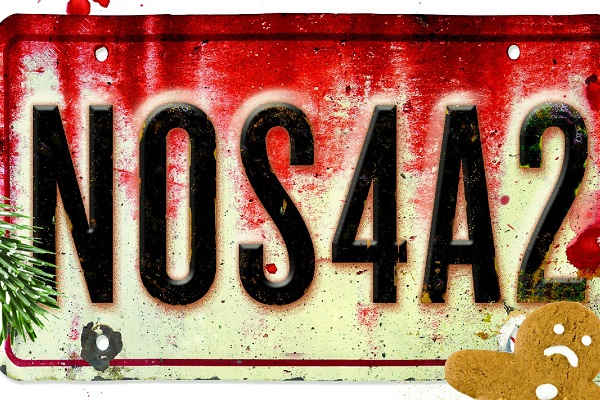
While it's not a Stephen King novel, Joe Hill's NOS4A2 does connect in to The Dark Tower series with several fun, deftly placed Easter Eggs. The character of The Gas Mask Man, for example, says the line "My life for you" to the villainous Charles Manx- something the Trash Can Man says to Randall Flagg (one of the antagonists of The Dark Tower) in The Stand, and something that is repeated again in the Dark Tower series.
The vampire-like Manx also speaks of the gates to Mid-World, part of the Dark Tower universe, and the line "the clearing at the end of the path" is used to describe Vic returning from Christmasland.
While Hill would state that he was just fooling around with these connections and not trying to tie his work to The Dark Tower, he actually did a superb job linking the two - enough that they feel as if the inhabit the same universe, at the very least.
8. Desperation
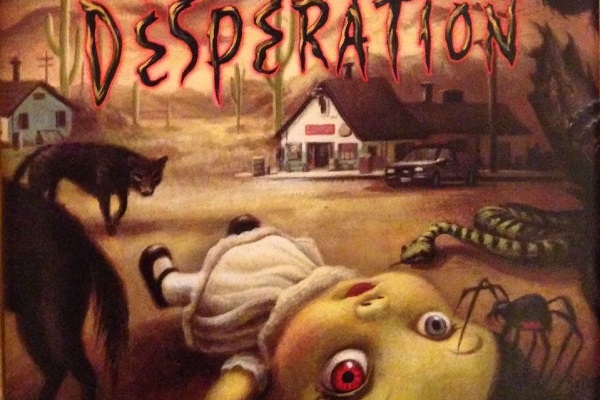
Another novel (along with its mirror novel, The Regulators, written under King's pen name Richard Bachman) Desperation deals with multiple, reflecting worlds and monsters from the other side. Desperation sees the deputy of the mining town of the very same name, Desperation, Nevada, kidnapping just about anyone he encounters on the highway running through town. Said deputy, Collie Entragian, uses all sorts of tricks to pick people up, from faked drug charges to claiming a gunman is on the loose, but in the end, his captives realize that Entragian is not what he seems. Instead, he has been possessed by an evil presence named Tak, which is trapped beneath a mining pit, and which can control both humans and local wildlife.
It's quite clear that Tak originates in the Gunslinger's world, the world of The Dark Tower. The novel utilizes the Language of the Dead, something found throughout the Dark Tower novels. It refers to can-tah (little stone carvings, representing little gods) and can-tak (big gods), the ini (the Well of the Worlds, which is how Tak enters ours), and mentions can-toi - beings also referred to as "low men," who are humanoid, yet not human, but rather hybrids of humans and another race, the Taheen.
The can-toi have the faces of rats, but believe they will become human, and wear human faces over their own until that time - and to blend in, though rather poorly.
7. Insomnia
First published in 1994, Insomnia was not every King fan's cup of tea when it came out. In fact, those who weren't familiar with The Dark Tower series (which was still in progress to that point) found it confusing to say the least. Bizarre might actually be a better term.
It was a divisive novel for King fans, many of whom loved King for his straight horror novels, but hadn't yet picked up on his fantasy work. Whatever you think of Insomnia (and for whatever reason), there's no question that it is strongly connected to The Dark Tower series. In fact, you might consider it the first of King's novels to be overtly connected to the series.
In it, the main character, Ralph Roberts, a man suffering from Insomnia and seeing things as a result is required to save the life of a child, Patrick Danville - a child he comes to know will be important later in life. (Danville, it turns out, is an important character in the final novel of The Dark Tower).
The dark tower itself, ka, ka-tet (important concepts in the Dark Tower world), and other related topics are mentioned outright. Later on in The Dark Tower series, concepts from Insomnia - such as blue auras - are also brought up. The biggest connection, however? Insomnia marks the first appearance of the Crimson King, the primary antagonist (though the man in black might get more page time) of the series.
6. Hearts In Atlantis
Hearts in Atlantis is a 1999 collection of two King novellas and three short stories, the first and fifth of of which (Low Men in Yellow Coats and Heavenly Shades of Night Are Falling), were made into the Anthony Hopkins film Hearts in Atlantis. It is these two stories - and mainly Low Men in Yellow Coats - that are connected to the overall Dark Tower universe. Low Men are the can-toi, first mentioned in Desperation: not quite human, and eventually discovered to have the faces of rats.
One of the main characters, Ted Braughtigan, befriends a young boy named Bobby - and Bobby later discovers him to be psychic. Braughtigan is, in fact, a breaker, one who the Crimson King has his can-toi foot soldiers out searching for. Though Ted is eventually captured, he later sends Bobby an envelope full of rose petals from the base of the Dark Tower, letting the child know that he has escaped.
In a series of stories set in the '60s/Vietnam era, these terms might seem out of place, but King manages to tie them in rather delicately, so they work - though the film version would remove all references to The Dark Tower and change the destinies of the characters.
5. From A Buick 8
From A Buick 8 is an odd sort of novel, in that it's mostly about a demonic car - but one that is, in fact, rather stationary, unlike King's other "evil car" novel Christine. However, the car isn't actually a car at all. It's almost like a prop, with a steering wheel that doesn't work, and an engine with no moving parts. It also has the ability to heal itself.
Kept by Troop D of the Pennsylvania State Police after being abandoned, it's a curiosity, and something they tell stories of to the son of a popular troop member killed by a drunk driver. In actuality, the car is one of those belonging to the can-toi/low men, and like them, it's not quite right, hence being a car that isn't a car.
It also has the ability to shift people between worlds, no doubt to mid-world or elsewhere in the Dark Tower universe. The car is a relic of the Gunslinger's world left behind in ours, like a bomb from a forgotten war left in the jungle, not yet defused.
Everything about the "what is it" of the Buick screams Dark Tower.
4. The Eyes Of The Dragon
The closest thing to pure fantasy King has ever written, and an underrated classic (though hardcore King fans really have shown tons of love for the novel), The Eyes of the Dragon is one of the earliest King novels that can be linked to the Dark Tower. In fact, it's this novel's use of the recurring King villain Randall Flagg (just called Flagg here) that really made readers aware that the novels King was writing were, in fact, connected in many cases.
First published in 1984 and telling the story of a king (coincidentally named Roland, as is the Gunslinger of Dark Tower fame) murdered by his adviser, it's classic good vs. evil tale. The adviser, Flagg, pins this regicide on the King's son Peter - who is in turn imprisoned in a great tower called the Needle. Befriending Peter's younger brother, Thomas, who inherits the throne, Flagg manages to capture the new King's ear - until Peter escapes, and Flagg's crimes are made public.
In the end, Peter is installed as the rightful King, while Thomas sets off in search of Flagg, who after being revealed as a demon at the climax of the novel has fled. Thomas does in fact find him - but what happens next is never spoken of.
Besides Flagg simply being present, this novel feels as if it is set in an alternate universe, perhaps yet another reflection of the Gunslinger's world - though the Gunslinger himself mentions Thomas and his butler Dennis in the second novel of the series, The Drawing of Three.
3. It
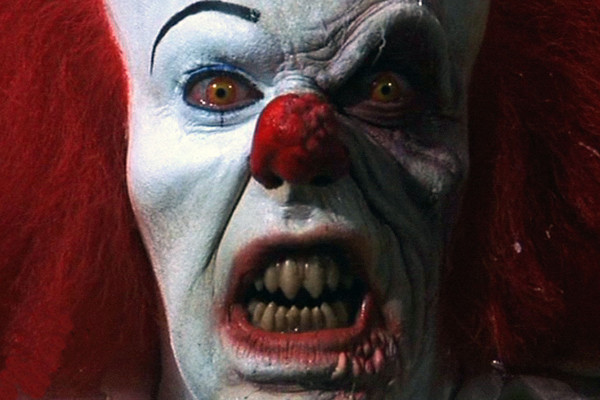
It remains to this day one of King's most highly beloved classic novels, a truly terrifying examination of our greatest fears and ability (or inability as the case may be) to confront them. If you don't remember the book, you will undoubtedly remember the Tim Curry mini-series of the same name, in which he played demonic Pennywise the Clown.
What you may not know is that It has several links to the Dark Tower universe. The first of which is most obvious - the creature itself. It, in its "true" form appears to the human eye as a giant spider (which contains its essence in the form of energy referred to as deadlights). The form is similar to that of Mordred in The Dark Tower (a were-spider), but in practice it's actually related to the creature known as Dandelo - basically, a psychic vampire that feeds off emotions like Pennywise.
Yet like the creature from It, he must also follow the basic rules of whatever form he takes on. The connections don't stop there: in It, the enemy of the creature (spider) is the turtle. In the Dark Tower series, the Turtle is a guardian, and in both, they are forces of good. When in the Dark Tower, the turtle passes on, King uses the line "and the Turtle passed out this story (just as a paper boat you may remember)" - a reference to the paper boat sailed by the doomed George Denbrough at the start of It.
2. The Stand

But for the final few novels of The Dark Tower series, The Stand would probably rank number one when discussing works connected to the series. Regardless, it's a major novel that has a huge connection to the overall tale: it supplied the greatest of all King villains, Randall Flagg. Though The Dark Tower may actually predate The Stand (King started it in 1970, inspired by Browning's Childe Roland To The Dark Tower Came, and the first novel, 1982's The Gunslinger, was a combination of several previously published short stories), it is The Stand that introduces King's readers to Randall Flagg, the Man in Black, for the first time. It is in The Stand that readers get to known him as the devil's right hand man (not literally, though if you consider The Crimson King in The Dark Tower, maybe so), and of his ability to survive death (at least if you've read the Uncut edition). Flagg's not the only connection The Stand has to the Dark Tower, though he's arguably one of the biggest. Additionally, the world in which The Stand is set is visited in the fourth novel of the series, Wizard And Glass.
1. 'Salem's Lot
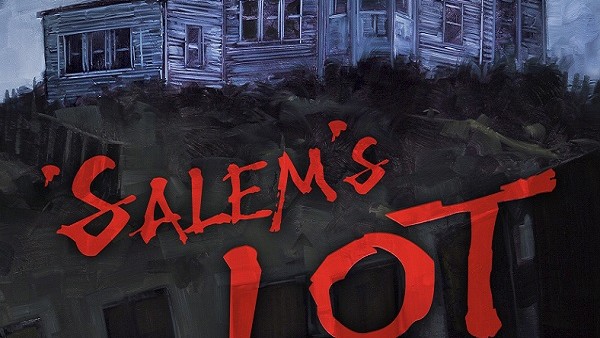
'Salem's Lot is King's Dracula. It's his vampire story, and unlike many young horror writers (keep in mind this was King's second published novel), he got it right on the first try. The book was an instant classic, updating the vampire tale for modern times without losing any sense of morality or just going for sex and gore, as later vampire novels by other authors would so often do.
For years, King contemplated a sequel to the book - then years became decades, and unlike The Shining and The Talisman, which eventually did get sequels, a follow-up to 'Salem's Lot just never seemed to happen. That wasn't the end of it, however. Father Callahan, who in 'Salem's Lot is broken of his faith and forced to feed from the vampire Barlow, returns and becomes a major character in several of the final Dark Tower books, first appearing in the fifth novel, Wolves of the Calla.
Here, he is in New York, homeless, but begins to work at a shelter, and soon finds he can sense vampires around him - and eventually begins hunting them. This attracts the attention of The Crimson King, his can-toi (low men), and they attempt to eliminate him, but instead he throws himself from a window, only to wake up (after death) in the world of The Dark Tower, where he eventually becomes part of the Gunslinger's group. Callahan goes on to become such a big part of The Dark Tower that it's almost as if the later books in the series (and especially book five) become a sequel of sorts to the novel.
Callahan's quest for redemption, after all, would have made the perfect plot for a book, and you get that, in parts, in book five of the Dark Tower and beyond.
There are other novels connected to the world of The Dark Tower of course, from Rose Madder to Under the Dome to 11/22/63. Feel free to discuss all these and others below!