10 Unbelievable Things That Happen Every 60 Seconds

Depending on how long it takes you to read this sentence, the entire world has just changed, never to revert back. There it goes again. And again.

A minute can seem a considerable amount of time when you're waiting at the microwave door like a starved lion stalking its prey. A minute is forever when your legs are about to turn to soup on a treadmill; and as for being at work... well 60 seconds is a damn cruel eternity when it's the last few minutes of the day. We underestimate the power of the minute - you'd be surprised at what the world accomplishes by the time your microwave reaches zero. While you've been reading this intro, billions of chemical reactions have taken place in your body. BILLIONS. If you're reading this on the toilet... perhaps a few more. And if you're reading this having sex it's definitely about time you rethink your priorities. Come with us now on a journey through time and space, a sea of melting Dali clocks and enough annoying ticking to send even Dalai Lama over the edge. Here's 10 astonishing things that happen every 60 seconds...

10. 250 Babies Are Born

Anyone who has sat through the crotch-clenching roller coaster that is Channel 4's "One Born Every Minute", has seen enough already. We've established there's a baby born every minute in the UK - yes. We've also established we're now never having children, or going near a television ever again. The world is one never-ending production line of screams and tears, pushing out armies of tiny purple people. In the time it takes for you to brush your teeth on a morning, nearly 1000 new human beings have entered the world. Many factors affect birth rate in a country: female employment, poverty levels, social and religious beliefs and access to family planning. Not all of these newborns are lucky enough to enter a first world country with comfort, food and a stable roof over their head from day one. 113 of the children born every minute enter a world of poverty: 15 of which will suffer from birth defects. Something to think about, isn't it?

9. Oprah Makes 600 Dollars

More than most of us make in weeks. Oprah Winfrey makes $315,000,000 a year: which means $26,000,000 a month, $6,000,000 a week, $35,000 an hour, $600 a minute, and 10 dollars EVERY SECOND. Don't be hating yet: the media mogul the world now knows rose from poverty, abuse and prejudice to get where she is today, and actually donates millions of dollars to charity. And if you thought that was impressive - you should see how much Bill Gates has in the kitty. The business magnate and Microsoft chairman has a net worth of a whopping $76 billion. At the time of Apple's Steve Jobs' untimely death in 2011, even his $11 billion net worth was a fraction of that held by Gates. Best start putting in some overtime...

8. 105 People Die

Every minute, four people in the world contract HIV. Every two minutes, someone in the UK is diagnosed with cancer. These figures are a lot more reassuring than two decades ago though, where in comparison American cancer deaths have gone down by 20% over that time. As for the UK: the disease killed 220 out of every 100,000 in 1990, but that figure is now down to 170 according to Cancer Research UK. Okay, enough of the gloomy statistics: what's scary about this fact is the huge ratio difference in terms of deaths to births. There are a lot more people entering the world than dying: which I guess we shouldn't look at as a negative, but with overpopulation in China and famines in Africa, it's a massive problem. We're running out of land, and are essentially a plague on the Earth. As wisely stated by the British deity that is David Attenborough: "If we do not control population, the natural world will".

7. Lightning Strikes The Earth 6000 Times
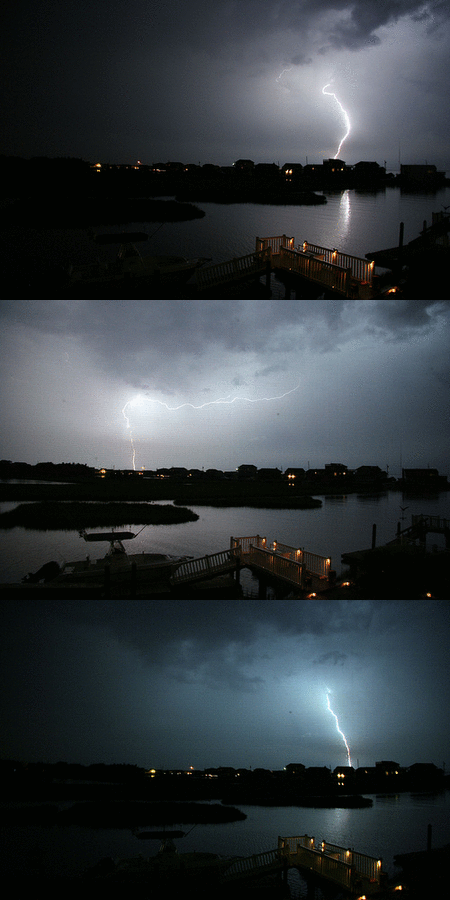
It's said to be a rare occurrence but you'd be surprised just how many times these deadly electric bolts smash through our skies. That is, 100 per second, 6000 per minute, 360,000 per hour or 8,640,000 per day! We need lightning to occur in order to maintain the electrical balance between the surface of the Earth and the atmosphere - it's a vital phenomenon though it's not always pleasant for us humans. In 1998, an entire football team were killed by a bolt of lightning in the Democratic Republic of the Congo. Curiously, their opponents escaped the catastrophe completely unharmed. The Croatian's are particularly unlucky when it comes to lightning bolts: one unfortunate motor-biker had his penis struck by lightning during a quick roadside toilet break, and another woman was left with a severely burned anus after a lightning strike entered her body through her mouth and left through her bum. Ouch.

6. Americans Eat 21 Thousand Slices Of Pizza

Pizza is good. Pizza is very good. Americans know this, which is why they eat approximately 100 acres of the cheesy goodness a day. We're suckers for the slices, gorging more than 38 billion dollars worth each year. Pizza restaurants get a hefty bonus during the Super Bowl too, with over half of the American population eating more on that day than any other of the year. And who can guess the number one topping? Well, pepperoni of course. A huge 2.5 million pounds of the meaty topping is sold each year. In India, the most popular toppings are pickled ginger, minced mutton and tofu... in case you were wondering. Man...we're hungry.

5. Your Heart Pumps 83 Gallons Of Blood
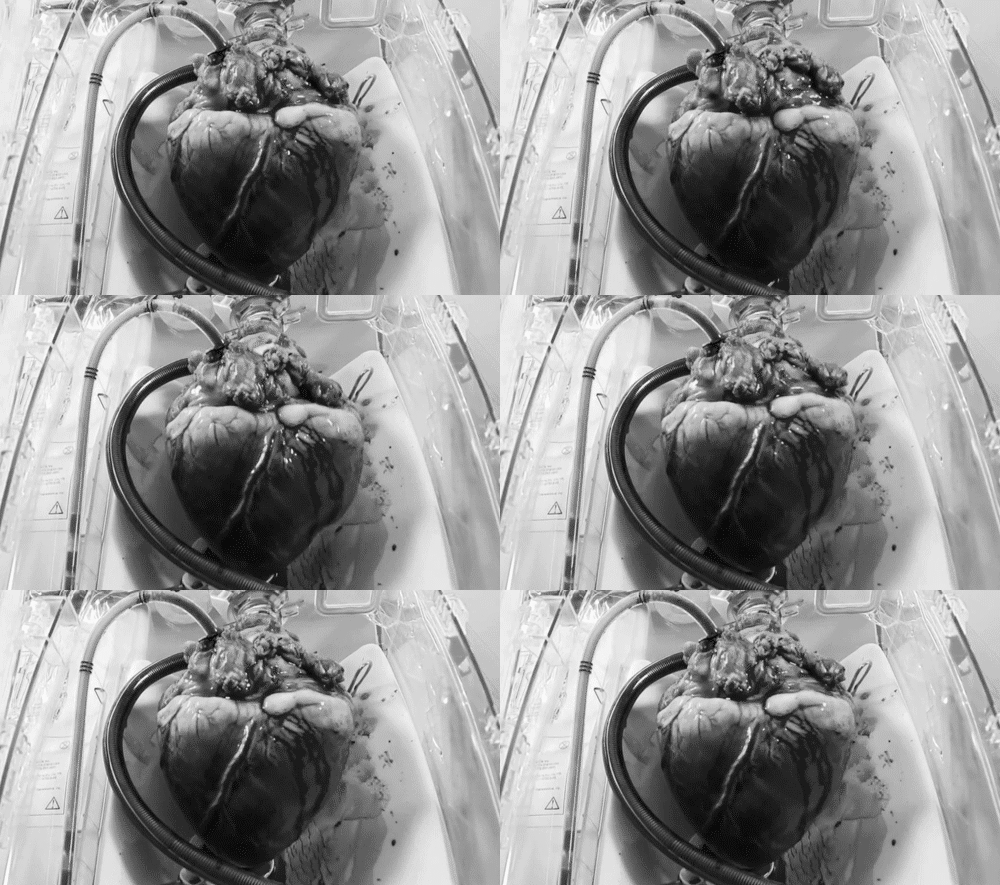
This is happening inside of you right now. Freaky, huh? It's a hard little worker, your heart. Pumping 377 litres around your entire body every 60 seconds is quite a task. When you start focusing on the crucial work it carries out night and day; it's pretty daunting. Your heart is made of two pumps: one that sends out oxygen-rich blood to deliver around the body, and one that collects the blood that has already delivered its load: sending it to the lungs to pick up more. Beating over 100,000 times a day means, by the time you're 70 years old your heart will have made it to 2.5 billion beats. On average that is: unless you spend every evening watching psychological thrillers, on a treadmill by the edge of a cliff - then it might be a little higher.

4. 1.8 Million 'Likes' Are Made On Facebook

Zuckerberg is now more powerful than God, research has, erm, proven. Tom from MySpace sits rocking in his old office every night, empty apart from the solitary dartboard with Mr Z's face on. By the end of 2013 - 10 years after it's birth - Facebook boasted 1.23 billion monthly active users worldwide. Facebook users share 2.5 billion pieces of content each day which has resulted in the largest opportunities for companies to communicate with consumers in non-obtrusive ways. We've become nations of Likeaholics: 62% of millennials use Facebook to post about what they are doing, where they are and who they are with. That's a lot of people who can't go to the loo without updating their status. Nearly half of selfies shared on social media are through Facebook, which scientists say are linked to narcissism, addiction and mental illness. The UK's first ever selfie addict has had therapy this year to treat his addiction, which saw the 19-year-old spending 10 hours a day taking up to 200 photos of himself. The treatment involved taking his iPhone from him for 10 minutes, increasing to 30 minutes, to an hour, and so on. How has it come to this?

3. Nike Makes A $36,505

While every minute, someone working at a Nike factory in Vietnam makes $0.0014. Quite a difference, indeed. Nike has faced huge tides of public shaming for its sweatshops, to the point where "Just Don't Do It" became louder and louder as their sales and image tarnished. However, the company made a massive turnaround: posting regular corporate social responsibility reports, where they've outlined excessive overtime and "fair wage" as a problem they're tackling. This being said, it was only last year that thousands of workers in Cambodia and Indonesia protested, seeking a £9-a-month rise. Nike's low wages, of course, leave money in the bank to spend on it's hefty marketing campaigns. Without it, they wouldn't be rolling in $36K a minute.

2. The Universe Has Expanded 2766.4 Miles
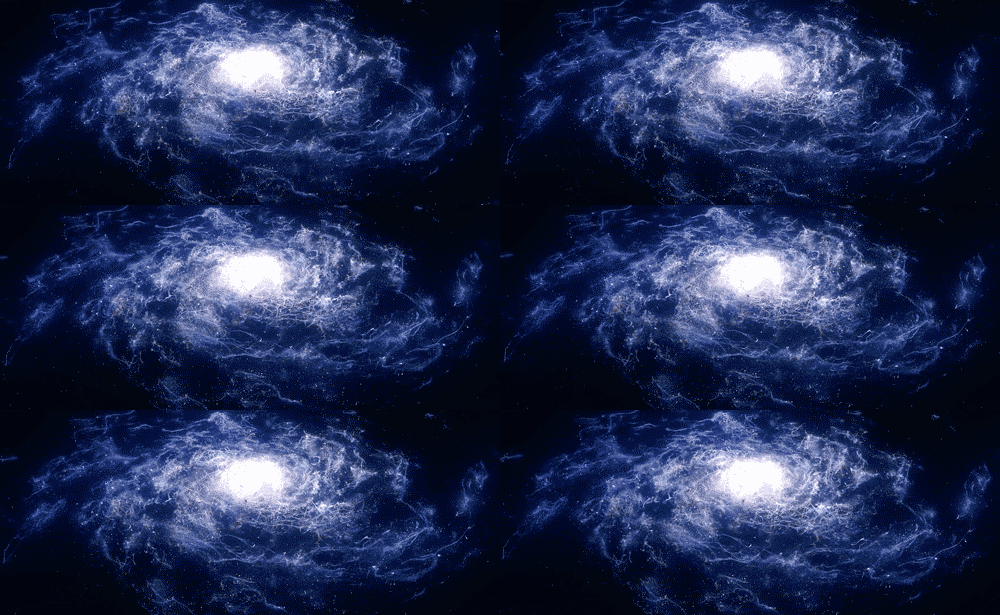
The most frustrating question in astronomy: how far away is everything? Space is stretching, every single minute, and it's done so less than a trillionth of a second after the Big Bang. Bouncing radar pulses from planets as well as probes can help scientists measure the distance of everything from the Moon, to stars about a thousand lightyears away. But for distant galaxies, it can get a little trickier. The same goes for measuring how fast the universe is expanding. Even good old Einstein's head was once scrambled trying to figure out whether we were coming or going, literally. Thanks to a pretty little spiral galaxy named "NGC 3021"- we can now answer these questions. The cosmic beauty contains stars called Cepheid variables, which pulsate in size and brightness. If you measure the time it takes to pulsate, and compare that to the brightness of the star, then BOOM! You have the distance. This type of star, with the addition of Type I supernovae (exploding stars) and quasars (bright galaxy cores) shine as powerful beacons for astronomers. So there you go - the mammoth energy at which the universe is growing, figured out by the mere brightness of some stars. Science is awesome.

1. Humans Kill More Than 190 Sharks
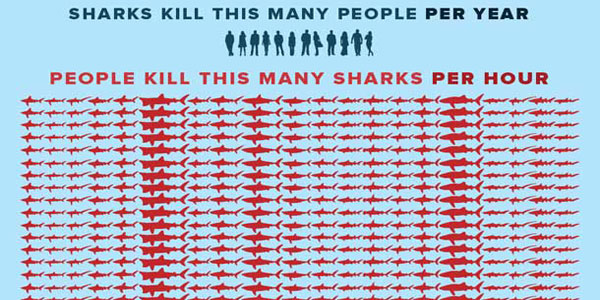
The world's most terrifying predator... the Human. A scientific paper published by Marine Policy this year estimated that 100 million sharks are killed per year. Add the number of unreported catches, and this could possibly even be as high as 270 million annual shark deaths. In case you were wondering, sharks kill 12 people a year. It's clear our finned fellows have a devastatingly bad rap. So who is to blame for these shocking statistics? The primary culprit China's black market, where shark fin soup is a delicacy and "finning", albeit the cruel and wasteful practice is rife. The sharks, once their fins have been hacked off, are usually discarded back into the ocean, where, no longer able to swim properly, they sink to the ocean floor and suffocate; or are eaten by other predators. It seems our vulnerable sharkies have a PR problem that could eventually lead to their extinction. This would extremely jeopardise the world's oceans: as apex predators, sharks help balance the water's ecosystems. This staggering infographic (condensed below) by Robin Richards illustrates the outrageous ratio better than words ever could.
Maybe by raising awareness of our "most feared predator", we can do something to curb the finning of our deep sea inhabitants.

 
Posted On: 
Contributor
Contributor

Human woman. Content Manager at What Culture. Lover of many "ologies", punk rock and cats. My god is Ilúvatar. Follow me on Twitter: @nina_cresswell