10 Unbelievably Cruel Studies (Done In The Name Of Science)

LSD: elephant killer, potential method of CIA mind control.

It's rare that you'll see a movie, TV show, book or video game with a scientist in a starring role. For the brain boxes on the side of good, they're usually relegated to supporting roles, playing the part of Basil Exposition or giving the real heroes the justification and/or technology to go fight the bad guys or stop the Sharknadoes or whatever. That's because what most scientists do day-to-day is hang around in labs, looking at things under microscopes and massaging their brains to come up with new, ground breaking theories. We assume. Then you have the evil geniuses, those who use their scientific knowledge as a force for bad. They're in direct opposition to the heroes and their smarty pants sidekicks, but at least these lab coat-wearing jerks get to be more screen time as the main antagonists rather than supporting protagonists. The villains in Bond films and the like are usually playing on our lizard brain distrust of smart people, who are doing things us laymen couldn't possibly understand. So it's probably bad stuff that will involve them enslaving or eradicating humanity. In reality, scientists are somewhere between these seemingly contradictory fictional depictions. The researchers and PHD graduates you come across in the real world do spend a lot of time doing experiments and staring at data, and usually it's for a good reason. Sometimes, though, they have to do bad things to get to that important discovery. Torturing animals, testing things on people without them knowing, shoving kids in boxes...these are ten unbelievably cruel studies done in the name of science than even Victor Frankenstein would baulk at.

10. The Skinner Box

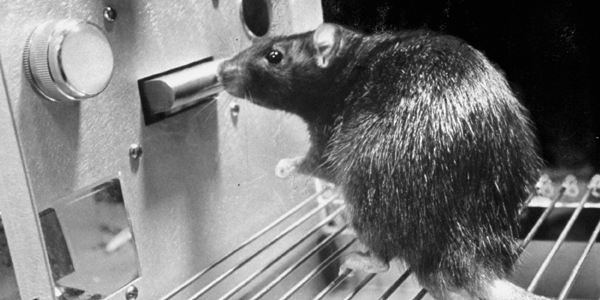
BF Skinner is one of the big names in contemporary psychology, and his place in the history books was sealed when he was still just a student. During his time at Harvard University during the thirties the young Skinner became fascinated with the experiments of Jerzy Konorski, and vowed to continue his pioneering research into both operant and classical conditioning. What that is in plain English is modifying people's behaviour either through positive and negative reinforcement or by building an association with certain stimuli, respectively. For operant, think rewarding yourself with a cookie when you do good things as incentive to do more good things. For classical, think Pavlov's dogs, which were fed whenever a bell was rung and then started salivating any time they heard a bell Skinner was mostly interested in the operant side of things, which is why he built his Skinner box. He later became upset at this name, and the associations forthwith, and tried to insist that everyone call it an "operant conditioning chamber" instead, but to no avail. He deserves to have his name attached to it. Because it's pretty messed up. A Skinner box consists of an electrified grid, a loudspeaker, lights, a response lever, and a food dispenser. With this, BF Skinner tortured rats. Well, maybe not tortured, but they certainly didn't have a fun time. They would do a series of tests using the lights, expecting the animal inside - usually a lab rat, although later studies also employed pigeons and primates - to get the "answer" right and push the lever, rewarding them with food. If they failed, they got a swift, sharp electric shock. So this guy built a box to electrocute animals and claimed it was about studying "behaviours". Wow.

9. Elephants On Acid

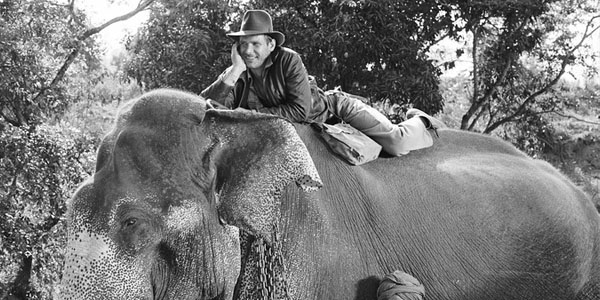
Tusko is a cute-if-unimaginative name often given to elephants in captivity, including "The Meanest Elephant" who ended up being thrown out of his circus because of his bad temper, as well as another Thai-born pachyderm currently hanging out at the Oregon Zoo in Portland, where he's been since the mid seventies. None of these elephants compare, however, either in notoriety or the horrible stuff they had done to them, to the Indian Tusko who resided at the Oklahoma City Zoo and was the first animal acid casualty of the sixties. Michael Jackson didn't give Bubbles his first dose until the mid-seventies, at the earliest. This particular Tusko was living a perfectly nice, quiet life at the Lincoln Park Zoo until August 3rd, 1962, when the zoo's director Warren Thomas allowed researchers from the local university to conduct an experiment on their prize elephant. The aim of the experiment was to see if they could artificially induce "musth", a state that elephants enter only once a year and sees them increasing in both their sexual excitement and aggression. The experiment in question? Injecting the poor creature with a dose of LSD is over 3000 times larger than the normal amount humans take. He must really have been tripping balls, huh? Well, for five minutes maybe. Then he collapsed and, within the hour, was dead. The researchers took away the important discovery that "It seems that the elephant is highly sensitive to the effects of LSD." Well worth killing poor old Tusko for!

8. Anything With Orphans

Just as you shouldn't trust the depiction of scientists in our popular fiction, you should also question how well off orphans seem to have it in movies, novels and comic books. Bruce Wayne's parents got killed but he was still rich and grew up to be Batman, and little orphan Annie seemed to have a pretty good time of it without a mum or dad, but in real life, being an orphan is pretty tough. They deserve your sympathy, and they absolutely do not deserve to be drafted into a scientific study without their prior knowledge or consent. Try telling that to these researcher types, though, and in it's in one ear out the other. There's been a handful of psychological and medicinal experiments that were all about studying orphans, but the cruellest of the bunch - and that's saying something - has to go to Wendell Johnson during his time at the University of Iowa. Way back in 1939 Johnson recruited his top student, Mary Tudor, to oversee an experiment of his own design. They would be working with two groups of orphans, one of which would be given proper speech therapy, and the other would involve a teacher that kept shouting at all the children, picking up every flaw in their speech and insisting they were stutterers. Guess what - the first group all gained perfect diction, and the second group all ended up with stutters, despite most having no trace of one beforehand. It was Johnson's peers that nicknamed this the "Monster Study", rightly appalled that he would conduct research on children - especially orphans - and anxious not to be seen to be doing similar things to the barbaric experiments the Nazis had been using concentration camp prisoners for not long before, it was covered up. The University of Iowa publicly officially apologized for the Monster Study in 2001.

7. Scientists Tell Pilots Their Planes Are Crashing

War is a psychologically taxing, traumatising and overall terrifying experience. Young, barely-trained men get shipped off into war zones they're hardly prepared for, operating equipment they're not familiar with and fighting people for reasons they can't comprehend. The most common feeling for a soldier is fear, so who better to be the subject of a study by some more of those cognitive behavioural scientist goons BF Skinner was so fond of? Psychologist Mitchell Berkun had much the same train of thought when he put together a controversial experiment that necessitated faking a plane crash. Berkun wanted to test the way that human fear can be changed and manipulated so, to that end, he set up a study which would have people experiencing real, genuine terror. Not the sort of thing that can be faked in a lab with electric shocks and the like, but people actually in mortal fear for their life. Ten soldiers going through basic training at the Hunter Liggett Reservation in California were asked to join a test flight, which would pretend to stall once at cruising altitude, followed by the pilot announcing that they were going to have to make an emergency landing. To really get the fear of God into the poor young soldiers they placed a cavalcade of emergency vehicles on the ground below them, visible from the plane, and then asked them to sign a life insurance waiver that said the army weren't culpable if they died. Not only did this seal the deal but it was also the way they tested the level of fear in the participants - how accurate did they fill out a form when they thought they were about to die? Who care because THAT IS SO MESSED UP WHY WOULD YOU DO THAT.

6. Beheading Turkeys To Test Horniness

Apparently turkeys will sleep with just about anything. That's not a weird form of feathered slut shaming, that's just the truth. And the reason we know that to be true is because of an experiment conducted by Martin Schein and Edgar Hale of the University of Pennsylvania, a couple of scientists who were interested in studying the sexual peccadilloes of turkeys for reasons we think it's best not to ask about. The study began with a lifelike model of a female turkey which, apparently, was still enough for a male to try and mate with it. Didn't have to move, squawk or be noticeably breathing, and those horny buggers would try and mount it. From there Schein and Hale decided to see how far they could go with their model before the male turkeys would lose interest. Slowly they took away each piece of the female turkey doll until it was just a head on a stick. Turns out that male turkeys really aren't fussy, because even then they would try and do the horizontal mambo with a head on a stick - apparently preferable to a headless full body - and so they decided to press on. Then they started doing the same shtick, only with an actual, real female turkey. Which they slowly dismembered and offered up to the male turkeys for their consideration. Again, they got down to the point where they cut off a female turkey's head and stuck it on a stick, and still the males wanted to get jiggy with it. So this one was cruel in two ways: not only did they viciously slaughter a bunch of turkeys for a stupid study, but they also cursed a bunch of males with some serious blue balls.

5. The CIA Tries Mind Control

If you think giving acid to an elephant was bad enough, well, you must have forgotten about the CIA. Over the years the American domestic intelligence agency has been involved in all sorts of murky, immoral behaviour, both at home and abroad. They really outdid themselves when they started up Project MKUltra, though, an ongoing series of experiments better known as the CIA's mind control program. Yes, there was a period in American history where the government was legitimately looking into whether it was possible to brainwash people. Mainly with large doses of hallucinogenics. The program began way back in the fifties and only halted twenty years later when details of the experiments started leaking to the public. And the public weren't happy. That probably had something to do with the fact that almost every aspect of the research was totally illegal, from experimenting on unwitting US and Canadian citizens to hiring prostitutes to lure people to CIA safe houses where they would slip them some drugs and then watch the consequences from behind a one-way mirror. Yeah, there were sex workers on the government payroll for a while there. Not only that but, in concert with the US military and dozens of universities across the country, Project MKUltra saw tens if not hundreds of participants - who ranged from foreign prisoners of the government to everybody folks who happened to be in the wrong place at the wrong time - subjected to various other chemical substances, hypnosis, sensory deprivation, isolation, verbal and sexual abuse, as well as various forms of torture. Did we mention that the program had a few ex-Nazi scientists on board? Yep, okay, now it makes a lot more sense. And obviously they never cracked the mind control thing...or is that we're programmed to tell you? No, absolutely not, citizen, now read some more articles and don't question anything. Ahem.

4. Real Life Lord Of The Flies

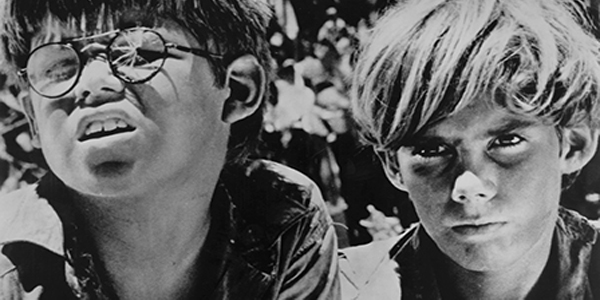
William Golding's novella is a classic of English literature, as well as being a worst-case scenario for school trips that has caused many a sleepless night for particularly anxious parents of young children. For social psychologist Muzafer Sherif the book wasn't a source of entertainment or worry, however - it as the inspiration for one of his most well-known (and nasty) experiments. The Robbers Cave study was supposed to find out whether two groups would turn on each other, if left for long enough, in total isolation. No animosity between them beforehand. Would they still find things to become antagonistic about? No adult in their right mind would volunteer for such a piece of research, which Sherif didn't have to worry about. Because he took a literal page out of Golding's book and decided he would experiment on kids. Their parents signed off on it, don't worry, but the children in question didn't have a clue what was awaiting them when they got shipped off to camp at Robbers State Park in the summer of 1954. Did we mention this one also took place in Oklahoma? Is there something in the water there? That makes everyone insane and cruel? Unbeknownst to the kids they had been split into two separate groups, who shared the land but were encouraged not to interact, engaging in their own team building exercises and the usual summer camp activities. Eventually the two groups established their own hierarchy, elected leaders and formed unique identities, giving their groups names and flags. Within three weeks the two groups of 11-year-olds were at war with each other, engaging in frequent fistfights and large-scale vandalism of each others' camps to the degree that the police had to be called on numerous occasions. Hey, way to earn these kids records and bruises, Sherif!

3. Harry Harlow Tortures Monkeys

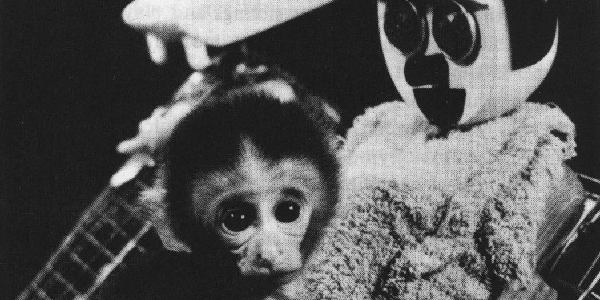
Harry Harlow made the University Of Oklahoma researchers who killed an elephant with an acid overdose looks like ruddy saints with his experiments conducted almost solely on rhesus monkeys. The American psychologist did some truly unique work looking into maternal-separation, dependency needs, and social isolation, from which we learned the importance of care-giving and companionship in social and cognitive development. It's just that he had to make those studies by doing unbelievably cruel things to orphaned baby apes, is all. If we've not already tested the limits of your understanding by this point, animal lovers, we strongly advise you to look away now. Skip to the next slide, have a cup of tea, maybe watch some of those old PG Tips adverts on YouTube. Because in comparison to this, sticking some chimps in clothes and making them "act" won't seem so bad. One of Harlow's early monkey studies involved seeing whether baby apes would prefer a friendly-looking "surrogate" mother made of cloth or a scary wire-frame one. They overwhelmingly chose the former, even when the latter was carrying food and milk, suggesting that appearance is important in forming attachments. Or just they were scared, orphaned monkeys who were looking for solace wherever they could. That one was more weird than controversial, but Harlow wasted not time in coming up with his most infamous study. His aptly-titled pit of despair was a claustrophobic, locked box into which he dumped newborn and young monkeys, hoping to induce a form of animal clinical depression. It worked, obviously, and then he kicked it up a notch by rearing multiple baby apes in similar isolation, releasing them after two years and finding them severely disturbed. As you probably would be. Perhaps unsurprisingly, many credit Harlow's experiments for inspiring the start of the animal liberation movement.

2. The Stanford Prison Experiment

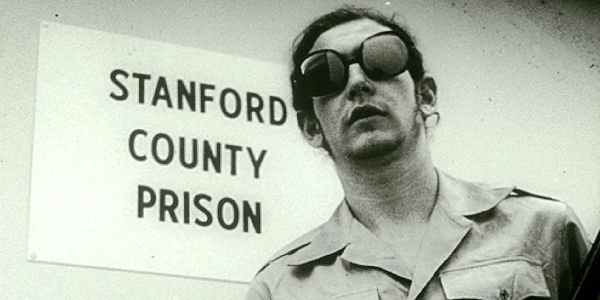
Philip Zimbardo remains one of the smartest and most influential researchers working today, still conducting studies and making startling new discoveries in his field of psychology. Which, by all accounts, he should never have been allowed to do, considering the way one of his earliest and most famous studies turned out. Like his predecessors Skinner and Harlow, Zimbardo was interested in social psychology, and the way people developed and fell into certain roles in society. It just so happens that when he decided to give his own take on the subject it involved a load of college students being psychologically and physically tortured, degraded, and generally traumatised for the rest of their lives. The experiment was simple. In 1971 Zimbaro lead a team of researchers at Stanford University to set up and study a recreation of a prison block, with undergraduates volunteering to take the roles of either guards or prisoners. They would live in mock cells build in the basement of the college for a fortnight, allowing the psychologists on the outside to see how these opposing parts - the powerful guards versus the powerless prisoners - would play out, even with people who weren't actually prisoners or prison guards. How it worked out was that each group adapted to their roles all too easily and ended up far exceeding the boundaries set by the experiment and expected by the researchers, with a third of the guards judged to be exhibiting €œgenuine€ sadistic tendencies, emotionally traumatising many of the prisoners, two of which were removed from the study early. The guards only referred to the prisoners by their numbers and began submitting them to bizarre punishments, like solitary confinement and taking away their toilet privileges in favour of a bucket. Zimbardo finally pulled the plug on the whole thing after only six days.

1. Secret Surgery

Dr Eugene Saenger was a radiologist and an expert in nuclear medicine whose research contributed to the establishment of radiation safety standards for patients and medical personnel. It's just a shame that pioneering and life-saving research had to be done in the most morally questionable manner imaginable, taking the consent-less studies we've looked at before to their logical, unbelievably cruel conclusion. Studies which, decades later, would see Saenger sued by the families of the unwitting participants to the tune of a $3.6 million settlement. Thankfully for Saenger, he didn't have to foot that whole bill. The federal government were also involved in the case. Did they learn nothing from MKUltra? Well, no, because somehow this managed to happen before that, and yet nobody was brought to justice until the mid nineties. Dr Saenger started off well enough in the sixties, being among the first to report on the development of tumours in children after they were administered radiation treatment for benign conditions. He probably saved a lot of lives with that one. It was his work with the Pentagon that would wind up having the opposite effect, and ruining families' lives for generations to come. On behalf of army commanders at the Pentagon, Saenger embarked on a study that was designed to answer the question of what would happen if a nuclear weapon was detonated in the battlefield. How much radiation could a soldier stand before he became disorientated, or totally disabled? Deciding that their own enlisted troops had suffered quite enough over the years, researchers at the University of Cincinnati instead exposed cancer patients to larger doses of radiation than usual, many over their whole bodies, and recorded their physical and mental responses. Most of those patients were poor, working class people, many of them black. Twenty of the almost ninety involved died a month after the study began, and all of them experienced severe nausea and mental disorientation. These results were later used to improve treatments and survival rates or to relieve symptoms, true, but they also severely irradiated countless innocent people without their knowledge, and killed many of them, either immediately or further down the line. Which is so, so messed up. America!

 
Posted On: 
Contributor
Contributor

Tom Baker is the Comics Editor at WhatCulture! He's heard all the Doctor Who jokes, but not many about Randall and Hopkirk. He also blogs at http://communibearsilostate.wordpress.com/