10 Ways Robots Will Change All Our Lives Forever
The way of the future, the way of the future, the way of the future.

Robotics and artificial intelligence are two of the most exciting and rapidly developing fields in technology at the moment.
Robots are already a big part of our lives and this trend looks set to continue almost indefinitely. Asking whether robots will change our lives could be a bit of a moot point, seeing as they already have, we're just used to the ones we already have. Nobody would even think of their toaster or kettle as a robot, but in a way they're an automated system designed to take the work out of an everyday task in the same way that a Roomba is.
So the real question is, what's next?
We all know that robots can put a car together on an assembly line, but as we develop more intelligent and even emotional robots, we might come to find that they are more and more a part of our day to day lives at work, at home and at play.
If you think about how much you rely on your smartphone nowadays, when 20 years ago it would have been a completely inconceivable bit of technological wizardry, it seems impossible to imagine what kind of hi-tech gadgets will become indispensable in the coming decades.
Could they soon drive our cars, cook our food, teach our children ... steal our jobs? Even become the object of our desires?
Robots are the future, we just don't quite know what it will look like yet.
10. Service Industry
https://www.youtube.com/watch?v=De1NYCvRbNoAs robots not only become more and more physically sophisticated, but more socially and emotionally intelligent, they will become more and more prevalent in situations that would usually require the human touch, such as customer service.
As it is, most phone calls to a business will be at least partially dealt with by an automated system. As personal information becomes more and more widely available on the internet (no matter how careful you are, you will have some kind of cyber footprint), customer facing robots may even be more useful than their human counterparts.
With just an internet connection, they will have all sorts of useful information about you and this is not just limited to you Facebook profile, but your browsing and purchase history, likes and dislikes, geographical location, occupation, and even your credit rating. Anything you have ever put into a web form or even anywhere you have been (remember that mobile devices often track location now), could feasibly end up attached to your online presence.
In slightly less unsettling news, there are already novelty robot cafes and restaurants in countries such as China and Japan (surprise surprise) in which robots take the place of waiters, waitresses and chefs and all ordering is digital. In the future they might even be able to predict what you would like to order.
9. Personal Assistants

This might seem like some kind of futuristic James Bond style gadget - a sexy secretary bot with pointy metal norks, perhaps - but the reality is that you've probably already got the beginnings of your own robotic personal assistant in your pocket right now.
With the advent of artificial intelligence, machines are no longer mindless calculators that have to wait for your very specific instructions; nowadays, our machines are able to learn, act independently and even pre-empt what you want from them.
Google are the big dogs when it comes to bringing this service to the masses, with ever increasing levels of sophistication in the mind of Google devices. Even a mid-range smartphone these days can figure out where you work, how you travel there and how long it will take you - in real time - without you ever asking it to; You can ask it out loud to tell you your engagements for the day and it will read them out to you; If you Google a restaurant, a couple of hours later a card might pop up giving you the option to book a table with one tap of a button.
Sounds an awful lot like a personal assistant to us.
And this is just low level, £200 smartphone stuff. Right now, a veritable horde of researchers are pouring their efforts into making the minds of machines ever more indistinguishable from our own. The Google Brain Project that was launched in 2011 is a deep learning project with the aim of creating ever more intelligent and, most importantly, useful AI that is able to draw on the almost infinite hive mind of the internet and become truly adaptive, intelligent and (almost) human.
8. Security And Defence
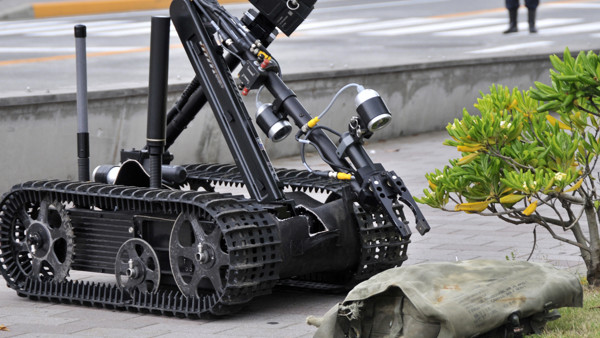
Robots and the military have gone hand in hand for some time now, with drones, surveillance and bomb-disposal robots all fairly standard now. With these kinds of devices, the line between autonomous and remote control is slowly being shifted around and more and more of the functionality of these robots is being given over to their programming.
They're incredibly useful when it comes to first response units, allowing them to quickly assess the potential dangers of a situation without having to send a human in blind. Telepresence robots can also be used in surveillance alongside more traditional methods to allow a limited workforce to essentially be in many places at once.
The need for humans to be physically involved in warfare may soon become a thing of the past with the development of drone and avatar technology, allowing all combatants to be controlled remotely.
Household security will also become more of a robot-dominated field and those clever people behind the now-famous Roomba cleaning bot are currently developing a line of security and defence robots for the home that can be controlled from a smartphone. It would essentially be like having a guard dog, but one that is less likely to be pacified by a doggy treat and a scratch behind the ears.
7. Medical
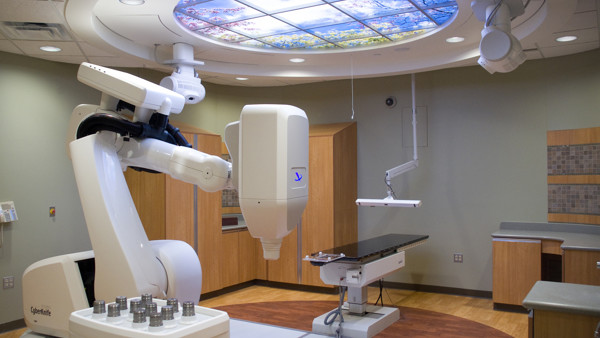
A clear industry in which robots can make a real difference is in medicine.
Automation in the medical world is already making headway, with surgical robots performing highly precise and minimally invasive operations, pharmaceutical robots mixing preparations for IVs and dispensing medication, and disinfection robots that can cleanse an entire room of germs in minutes using a UV light.
As well as using robots in supportive roles, we are also increasingly able to use them in the actual treatment of patients.
The ones making headlines at the moment are the futuristic-sounding nanobots: Microscopic swarm robots that can be injected into patients for the highly targeted treatment of diseases such as cancer. Researchers have also been working on a tiny robot of just millimetres in size that is able to perform heart surgery. This would transform what is currently a hugely invasive and traumatic procedure into a much simpler one.
Exoskeletons are also making big noise in the world of rehabilitation (well, more of a "whirr whirr" noise actually). Researchers at Columbia University are currently looking into how we can use robotic exoskeletons to restore movement in patients with injuries, either as an aid to physiotherapy, or even as a permanent means of restoring movement in paralysed patients.
Then we come to the incredible world of prosthetics where the technological advancements have been coming thick and fast with prostheses that are now able to be controlled by the mind alone.
Debilitating injuries to semi-bionic superhuman. Sound pretty impressive to us.
6. Work
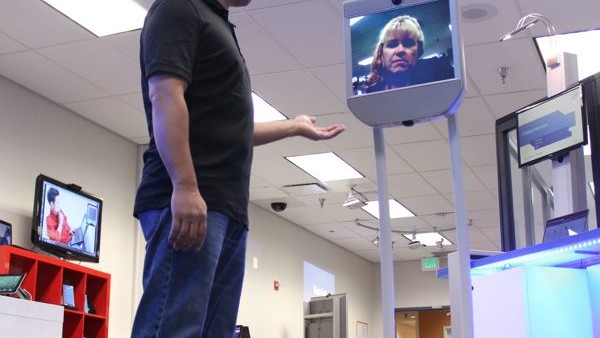
If you think you're too easily distracted by your smartphone or emails at work now, imagine a world in which telepresence robots are an everyday occurrence.
These robots, you know, the ones that you can control remotely with the screen for a face to display a video call, would enable you to beam your presence almost anywhere in the world for everything from international business meetings to checking the back room for stock whilst making sure the person you're serving isn't about to make off with the till.
Your robotic avatar could even attend performances or conferences that your real self is just too busy to go to in person, or even just let the dog out if you find yourself having to work late. Just don't send it to your kids' ballet recital or anything, there are some things that you should probably do in person.
These robots are pretty much universally mocked at the moment, but even with this open derision, they are becoming more and more common in the workplace. They are, of course, open to abuse from a disgruntled workforce though.
There have been instances in which telepresence robots have been dressed in Disney princess dresses, blocked into a corner, or even simply shoved in a lift, unable to press any buttons to free itself. Aside from being hilarious, these pranks would most likely decline if these robots were to become a more commonplace part of office life.
5. But Will They Steal Our Jobs?

So robots, in one form or another, becoming ever more present in our work and home lives looks to be the future of the human race, but will they end up stealing our jobs?
With “electronic human avatars with substantial work capability are years, not decades away" according to internet pioneer, Michael Roberts, are we stopping to think enough about the sustainability of the robotics boom? Unskilled jobs are easily replaced by automation, and even skilled jobs are beginning to feel the sting, with everyone from receptionists to key-cutters being edged out by a computer. Waiters, researchers, teachers and even doctors can, at least partially, be replaced by a cheaper, more accurate machine that is never hungover or distracted.
With many blue and white collar jobs subject to automation, but others requiring humans, mass unemployment in certain sectors and even the breakdown of social order could well be on the cards. Creatives would be, for the moment, relatively safe from losing their job to a robot, whereas top bankers could soon be replaced.
On the flip side, however, there are those who think that the world of automation will augment the workplace, increasing productivity rather than depressing employment. In offloading time-consuming, repetitive tasks on to computers, it opens up the possibilities for making the most of a human workforce.
Yes, there is some automation happening already, but it is possible that we're more ready for it than we think. With most kids learning how to code whilst still in school, a new wave of innovation and job creation could be on the horizon - robots need people to build and design them after all.
Outside of this very simple system, there's also the fact that there are many jobs requiring the human touch that a robot simply can't do.
You can programme a robot to lift an elderly person out of bed and even interact with them on a near-human level, but this still can't replace the presence of an actual caring human with which they can build an emotional connection. Even systems that could be semi-automated, such as self-driving cars, will most likely still need a human hand. After all, planes still need pilots, even if they are all flown by autopilot.
4. Sex
https://www.youtube.com/watch?v=wLVOnVsLXqwWe couldn't have a list of the future of robotics without broaching the subject of robot sexytime now could we?
With the development of technology, there is almost always someone somewhere who is thinking about how they can use it to get their rocks off, and robots are certainly no different.
There are some fairly serious discussions going on at the moment about what the true effect of a digitised sex industry would look like. Obviously, we already have sex robots on a much smaller scale, there's probably one in your girlfriend's bedside drawer right now, but the impact of a full blown sex industry would be very different from a rampant rabbit collection.
There are a few theories out there for which way things could go if robots were to replace prostitutes. The simplest of these would be the displacement hypothesis, in which robots just replace human sex workers. This transition would potentially be accelerated in countries in which prostitution is illegal, but the manufacture of sex robots isn't. Ethical issues of prostitution such as trafficking, objectification, human rights and the spread of STDs also wouldn't be an issue. If this were to happen, the already vulnerable sex workers would face mass unemployment.
In another scenario, human prostitutes would be resilient to the robotic invasion, with many people preferring the human-to-human contact over a quick bot-bonk. In this case, it is even possible that the human sex worker would become more of a premium "product" in comparison to their robotic counterparts.
This is before we get into the whole world of virtual reality and a boom in robotic sex aids. The real question here is where do we draw the line between sex toy and hooker-droid?
3. In The Home
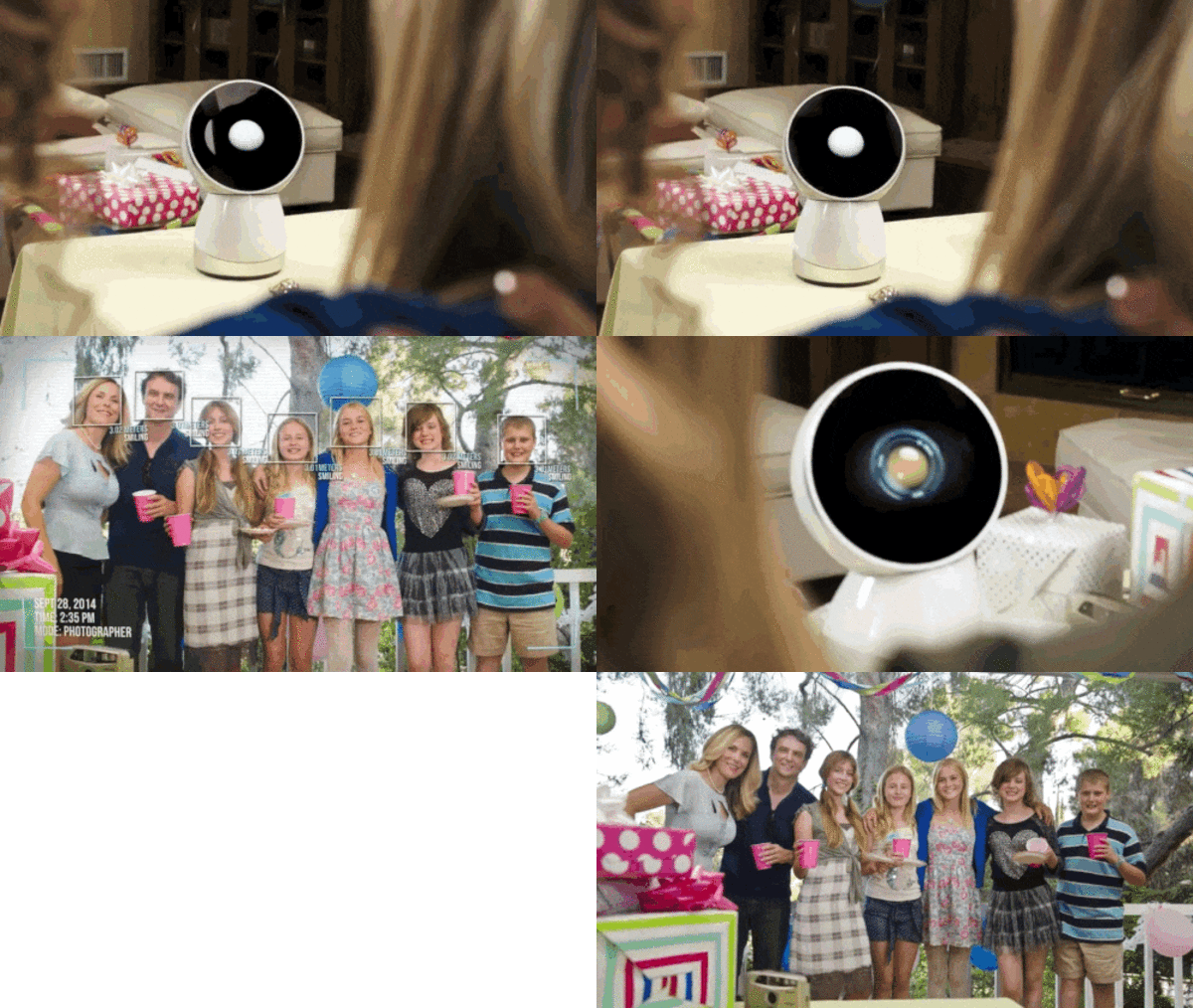
Since pretty much the birth of robotics, the "home help" bot has been developed and redeveloped in the hope that, one day, we won't have to lift a finger as our own personal Butler Bot stirs a delicious spaghetti bolognese whilst we watch the telly.
These visions of the future are usually in the form of slightly comical humanoid-style robot with various attachments for sweeping up leaves and reading bedtime stories to your kids. These are still very much on the cards, as the latest development of the Personal Robot 2 (or PR2) demonstrates. This personal household robot has two arms, some semblance of a face and is capable of everything from folding your washing to cooking your breakfast.
However, the future of household robots is beginning to move away from this slightly 1950s futurist style towards something that we might already be more familiar with, something much more device based.
That is to say, we will probably have lots of different, specialised droids for lots of different tasks. It's very difficult to get a single machine to do multiple tasks, they're just not that adaptive at the moment (and for the foreseeable future). It is much more likely that we will see advances in smart homes with multirobot systems rather than a single robot that rolls around on a monowheel and gets stuck in corners whilst trying to bring you breakfast in bed.
These could consist of wandering cleaner bots (Roomba anyone?), automated kitchen systems that could start your breakfast as your alarm goes off, or even a roving air purifier that seeks out odours and airborne dust (this was actually displayed at CES 2015 as Atomobot). Swarm robotics, better known for their medical applications as nanobots could well get a look in too as a little roving colony of cleaner bots.
But, worry not, if you still fancy a butler bot, there are still a number of them in development, you'll just have to put up with comical clumsiness for a bit.
2. Immortality?
As well as driving our cars and cooking our dinner, could robots be the answer in our quest for immortality?
Russian entrepreneur, Dmitry Itskov, thinks so. Itskov has set up a not-for-profit organisation known as the 2045 Initiative and focusses on providing an international centre of research into the possibility of extending the human life through robotics, perhaps even to the point of transferring our human consciousness into robotic avatars.
Whilst this feels like a far distant bit of science fiction, Dmitry is entirely sincere in his belief that this could be a reality in the future. Whilst it's a big leap from telepresence devices to avatars, the basic notion of experiencing the world through a robot is shared between the two concepts.
In the nearer future, robotics can be used in the potentially indefinite extension of human life through the use of bionic implants. We already use pacemakers, robotic prosthetic limbs and neural implants, not to mention life support systems such as respirators in every one of our hospitals
So you could say that we're pretty much halfway there when it comes to robotic immortality.
1. The Psychological Effects

The future might be robotic, but what effect will it have on our minds?
Most people wouldn't imagine that having an android to do their housework would have anything to do with their psyche, but there are some experts out there that think we should think seriously and carefully about not only how good robots are for our daily lives, but our souls.
There are some issues with getting robots, particularly ones that are even remotely humanoid, to carry out the menial tasks in the workplace, home or even the bedroom. The kind of relationship formed between a robot of this kind and its owner is something of a master/slave dynamic. No matter how mentally robust a person imagines themself to be, having mastery over something else that appears to have a sembalence of humanity in it will do something to the psyche.
The fact that robots (for all our best efforts) are still unable to think and feel on the level of humans is how we are able use them as objects in a way that wouldn't be acceptable to use a human. However, our propensity to project our qualities onto robots (i.e. giving them faces and names) has the potential to skew our perspectives of dominance and submission in humans.
There are some that even think that this could be having a negative effect on gender stereotypes as almost all humanoid androids used for carry out day-to-day tasks are male formed, but put breasts on it and it's a sex robot. Not only that, but one that you can totally dominate with impunity.
We're not talking here about the "robot rights" debates that always spring up in dystopian future fiction. This is not a concern for how our actions will affect our robotic servants, but how becoming accustomed to total dominance would affect us as humans. As much as we like to think so, humans are highly social and are not just logical beings, and we have a propensity to project ourselves onto inanimate objects. This combined with absolute authority is enough to turn anybody's head.
We aren't robots, after all.