10 Weirdest Extinct Creatures
Meet the guys with chin tusks, five eyes and claws bigger than their own face.
A statistic that seems to get thrown around a lot when discussing extinction is that over 99% of the species that have ever lived on this earth are now gone forever. In one sense, were probably quite lucky that thats the case. After all, if the dinosaurs hadnt been killed off, mammals may never have had the chance to become the dominant class of creatures that they are today. If Neanderthals hadnt died out, wed almost certainly be involved in an ongoing xenophobic war with them rather than getting along smoothly. Were really tolerant like that. However, were also missing out on some amazing sights that were part of our ancestors daily lives. Imagine if some of natures long dead species were still around today; herds of majestic woolly mammoths migrating across a busy motorway; stumpy little dodos eating chips and pasties off high street pavements; enthralling Attenborough documentaries about the daily lives of the stegosaurus. And best of all, there would be a whole host of weirdos to stare at. Mother Nature has killed off over five billion species in total (with a little help from the human race) and some of them looked really, really strange.
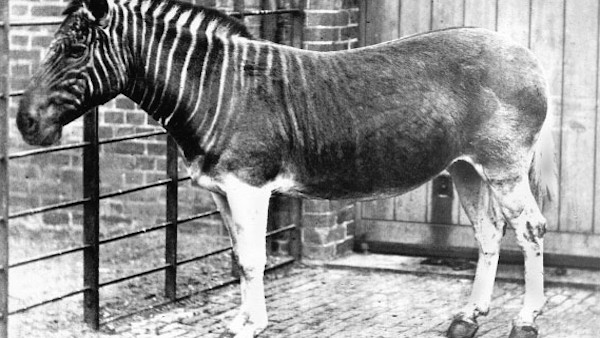
10. Quagga
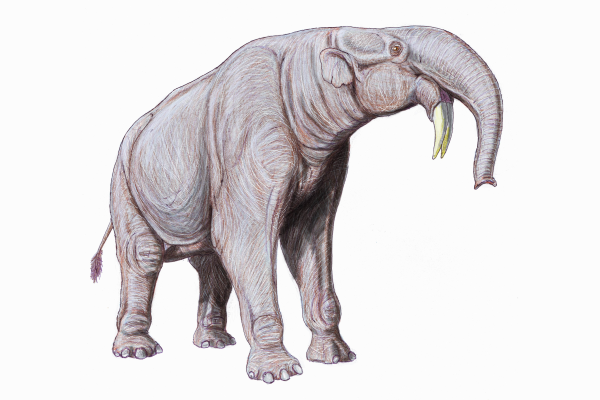
9. Deinotherium Giganteum
8. Macrauchenia
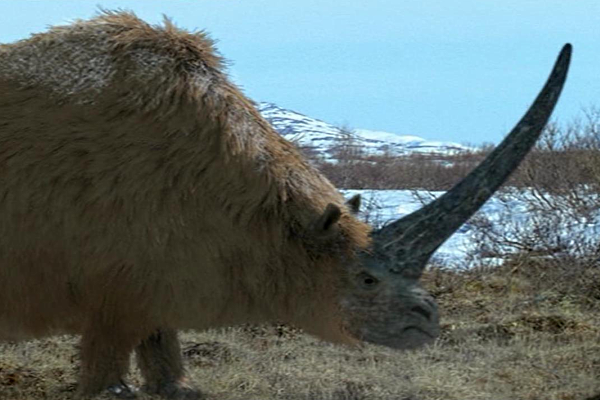
On an elephant (or indeed a deinotherium) this nose would look fine. On a macrauchenia, however, it doesn't. It's like seeing a cat with a dorsal fin. Mother Nature has so many gifts to dole out but you have to know how to rock it. Probably called Gonzo by the school bullies, macrauchenia also had to contend with the unique but equally undesirable trait of having nostril openings on the top of its skull rather than at the front where all the normal people have them. Its torso seems slightly too large in comparison to its legs and it was noted for having a relatively small head. Even more embarrassingly, macrauchenias name is derived from the Latin for long llama, which is one of the most unappealing comparisons one could hope for when being named by a scientist. Incidentally, the first macrauchenia fossil was actually discovered by Darwin. However, like a true misfit, this trunk-bearing long-llama isn't actually very closely related to llamas, camels or even elephants. Its three-toed legs are not dissimilar to those of a rhino but it's also largely unrelated to this group too. In truth, it is likely that the macrauchenia was sent to an early grave after being out-competed by other herbivorous mammals before it got chance to evolve into anything we recognise today (although it does get the odd cameo in the Ice Age films). What a legacy; being driven to extinction by a bunch of primordial cows and sheep.7. Elasmotherium
6. Leptictidium
A leptictidium doesn't have any overtly strange features when you examine it piece-by-piece but it's when you look at the whole ensemble that you realise how odd it is. The tail and feet are much like a rat's, the head is pretty shrew-ish and the torso wouldn't look out of place if you superimposed it onto Bambi. But when all of that is thrown together into a single animal and then it starts hopping along like a kangaroo rather than scurrying around like a rodent, you have to start questioning whether the term "intelligent design" needs a change of adjective. Still, looking a bit silly is a fair exchange for being well-adapted to one's environment. Living in a world where giant carnivorous birds sat at the top of the food chain and would love to take a bite out of the metre long critter, leptictidium was able to blend into its surroundings, move quickly to evade predators and live off a varied omnivorous diet. Fossils have been found with their stomach content intact and it appears that they often dined on insects, small lizards and even other mammals. So, despite looking like a walking (or hopping) jumble sale of body parts, leptictidium had everything it needed to get by in the world and even managed to survive what the dinosaurs could not. Good on you, shrewface.5. Therizinosaurus

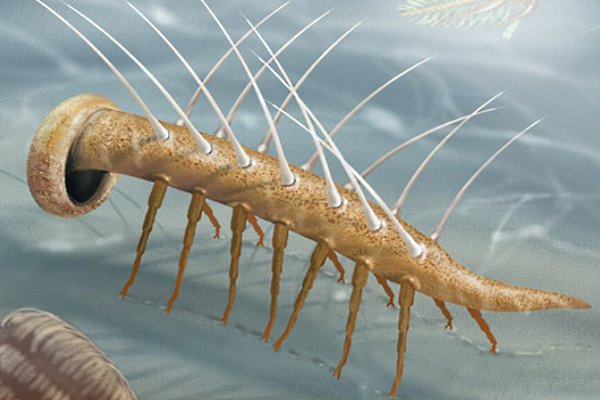
4. Hallucigenia
3. Chalicothere
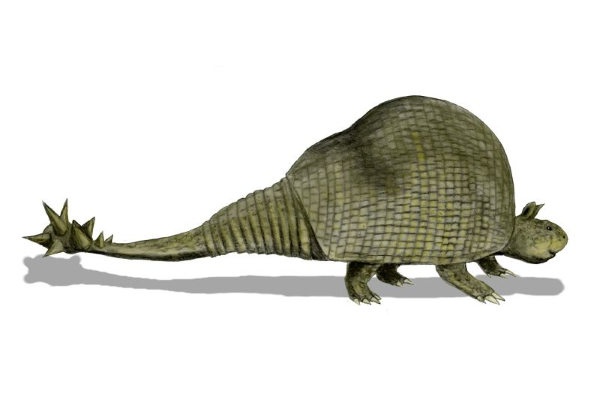
At 3 metres tall, the chalicotheres of the Oligocene period could beat your whole family in an arm wrestle and then tear you limb from limb. Those beefy muscles were built to carry almost half a tonne of weight, with the vast majority of the load being supported by their haunches. This is one prehistoric beastie that couldn't afford to miss leg day at the gym. The front limbs, though less chunky, boasted a set of large hooked claws, which curved in such a way that meant chalicotheres couldn't actually place their hands flat on the ground. Initially this kind of curvature suggested that these creatures liked to dig for their food. However, it is now believed that they preferred pulling down high branches and stripping them of their leaves. Either way, with such immense strength and that nasty set of claws, you would not fare well in a bare-knuckle bout with a chalicothere. That said, perhaps one of the strangest features of the chalicotheres was that they looked as though they had indeed been in a punch-up and lost; they lacked any front teeth on their upper jaw, like some sort of giant hairy toddler. Further examination of their gnashers lead scientists to believe that chalicotheres were "selective browsers", which either means that they existed in an environment where they could be picky about what they grazed on, or that they had a preference for Safari over Google Chrome. The real curve ball in this story is the identity of its closest living relative. Chalicotheres knuckle-walking tendencies are rather apelike, their claws are similar to those of an anteater and those forelimbs are reminiscent of a sloth's. But believe it or not, the chalicothere is actually an early form of horse. You might have a hard job getting a saddle and bridle on one though.2. Doedicurus
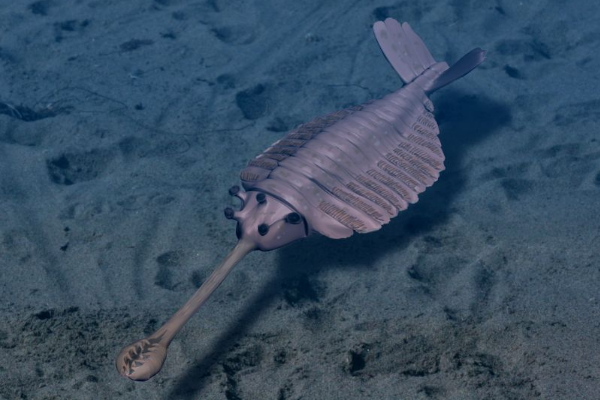
1. Opabinia Regalis