12 Historical "Facts" That Simply Aren't True
What do you mean, Lady Godiva didn't ride through Coventry completely naked?!

Certain things in history are just fact: the Battle of Hastings took place in 1066, President John F Kennedy was assassinated in Dallas, Texas, on November 22, 1963, and Nelson Mandela was imprisoned for 27 years.
The study of other parts of history can be open to interpretation though. For example, some people argue that King Richard III was an evil tyrant, while other believe he was no better or worse a monarch than any of his predecessors or successors. Alternatively, some historians argue that the Treaty of Versailles and the "failed peace" following the Great War made the rise of Adolf Hitler and the Nazis and the subsequent onset of World War II "inevitable", while others believe the two global conflicts are not as intertwined as this.
But this does not present a problem in itself, because history is a discipline that is intended to forge debate, research, argument and measured reasoning. It is when fact and opinion become blurred, and false "truths" become believed that this becomes a problem. Certain myths and legends - such as Robin Hood and King Arthur - are known to be such, but sometimes historical beliefs are presented as "facts" when they are actually incorrect.
For example, Christopher Columbus didn't set foot in the modern-day United States, Lady Godiva did not ride naked through Coventry on horseback, and Abraham Lincoln did not initiate the US Civil War merely to abolish slavery. So forget all the historical "facts" you previously believed you knew and discover these 12 fallacies that are often misrepresented as the truth...
12. The Accused In The Salem Witch Trials Were Not Burned To Death... They Were Hanged
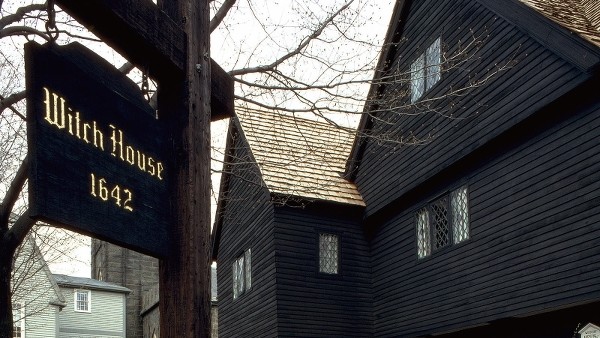
The Salem Witch Trials of 1692 are one of the most infamous incidents in the history of America - yet a common misconception exists that any person found guilty was burned at the stake. In fact, the majority of "witches" were actually hanged. With the hearings and prosecutions taking place between February 1692 and May 1693 in Salem, colonial Massachusetts, 20 people in all were executed - the majority of them women, and almost all of them by hanging.
One of the "witches" was crushed to death by heavy stones though, and a couple died in prison. It is unclear exactly why history has come to falsely suggest that the Salem "witches" were burned alive, but it is likely that popular culture has confused these trials with other previous similar incidents.
For example, burning of accused sorceresses was used by Christians during the witch-hunts of Europe in the 16th Century, with an estimated 40,000-50,000 executed via this method. Salem witches, however, were not executed in such a way.
11. Christopher Columbus Didn't Discover Mainland America... He Only Found The Caribbean Islands

It's common knowledge that Christopher Columbus discovered north America - including the modern-day United States - right? Well, unfortunately this is simply untrue. Columbus did arrive on the continent, but he only made it to the Caribbean islands - and he never set foot in what is now the USA.
Between 1492 and 1503, Columbus set sail from his adopted nation of Spain to the Americas on four separate voyages, and on each occasion he found himself in the Caribbean and in South America. Among the modern-day nations he visited were Cuba, Jamaica, Santo Domingo, Martinique, Guadeloupe, Venezuela and Mexico - but not the USA.
Despite this fact, popular myth and legend has led to many countries in the New World - including the USA - officially celebrating Columbus Day on or around October 12 (the day the explorer first arrived in the Americas). Columbus' explorations did set the trend for further European ventures into the Americas, and for this reason it is partially understandable that the USA celebrates the early coloniser.
Interestingly, due to the fact Columbus never accepted he reached the Americas - vehemently believing his voyages were to Far-East Asia - the continents were not named after him, but instead after Florentine explorer Amerigo Vespucci (who proved Brazil and the West Indies were not on Asia's eastern outskirts).
10. George Washington Did Not Have Wooden Dentures ... Although He Did Have False Donkey Teeth

According to historical "fact", the very-first President of the United States and the Commander-in-Chief of the Continental Army during the American Revolutionary War, George Washington, had an appalling record with his teeth and so had wooden dentures inserted. The first part of this is true, but Washington did not have wooden teeth. He did, however, have at least four other sets of false teeth throughout his life - made from a variety of bizarre materials.
Having lost his first adult tooth at the age of 22, Washington had just one left by the time he became President in April 1789. It is believed that the use of mercury oxide to treat such illnesses as malaria and smallpox contributed to this rapid loss of teeth. With his dentist John Greenwood constructing the majority of Washington's dentures, the first set of false teeth the latter used as President were carved from elephant and hippopotamus ivory and they were held together using gold springs.
Worryingly, before this Washington had a set made using real human teeth, supposedly purchased from African-American slaves. Other sets were made from such materials at donkey teeth, horse teeth, ivory and lead - with the one pictured above believed to have been constructed from a combination of both cow and human teeth. Lovely...
9. "The Great Emancipator" Abraham Lincoln Did Not Fight The US Civil War Merely To End Slavery... It Was Just A By-Product
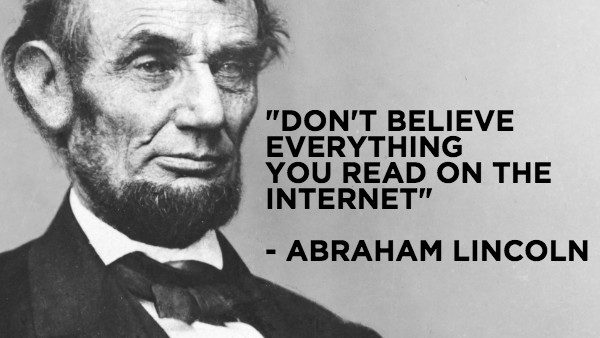
Often referred to by such nicknames as "The Great Emancipator" or "The Liberator" due to the fact he helped bring about the abolition of slavery in the USA, the 16th President of the United States Abraham Lincoln was not as anti-slavery as history would have you believe.
Having swept the northern vote in the US presidential election of 1860 as the Republican Party nominee, Lincoln received very little support in the southern states - and then the so-called "Confederate States of America" attacked Fort Sumter in April 1861, bringing about the four-year US Civil War. But Lincoln did not declare war simply to end slavery - it was far more complex than that, and mainly it was because the Confederate States were threatening to secede from the Union.
In fact, in a letter to the New York Tribune in 1862, Lincoln explained:
"If I could save the Union without freeing any slave, I would do it; and if I could save it by freeing all the slaves, I would do it; and if I could save it by freeing some and leaving others alone, I would also do that."
Privately Lincoln may have been against slavery, but it took three years of fighting during the US Civil War before he felt compelled to sign the Emancipation Proclamation in 1863 - and even then this was partially due to Unionists rallying for better economic terms, rather than just for purely humanitarian reasons. "Honest Abe" has sometimes been painted as being far more liberal a human being that he possibly was...
8. The Great Fire Of London Did Not End The Spread Of The Plague... Their Timings Were Merely Coincidental
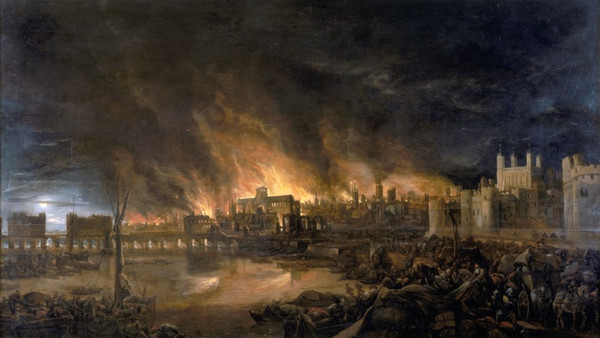
Another fire-based "fact" from history that isn't true - the Great Fire of London did not end the Great Plague in Britain's capital, the timing of both so close to one another was merely coincidental. The end of the Great Plague epidemic of 1665 - when the bubonic plague killed a sixth of London's inhabitants, some 80,000 people - has often been attributed to the outbreak of the Great Fire of London in September 1666, yet the two were not interlinked.
Supposedly the fire burned down the unsanitary housing that sheltered the rats and disease-carrying fleas, preventing the plague from returning - but there is little to no evidence to suggest this is true.
For a start, the fire was restricted largely to the centre of London, meaning that the slum suburbs on the outskirts could not have been cleansed by the flames. London was struck down with these two catastrophic events in the space of a year - but it does not appear as if either was connected to the other.
7. Cleopatra Was Not Egyptian... She Was Of Greek Origin But Portrayed Herself As An Egyptian Goddess

Pharaoh Cleopatra VII Philopator - the last active pharaoh of Ancient Egypt and as Egyptian as they come. Well, actually no - she was of Macedonian-Greek origin and she became the first-ever member of her family to actually learn the Egyptian language. Once Alexander the Great died in 323 BC, the Ptolemaic dynasty took control of Egypt - and Cleopatra was a descendant of this family, ruling on the Egyptian throne between 51 BC and 12 BC.
In all popular culture, Cleopatra appears to be portrayed as being a native Egyptian, yet she was descended from a foreign family who ruling the nation - just like the Normans in England following the Battle of Hastings in 1066. In addition, this image may have been built by Cleopatra herself, as she wanted to legitimise her reign by making herself appear as Egyptian as possible.
As well as learning the language, Cleopatra also claimed to be a reincarnation of Egyptian goddess Isis.
6. Emperor Napoleon Was Not Extremely Short... He Was Taller Than The Average French National At The Time

Emperor Napoleon Bonaparte led the French Empire into many wars following the French Revolution and, as well as being regarded as one of the most brutal dictators and most-accomplished military leaders in history, he is remembered as having been extremely short. Now, although it is true that Napoleon only stood at a mere 5ft 7ins tall, this was not an uncommon height for men in early-19th-Century Europe - and, in fact, it was above average for French nationals at the time (5ft 5ins).
Part of the confusion about his height may have arisen from the fact that in the early-1800s Napoleon was registered as being 5ft 2ins - but that was still using pre-French Revolution units, which differ from modern-day measurements.
"Le Petit Caporel" ("The Little Corporal") may have been known as such, but "Angry Little-Man Complex" - sometimes referred to as "Napoleon Syndrome" - has seemingly been unfairly attributed to the former French leader.
5. Vikings Did Not Wear Horned Helmets... This Detail Was Added By Richard Wagner's 19th-Century Opera
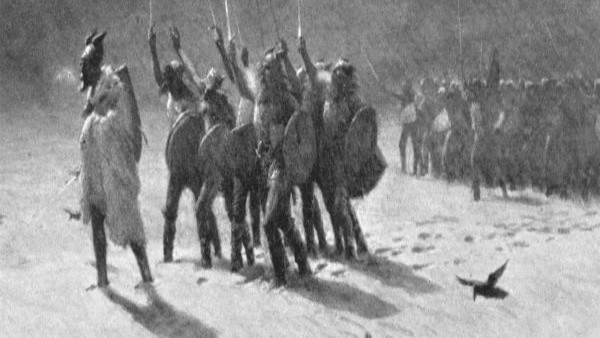
Just about every single viking that appears in popular culture nowadays seems to be wearing a horned helmet - yet there have been no archaeological findings ever discovered that support this fashion statement.
In fact, between the late-8th and late-11th Centuries, vikings either wore leather strapping across their heads, helmets minus the horns, or simply no head-gear at all - and the horns have been added to their image in the last couple-of-hundred years.
It appears that the misconception has arisen from performances of Richard Wagner's opera "Der Ring de Nibelungen" from 1786 onwards. The costume designer for the very-first showing of the opera chose to use horns in the production, possibly confusing viking dress with that of early European settlers.
4. Marie Antoinette Did Not Declare "Let Them Eat Cake" To The French Peasantry... The Quote Was Merely Misattributed To Her
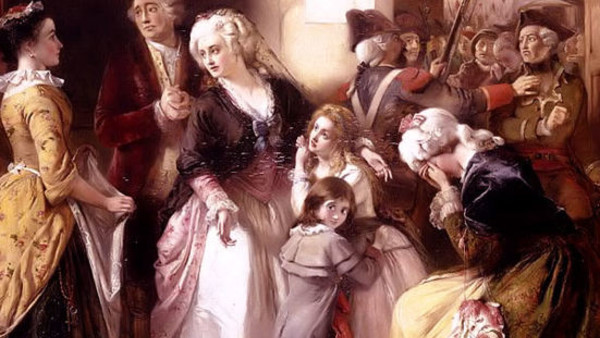
Queen Antoinette was pretty much hated by all French peasants and, although she may have thought it, she never actually told the starving 18th-Century proletariat to 'eat cake'. Jean-Jacques Rousseau, in his book Confessions, wrote the line: "Make-shift of a great princess who was told that the peasants had no bread and replied: Let them eat brioche".
This satirical piece only implied that Antoinette said it, in a sarcastic way, but the reality is she didn't tell the French peasantry to eat a sweet, French cake-like bread as an alternative to their normal baguette.
3. Lady Godiva Did Not Ride Naked On Horseback Through The Streets Of Coventry... But She Did Plead For Her Husband To Reduce Taxes
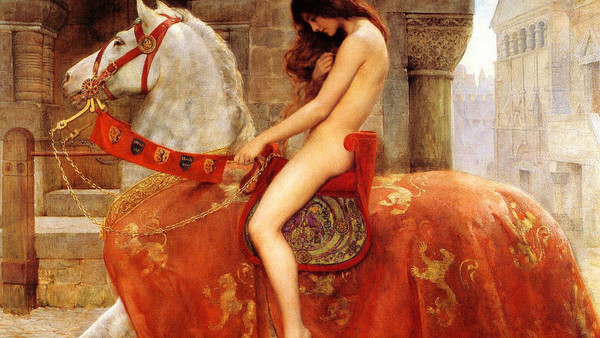
Lady Godiva was an 11th-Century Anglo-Saxon noblewoman - but there is no evidence at all that she rode through the streets of Coventry naked, only covering her bosoms with her long red locks. She did most certainly object to her wicked husband, Leofic, Earl of Mercia, and his ridiculously-high tax prices - but she did not protest against them by stripping down and riding on horseback.
The first account of this tale does not appear until 1236, long after Godiva had died. Interestingly, the term "Peeping Tom" - used to refer to voyeurs - also originates from later tellings of the legend of Godiva supposedly riding through Coventry stark naked.
2. Emperor Nero Did Not Play His Fiddle While Rome Burned... In Fact He Was 30miles Away When The Fire Broke Out
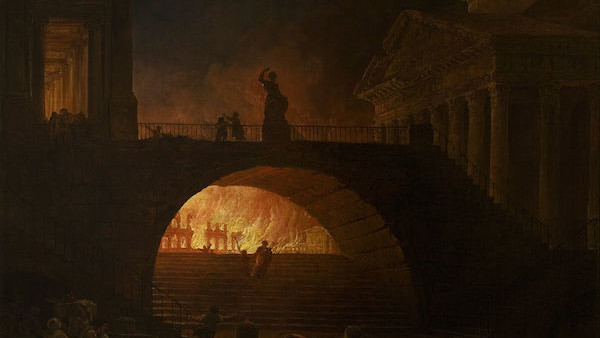
The Great Fire of Rome devastated the capital of the great Empire between July 18th and 26th in the year 64 CE - and Emperor Nero has been accused of both starting the fire himself, as well as playing the fiddle while the population suffered.
Supposedly, Nero decided to start the fire so he could take credit for eventually stopping the devastation that ensued - and then ran up into the Tower of Maecenas and enjoyed himself by playing the fiddle, singing and watching his subjects suffer.
However, Tacitus - one of the most-trustworthy historians of the time - documents that Nero was not even in Rome at the time, but was a full 30miles away at his villa in Antium. Although this doesn't end suspicion that Nero was involved in the breakout of the fire - he still could have commanded it even if he wasn't there - it does suggest that the Emperor could not have been in the tower playing music while panic erupted across the capital.
1. The US Declaration Of Independence Was Not Signed On July 4, 1776... It Was Merely Approved By Congress On That Date
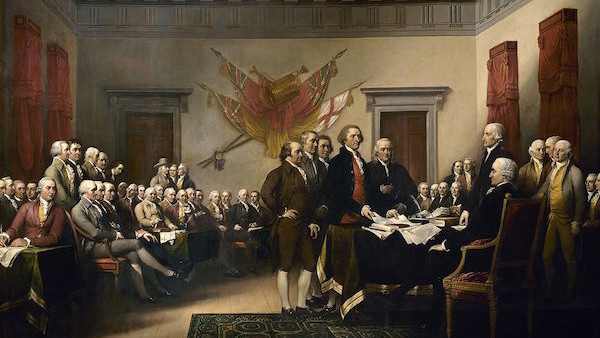
American Independence Day brings about celebrations across the USA on July 4 - supposedly the date that the original Declaration was signed.
However, this is not true - it was actually signed on July 2, 1776, by the Founding Fathers. July 4th was actually the day when Congress ratified and issued the Declaration of Independence in various forms - including Thomas Jefferson's original draft, as well as the changes made to it by John Adams and Benjamin Franklin.
So key was the date of the signing of the Declaration of Independence actually deemed that Adams wanted the USA's national birthday to be celebrated on July 2nd, and not July 4th as it is now, because he thought that was more important than Congress ratifying the document.
Although there may only be two days in it, it is interesting to note that many commentators suggest that July 4th is actually the day the Declaration of Independence was signed by the Founding Fathers, and not July 2nd.