12 Problems Only Haruki Murakami Fans Will Understand
Turn up the jazz and pour yourself a whiskey.

Haruki Murakami is something of a literary rock star his book launches are so sensational they're akin to movie premieres, championing sales well into the millions in his home country of Japan alone.
His breakout out novel was Norwegian Wood (named after the Beatles track of the same name). The novel was so popular in Japan that it catapulted Murakami into the realm of superstar, reportedly forcing him to flee the country due to dismay at his new-found fame. Since then, Murakami has found incredible success around the world - his books have been translated into more than fifty languages, and every year he's one of the favourites for the Nobel Prize in Literature. Murakami's books are extremely popular with young adults; many detail the mundane lives of twenty to thirty year olds, lives that list lazily along until suddenly they're interrupted by utter strangeness an erotic phone call, a missing cat, a particularly long traffic jam these are the conduits through which our protagonists bizarre journeys begin. Thus far Murakami has had thirteen novels translated into English, and several short story collections too. Throughout these books fans have picked up on certain staple traits, plot devices and characteristics that are not so much repetitive as familiar territory, marking the welcome return to the strange, magical world of Haruki Murakami.12. Talking To Cats (They Don't Talk Back)

Unlike Satoru Nakata one of the characters in the brilliant Kafka On The Shore it's not actually possible to talk to cats. Well, it's possible, just don't expect much of a response. But that doesn't mean Murakami fans won't try anyway.
Murakami has never been coy about his love for cats they feature in the vast majority of his novels, sometimes in the middle of the action and sometimes as a sidelined presence of mystery. The Wind-Up Bird Chronicle, for instance, begins with the search for a missing cat. One of Murakami's more recent novels, 1Q84, features a story about a town full of cats. Fans of Murakami know what it's like to itch for an urban adventure so why won't the cats talk back so we can just get going already?11. Not Liking Whiskey (But Trying To Drink It Anyway)
It's a freezing Monday evening and you've just come home from an utterly monotonous day at work to your single bedroom apartment.
You don't have a spouse or a significant other and the phone is dead on its hook, but you aren't lonely you don't know how you feel, really. Sometimes you're content, and sometimes you don't feel much at all. Time to pour a whiskey and climb into bed. Ah, what a life that would be...if only you actually liked whiskey. Still, you keep a bottle on the alcohol shelf and occasionally try and drink it when the mood strikes, just like so many Murakami characters before you. And for those Murakami fans who do like whiskey, consider yourselves lucky - the nights ahead don't look so cold.10. Trying To Explain To People That Making Spaghetti Is Beautiful

No, it's not about the spaghetti per say it's more about the beauty in mundanity, you know? The sounds, the smells, the simple pleasures afforded just by living...hey, wait, where are you going?
Murakami's stories centre around average lives that become less than average. Sometimes this is achieved by dropping an oddity into the protagonist's life like a disappearing woman, for example and other times it's achieved by holding a magnifying glass up to what we perceive as normal, noting its alien yet somehow rhythmical qualities. This makes things difficult for Murakami fans, who only want to explain the beauty in watching old foreign films all day, or popping down to the shop for some milk, or even cooking up a big old pot of spaghetti9. The Whole Nobel Prize Thing

Murakami's feelings on winning the Nobel Prize in Literature are quite clear he doesn't really care. No, I don't want prizes. he once said in an interview. That means you're finished.
Nevertheless, it's natural for fans of the man's work to want to see that work recognised especially in one of the most prestigious forms possible. Every year bookmakers cite Murakami as one of the frontrunners for the Nobel Prize in Literature, and every year (thus far) fans are disappointed. Knowing Murakami doesn't particularly mind is encouraging, but fans still hold out for the year he reigns victorious.8. Waiting For English Translations

If you think waiting a month or two for films and video games to be localised is bad, spare a thought for Murakami fans (and fans of foreign literature in general) who have to wait at the bare minimum at least a year after launch to get their hands on the newest book.
Until recently this wait time was often upwards of two or three years! Knowing that fans in Japan have their hands on a new Murakami book sucks, but it's not the worst thing about translations...7. Not Everything Will Be Translated
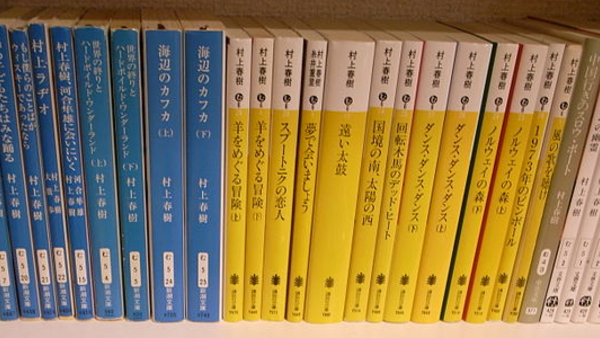
Translation is hard it's extremely labour intensive and is often done by a single person in order to maintain a unified authorial voice.
For years Murakami's main English translators have been Alfred Birnbaum, Jay Rubin and Philip Gabriel, but the nature of the book industry mains it's simply impossible (and not economical) for everything Murakami writes in Japanese to be translated into English. You've only got to take a look at the bibliography on Wikipedia to see how much work remains untranslated. There are books of essays, travel writing and short stories that will probably never be translated. Sigh.6. The Only Jazz And Classic Music You Know Is From His Books

Music plays an absolutely massive role in Murakami's books, evoking certain themes and tying together the tastes of many of his stories' protagonists.
Like talking cats and cool whiskey, there's something romantic about the jazz and classical records that permeate his work, and fans often want to get in on the melancholic action. Whether it's Janacek's Sinfonietta, Nat King Cole's It's Only A Paper Moon or the chill jazz masterpiece The Girl From Ipanema, fans of Murakami have come to associate a heck of a lot of music with the Japanese writer for some, he's the only source of jazz and classical recommendations they know.5. Wanting To Climb Down A Well

Murakami once said My lifetime dream is to be sitting at the bottom of a well. To many people this probably sounds like insanity, but not to Murakami fans they know exactly where he's coming from.
In Murakami's novels, wells and other subterranean spaces represent many things, from descending into one's own mind to the chance to emerge reborn and renewed. Take the underground caves found in Hard-Boiled Wonderland And The End Of The World, for example, or the deep well at the end of The Wind-Up Bird Chronicle which threatens to swallow Toru Okada whole. Its my lifetime dream to be sitting at the bottom of a well. Its a dream come true. I thought: its fun to write a novel, you can be anything! So I thought: I can sit at the bottom of a well, isolated Wonderful! Rest assured, Murakami - fans know what you mean.4. Thinking Losing Things Means Something Is About To Happen

For Murakami fans, losing a mobile phone or a set of car keys isn't just an upsetting conundrum it potentially marks the start of something wonderful.
Throughout Murakami's novels, so many things vanish from people to day to day items to entire buildings and each of these disappearances marks the start of a journey of self discovery. Sadly, in reality, losing stuff just means that you lost something. But that doesn't stop fans from wondering how long after they've misplaced their wallet or purse it'll be until the talking cat shows up...3. Admiring People's Ears
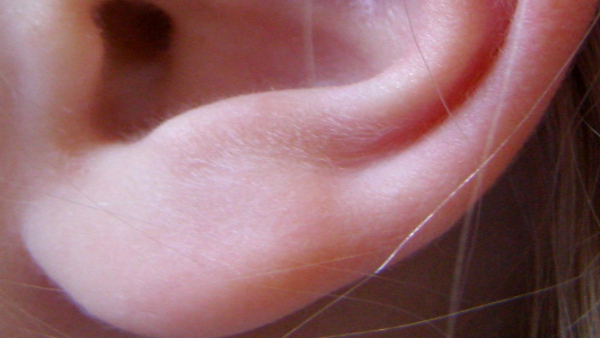
I guess I was kind of into ears back then. Yeah, that must be it.
This was the response to a Harvard student who asked Murakami why he described a woman's ears in such immense detail in A Wild Sheep Chase. Seriously, there are whole paragraphs dedicated to the amazing awe-inspiring beauty of ears and now fans are kind of into ears, too. The protagonist's obsession with ears in A Wild Sheep Chase is just one of the many details that contribute to the book's surreal tone. It's something to come out of a book having learned a lesson about life it's another to have gained a new-found appreciation for ears.2. Wanting To Take Up Running (But Being Too Lazy)

Haruki Murakami has the uncanny ability to make the most boring, everyday stuff seem extraordinary it's no surprise to find, then, that this talent extends to sports, too.
A keen runner (he has participated in dozens of marathons over the years) Murakami wrote a memoir about his interest in the hobby titled What I Talk About When I Talk About Running.
In typical Murakami fashion, he makes the activity sound like something life changing (as indeed any form of regular exercise is) comparing his writing to a long-distance run, commenting on the need throughout life for stamina and health. Alas, many Murakami fans are simply too lazy to take up running. The idea is nice and all, but most would rather stick to the whiskey and spaghetti making, thank you very much...1. Convincing Other People To Read His Books

So what's the novel about, exactly?
Well, it's tough to explain. Basically there's this guy and he's making spaghetti and then he gets a dirty telephone call from someone. And then his cat goes missing, and when he goes to find it he meets a teenage girl, and they hang out for a while, and then he continues on his search. I see. But yeah, it's really good, you should totally read The Wind-Up Bird Chronicle. Or there's always Kafka On The Shore. What happens in it? There's this old man who can talk to cats, and Johnnie Walker kills them. Johnnie Walker the whiskey guy? Yeah. Oh, and Colonel Sanders is in it, too. "Umm..." Enough said.