12 Things Everyone Gets Wrong About St Patrick's Day
You're getting drunk on March 17 for all the wrong reasons...

12. Blue Is The Colour For St Patrick's Day... Not Green, Because That's Unlucky
Every pub decorates its interior the shade of the Emerald Isle and everyone clads themselves in bright green clothing on St Patrick's Day - even though traditionally they should actually wear blue. Knights in the Order of St Patrick - a British chivalric title which was given to Irishmen between 1783 and 1921 - actually wore light blue and not green. This shade was even known for centuries as "St Patrick's Blue". Green may symbolise Ireland nowadays due to its links with Irish independence from the 18th Century onwards - but it bears no relation to St Patrick himself. In fact, bizarrely for many centuries green was seen as unlucky on the Emerald Isle.11. St Patrick Wasn't Even From Ireland... And He Was A Slave

10. Until 1970 St Patrick's Day Was A Dry Holiday In Ireland... And Every Single Pub Was Closed
 Pints - particularly of Guinness - will be flowing in their millions on St Patrick's Day in 2015, yet in the past this was not the case in Ireland. Traditionally St Patrick's Day was a religious feast day in Ireland - celebrating the arrival of Christianity on to the Emerald Isle - and until 1970 all pubs had to be closed by law. It's now almost impossible to imagine a St Patrick's Day without alcohol - it seems like sacrilege...
9. People Do Not Drink Green Beer In Ireland On St Patrick's Day
 In America and other parts of the world, "green beer" is widely available on St Patrick's Day. Essentially it is exactly what it sounds like - a pint dyed green. Yet this is certainly not an Irish tradition, but merely a gimmick that has been adopted in order to sell a greater amount of alcohol on St Patrick's Day. There is nothing Irish about it at all.
8. The Shamrock Is Not The National Symbol Of Ireland
 Shamrocks will be blazoned across the front of pubs around the world on St Patrick's Day - but it is not actually the national symbol of Ireland, although it does have connections to the day itself. The Irish coat of arms contains a gold harp with silver strings on a blue background and has been used since King Henry VIII's reign in the 1540s. This gold harp, and not the traditional shamrock flower, is the nation's symbol. St Patrick is closely associated with the shamrock, however.
7. And The Irish Shamrock Actually Has Three Leaves, Not The Four Commonly Used
 A "four-leaved clover" or shamrock is said to bring great luck, so rare are they - but it is actually the three-leaved variety that St Patrick is associated with. The legend goes that, while attempting to spread the word of Christianity around Ireland, St Patrick picked up a three-leaved shamrock to show to the general populous. This shamrock then became a symbol to depict the Holy Trinity of the Father, the Son and the Holy Spirit when St Patrick preached to the Irish - and that is why it became synonymous with him.
6. The Song "Wearing Of The Green" Is Anti-Colonialist... So Be Careful When Singing It In The Pubs Around Britain
The song Wearing of the Green will be sung in pubs in Ireland and around the world on St Patrick's Day - but its origins are from the Irish Rebellion of 1798. Many Brits will join in the festivities and belt out lyrics from the song - yet be careful, because it is actually extremely anti-British. The original resistance song contained the lines "they are hanging men and women for the wearing of the green" and "so if the colour we must wear be England's cruel red, let it remind us of the blood that Irishmen have shed". Not really celebratory lyrics, are they?5. St Patrick's Day Parades Are An American Thing... Not An Irish Tradition

4. It Should Be Called "St Maewyn's Day" Instead
St Patrick's birth name was actually "Maewyn Succat" and he only altered it to "Patricius" once he became a priest after moving to Ireland. So technically "St Patrick's Day" should actually be "St Maewyn's Day"...3. There Were No Snakes In Ireland For St Patrick To Supposedly Drive Out Of The Country
 Not only does the legend of St Patrick claim he brought Christianity to Ireland during the 5th Century - which is not strictly true anyway - it also claims that he drove all of the snakes out of the country. The legend goes that St Patrick banished all the snakes on the Emerald Isle into the sea after they attacked him while he was undertaking a 40-day fast on top of a hill. However, all evidence suggests that post-glacial Ireland would have been far too chilly for cold-blooded snakes anyway - plus there has never been a snake fossil found in Ireland, so they almost certainly never lived there in the first place. It's certainly a cool, if pretty bizarre, story though.
2. St Patrick Died On March 17... So It's Actually A Celebration Of His Death And Not His Life

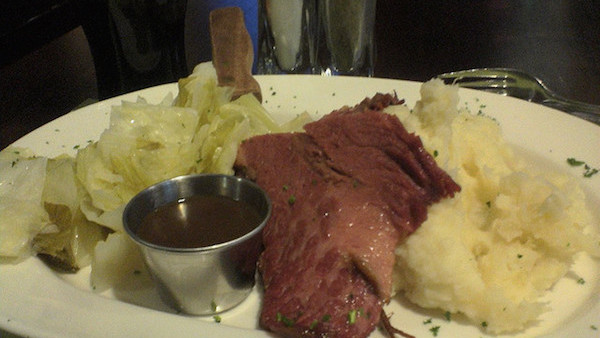
1. Corned Beef Is Not Eaten On The Emerald Isle On St Patrick's Day... And It's Not Even An Irish Dish